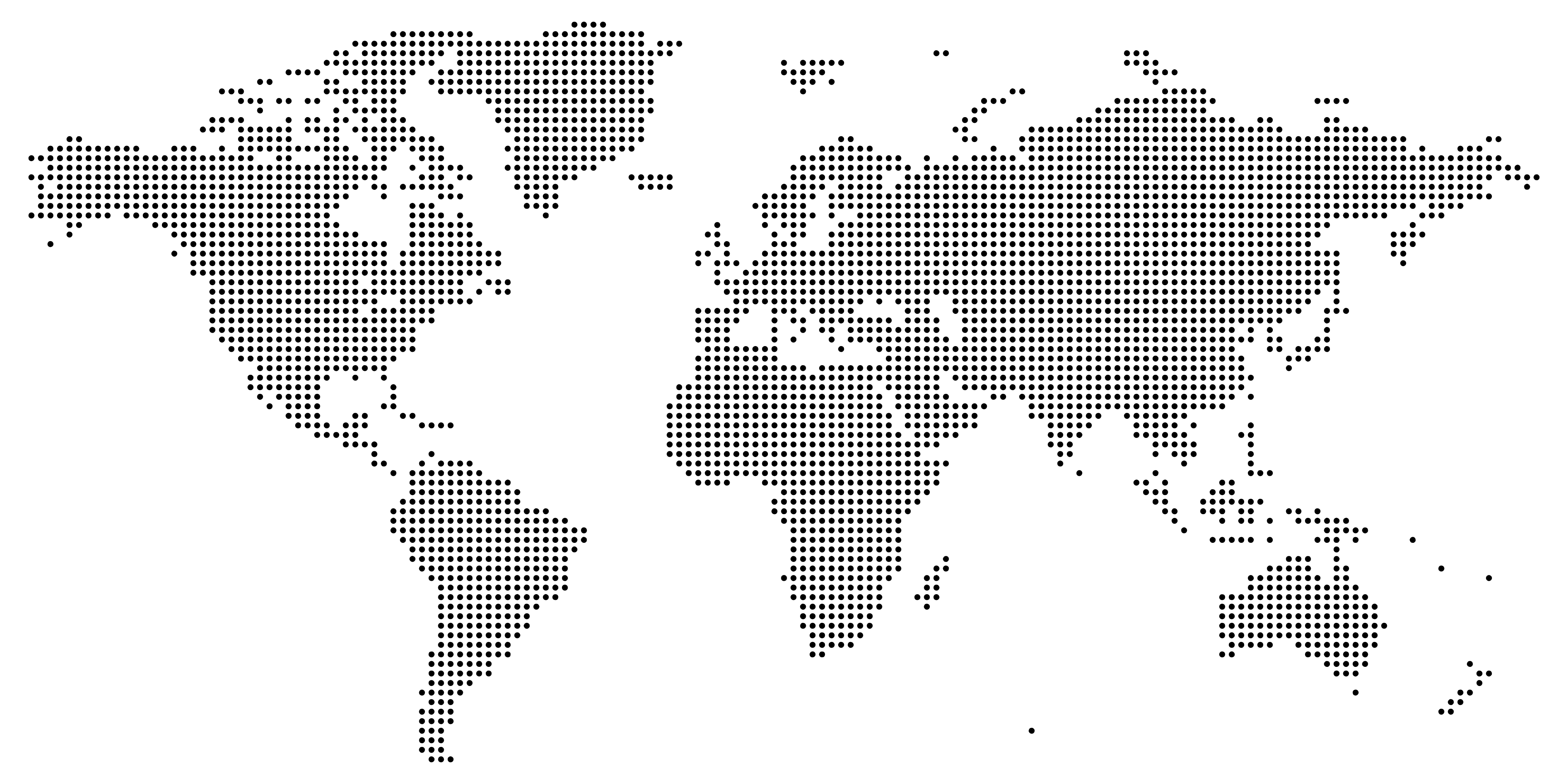
An interactive database of neurotech startups worldwide, from BCIs and neuromodulation to neuroimaging and diagnostics. Updated monthly, the map makes it easy to explore emerging companies, track technologies, and discover innovations shaping the future of brain technology.
An interactive database of neurotech startups worldwide, from brain-computer interfaces and neuromodulation to neuroimaging and cognitive health tools. Updated monthly, the map makes it easy to explore emerging companies, track novel technologies, and discover new innovations shaping the future of brain technology.
Oops! Something went wrong while submitting the form.
Thank you! Your submission has been received!
Oops! Something went wrong while submitting the form.
Thank you! Your submission has been received!
Oops! Something went wrong while submitting the form.
Thank you! Your submission has been received!
Oops! Something went wrong while submitting the form.
Thank you! Your submission has been received!
Oops! Something went wrong while submitting the form.
Thank you! Your submission has been received!
Oops! Something went wrong while submitting the form.
Thank you! Your submission has been received!
Oops! Something went wrong while submitting the form.
NeuroBionics
Developing minimally invasive implantable bioelectronic fiber systems for targeted neuromodulation therapies and integrated neural interfacing in clinical and research contexts.
Providing Starstim and Enobio devices for wireless EEG monitoring and non-invasive brain stimulation, applied in research, clinical trials, and therapy.
Developing a minimally invasive, needle-delivered neuromodulation electrode platform to expand access to peripheral nerve stimulation for chronic pain treatment.
Developing thin-film implantable electrodes to enable high-precision neural recording, stimulation, and ablation in neurosurgical and neurological care.
Developing an implantable closed-loop responsive neurostimulation system that detects abnormal brain activity and delivers targeted stimulation to reduce seizures in drug-resistant focal epilepsy.
Equipping clinicians with a wearable, medical-grade EEG system that delivers real-time neural biomarkers via a head-adhered sensor and cloud analytics.
Empowering epilepsy and migraine patients with mobile apps (Helpilepsy, MigraineManager) for logging symptoms and safely sharing data with their neurologists.
Offering Xen, a wearable headphone system that delivers gentle transcutaneous vagus nerve stimulation to reduce stress, improve sleep, and boost focus.
Providing an AI-guided brain-body interface platform combining minimally invasive BCI and neurostimulation to restore movement after stroke and spinal cord injury.
Developing AlphaDBS, a closed-loop deep brain stimulation implant that adapts therapy in real-time based on brain signals to treat Parkinson’s disease.
Developing cloud-native infrastructure and APIs that enable brain-computer interface developers to collect, train, and deploy neural data applications securely and at scale.
Building foundation models for brain data that decode thoughts into text, images, and speech from non-invasive neural recordings including EEG and fMRI.
Developing a fully digital Alzheimer’s therapy that uses ultra-high-frequency digital-photonic stimulation via the retina, delivered through VR/AR, to activate memory systems.
Building open-source neurotechnology tools and standards that make advanced brain-computer interfaces accessible to researchers, developers, and creators worldwide.
Developing wearable, open-source infrared and ultrasound platforms to diagnose and non-invasively treat diseases such as stroke, depression, and tumors.
Developing the Connexus, a fully implantable, high–data-rate BCI that records single-neuron brain signals to restore communication in paralyzed patients.
Developing the Layer 7 Cortical Interface, a minimally invasive, high-resolution brain–computer implant to restore communication and independence via thought.
Developing biological foundation models and clinical research platforms to understand, detect, and prevent neurological disease through AI-driven neuroscience.
Empowering imaging teams with a cloud-native AI platform that automates MRI data upload, biomarker extraction, and centralized review for clinical trials.
Developing the Delphi-MD, a first-in-class TMS-EEG functional neuroimaging system for early detection and differential diagnosis of brain disorders at the point of care.
Developing GRACE, an implantable electric field therapy (EFT) device for glioblastoma treatment, targeting tumor cells post-resection to slow recurrence and extend survival.
Developing non-invasive neuromodulation systems that combine transcranial electrical stimulation with immersive VR/XR software to support neurorehabilitation workflows.
Developing an implantable cortical visual prosthesis that converts camera input into patterned stimulation of the visual cortex to restore functional vision.
Providing a cloud-based AI platform (StrivePD) that transforms smartphone and wearable neurology data into actionable insights for precision neurology.
Develops invasive brain-machine interface systems for reconstructive therapy, aiming to restore neural control in conditions unresponsive to conventional options.
Developing the Evoke System, the first FDA-approved closed-loop spinal cord stimulation system using evoked compound action potentials (ECAPs) to automatically adapt therapy in real time.
Pioneering a wearable brain-first neurotechnology, Nettle, that provides non-hormonal brain stimulation to reduce menstrual pain, low mood, and brain fog.
Delivering a wearable audiovisual neuromodulation mask that uses light and sound pulses via HRV feedback to reduce chronic pain, improve sleep, and ease anxiety.
Developing a wearable, non-invasive low-intensity focused ultrasound platform targeting the splenic nerve and autonomic neural pathways for treatment of chronic inflammatory diseases.



.jpeg)



.jpeg)
.jpeg)



























.svg.png)


.jpeg)

























.jpeg)



.svg)