ABILITY Neurotech

Developing implantable neural interface (BCI) to restore autonomy in paralysis by capturing, transmitting, analyzing, and stimulating brain activity.
Switzerland
●
Brain-Computer Interface
Anthriq
.jpeg)
Developing non-invasive EEG-based BCI headsets and a full-stack biosignal ecosystem, hardware, SDK, APIs, for real-time brain-tech interaction.
India
●
Brain-Computer Interface
Biological Input Output Systems
Developing an implantable universal neural interface that enables intuitive two-way communication between the nervous system and external devices to restore movement and sensation.
USA
●
Brain-Computer Interface
Blackrock Neurotech

Developer of the Utah Array, the first FDA-cleared BCI implant, enabling long-term neural recording and brain-controlled devices.
USA
●
Brain-Computer Interface
BrainCo
Developing non-invasive brain-computer interface wearables for cognitive training, education, and assistive control using EEG-based neural signal decoding.
China
●
Brain-Computer Interface
Cahira Technologies
.jpeg)
Developing autonomous, non-surgical nanoelectronic brain implants that self-deploy in target regions to treat neural disorders and enable human augmentation.
USA
●
Brain-Computer Interface
Coapt

Developing AI-powered myoelectric control software that enables intuitive, adaptive control of prosthetic limbs.
USA
●
Brain-Computer Interface
Cognixion

Empowering communication with a wireless AR headset that blends non-invasive EEG, AI, and augmented reality to help users speak and interact.
USA
●
Brain-Computer Interface
Coherence Neuro

Implementing precision bioelectronic therapy with SOMA-1, an implant during glioblastoma surgery that continuously monitors and disrupts tumor-driving electrical signals.
UK
●
Brain-Computer Interface
CorTec
.jpeg)
Building a fully implantable, bidirectional neurostimulation and recording platform designed to restore neural function by sensing brain activity and delivering adaptive stimulation in closed loop.
Germany
●
Brain-Computer Interface
Corticale

Developing minimally invasive CMOS-based cortical implants (SiNAPS) that record from thousands of neurons for high-resolution brain-computer interfaces.
Italy
●
Brain-Computer Interface
Fluent BCI
.jpeg)
Developing non-invasive brain-computer interfaces that translate neural intent into fluid, real-time control for communication and interaction.
Australia
●
Brain-Computer Interface
Forest Neurotech

Pioneering ultrasound-based brain–computer interfaces using Forest 1, a compact, fob-sized scanner enabling noninvasive whole-brain imaging and neuromodulation.
USA
●
Brain-Computer Interface
Gestala

Building a non-invasive ultrasound-based brain-computer interface platform for neuromodulation and neural signal decoding.
China
●
Brain-Computer Interface
INBRAIN Neuroelectronics

Developing ultrathin graphene-based neural implants (<10 µm) for AI-powered, bidirectional modulation of neurological disorders like Parkinson’s.
Spain
●
Brain-Computer Interface
Merge Labs

Exploring gene-therapy-enhanced, high-bandwidth, ultrasound-based brain-computer interfaces to enable seamless human–AI integration.
USA
●
Brain-Computer Interface
Morph Labs

Building brain-driven prosthetic control via AI-decoded neural signals, translating amputees’ brainwaves into intuitive limb movement.
USA
●
Brain-Computer Interface
Neuralink

Developing high-channel-count implantable brain-computer interfaces to restore motor function, enable communication, and eventually merge humans with AI.
USA
●
Brain-Computer Interface
NeuroBionics

Developing minimally invasive implantable bioelectronic fiber systems for targeted neuromodulation therapies and integrated neural interfacing in clinical and research contexts.
USA
●
Brain-Computer Interface
NeuroXess

Developing implantable brain-computer interface systems to restore communication and motor function in patients with severe neurological impairment.
China
●
Brain-Computer Interface
Neurosoft Bioelectronics
Developing ultra-soft, foldable neural implants and AI-driven decoding to monitor and modulate brain activity for epilepsy, tinnitus, and rehab.
Switzerland
●
Brain-Computer Interface
Orbit

Developing a wearable brain–computer interface and machine learning models to decode emotional and cognitive states from neural signals.
USA
●
Brain-Computer Interface
PSYONIC

Developing the Ability Hand, an advanced multi-articulated bionic prosthetic with integrated fingertip touch sensing and sEMG control.
USA
●
Brain-Computer Interface
Paradromics
.jpeg)
Developing the Connexus, a fully implantable, high–data-rate BCI that records single-neuron brain signals to restore communication in paralyzed patients.
USA
●
Brain-Computer Interface
Phantom Neuro

Developing minimally invasive muscle implants and AI-driven interfaces enabling intuitive prosthetic and robotic limb control for amputees.
USA
●
Brain-Computer Interface
Precision Neuroscience

Developing the Layer 7 Cortical Interface, a minimally invasive, high-resolution brain–computer implant to restore communication and independence via thought.
USA
●
Brain-Computer Interface
ReVision Implant
Developing an implantable cortical visual prosthesis that converts camera input into patterned stimulation of the visual cortex to restore functional vision.
Belgium
●
Brain-Computer Interface
Ruten Inc

Develops invasive brain-machine interface systems for reconstructive therapy, aiming to restore neural control in conditions unresponsive to conventional options.
USA
●
Brain-Computer Interface
Science Corp
.jpeg)
Developing optogenetic visual prostheses that use microLED arrays to restore sight by stimulating retinal neurons with patterned light.
USA
●
Brain-Computer Interface
Starfish Neuroscience

Building miniaturized, wireless, battery-free BCI chips enabling simultaneous stimulation and recording across multiple brain regions for future therapies.
USA
●
Brain-Computer Interface
Subsense Inc

Developing the first non-surgical, nanoparticle-based bidirectional BCI, enabling precise brain stimulation and recording without surgery.
USA
●
Brain-Computer Interface
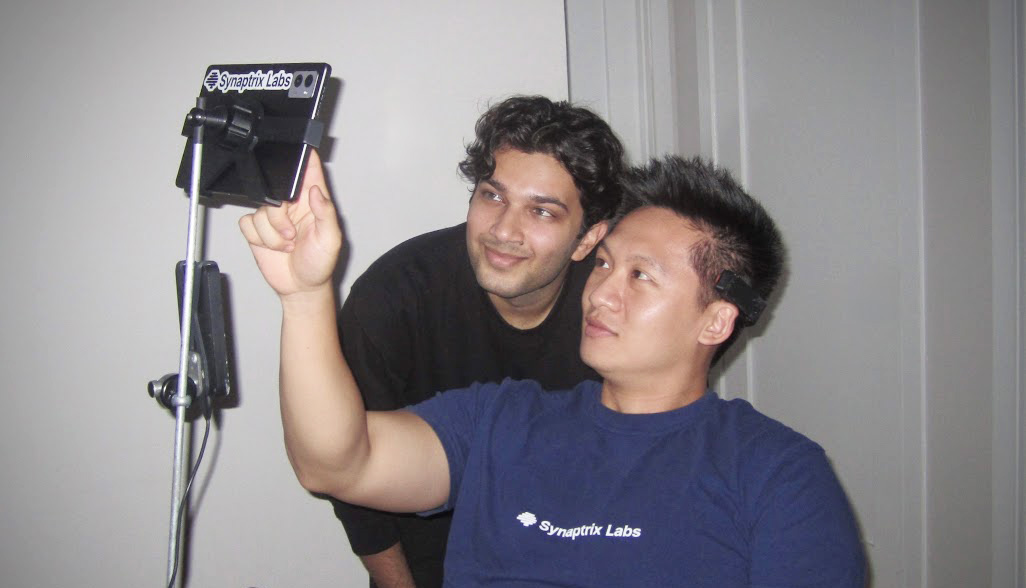
Synaptrix Labs
.jpeg)
Developing a non-invasive, AI-powered brain-computer interface (BCI) headset and proprietary neural-decoding platform to enable individuals with paralysis to control wheelchairs.
USA
●
Brain-Computer Interface
Synchron

Developing the Stentrode, an endovascular, minimally invasive BCI implant enabling paralyzed individuals to control digital devices using thought alone.
USA
●
Brain-Computer Interface
.svg)





.svg)
.svg)


%20(1).jpg)