

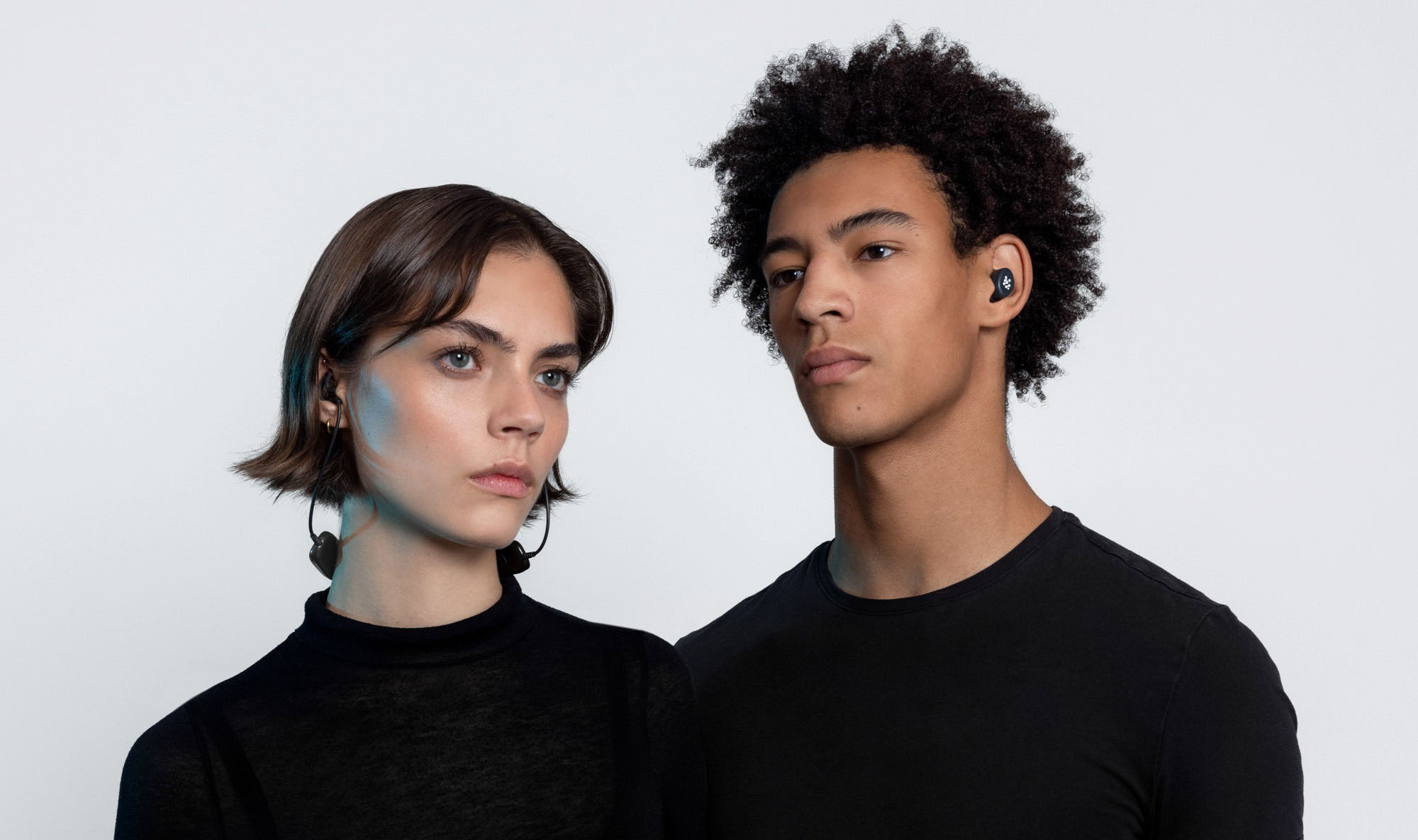
It has been a while since EEG left the lab. Wet electrodes have turned dry and are no longer reserved for neuroscientific research and clinical populations. By integrating the technology in comfortable form factors, including headbands, headphones, and earbuds, EEG is increasingly becoming a consumer product. These products are already opening up new ways to control your devices, while accurately measuring and modulating your sleep at night and your productivity during the day.
That development is now showing up in numbers. The Centre for Future Generations analyzed the neurotechnology market and found 153 consumer neurotech firms active globally, 64% of them using EEG. Seventy-seven consumer EEG firms were founded in the last fifteen years, compared with just twelve in the fifteen years before. As EEG becomes a product direction for major technology companies, the next phase will depend on how well it can move from isolated use cases into reliable, everyday products.
EEG now supports a growing range of consumer use cases, even if it cannot yet fully decode your thoughts. Most applications remain bounded, answering narrow questions with clear outputs. Did a user fall asleep? Did they enter REM sleep? Did a sleep feature change after delivering an intervention? With current classifier approaches, the most constrained questions result in the most reliable outputs.
That is why consumer EEG is initially appearing in a few clear clusters. In device interaction, headphones and earbuds can integrate a broader ExG stack to detect jaw clenches and eye movements as explicit hands-free control inputs, while EEG adds cognitive-state information for more adaptive experiences. For a range of new wearables, from smart glasses to rings, ExG opens up device control without requiring a phone or voice command.
Sleep is another quickly developing category, where headbands and earbuds are comfortable enough to measure neural activity throughout the night. During sleep, EEG goes a layer deeper than the proxy signals measured by most wrist-worn wearables. Measuring both the macro- and microarchitecture of sleep, it provides a more detailed view of nightly rest while opening a path toward real-time audio intervention.
Meanwhile, during the day, EEG is being explored for measuring cognitive states such as fatigue, workload, and focus. These are difficult states to compress into one score, but become more useful and actionable when interpreted alongside wider context and trends.
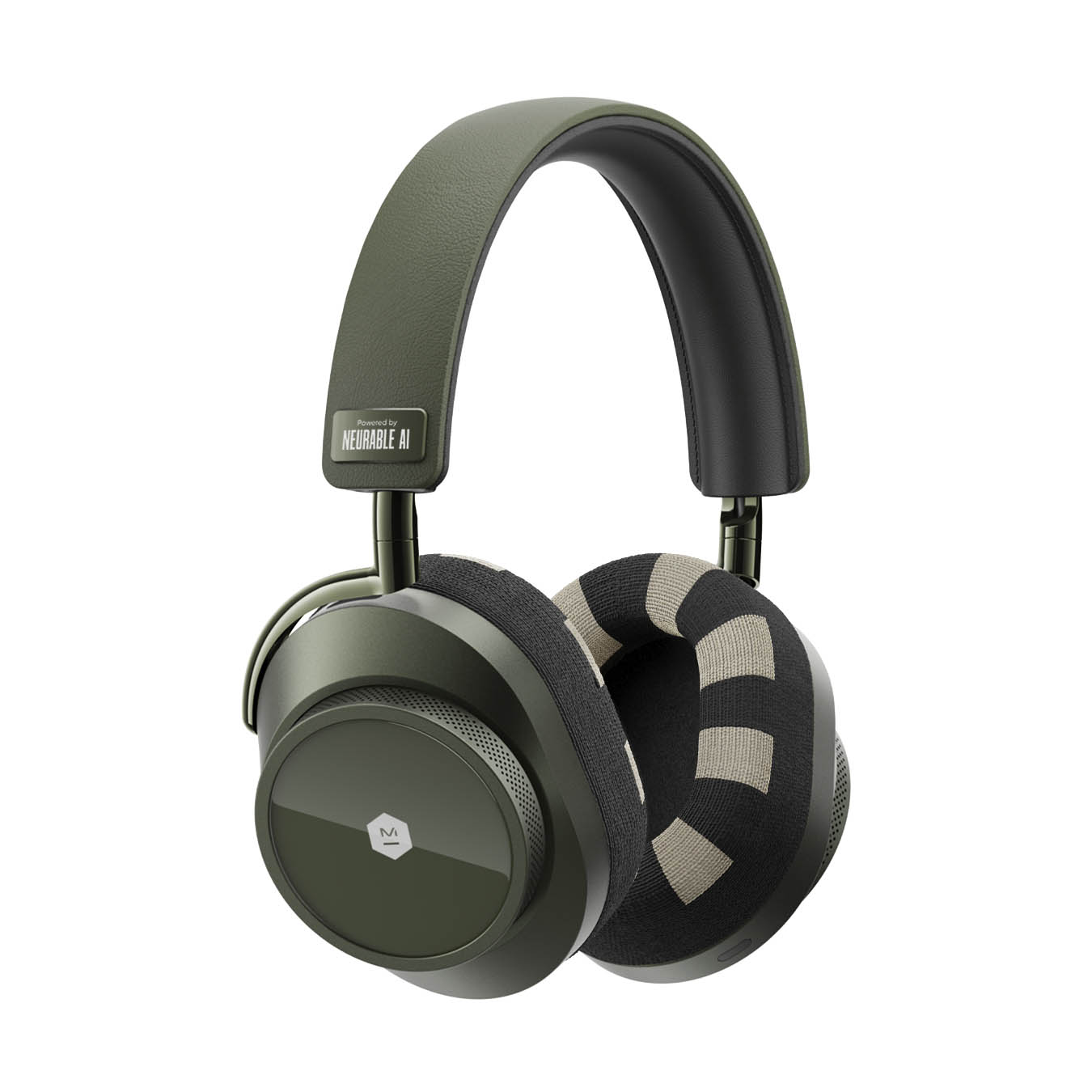
As the first use cases become clearer, companies are emerging to commercialize them. The Centre for Future Generations, a Brussels-based think tank researching novel technologies, counted 77 consumer EEG firms founded in the last fifteen years. Several have attracted significant private and public funding. Zander Labs secured a €30 million research contract to develop EEG interfaces, while NextSense raised a $16 million Series A in November 2025 to launch its EEG sleep earbuds. One month later, Neurable raised a $35 million Series A to expand its EEG headphone technology and cognitive-state tracking platform.
Consumer EEG also benefits from momentum in the wider hearables market. EEG can only be integrated into a limited number of practical form factors, most of them sitting in and around the ears. And hearables, headphones and earbuds, remain the largest wearable category. IDC forecasts that more than 400 million units will be shipped in 2026.
As consumer EEG matures, the industry is likely to move from isolated classifiers toward more reusable neural models. Today, sleep staging, fatigue, workload, and attention are all treated as separate problems, with models tied to the users, devices, and recording setups on which they were trained. Brain foundation models reduce that fragmentation by learning general representations that can transfer across tasks.
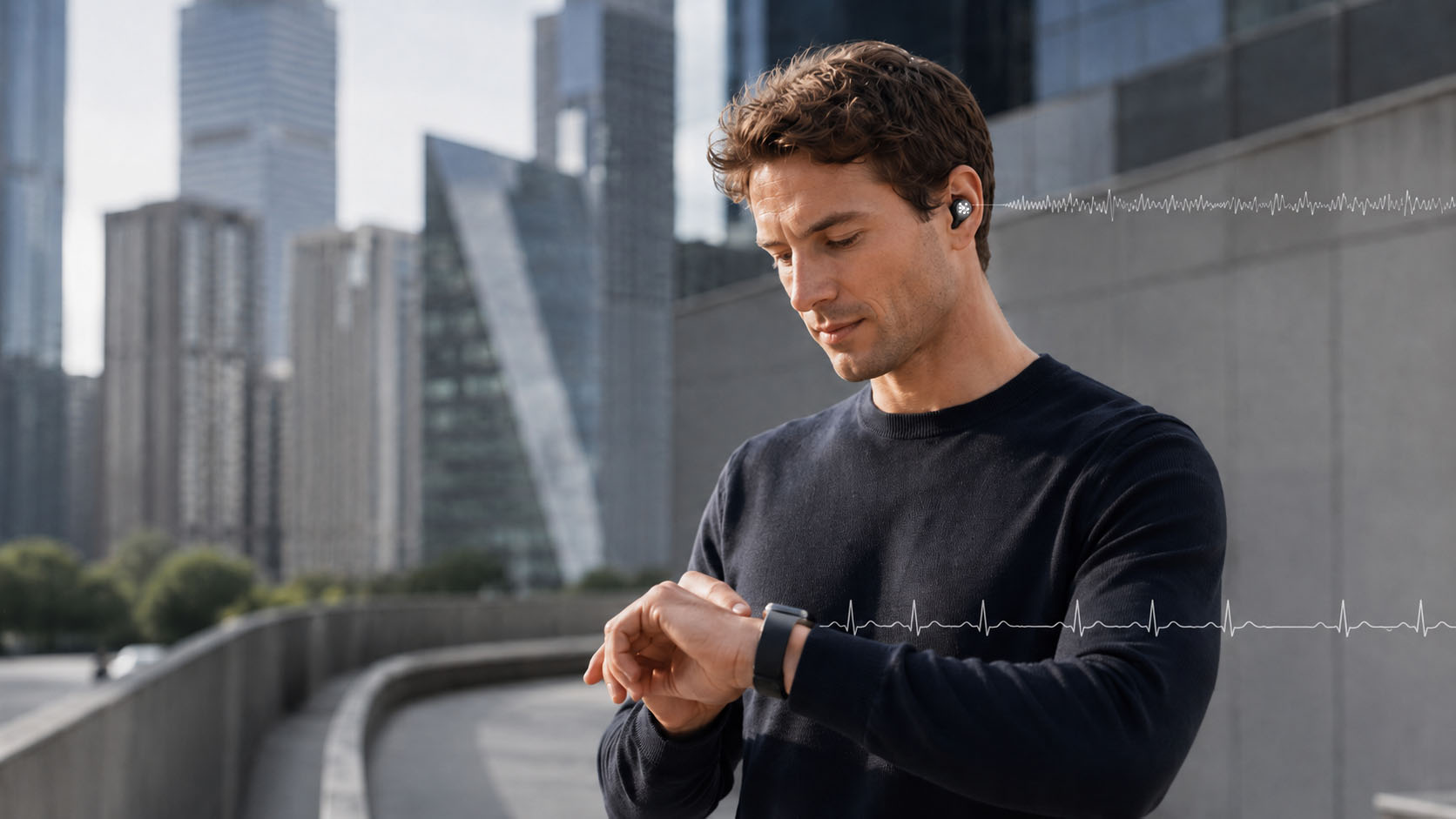
The larger shift is toward models that combine brain activity with physiology, behavior, and context. EEG alone rarely explains why a signal is changing, but sleep history, movement, audio, heart rate, and time of day can make an output more interpretable. Google’s wearable foundation model shows the scale this approach can reach, combining physiological and movement signals across up to 40 million hours of data from more than 165,000 people. EEG adds the internal-state layer to that brain-body-context model.
Brain foundation models require large troves of real-world data to be assembled, creating a substantial data-collection challenge. Earbuds are one of the more practical routes to tackle that challenge. They are already worn daily and can combine EEG with motion and audio data, delivering richer datasets. Repeated use then creates a path from population classifiers toward personal baselines, longer-term trends, and adaptive feedback.
Yet consumer EEG still faces several integration challenges. The clearest trade-off is between spatial coverage and miniaturization. Full-scalp EEG captures electrical activity from across the head, while headphones and especially earbuds rely on far fewer channels in a constrained anatomical location. For some applications, including auditory attention decoding, recent comparisons show that this reduction in coverage can lower accuracy.
A second, more addressable challenge is fit. Every head and ear is slightly different, making it difficult to build one product that works reliably across users without extensive customization. In in-ear EEG, the size and position of the ear tip affect more than comfort. They also influence electrode contact, impedance, noise, movement artifacts, and the consistency of the resulting signal.
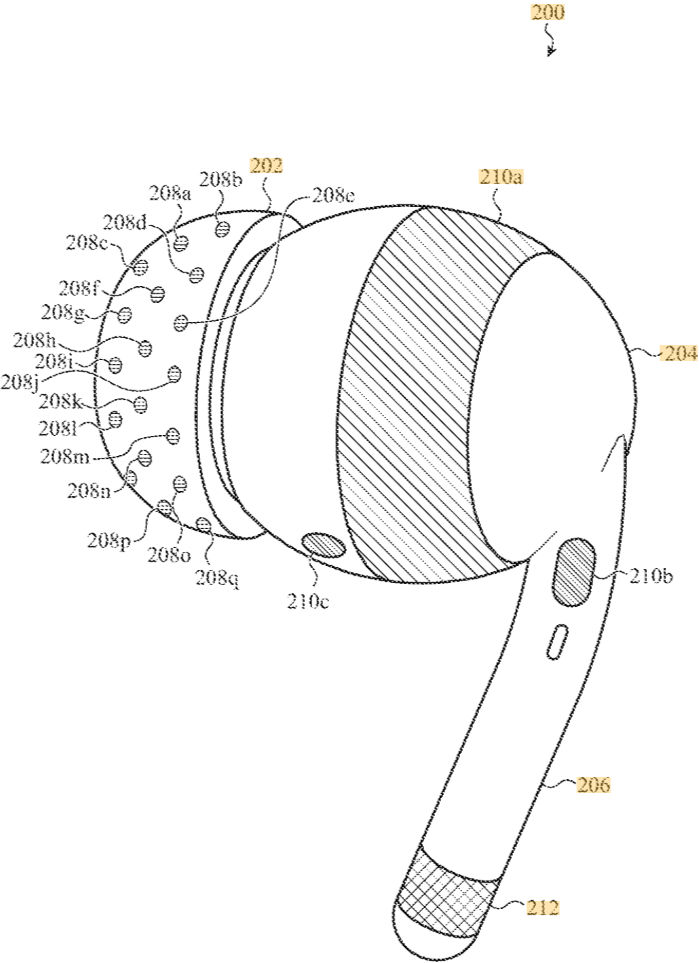
Earbuds and headphones can now house a growing range of sensors and processing capabilities, but each additional feature competes for space, power, and compute. Apple recently added in-ear heart-rate sensing to its AirPods Pro 3, while holding patents describing earwear capable of capturing a broader ExG stack. But any future brain-sensing system would still need to fit alongside noise cancellation, Bluetooth, microphones, batteries, audio processing, and the other functions consumers already expect.
One of the largest challenges is how to responsibly handle the data these products produce. Neural data can support inferences about cognitive and emotional states, creating a privacy boundary that remains weakly addressed in most legislation. Chile is a notable exception, becoming the first country to constitutionally protect brain activity and information derived from it in 2021. In 2025, UNESCO adopted a global Recommendation on the Ethics of Neurotechnology, emphasizing safeguards around consent, privacy, security, and autonomy.
The first consumer EEG earbuds used by millions will likely not be produced by one of the seventy-seven new entrants. The market increasingly points toward bringing neural sensing into products people already use. EMOTIV established an early version of this model, pairing its own EEG headsets with developer licensing, software access, and third-party applications. More recently, Neurable has shifted toward licensing its technology for headphones, glasses, and other wearables, while IDUN Technologies is building its in-ear EEG through a network of hardware and application partners.
The timing is helped by the scale of the hearables market and the shift toward biometric earwear. Hundreds of millions of hearables ship each year, and products such as AirPods show that the category is expanding beyond audio into physiological sensing. Earbuds also have a built-in output channel, allowing the same device to measure a state, deliver an audio intervention, and track the response over time. That creates a natural path toward closed-loop and increasingly personalized products.
The real value may therefore sit in abstraction. Most consumer-electronics companies do not want to design electrodes, manage signal quality, separate artifacts, or build EEG models from scratch. Instead, they will look for usable features; platforms that combine hardware integration, signal processing, and classifiers. Consumer EEG becomes more scalable when companies can build brain-aware products without becoming EEG companies themselves.
IDUN Technologies is one of the central in-ear EEG companies building toward the future of consumer brain sensing. The company spun out of ETH in 2017, developing Dryode®, a new flexible, soft, and biocompatible material for measuring high-quality ExG. In the following decade, the startup explored applications across sleep monitoring, cognitive-state tracking, neural UX, adaptive audio, and brain foundation models.
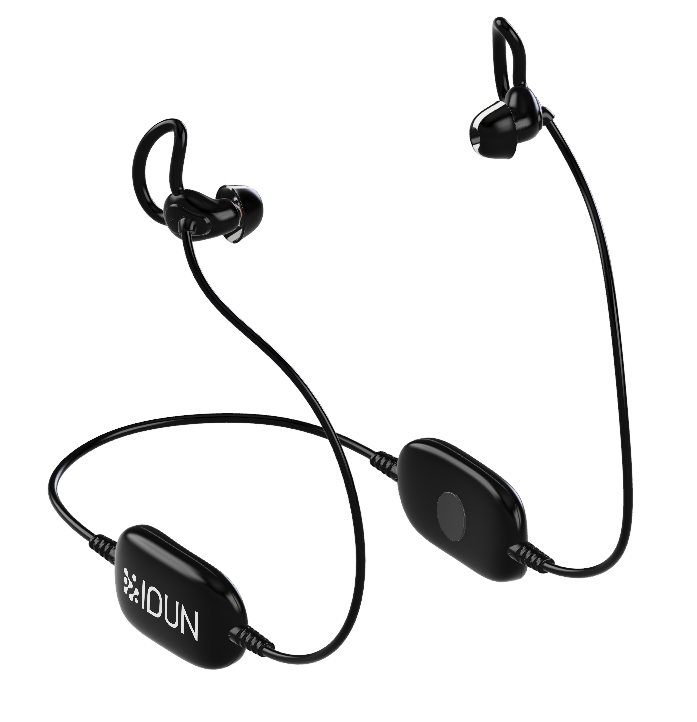
IDUN’s current platform is built around Guardian 4, which combines dual-channel in-ear EEG with IMU, audio, wireless connectivity, and edge processing. Analog Devices provides the biopotential front end for signal acquisition, while Qualcomm’s Snapdragon S7 Sound platform supports audio, connectivity, and on-device processing. IDUN’s Dryode® electrodes provide the soft contact layer used to capture ExG signals from inside the ear.
The company is working with consumer audio partners to explore how in-ear EEG could move into familiar products. For example, IDUN collaborates with sleep-earbud company Ozlo to explore unobtrusive sensing, real-world data quality, and more meaningful sleep insights.
A separate group of partners is building applications on top of IDUN’s sensing layer. Arctop uses IDUN’s stack in its neural decoding efforts, while BRNLIT.AI is exploring how to create EEG-personalized light signals for focus. Meanwhile, Audicin is testing how brain-entrainment audio affects activity during focus and relaxation sessions.
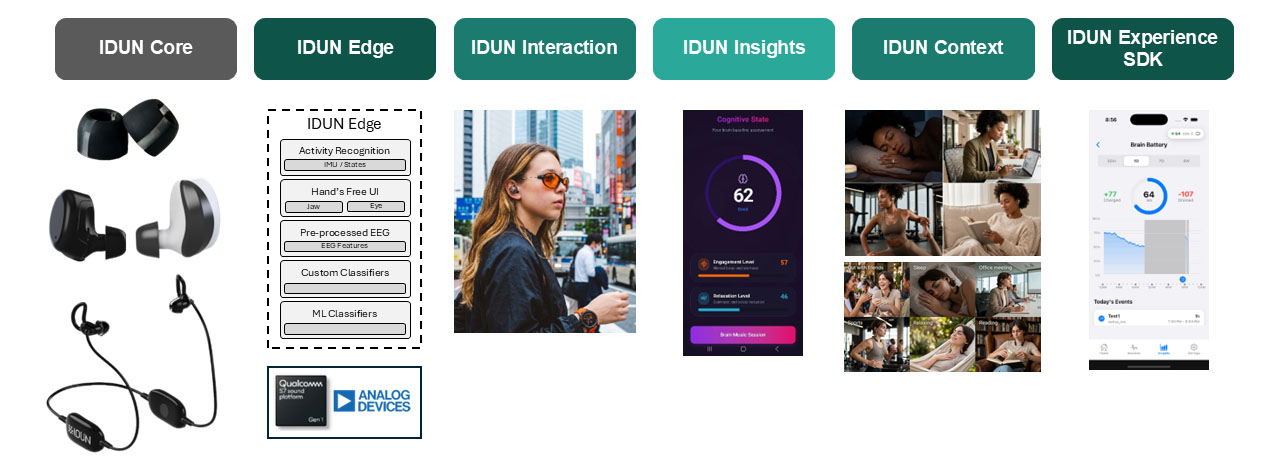
But IDUN’s product stack is more than its dry-electrode earbuds. Its Brain Sensing Integration Package covers hardware design through IDUN Core and embedded EEG and audio processing through IDUN Edge. IDUN also offers more consumer-ready use cases: Interaction covers EEG-enabled hands-free UX, Insights turns abstract neuroscience into concrete outputs, and Context connects measurements to lifestyle and app context. For product teams, the final layer is Experience, an SDK that helps them build neuroadaptive products without needing to become EEG specialists.
Consumer EEG is unlikely to reach scale by asking millions of people to adopt a dedicated brain-sensing device. The more plausible route runs through headphones and earbuds they already use, with neural sensing added alongside audio, physiological monitoring, and local AI.
That makes integration the defining challenge of the next phase. The companies that solve electrodes, signal quality, models, context, privacy, and developer access as one stack can turn EEG from a specialist product category into a feature of everyday consumer hardware.

Exploring In-Ear EEG is a five-part article series exploring the current landscape of consumer in-ear EEG technology. The series is produced in partnership with IDUN Technologies, a Swiss start-up leading the push for full-wireless in-ear EEG technology. The series covers the core use cases of in-ear EEG today, the main form factors of consumer ExG, and the overall market in 2026.
Read the full series.
Produced with support from

%20copy.jpg)





.svg)

