

Passwords have been vulnerable to cyberattacks for years. Now, AI-generated deepfakes present new challenges for facial and voice-based authentication. The digital identity industry, predicted to grow to ~$130bn by 2030, is evolving in response. Advanced biometrics leverage gait analysis and micro-facial expressions, while in recent years, even neural signals have emerged as a promising modality for user authentication.
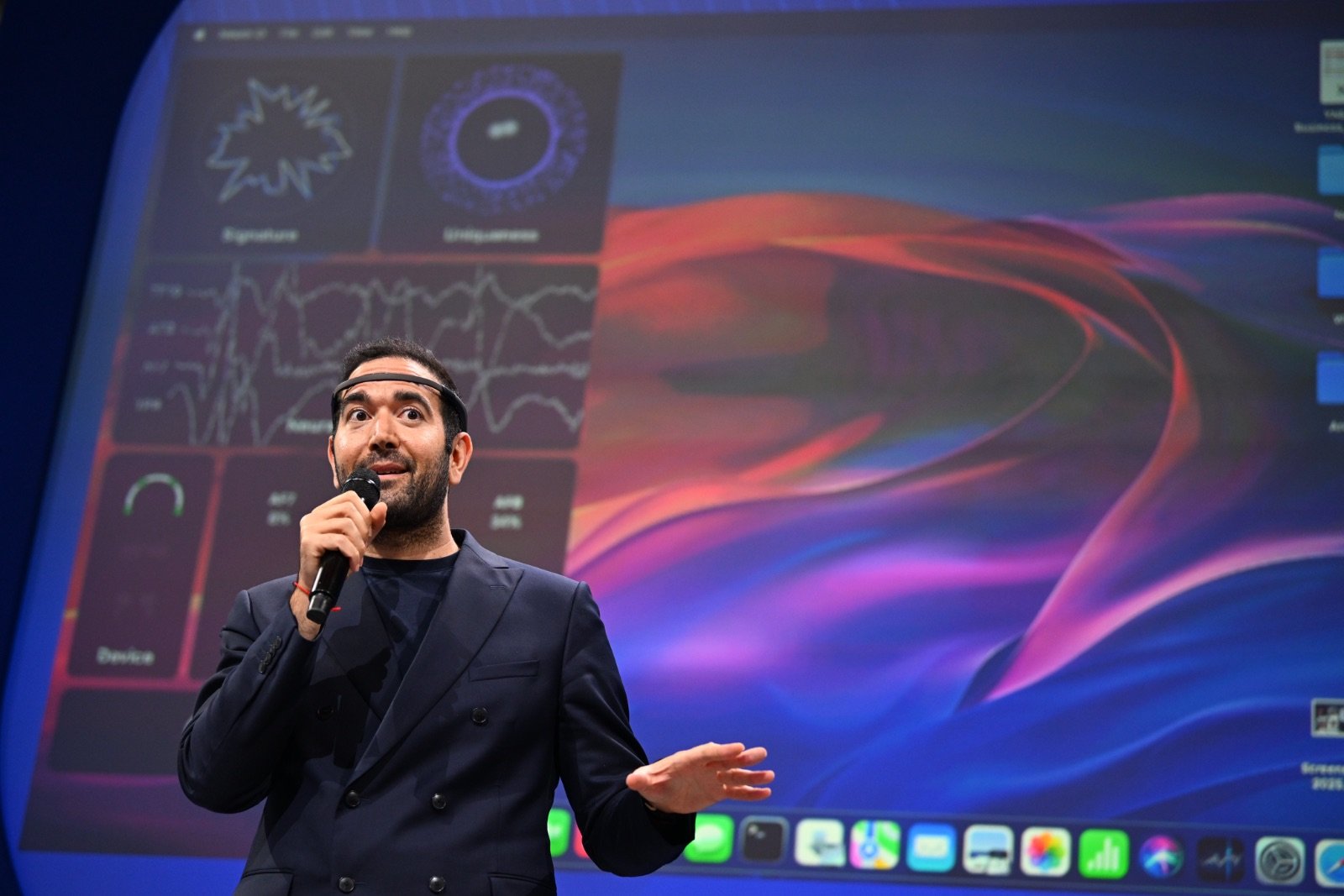
Yneuro, founded in 2019 by Thomas Semah, is developing Neuro ID, software that allows EEG-enabled devices to authenticate users through their brain activity. The Paris-based team of 16 has raised funding from angel investors and Bpifrance and is now focused on commercial deployment, initially targeting high-security sectors before expanding into consumer wearables.
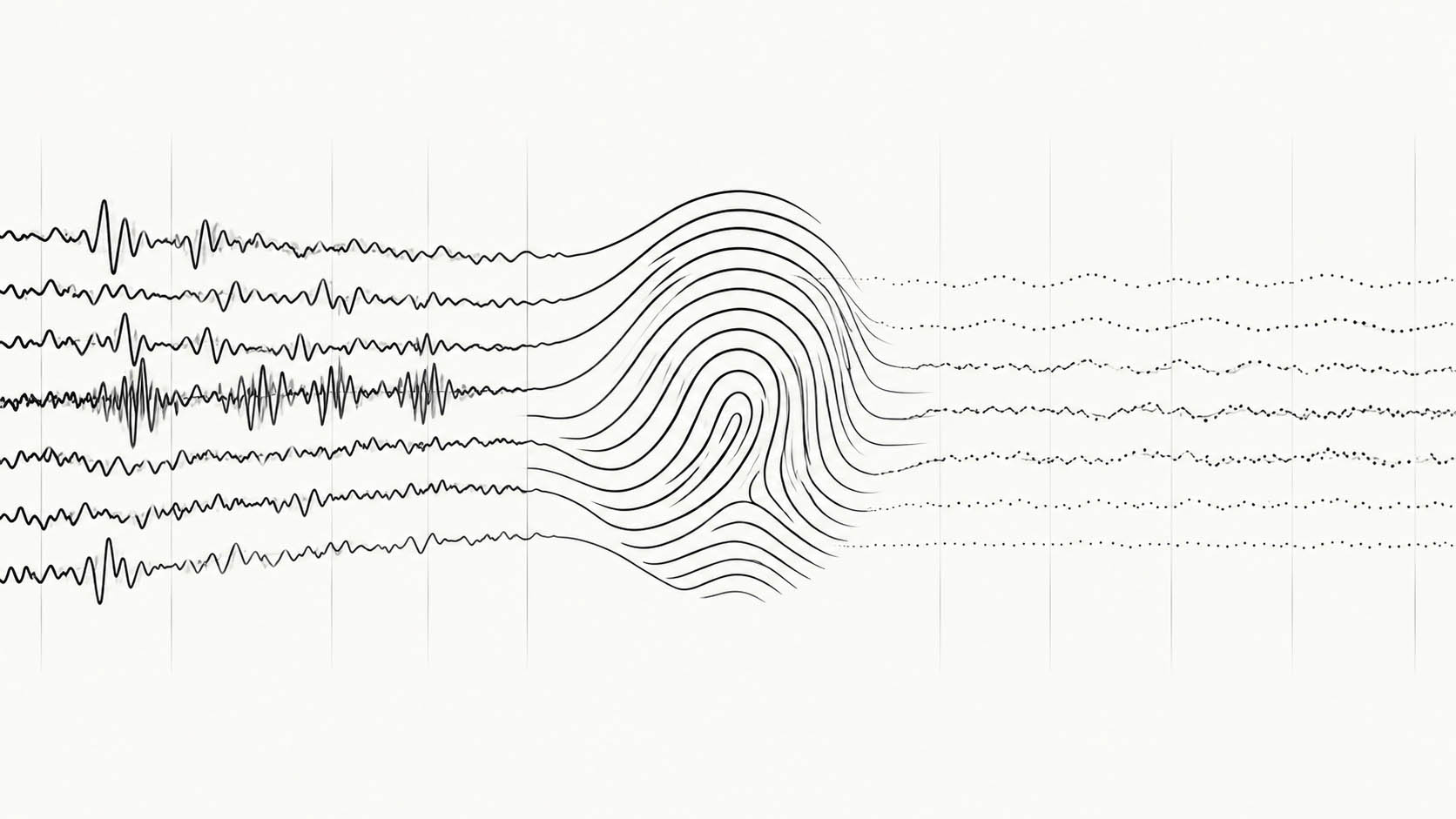
Research has shown that EEG readings contain a unique ‘base signal’ that can identify individuals; these EEG signatures can even distinguish between identical twins. Yneuro wants to translate this principle into a practical authentication system.
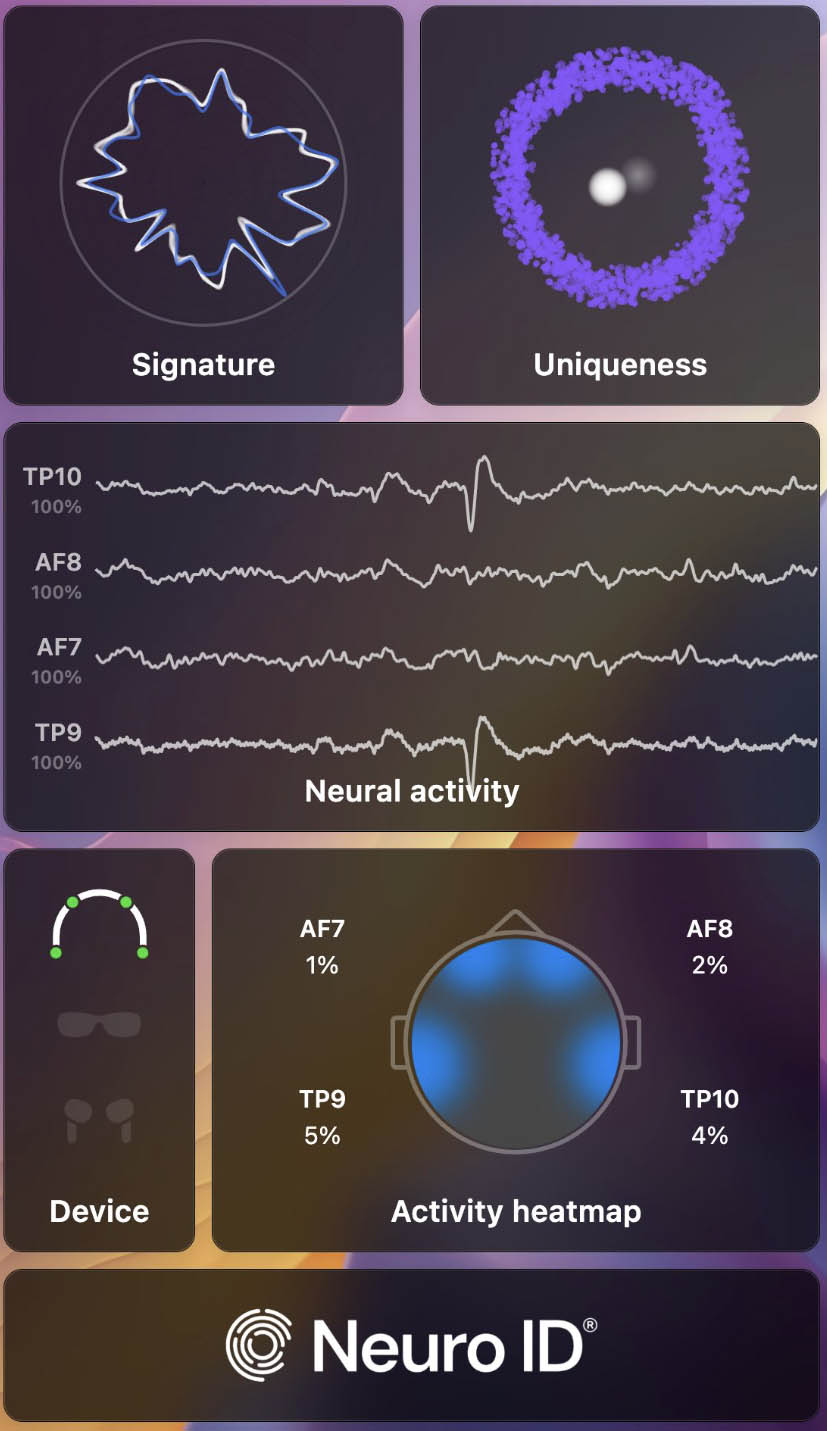
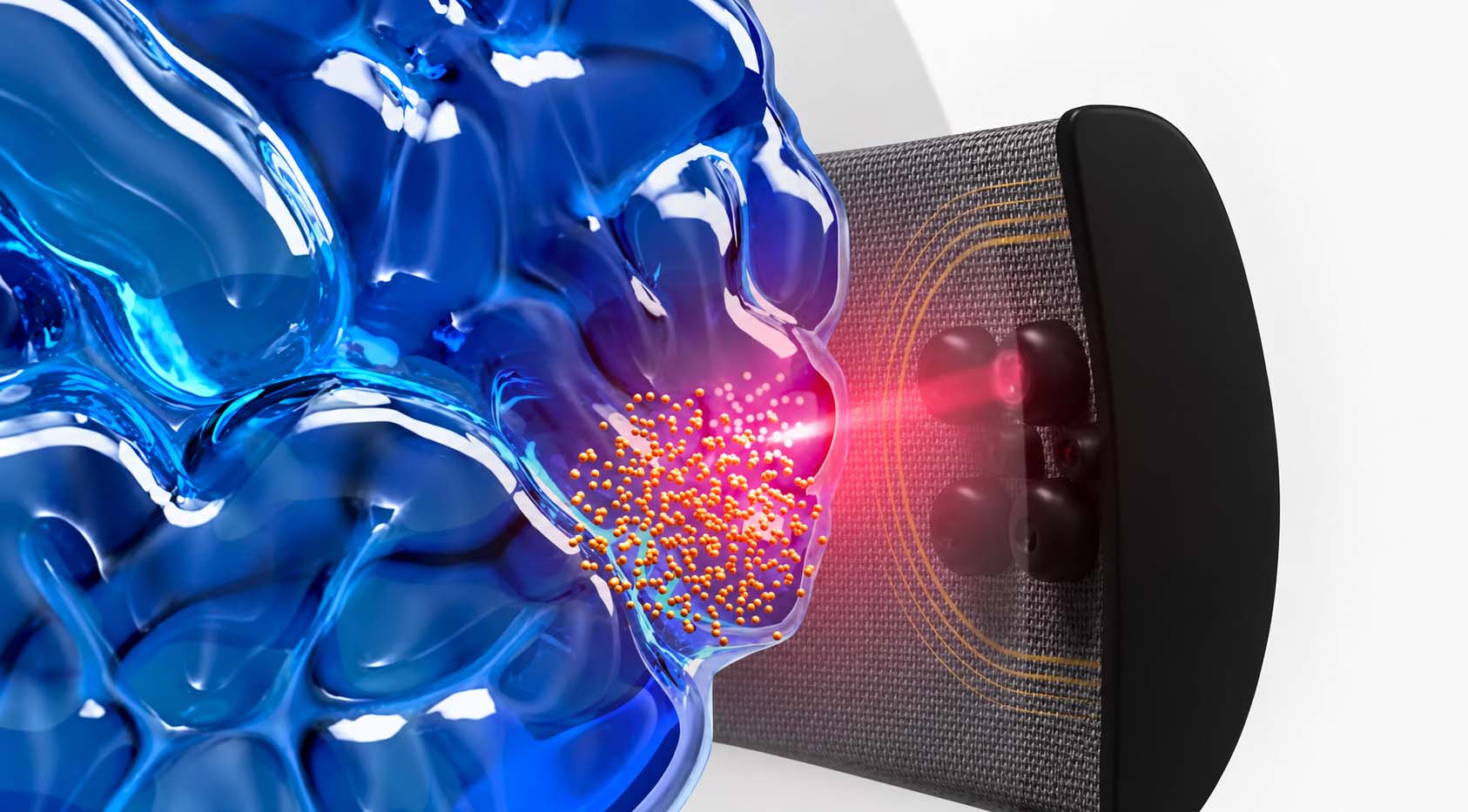
Neuro ID can be used with EEG-enabled wearables, such as smart glasses or earbuds, that integrate a small number of dry EEG sensors. Its software first assesses signal quality, ensuring the recording is sufficiently reliable for authentication.

Machine-learning models, trained on years of EEG recordings across 125 different recording configurations, then extract patterns associated with individual identity while filtering out task-related activity, noise, and hardware differences.
These features are converted into a compact mathematical signature. The raw EEG is briefly used to generate the signature and subsequently discarded. During authentication, this signature is compared against one established during initial enrolment.
Researchers have highlighted the vulnerabilities of static biometrics to increasingly sophisticated spoofing attacks, advocating for more dynamic approaches to authentication. Neuro ID aims to address this by reassessing the signal every 100 milliseconds, enabling continuous verification while the device is worn.
In addition to this continuous sampling, Neuro ID is described as a ‘regenerable’ biometric. According to Semah, if a stored signature is compromised, Neuro ID can generate a new protected signature from the same underlying brain activity, rendering the previous version unusable.
We spoke with Semah about the potential of brain-based authentication and Yneuro’s vision for broad-scale adoption.
How stable is the EEG identity signal across changes in stress, fatigue, illness, medication, or age?
That is the question we built the company around. EEG is alive. It moves with fatigue, stress, caffeine, and age. That variability is why EEG identity stayed in the lab for twenty years.
Our models focus on what stays constant in you across sessions, days, tasks, and devices. A tired you and a rested you are still the same person to Neuro ID.
The signature also evolves. Rather than relying on a single moment, Neuro ID combines readings over time. The best readings refresh the signature, so it keeps up with you over the years.
Illness and medication follow the same logic. We keep what belongs to identity and let the rest go. That dynamic part is also how we know a signal is live.
What happens when the EEG signal is insufficient for authentication? Is there a fallback?
Yes, and it is built in. We never force a decision the signal cannot justify. If confidence drops, Neuro ID does not guess. It asks for a second factor, as a bank would.
First, Neuro ID checks if the signal is good enough. If a sensor loses contact for a moment, it pauses, waits for contact to return, or hands authentication over to something you already use, such as a passkey, a PIN, or your phone. It plugs into existing identity systems. The bank or app never sees the signal, only a yes or a no. Our customers set the rules.
Continuous authentication also helps. A one-time check gets one shot. Neuro ID gets a new shot every 100 milliseconds, and confidence builds over time. A noisy second is just a pause.
Why would EEG device manufacturers outsource authentication rather than develop it themselves?
Identity is both a science problem and a data problem. Getting from a few dry sensors to a security-grade decision took us years of work, drawing on EEG recordings from more than 108,000 people. We also have six international patent families. Nobody bolts that onto a pair of glasses in an afternoon.
And it has to work everywhere, on your glasses, your earbuds, whatever you put on. A bank will not integrate a neural identity system for every brand of glasses. It needs a single layer that works on every device its customers own. That is how Bluetooth and payments became shared layers.
Nobody else does this. Neuro ID is the world’s first neural authentication technology.
Where are you seeing stronger demand today?
The strongest pull today comes from high-security identity. Government, defense, finance, and critical infrastructure. These customers are living the deepfake crisis right now, and they value what only neural authentication offers. Hands-free, camera-free, continuous proof that a live and authorized human is there. A soldier, a surgeon, or a field technician cannot stop to type a code. We are signing our first contracts there.
Consumer is where it gets big. Over 400 million earbuds ship every year, and smart glasses grew 167% in a single quarter. Every one of them will need authentication that just happens.
Security pulls first. Consumer scales. Fingerprint recognition took the same road, from the government to the phone in your pocket.
Neuro ID’s longer-term success in consumer markets will depend on the wider adoption of EEG-enabled devices. While technology companies are increasingly exploring the integration of neural sensors into everyday wearables, these devices are not yet mainstream.
Building trust will be equally important. As public awareness of neural data privacy grows, Yneuro will need to demonstrate that its authentication system protects sensitive information without compromising security. Semah recognises this, emphasising that Neuro ID discards raw EEG recordings and retains only the derived signature.
Signal quality also presents a challenge. Neuro ID’s performance will depend on the quality of EEG recordings across different hardware configurations. Previous research into EEG-based authentication used an average of 33 electrodes, far more than would realistically fit into glasses or earbuds.
Although research has demonstrated the feasibility of brainprint recognition using as little as a single EEG channel, the evidence base remains relatively limited.
Yneuro has sought to address hardware variability by training its models across 125 different recording configurations. An important test will be how Neuro ID generalises to new devices with different electrode placements and sensor counts.
Semah is confident Yneuro has overcome the fundamental scientific barriers, with its focus now shifting towards commercial deployment. He identifies the development of industry standards as an important next step, as neural biometrics lack the established certification frameworks of facial and fingerprint recognition.
Alongside these standardisation efforts, Yneuro is contributing to the development of open EEG benchmarks through the NeurIPS 2026 EEG/EMG Foundation Challenge. The competition is held to advance foundation models capable of learning from neural and muscular signals.
Produced with support from

%20copy.jpg)



.svg)

