

It takes a village to raise a child. It also takes a village to care for a person living with Alzheimer’s disease. An estimated 7.4 million Americans aged 65 and older are living with Alzheimer’s, and that number is expected to keep rising. After decades of drug development and tens of billions in private clinical-stage R&D, Alzheimer’s remains one of medicine’s hardest treatment markets. Neurotechnology is now asking whether brain network activity itself can become a therapeutic target.
Cognito Therapeutics, a Cambridge-based company founded out of MIT research from Ed Boyden and Li-Huei Tsai, is taking a sensory stimulation approach to Alzheimer’s. Its Spectris platform uses synchronized light and audio stimulation at 40Hz to evoke gamma-frequency brain activity. Early feasibility data suggest potential effects on cognition, function, and brain atrophy, but the larger test now comes from Cognito’s pivotal HOPE trial.
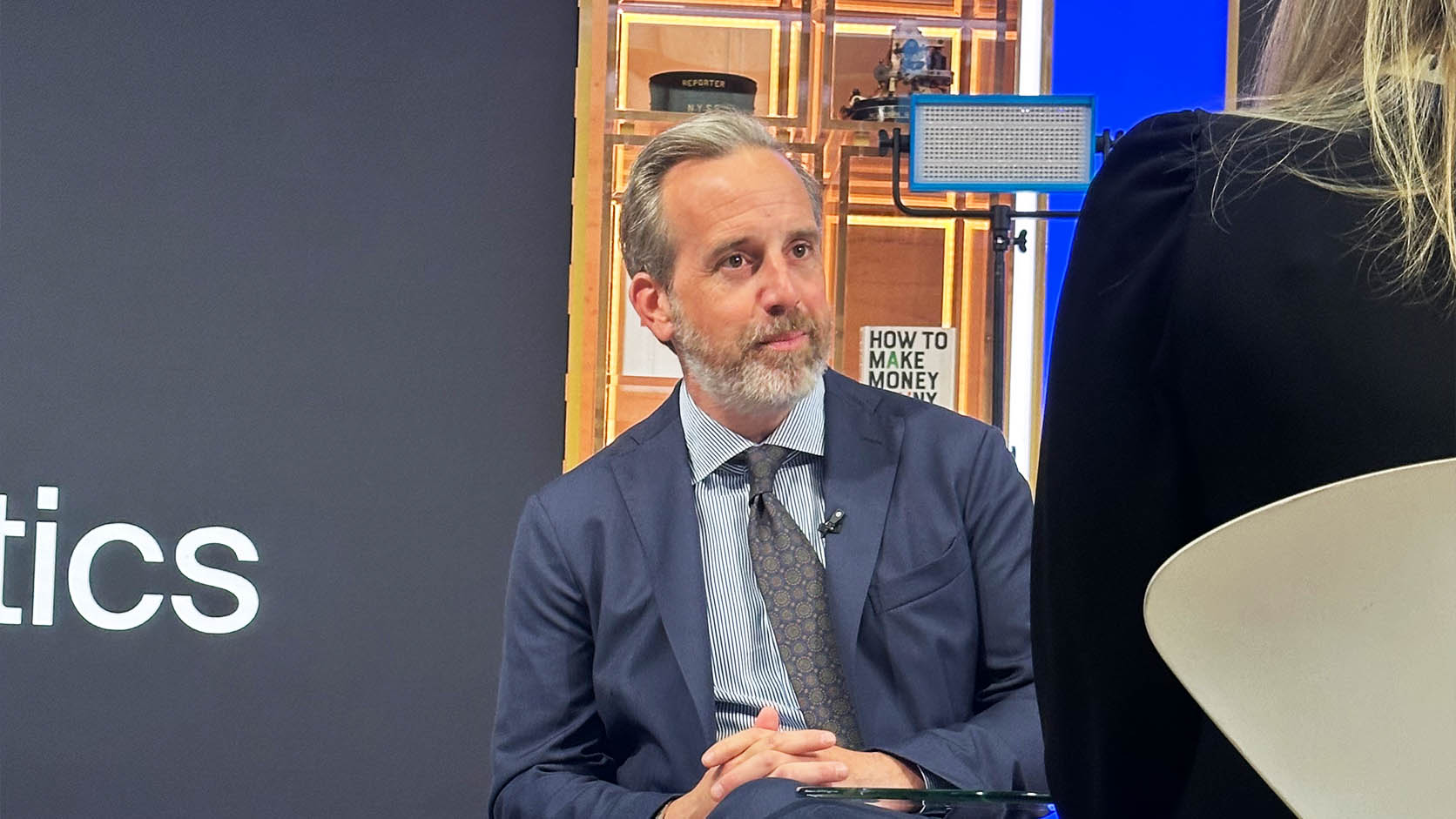
Christian Howell was appointed CEO of Cognito in August 2024. He joined at a crucial moment for the company. Since then, Cognito has closed a $105 million Series C, launched Brain Health Collaboratory partnerships with WVU Rockefeller Neuroscience Institute and Ochsner Health, and advanced toward the readout of its pivotal HOPE trial, expected this August. Neurofounders spoke with Howell about Spectris, the evidentiary challenge in slowing neurodegeneration, and the future of a more scalable brain health platform.
How do you usually describe what Cognito is doing?
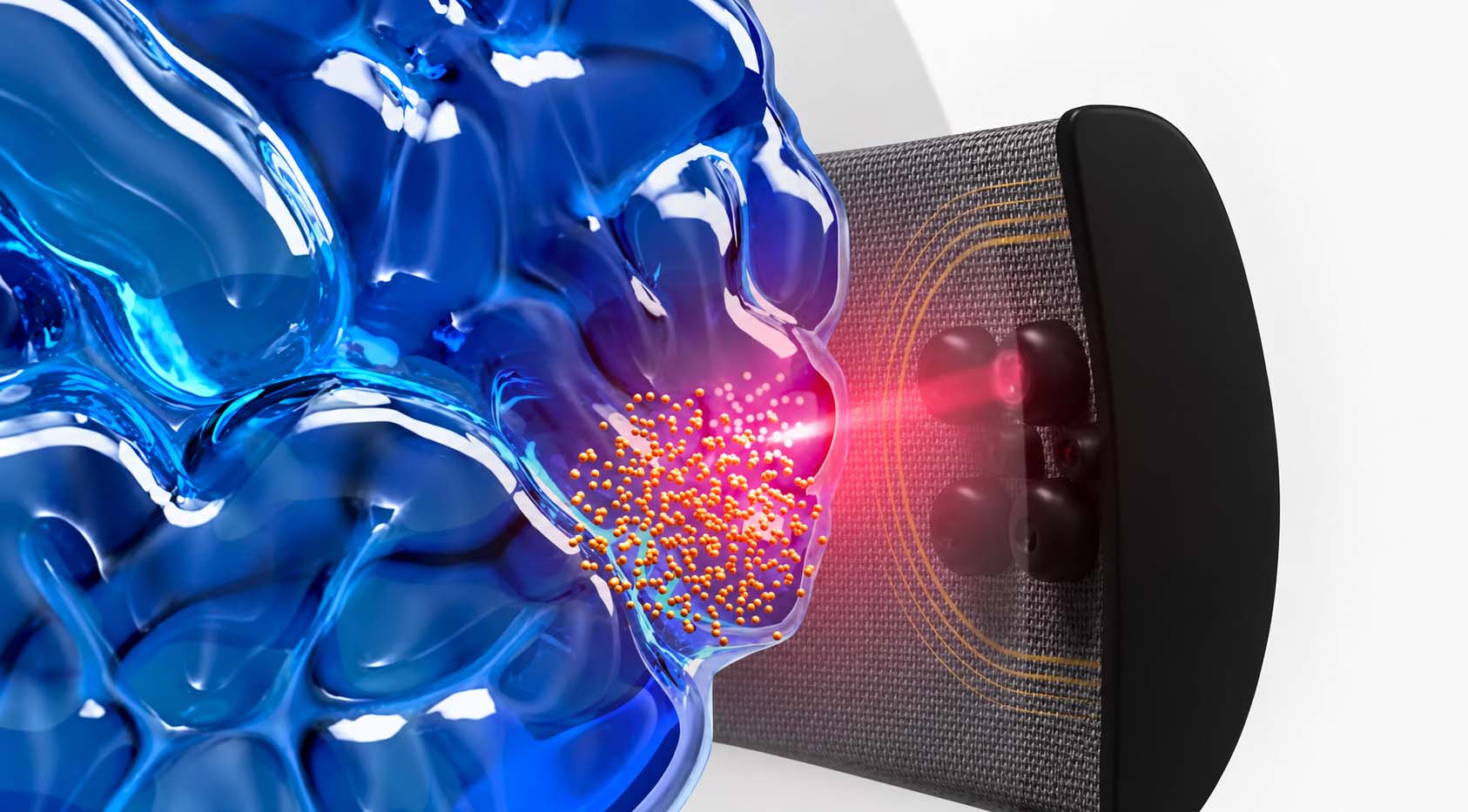
We see ourselves as a neurotechnology company, but what we’re doing is coordinating brain activity to drive the brain’s own biology to preserve brain structure and function. And that’s where it feels distinct from neuromodulation. We use sensory stimulation to coordinate neural activity, and that neural activity drives very specific endogenous biology that is most important to the preservation of the brain’s ability to function.
What is the science behind the Spectris platform?
They learned at MIT that the brain oscillates at various levels, and when it’s most active at gamma, which is 40 hertz and above, it produces biology that is specific to preserving brain structure and function.
They then asked the question: how could we stimulate the brain to that level and hold it there? What they discovered was that if you stimulated the optic nerve at 40 hertz using light at 40 hertz, and if you stimulated the vestibulocochlear nerve at 40 hertz using sound at 40 hertz, they would reciprocate those oscillations to the visual and auditory cortices. And then you had this global response in the brain.
Then the question was asked: which patients would benefit most from driving gamma oscillations to stimulate synaptic proteins, myelin, glymphatic function, and vasoactivity?
When you look across the neurodegenerative platform, the Alzheimer’s population is one where the presence of amyloid plaques and tau proteins has really caused a loss of network connectivity. Because the brain can’t drive that activity, it can’t drive that biology to preserve the structure and function, which is why you see the loss of cognition and independence. And so, we decided to test and study the therapy in that population.
-p-3200.webp)
Neurodegenerative disease is difficult to study because relevant changes unfold over long timescales. Which measures do you find most robust for detecting an effect?
It is an interesting question. This is where Cognito is much more like a biotech. We are not just researching clinical effects, like the preservation of cognition or function, but also biomarkers and proteomics.
We look at biomarkers like volumetric MRI to see if we’re preserving brain volume. We look at things like EEG to see if we’re preserving what’s called the theta-alpha ratio, which is maintaining the activity of the brain. We’re looking at robust proteomics and exploring which proteins are expressed when the brain is activated.
So far, we’re seeing not just synaptic and myelin proteins, but very specific peptides like NRN1, which are incredibly important for the preservation of cognition, BDNF, and even peptides like vasoactive intestinal peptide.
Cognito’s founding scientists deserve a great deal of credit for developing such a novel technology while having to meet two standards. They had to meet the evidentiary, regulatory, and safety standards of a medical device. But they also had to meet the pre-market evidentiary standard of a biotech. So that’s why we invest so heavily in pre-market research.
This week, we had the last participant in our HOPE study finish their study. They will have a 30-day follow-on, and then we’ll do our database lock. But we did a 673-participant, 12-month, sham-controlled randomized trial measuring the preservation of cognition and function in mild to moderate Alzheimer’s patients. And we did it across 70 sites in the United States. That size of a De Novo study, as far as we can tell, has never been done before.
You raised a sizable round earlier this year. Why does Cognito need that level of funding at this stage?
I think people look at it and they think, boy, it feels like a lot of money for a medtech company. But if you look at it through the lens of a biotech, you would say that’s actually less than what we would normally raise to do a Phase III study.
We knew that Spectris was going to be compared against disease-modifying therapies that have come out over the last couple of years in the monoclonal antibodies. Lilly launched a product called donanemab, and Biogen and Eisai launched a product called lecanemab. We knew that was going to be the standard which we were going to be held against, so we wanted to make sure that we came with enough clinical evidence to support this being thought of as a biology-modifying therapy.
But also, I’m a big believer that you can’t think about data and evidence episodically. And I think this is something that’s kind of plagued the medical device business. We think about what data and evidence we need to get through the regulators. What data we then need to get through CMS. And then you get the valley of death, because you haven’t thought about those standards early on.
We really try to think about how we can create a robust and dexterous evidence base early, so that when we come to market, we are able to meet the evidentiary burden of as many stakeholders as possible.
Are pharmacological approaches competitors, or complements?
Candidly, I don’t think there is competition. And I don’t say that with hubris. What I mean is that there has never been a non-invasive, at-home therapy that is driving the activity of the brain to drive endogenous biology.
But I also think that we should always be thinking of attacking these diseases in combination therapies. We don’t think about taking on cancer with just chemotherapy or just immunotherapy; we think about it in sort of combination. I think the same has to be true in neurodegenerative diseases.
Most of the current discussion is about slowing disease progression. Do you think it could one day be possible to stop progression entirely?
The honest answer is that we don’t know. What we hope to learn coming out of the HOPE readout is that we can dramatically slow the progression of the disease.
Alzheimer’s progresses more rapidly as the disease progresses. We are measuring it when it’s very aggressive. The question is, if you were to stimulate the brain and drive this biology in advance of an Alzheimer’s diagnosis, could you create a protective environment where, even in the presence of that pathology, the brain would restore and retain its cognitive structure and function? Our hypothesis is yes, but it must be tested.
What I think is most exciting about Cognito is that we have no interest in being a single-asset therapeutic company. Our goal is to be the largest brain health company in the world.
And we believe that there’s an opportunity to bring this technology not just to Alzheimer’s patients and families, but to patients and families suffering from other neurodegenerative conditions like Parkinson’s, MS, and Huntington’s disease, and patients and families who have suffered more neurorestorative issues like stroke, traumatic brain injury, or concussion.
We are climbing Everest by beginning in Alzheimer’s, and we hope that soon we can begin to work with our partners and do research looking at all these other potential indications.
Most of our conversation has been about evidence, but another major challenge is creating a product tailored to this patient population. How are you addressing that?
Once we understood the technology and the science, we began to understand the UX. We spent a lot of time with Alzheimer’s patients, caregivers and families, and neurologists to understand what could be adopted by this community. We knew it had to be intuitive. It had to be simple. It had to be easily integrated into their day.
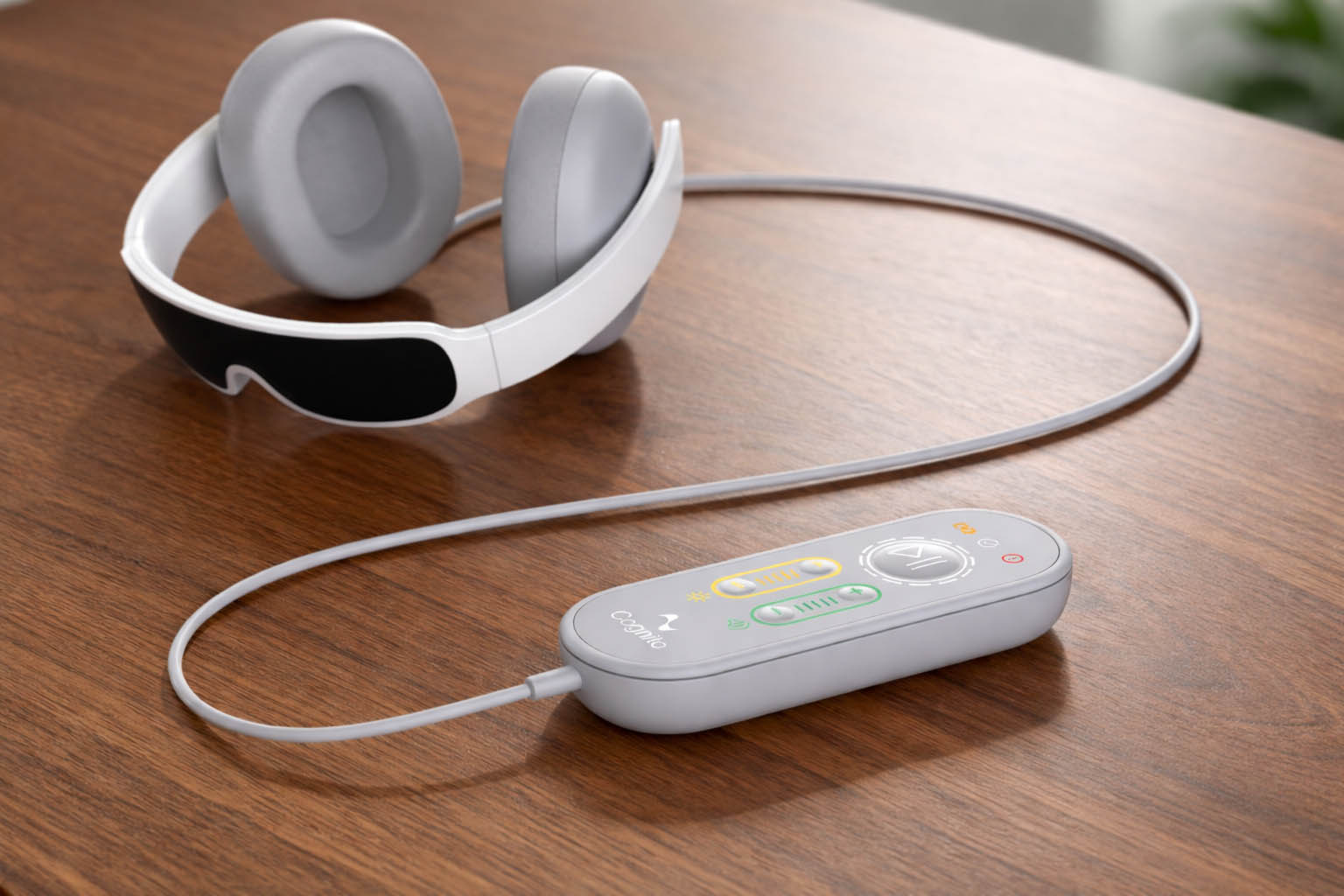
That led to the design of Spectris. It is self-guided. It’s very simple to turn on. And it gives voice commands that let participants know where they are in their treatment.
The other thing that we’ve done, which I think is important, is bringing the patient into the clinic and doing what we call a tolerance and gamma response. We give them the therapy and ensure that they can tolerate the light and sound. 98% of people have no issue. But some, as they get into later-stage Alzheimer’s, struggle sitting down for an hour at a time.
And then we turn the therapy on under an EEG, confirming that we get a gamma response and that the response holds for an hour. About 93% of our participants have been able to get a gamma response. For the 7% that have not, it is mostly due to hearing loss because we haven’t permitted hearing aids in the studies. But that’s something that can be relatively easily solved in the post-market.
The participants go home knowing that they are responding. And so, when we talk to and survey participants coming out of the study, what we hear from them is, “I feel empowered. I feel like I’m taking control of my disease. I know that I have a therapy in my home that my brain is responding to.”
And so, we’ve seen very good compliance in the studies. In our six-month feasibility study, we saw compliance of 85%, meaning 85% of participants used the device at least six days a week, at least 50 minutes a day. In the larger study, where we asked participants to use it every day for a year, we’re above 80% compliance. That is remarkable for an at-home daily hour therapy.
Can you explain the recent partnerships with Ochsner and WVU, and the work on a Brain Health Index?
We know through an enormous amount of preclinical and ongoing clinical research that there is broad potential for Spectris to be impactful in a preventative way. And we could not seize that moment, meeting the massive demand in Alzheimer’s and meeting the wider potential, unless we started doing collaborative partnerships with leading health systems.
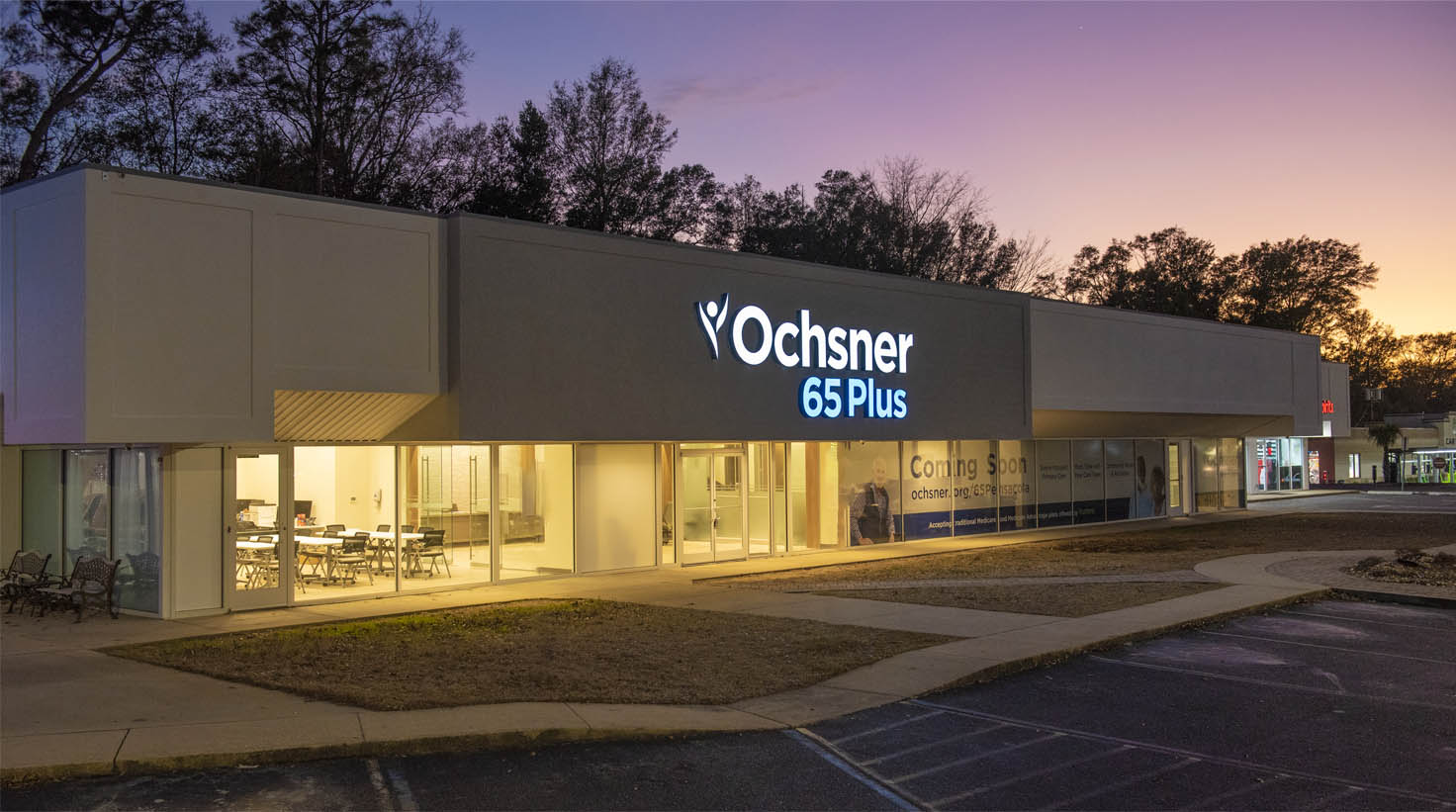
So far, we have announced two, one with the Rockefeller Neuroscience Institute at WVU Medicine, and then one with the Neuroscience Institute at Ochsner.
The purpose of these is to really explore a range of things. How do we do Alzheimer’s right? How do we collect data to inform where to go next? How do we think about translation? What other biomarkers are we seeing? How do we think about delivery modality?
The other thing I want to think about is the scores that increasingly help us keep track of our health. We want to think about something similar for the brain. So, thinking about how to take feedback from EEG, proteomics, patient-reported data, and other wearables to create a Brain Health Index that can show how you are maintaining the health of your brain. That is where we’ve kicked off at Ochsner specifically.
What does success look like over the next year, and over the next five?
Success in the next year is much more empirical than success in the next five. We will database lock the study in the next month. Then in late August, our expectation is to release topline to the world.
We believe this to be a truly breakthrough moment in not just Alzheimer’s, not just brain health, but really health broadly. Showing that we can use physics to drive biology safely to modify the structure and function of our brains.
We want to make sure that we are aligned with the regulators. We have worked closely with our review team to make sure that we bring a submission in early 2027 that gives the FDA confidence to give us an approval, which we hope to receive by mid-2027.
But the thing that keeps me up at night is not the study or the FDA. The thing that keeps me up is meeting the moment and balancing this urgency with building something durable.
There are 7 million people in the United States who we expect to be under our label and who do not have access to a therapy. There is great urgency for those people to gain access to something that can help. Yet it is not just about meeting the moment for those patients but also building the platform in a way where it’s cost-effective and widely accessible.
The hardest part of my job is balancing the altitude sickness between the potential of this technology and the honest-to-God work that needs to be done with CMS, payers, and hospital systems to build the infrastructure necessary to get this to patients. Because the numbers are staggering.
Seven million people in the United States live with Alzheimer’s. Fifteen million people have mild cognitive impairment. Twelve million of those people are undiagnosed. Ninety million people in the United States are within one relationship to someone with Alzheimer’s. It impacts women twice as often as men. It impacts people of color twice as often as it does white Americans. This disease is preying on the poor and the disadvantaged in this country.
So, I am desperate to figure out a way to build an infrastructure that allows us to get it to those patients. And I have to balance the urgency of those patients with building a system that allows it to get to them reliably, cost-effectively, and durably.
Produced with support from









.svg)

