Following a $250 million Series D, Precision Neuroscience announced the first international expansion of its clinical research network, signing a two-year memorandum of understanding with Cleveland Clinic Abu Dhabi (CCAD). The agreement, supported by Abu Dhabi’s Department of Health, brings the company’s Layer 7 interface into a new regulatory and clinical setting.
The Abu Dhabi study follows the same temporary-implant protocol Precision runs at its U.S. sites and will assess Layer 7 for mapping and monitoring brain activity. The agreement also covers joint technology development, training, and knowledge exchange. Jayme Strauss, Chief Clinical Officer at Precision, calls the move a step towards building a clinical network beyond the U.S.
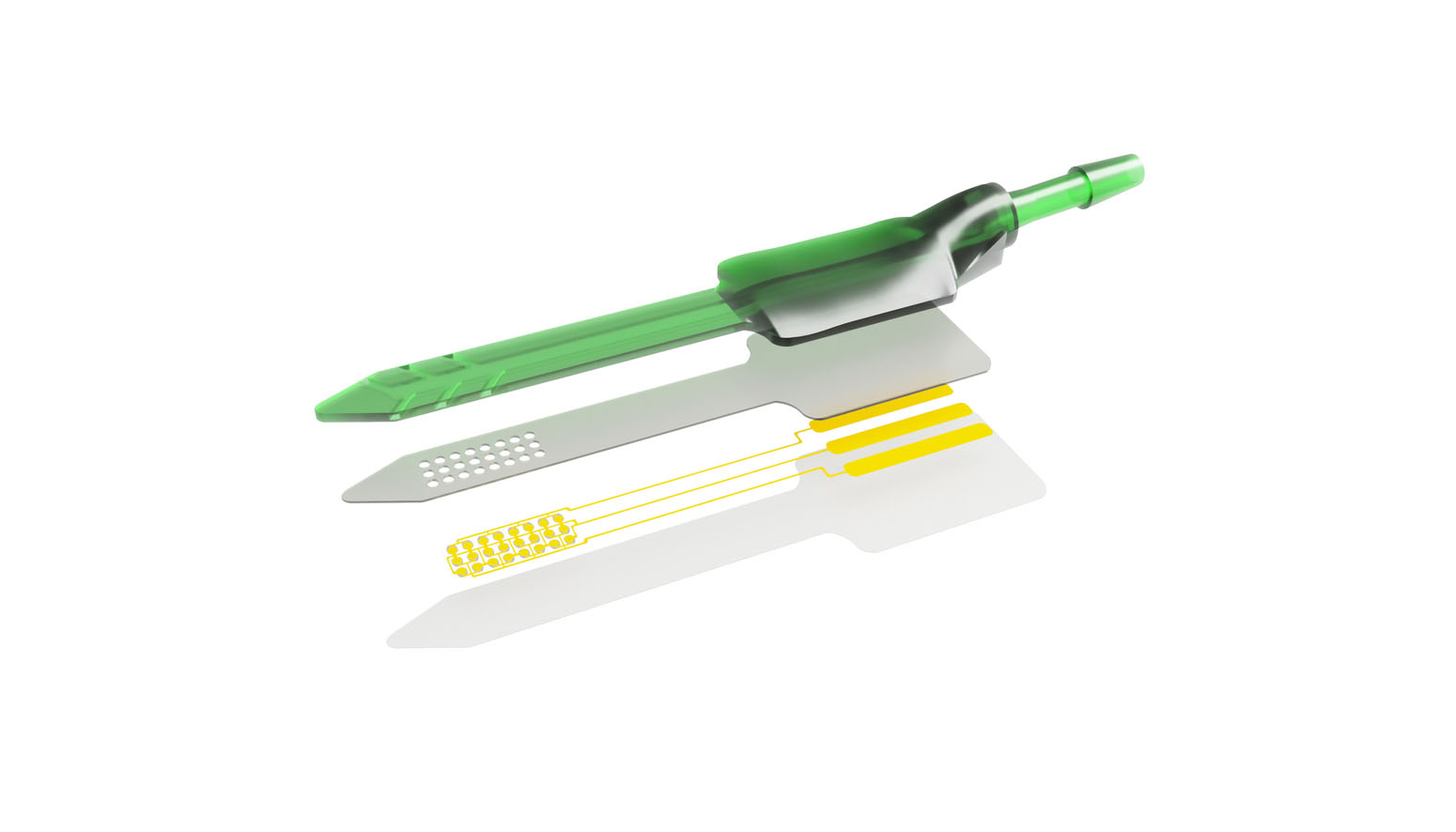
Layer 7 is Precision’s cortical surface electrode. The interface’s 1,024 electrodes sit across an area the size of a postage stamp, reading electrical signals from the cortex and converting them to digital outputs in real time. The FDA cleared the device in 2025 to monitor brain activity during temporary implantation of up to 30 days.
That temporary-implant protocol will now be tested abroad, with Precision specifically looking at how the device, surgery, and training hold up outside a single country’s health system. “For a device that is meant to serve patients worldwide, that is evidence too,” Strauss says.
Precision chose CCAD for its neurosurgical expertise and neurocritical care facilities, with Abu Dhabi’s Department of Health helping the company navigate local regulatory requirements. Dr. Florian Roser, Chief Medical Officer at CCAD, said the hospital is “in a strong position for this research collaboration.”
The Abu Dhabi study uses the same device and specifications as Precision’s U.S. sites, Strauss mentions. Eligible participants are adults already undergoing brain surgery. In one cohort, Layer 7 is in place during just the surgery itself. For another, it remains in place through a hospital monitoring stay of up to 30 days, before being removed.
Strauss says Precision is actively working towards a chronic implant study.
Chronic implants are considered Class III devices, falling inside the FDA’s highest-risk category and therefore requiring a much larger evidence package. There is “no predicate and no playbook for this,” Strauss says. Precision’s temporary studies add to the body of evidence on safety and intent-decoding performance. But long-term performance, Strauss says, remains an open question for future studies.
Neuralink is currently studying that long-term performance, using its N1 chronic implant, in its UAE-PRIME trial at CCAD. Announced in May 2025 in collaboration with Abu Dhabi’s Department of Health, the programme takes a similar shape to Precision’s move. Strauss declined to comment on other companies’ programmes but says it is “a good thing for patients when leading hospitals invest in this field.”
The BCI partnerships sit within a broader effort to build a life-sciences industry around Abu Dhabi’s healthcare system. Its HELM initiative, launched in 2025, brings together the emirate’s health regulator and economic development agencies to support research, manufacturing and commercialisation. Alongside the clinical partnerships, there are financial ties. Mubadala Capital participated in Precision’s recent $250 million Series D.
Similar connections are emerging across consumer health technology. Mubadala’s $75 million investment in WHOOP accompanies plans for a UAE office and local research, while Oura, Eight Sleep and Ultrahuman have all agreed projects combining wearable or sleep measurements with clinical and population health data.
For Strauss, success in Abu Dhabi would mean three things. First, CCAD’s own teams would perform procedures safely and well, generating evidence that stands alongside U.S. data. Second, a trained group of surgeons and clinicians would be able to support a second Gulf site. Third, the company would have a clearer picture of what it takes to bring the technology to patients outside the U.S. health system. Reaching all three would bring Precision “one step closer to restoring independence for people living with severe paralysis.”
Produced with support from