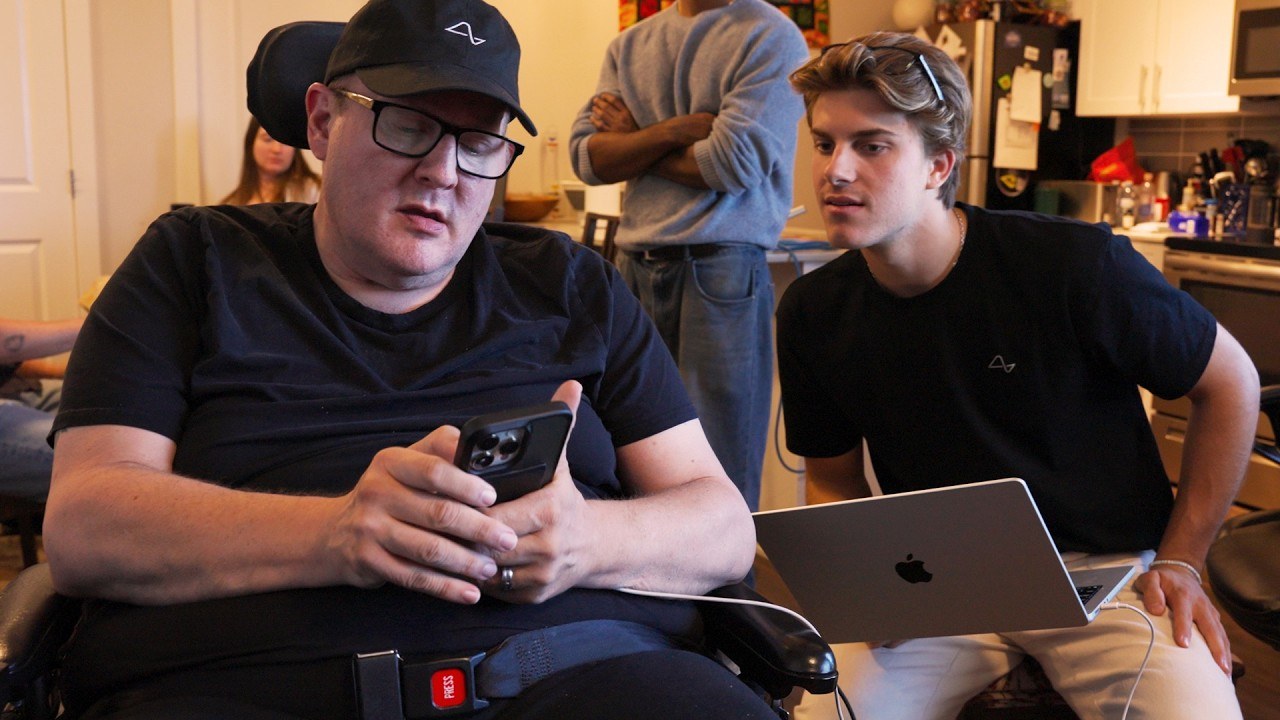
Last September, Neuralink shared an emotional behind-the-scenes video from its VOICE trial, in which Terry uses the company's N1 brain implant to communicate with his wife after losing much of his ability to speak due to ALS. Neuralink has now shared its first quantitative results from the trial, reporting that one participant reached a speech-decoding speed of 75 words per minute.
The findings were presented on October 28 at the annual Northeast ALS Consortium meeting. The 75-word-per-minute result was achieved within the participant's first week of use, with a 5.8% word error rate on a vocabulary of 125,000 words. Beyond the clinical results, Neuralink also detailed a 72-hour engineering sprint focused on improving the usability of its speech interface.
Neuralink's VOICE trial (NCT07224256) kicked off October last year at UT Southwestern Medical Center. The early-feasibility study looks at restoring communication in people with severe speech impairments caused by conditions such as ALS, spinal cord injury, and stroke. VOICE uses Neuralink's N1 implant, also used in its motor-decoding trials, and plans to enroll six participants, with safety as its primary outcome.
The newly reported results provide the first quantitative benchmark for the system. At 75 WPM, the participant achieved roughly half the speed of ordinary conversation, which typically runs at around 150 WPM. By comparison, a 2024 study measured an average of just 8.1 WPM using eye-gaze typing, a common communication method for people with ALS.
Neuralink's 5.8% word error rate corresponds to approximately six incorrectly decoded words per 100, while its 125,000-word vocabulary allows for broad communication beyond predefined commands.
Neuralink's results compare favorably with earlier speech BCI studies. In 2023, Stanford researchers achieved 62 WPM with a 23.8% word error rate on the same vocabulary size. More recently, a UC Davis study demonstrated sustained home use over nearly two years, averaging 56 WPM with over 99% accuracy in separate controlled testing.
Most speech BCIs, including Neuralink's, decode attempted speech by recording neural activity associated with the movements involved in speaking. Researchers are also investigating inner speech, where users silently imagine speaking without attempting to articulate words.
In 2025, Stanford researchers demonstrated real-time inner speech decoding in people with paralysis, achieving word error rates of 26-54% on a 125,000-word vocabulary. The approach could reduce the effort required to communicate, although is far less developed than attempted speech. Neuralink competitor Paradromics has already indicated it is investigating both forms of speech.
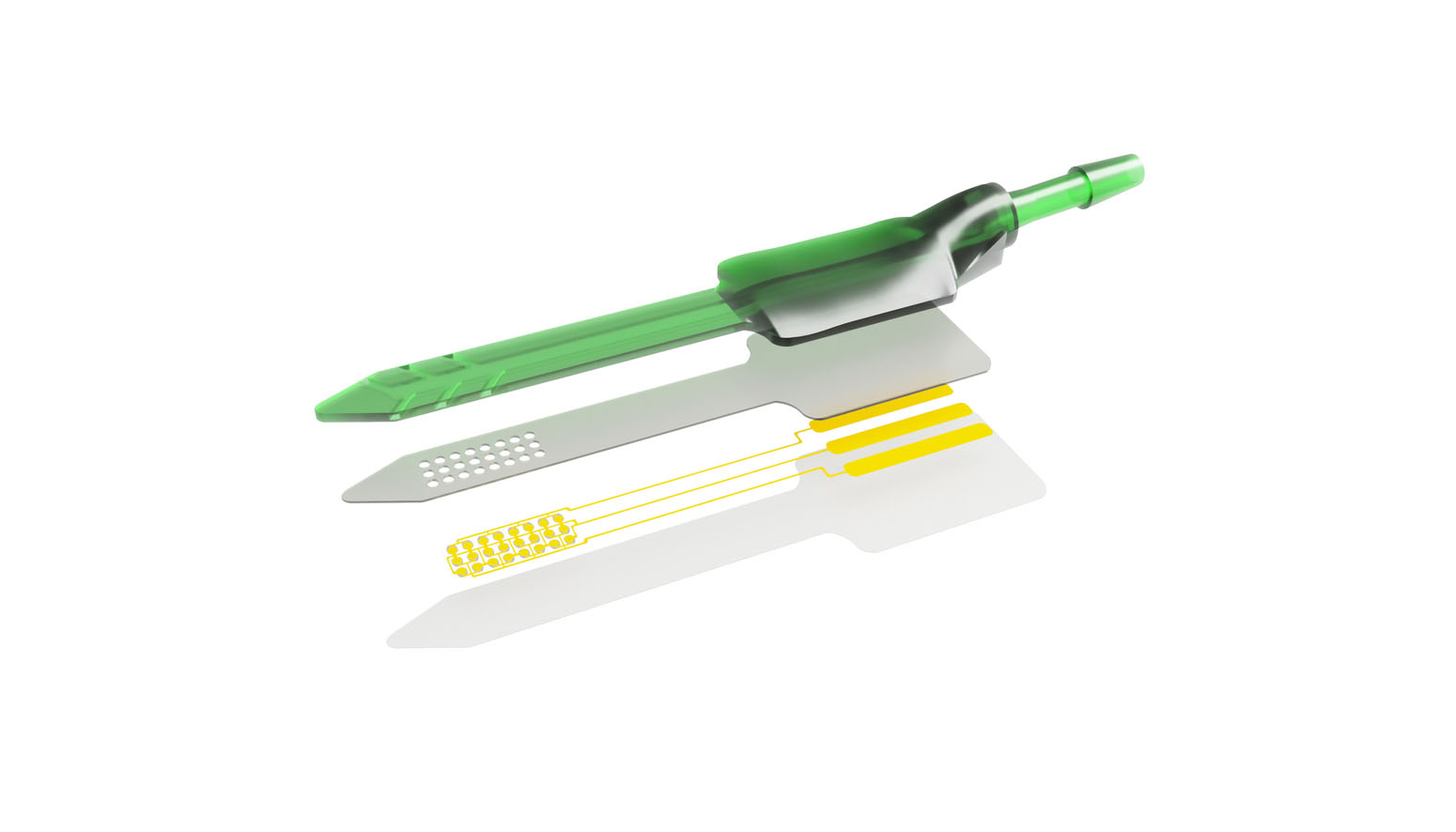
In VOICE, Neuralink uses the same N1 implant platform as in its motor-control trials, with electrode threads inserted into the cortex using its R1 surgical robot. The recording location differs depending on whether the system targets movement or speech.
Neuralink has also been advancing the surgical procedure. In June, the company reported its first transdural implantation, inserting electrode threads directly through the brain's protective dura mater without cutting it open.
Beyond decoding performance, Neuralink is working on making its implant easier to use. During a 72-hour engineering sprint, engineers developed a system that automatically detects when a user intends to speak, removing the need to manually activate the decoder. They also introduced real-time neural activity visualizations, allowing participants to explore which attempted speaking strategies produce stronger signals.
Much of the sprint focused on Bloom, Neuralink's mobile speech application. Engineers demonstrated integration with iPhone calls, routing synthesized speech directly into the call's audio stream. They also developed an iOS keyboard for dictation across applications, faster tools for correcting decoding errors, and a lock-screen shortcut for accessing Bloom.
Neuralink also prototyped an integration with Elon Musk’s AI assistant, Grok, allowing users to activate an AI agent by attempting to say "Hey Neuralink" followed by a task. The agent could then execute actions on the computer, extending speech decoding beyond communication into device control.
Produced with support from