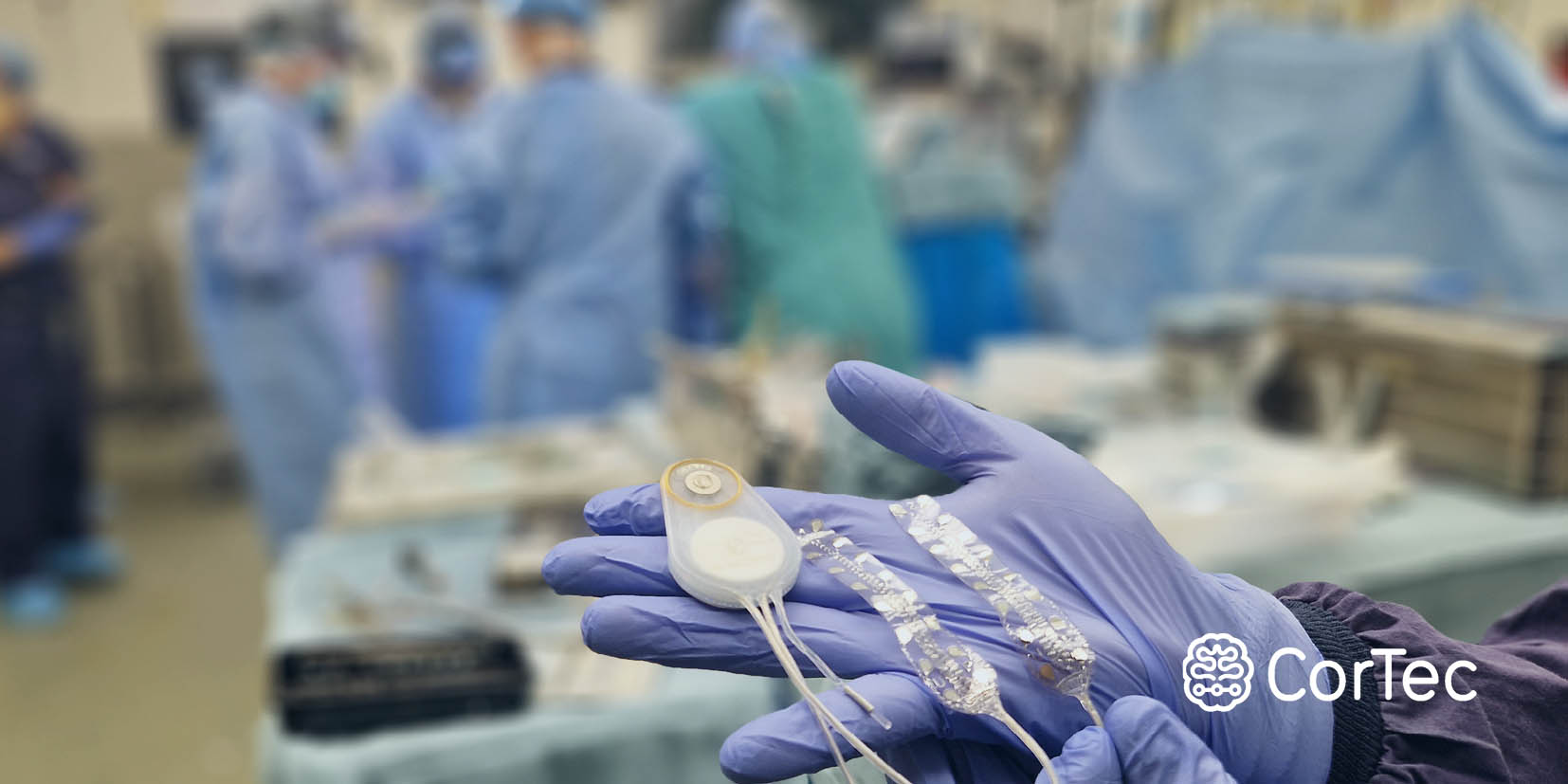

Brain-computer interfaces are increasingly popping up in patient demonstrations. This month, Precision Neuroscience added a new chapter to that story. Neurosurgical patients without paralysis used its temporary Layer 7 interface to control a cursor, navigate a smartphone and play video games through thought alone, without electrodes penetrating brain tissue. The demonstration connected Precision’s established surgical platform with its longer-term ambitions in assistive BCI.
Founded in 2021 by Michael Mager and Benjamin Rapoport, the New York-based company was built around the premise that cortical access does not require penetrating the brain. Its ECoG array rests on the cortical surface and records activity without penetrating tissue. Precision has already raised $180 million, used Layer 7 in almost 100 patients across more than 15 hospital partners, and secured FDA 510(k) clearance for temporary cortical monitoring. In January, it partnered with Medtronic to integrate the interface with StealthStation, creating a route into operating-room workflows across US hospitals.

We spoke with Precision’s Chief Clinical Officer, Jayme Strauss, about what it takes to turn those milestones into a scalable medical-device business. The conversation covered the temporary mapping product as a clinical data engine and adoption pathway, the role of Medtronic in reducing workflow friction, and the manufacturing, reimbursement, and clinical evidence required to move towards a broad platform for people with severe paralysis.
What has Precision focused on since 510(k) FDA clearance?
Since clearance, our focus has been on expanding clinical use of Layer 7 while building the infrastructure needed to bring the technology to more patients safely and at scale.
Clinically, we are approaching 100 patients across multiple health systems. Every procedure teaches us how the technology performs across different surgeons, operating rooms, and patient profiles. As a nurse, I see that as more than a milestone. It is the clinical experience needed to make the system reliable across real-world settings.
Commercially, the Medtronic partnership is central to that strategy. StealthStation is already used in hundreds of neurosurgical operating rooms. Integrating Layer 7 into that system gives surgeons structural and functional brain data together in real time, without asking them to change how they operate. All of this is building towards a fully implantable system for people with severe paralysis.
How do you see Precision’s path across clinical use cases?
Our immediate focus is restoring independence for people living with severe paralysis. Someone with ALS may remain completely cognitively intact while losing the ability to speak or move. That creates an enormous degree of isolation, both for the individual and for their family.
The work we have done across almost 100 patients is showing us what high-resolution neural recording can achieve in real surgical settings. That experience directly informs the development of communication and device-control applications.
Over time, the platform could extend to conditions such as depression, chronic pain and cognitive disorders, which involve circuits beyond the motor cortex. We believe we have the scientific foundation to pursue those areas seriously, but paralysis is where we are focused today.
What will it take for BCI to become a durable medical device market?
Throughout my career in medtech, I have seen that the gap between a technology working in research and becoming part of clinical care is almost always larger than people expect. I think about that gap in practical terms. Can a nurse use the device for the first time? Can a technician troubleshoot it without an engineer present? Can a family understand what to do at home?
We have shown that BCI works. What the field must demonstrate now is that it also works when the surgeon has not completed 20 procedures, when the care team is using it for the first time, and when it is deployed outside a leading academic centre. That is where durability is proven.
I have also seen technologies fail because nobody used them, rather than because they did not work. Hospitals are stretched, surgeons are busy, and anything that requires a significant change in how people operate faces an adoption problem.
Reimbursement is the other piece, and it must be developed in parallel from the beginning rather than after the device is ready. The process is slow and unglamorous, but it ultimately determines whether the technology reaches the people who need it.
How will the BCI market differentiate as more systems restore device control?
The unmet need in neurological care is large enough for more than one company to contribute. Many people are living with paralysis, ALS, and stroke, with very few meaningful options available today. There is room for multiple approaches.
The market will differentiate on the factors that matter clinically, including safety, reversibility, and whether a technology can move through real health systems at scale.
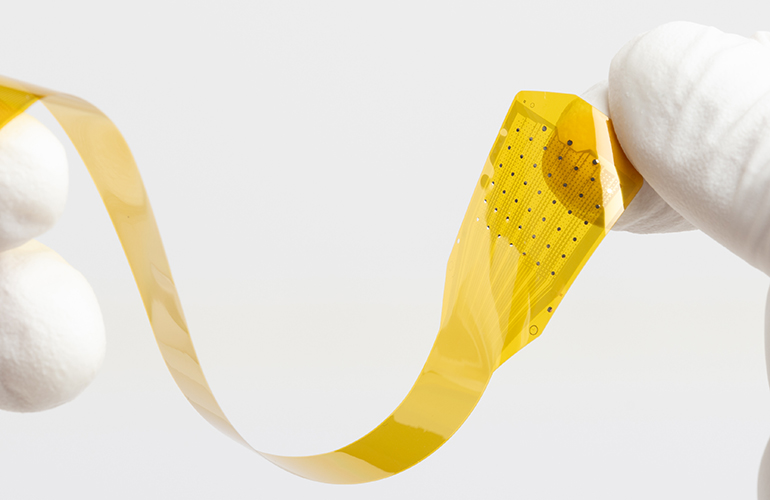
Precision was built on a conviction that much of the field initially rejected. We believed high-performance neural recording did not require penetrating brain tissue, and we have shown that it does not. Layer 7 is non-penetrating, reversible, and 510(k) cleared. Results published in Nature Biomedical Engineering in October 2025 also showed that our surface array can achieve decoding performance previously associated with penetrating systems.
What did the Medtronic partnership change in practical terms?
The Medtronic partnership created a more direct path into clinical use. By integrating Layer 7 with Medtronic’s StealthStation surgical navigation platform, surgeons can access structural and functional brain information together in real time. That gives them a more complete picture during surgery.
StealthStation is already widely used in hospitals, so we are not introducing an entirely separate workflow. Layer 7 integrates into a platform neurosurgeons already know, which makes adoption more practical in clinical settings. It allows us to deliver immediate value in neurosurgery while building familiarity with the technology across hospital systems as the broader platform advances.
How do you keep Precision focused on commercial realities?
I think about the patients I cared for as a nurse. I spent more than a decade in the neuro ICU before moving into medtech, and I have been at the bedside when someone loses the ability to speak. I know what that does to a person and their family. My father-in-law died of ALS, and my uncle has lived with quadriplegia for years. For me, whether this technology reaches the people who need it is never an abstract question.
From a company perspective, Precision owns its manufacturing facility in Addison, Texas. That gives us greater control over how we scale and iterate than we would have if we relied entirely on external manufacturing. We also work directly with the surgeons using our technology and hold ourselves to the evidence standards required by the healthcare system. That is the only credible path to reaching the patients who need it most.
What makes Precision’s neural dataset valuable and defensible?
The dataset we are building is unlike anything that previously existed in this field. We are generating high-resolution neural recordings from real patients in clinical settings, under IRB-approved protocols and with full informed consent. Every patient and recording add to our understanding of how the brain works and how the technology can be improved.
What makes the dataset defensible is its provenance. Generating data like this requires a 510(k)-cleared device, partnerships with leading academic medical centres and years of clinical procedures. That combination took years to build.
But beneath the idea of provenance is something simpler. Every data point comes from a patient who consented to contribute to something beyond their own procedure. That is what gives the dataset meaning and allows it to move the science forward.
The commercial case is real, but I also think about what this data could mean beyond paralysis. Depression, chronic pain, and cognitive disorders involve distributed neural circuits that we have not previously been able to access at this resolution. We are only beginning to understand what that could make possible.
What are the key milestones over the next 18 months, and by 2030?
Over the next 12 to 18 months, I want us to deepen our existing clinical partnerships, add new sites, and continue building evidence that the technology works consistently across hospitals and surgical teams. We are also laying the groundwork for reimbursement and working towards an Early Feasibility Study for the fully implantable device.
That reimbursement work must happen alongside clinical development, rather than after it, as it will ultimately determine whether the technology reaches the people who need it most. Everything we are doing in the operating room today is helping prepare for that next stage.
By 2030, I want us to be well into clinical trials for the fully implantable system, with people living with severe paralysis from ALS, spinal cord injury, or stroke using it to communicate with their families. Progress means making that path real and helping people regain some of the independence and autonomy they have lost.
.svg)








%20copy.jpg)