SpaceX just gave Elon Musk his second major public-market deep tech story. The company raised $75 billion at a reported $1.77 trillion valuation, going into the records as the largest IPO in history. SpaceX follows the playbook seen before at Tesla, where Musk turns a capital-intensive hardware company into a publicly traded millionaire-making machine. But while most attention is now on Musk’s public companies, Tesla and SpaceX, there has also been strong movement at Neuralink.
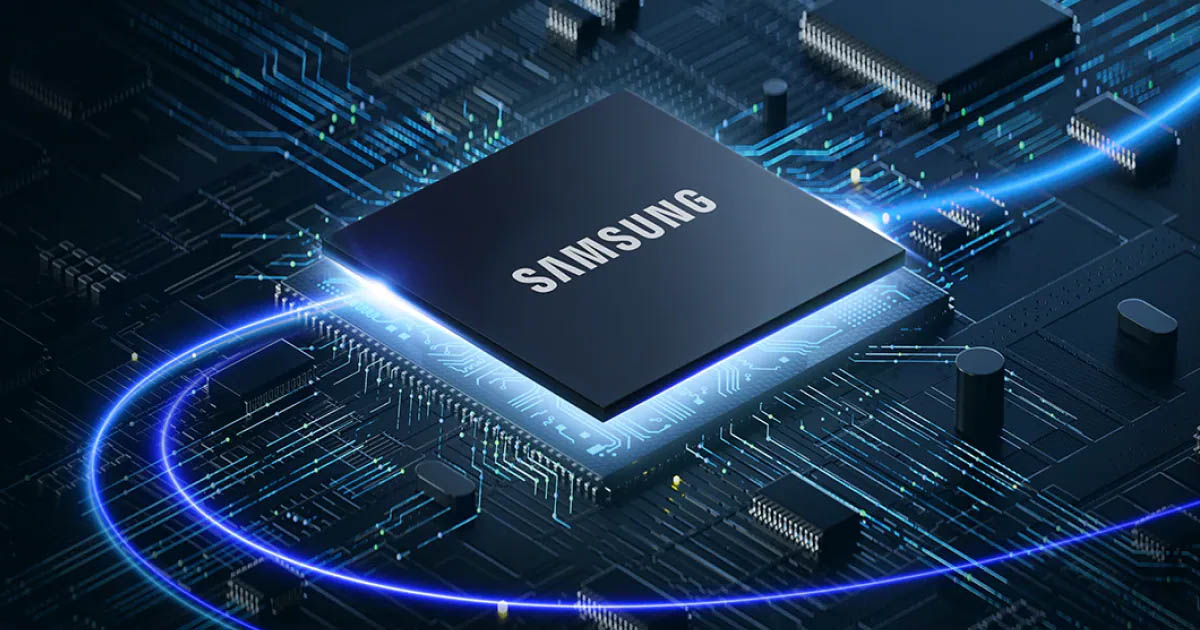
According to Korean reporting, Samsung has begun work on Neuralink’s fourth-generation implant chip, the custom processor used inside its brain-computer interface systems. Test chips are expected in 2027, with possible mass production later that year. The report follows Samsung’s $16.5 billion Tesla deal to produce the company’s next-generation chips, and comes as Neuralink and SpaceX expand their own manufacturing footprint in Austin.
According to Hankyung, Samsung Electronics’ foundry division has been developing Neuralink’s fourth-generation chip since late last year. The chip is reportedly being built on Samsung Foundry’s 4nm process and is designed for use inside Neuralink’s brain-computer interface platform. Test chips are expected to ship in the first half of 2027, with mass production possible in the second half of the year. The report frames it as Samsung’s first Neuralink order. Neuralink is believed to have worked mainly with TSMC on earlier chips.
The Samsung deal follows a larger Tesla agreement last year. In July 2025, Tesla signed a $16.5 billion chip supply deal with Samsung running through 2033. Musk said Samsung’s Texas factory would manufacture Tesla’s next-generation AI6 chip, which is expected to support future self-driving and robotics systems.
The deal comes as Korea seeks to play a larger role in the neurotech ecosystem. The government has designated BCIs as part of its K-Moonshot strategy, with plans to launch mission-oriented projects from 2027 across invasive implants, non-invasive wearables, neural-signal decoding, and brain-focused semiconductors. Recent industry-academia moves already show a shift from policy language to ecosystem-building. Samsung could become a core manufacturing node in this ambition, connecting Korea’s semiconductor strength to the local neurotechnology industry.
The Samsung semiconductor deal is not the only manufacturing movement inside Neuralink. Earlier this year, Neuralink filed a $8.2 million tenant improvement at its Del Valle site in Austin, converting 37,607 square feet into office and manufacturing space. That followed earlier filings for an 112,000-square-foot facility with offices, a machine shop, and cleanroom device manufacturing, plus a smaller office fit-out on the same property.
The physical footprint is designated to fulfil Musk's 2026 scale ambitions. At the start of the year, he said Neuralink would begin “high-volume production” of brain-computer interface devices and move toward an almost entirely automated surgical procedure.
The same manufacturing pattern is visible elsewhere in Musk’s companies. SpaceX has filed plans for Terafab, a proposed semiconductor and advanced computing facility in Texas with an initial investment of $55 billion and a possible total buildout of $119 billion. The filing describes a multi-phase project designed to reduce reliance on outside chip suppliers such as Samsung and TSMC.
Neuralink’s manufacturing moves follow in the footsteps of Musk’s other projects, sparking questions about future IPO prospects. Tesla went public before it had proven mass-market profitability, asking investors to value an expensive manufacturing company as a technology platform. SpaceX has now taken that logic much further, combining rockets, satellites, a social media platform, and AI infrastructure into a trillion-dollar public-market story.
Neuralink is still earlier and more constrained in terms of its industry. It has raised over a billion in private capital, expanded clinical activity, and built an implanted base, yet it remains a regulated medical-device company working on the FDA’s timeline. While the clinical work moves ahead, Musk is already putting the manufacturing pieces in place to one day turn the company into another valuable deep tech public-market story.
.svg)








%20copy.jpg)