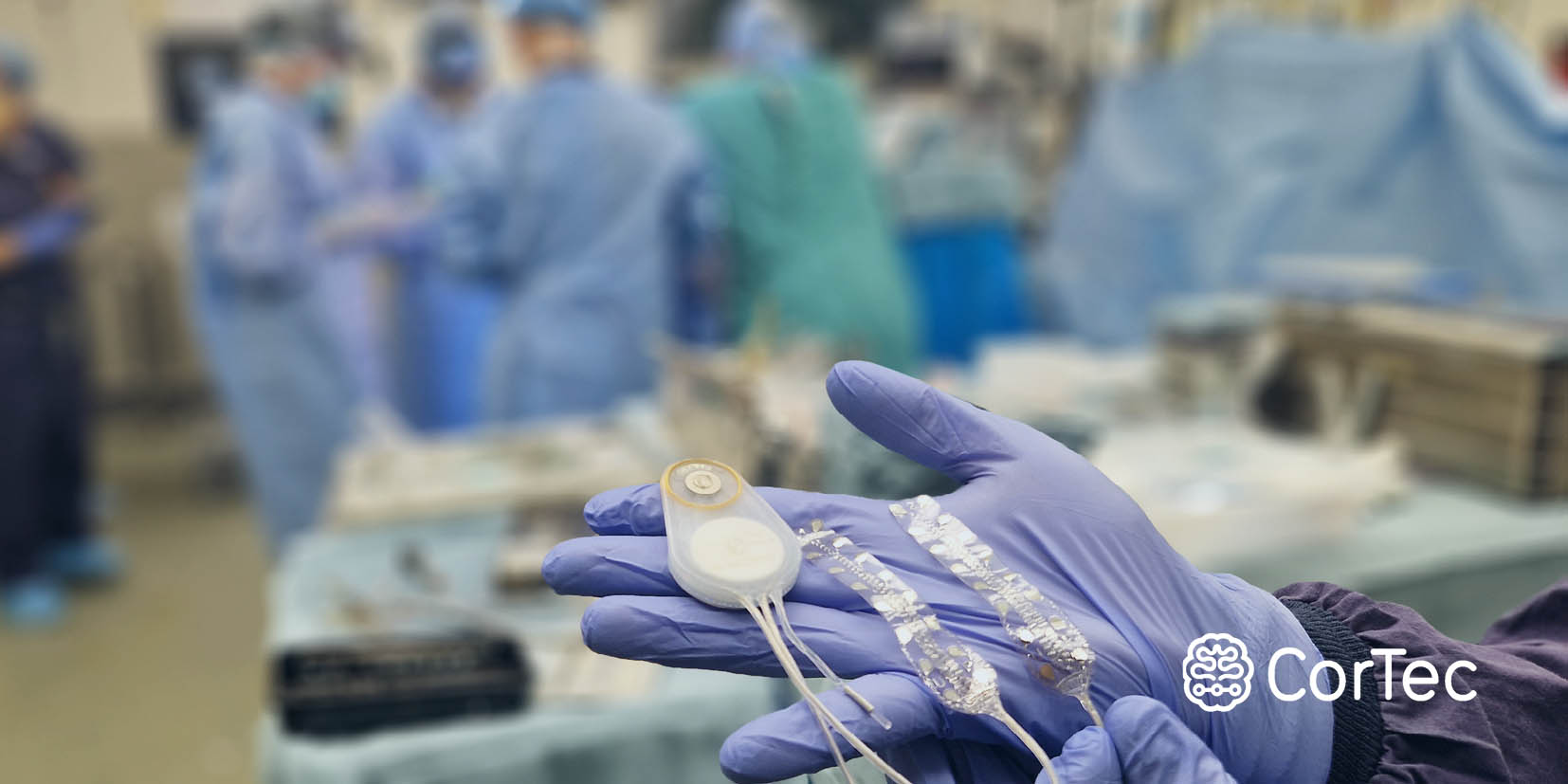
INBRAIN Neuroelectronics is taking a different route through the implanted BCI race. While many leading companies focus on restoring speech and device control, the Barcelona-based startup is building a graphene interface to decode and modulate neural activity for therapeutic use. With its first human study now completed, and partnerships with Microsoft and Mayo Clinic in place, Parkinson’s disease is becoming the first major test of that ambition.
At the helm sits Carolina Aguilar, co-founder and CEO of INBRAIN. Founded as a spinout of research originating at the Catalan Institute of Nanoscience and Nanotechnology and collaborating institutions, INBRAIN builds on years of European work to adapt graphene for neural interfaces. Aguilar co-founded the effort after a long career at Medtronic, where she worked on deep brain stimulation and led European and global commercialization.
%20(4)%20(1)%20(1).jpeg)
Neurofounders spoke with Aguilar about INBRAIN’s graphene interface, the evolving Microsoft Azure AI collaboration, what the company learned from its first human study, and how those pieces feed into a longer-term effort to rethink neuromodulation for Parkinson’s.
INBRAIN’s technological thesis traces back to the European research push that followed the 2010 Nobel Prize in Physics for early experiments with graphene. In 2013, the EU launched the €1 billion Graphene Flagship to move the material towards commercial applications. INBRAIN’s scientific founders José A. Garrido, Kostas Kostarelos, and Antón Guimerà spent years within that ecosystem developing graphene for neural interfaces.
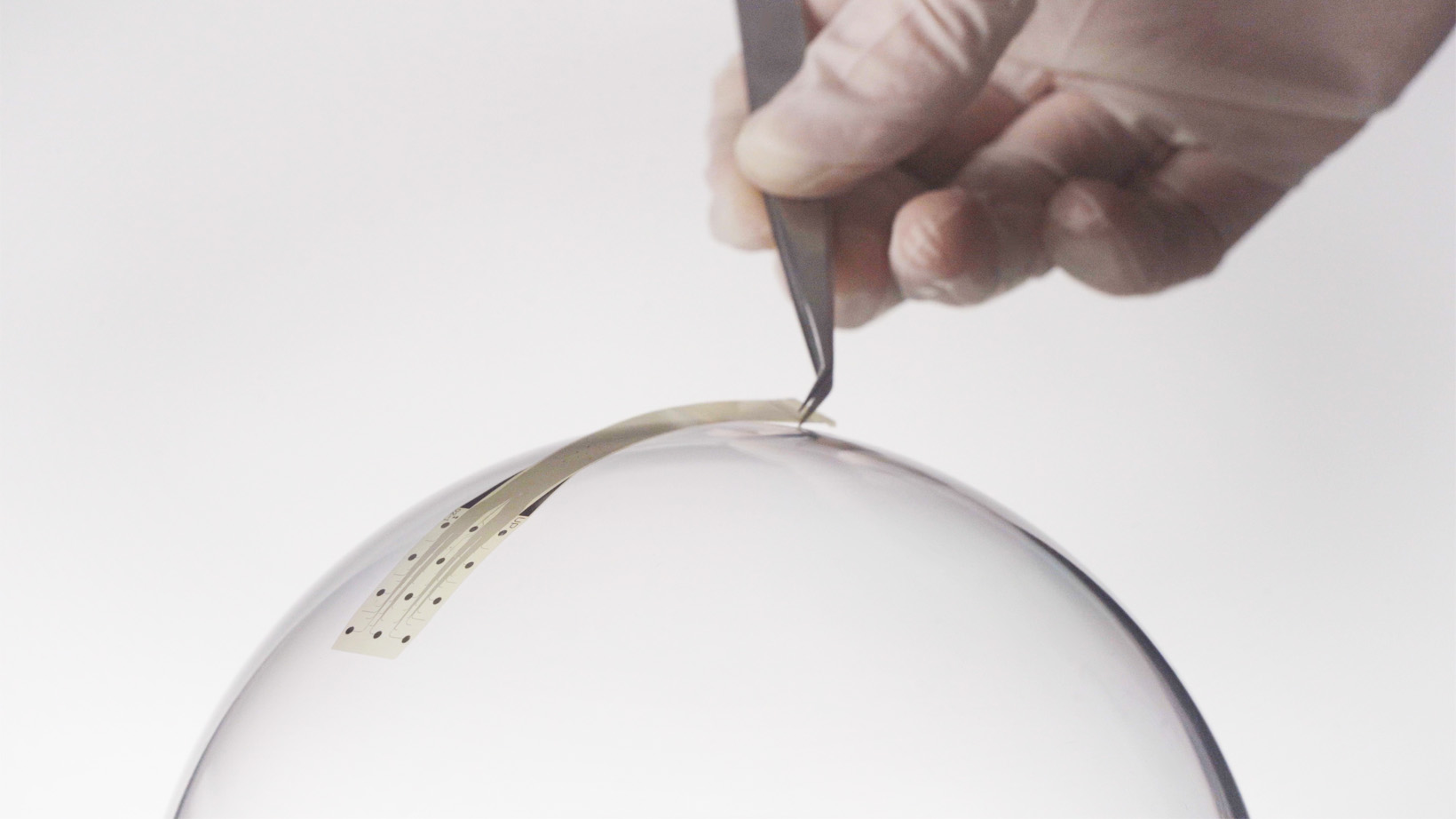
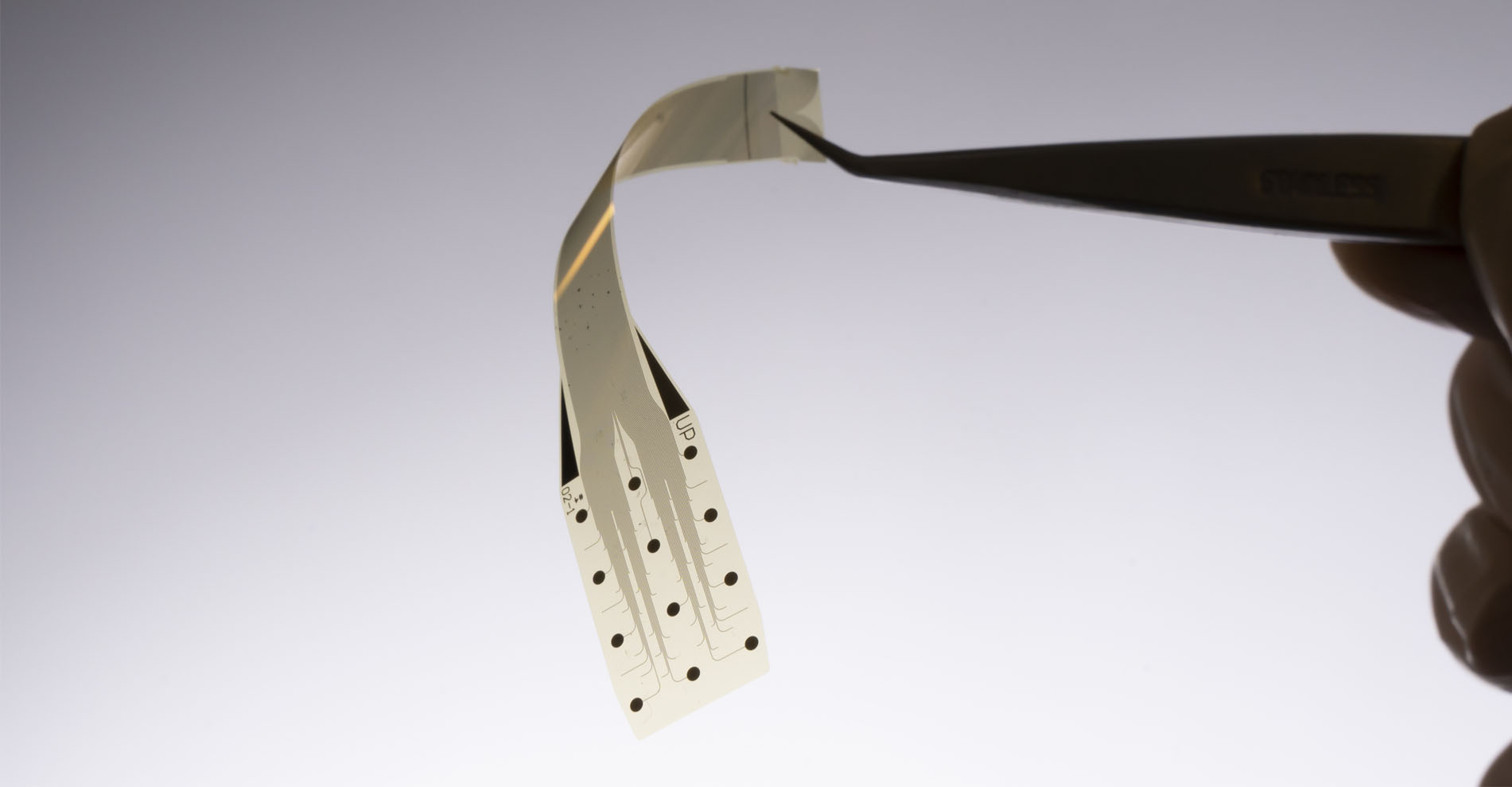
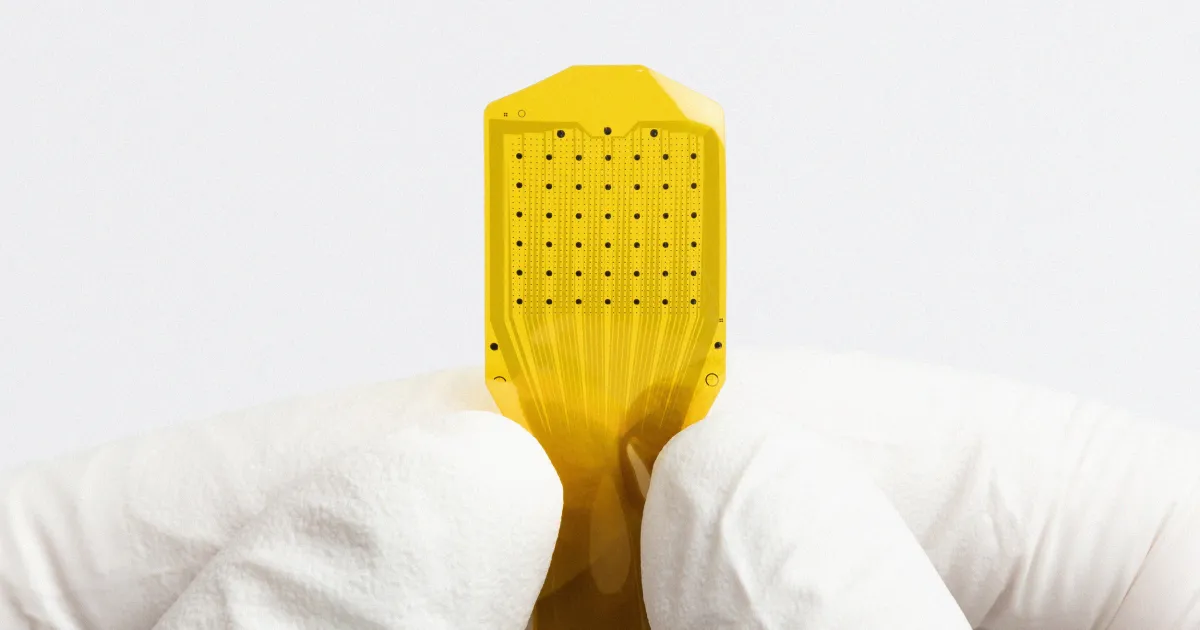
Much of that work focused on shrinking neural electrodes without sacrificing the signals they capture. INBRAIN’s contacts now range from around 25 to 800 micrometers, with seven Nature publications to date demonstrating the use of 25-micrometer graphene electrodes for recording and stimulation. Aguilar compares the material to conventional metal technology. “We can miniaturize from 20,000 to 40,000 times and still have an equal or higher signal-to-noise ratio than metal technology.”
INBRAIN found that miniaturizing electrodes can maximize resolution. Its interface can record activity extending into several hundred hertz and potentially the kilohertz range, where Aguilar says additional disease-related biomarkers begin to emerge. “We know as much about the brain as the tools allow us to see,” she says. Accessing those signals creates the possibility of linking more specific patterns of neural activity to individual symptoms and, eventually, therapeutic responses.
The same electrodes are also designed to stimulate. Graphene can inject substantial charge through a very small surface area, with preclinical studies already demonstrating selective stimulation alongside high-resolution recording. “We can read and write at micrometric precision,” says Aguilar. “Having those bidirectionality capabilities, we wanted to be therapeutic from day one.”
Parkinson’s disease has become the first major test of that thesis. INBRAIN plans to use high-resolution decoding to identify disease-related activity and then modulate the corresponding networks, including signals associated with symptoms such as dysarthria. “Our goal is concentrated on displacing deep brain stimulation, displacing the neuromodulation market in the first application for Parkinson’s disease,” says Aguilar. Stroke rehabilitation and epilepsy are expected to follow as the platform develops.
High-resolution neural interfaces produce substantial data, and that data needs to be transformed into something useful. In November 2025, INBRAIN announced a collaboration with Microsoft to combine its neural platform with Azure AI infrastructure. Within the partnership, INBRAIN looks to translate continuous neural signals into clinically usable information.
Aguilar privately showed Neurofounders how INBRAIN is developing that concept, while asking that several technical details remain confidential. In the demonstration, a Parkinson’s patient interacts with an AI assistant about their symptoms, while the system draws on data from the neural interface to interpret their current state. It then proposes an adjustment to the stimulation parameters based on the combined information.
A clinician reviewed the recommendation and retained authority over any change to the stimulation. The resulting control loop connects patient input, neural activity, AI interpretation, and clinical oversight. For Parkinson’s, a progressive neurodegenerative disorder, INBRAIN sees this architecture tailoring therapy continuously as a patient’s neural state and symptoms change.
Building that system at scale will require considerably more data. INBRAIN is preparing further studies partly to expand the datasets used to train its algorithms. “At the end we need to train our algorithms in a way that this is fully automated at scale,” says Aguilar.
INBRAIN’s first human study provided a clinical test of its technology. Conducted in Manchester during brain tumor resection surgeries, the study recruited ten patients, eight of whom were treated with the graphene interface. The device was temporarily placed on the cortical surface to assess safety, neural stimulation, and its compatibility with existing neurosurgical workflows.
The study has now concluded. “There was a primary outcome, safety, and that was met,” says Aguilar. “There was a secondary outcome, superior decoding accuracy of graphene versus metal technology. That was also achieved.”
The study also produced an exploratory speech-decoding result. INBRAIN distinguished individual phonemes, including a K from an L, and linked them to specific cortical regions with around 70% accuracy. Aguilar says some of that information appeared in higher-frequency activity that is difficult to capture with conventional electrodes. Full results from the study have not yet been published.
INBRAIN is now developing a semi-chronic cortical interface for brain mapping and neural decoding as its first commercial product. The semi-chronic interface’s role extends further into the company’s roadmap. Each clinical deployment generates additional human neural data, helping refine the AI models and de-risk the chronic platform ultimately intended for therapeutic use.
Part of that next phase will take place in the US, where INBRAIN has partnered with Mayo Clinic. Mayo brings decades of experience evaluating neuromodulation and implantable technologies, giving INBRAIN an established clinical benchmark as it tests its hardware and workflows. “They have a very strong benchmark to tell us: hey, have you thought about this? Have you thought about that?” says Aguilar.
Further out, Aguilar sees Parkinson’s as just one application of a broader platform spanning the central and peripheral nervous systems. “At the end, we have one neural system. It’s all working together,” says Aguilar. “Our motto is decoding neural signals to improve patients’ lives. Behind that there is even a deeper goal, which is to teach the neural system to self-repair.”
.svg)







%20(2)%20(1)%20(1)%20(2)%20copy.jpg)


%20copy.jpg)