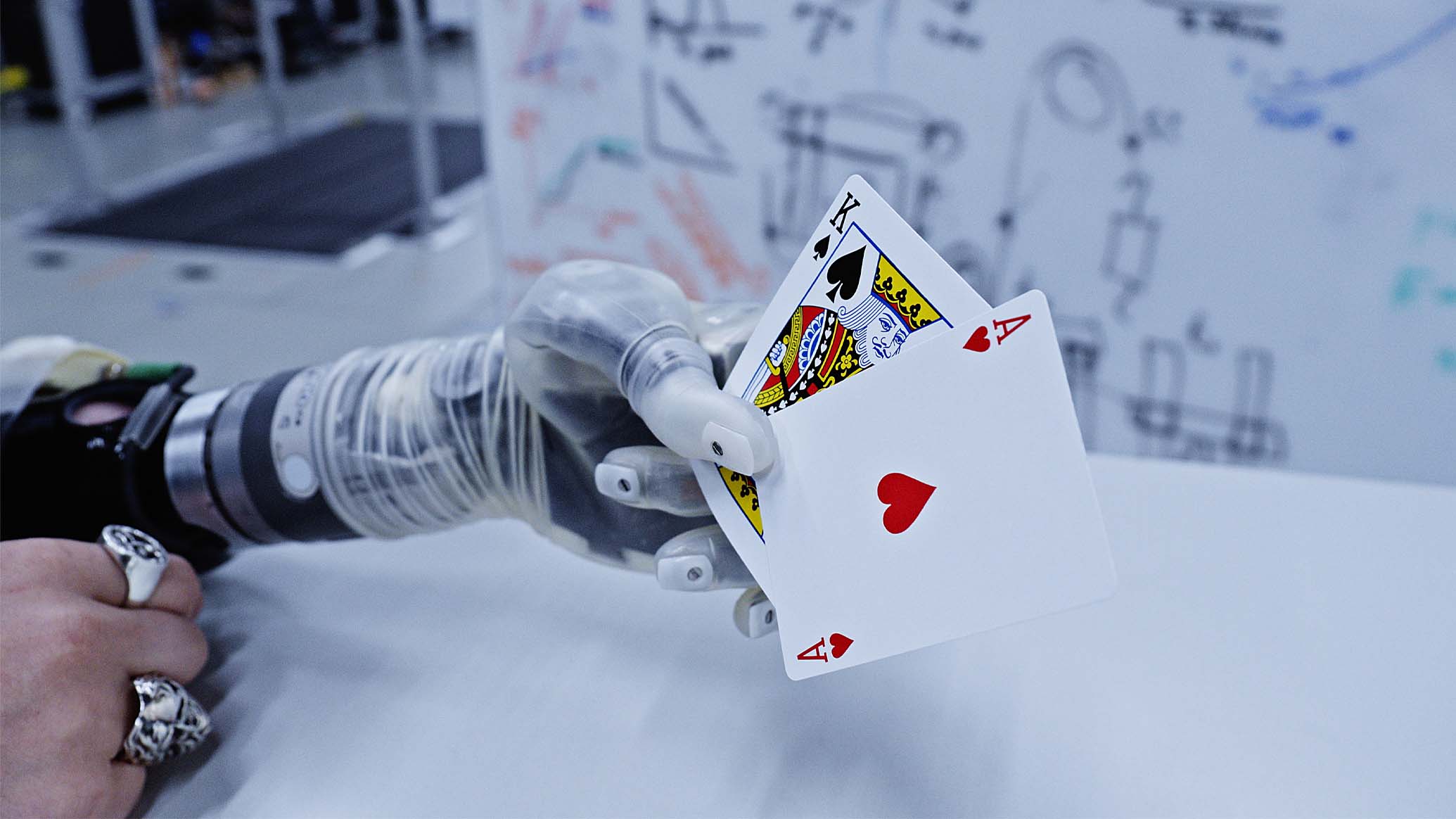

An AI agent is a piece of software that watches the world, tracks what is happening, and decides what to do next. Instead of emitting a single prediction, it runs a loop of observing, acting, and updating. Increasingly, AI agents are applied to neurotech, where they sit on top of closed-loop implants and wearables, adjusting stimulation as brain states shift. Slowly, the brain is transformed from an external signal source to an element in a shared control system, coupled to a stack of neurotech-hardware and AI-software.
Into that landscape steps INBRAIN Neuroelectronics, a Barcelona-based startup building graphene interfaces that adapt to the brain, capturing high-resolution activity. The company announced a collaboration with Microsoft to run an “intelligent neural platform” on Azure, using agentic AI to learn from each patient’s signals and adapt stimulation in real time. The ambition, in CEO Carolina Aguilar’s words, is to turn the nervous system into a “body OS” that can be read and written with more precision.
Last week, INBRAIN announced a strategic collaboration with Microsoft that puts Azure’s AI stack directly behind its graphene brain-computer interface platform. The Barcelona-based startup plans to use Azure’s agentic AI tooling and large language models to analyse neural data and help steer stimulation, with a focus on precision neurology using implantable BCI therapeutics.
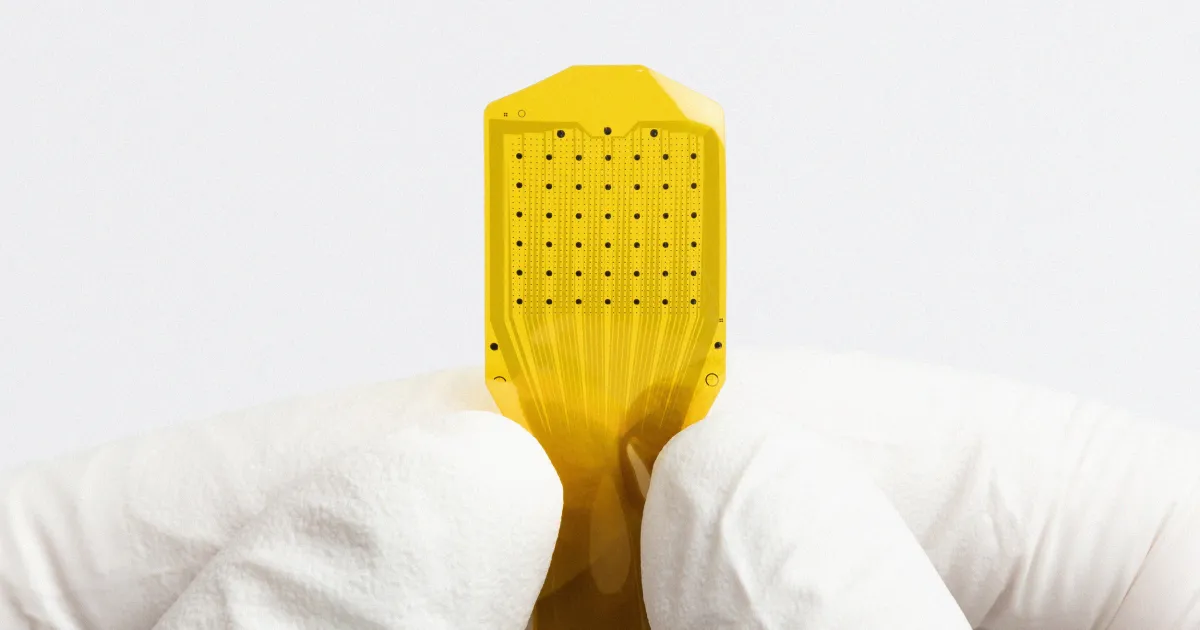
INBRAIN isn’t starting from scratch. Its core technology is an ultra-thin, flexible graphene interface that lies over the cortex, designed to record high-resolution activity and deliver stimulation with more precision than conventional metal electrodes.
The first human procedure has already been followed by an analysis showing no device-related safety issues and clear signal acquisition during awake tumour surgery mapping. More recently, INBRAIN announced a collaboration with Mayo Clinic to evaluate its platform and support U.S. expansion, signalling a push to accelerate both product development and validation across multiple centres.
The Microsoft collaboration is pitched as the next layer on top of that hardware: an “intelligent neural platform” that continuously learns from each patient’s brain signals and adapts stimulation in (near) real time. In practice, that means using cloud-based time-series models and agentic AI frameworks to spot patterns in the brain data, update control policies, and feed back optimised settings to the implant.
Initial applications regard movement disorders like Parkinson’s disease, but the roadmap extends toward epilepsy and, in the longer term, psychiatric and memory indications, if the approach scales.
Agentic AI is most useful in systems that do more than map inputs to outputs. These systems keep track of state, plan, and act toward a goal over time. Instead of a single prediction, you get a loop of observing, deciding, acting, and then updating behavior as conditions change.
Neurotechnology is a natural, but demanding, practice arena for that kind of system. Brain activity arrives as dense, high-dimensional time series that drift with sleep, medication, and disease course. Current closed-loop neuromodulation systems change settings based on fairly simple rules, rather than on flexible models of each patient’s ongoing brain state. Agentic approaches promise to spot more subtle patterns in brain activity and behavior, and to tune stimulation to each person.
INBRAIN is not the first BCI start-up to draw in a major AI-tech player to achieve that goal. Synchron has been working with NVIDIA on Chiral, a cognitive AI “brain foundation model” trained directly on neural activity from its endovascular Stentrode implant. They use NVIDIA’s stack to handle real-time decoding and large-scale model training. Earlier this month, Synchron closed a $200 million Series D round that brought its total funding to $345 million and pushed its valuation close to $1 billion, with part of the money used for expanding its Cognitive AI division.
Regulation, safety, and data governance will largely decide how fast agentic AI moves into real-world use. In the past years, regulators increasingly considered adaptive algorithms in medicine as software-as-a-medical-device, with stricter expectations around testing and change control when models update. For brain stimulation, those expectations sit even tighter: agents should have clear limits on what they can do on their own, backups if signals drift or hardware degrades, and logs detailed enough for clinicians to see exactly what the system did and why.
Furtermore, neural data is now explicitly framed as sensitive: this month UNESCO adopted the first global recommendation on neurotechnology ethics, calling out neural data and mental privacy as rights to protect. Taken together, regulatory movements should push agentic AI systems toward strong encryption, fine-grained access control, and clear rules on when recordings can be reused for model training, and by whom.
The INBRAIN-Microsoft announcement can therefore be seen a starting point for agentic AI in neurotech, rather than a definitive arrival. The next years at INBRAIN will show whether graphene-based interfaces can maintain their signal quality and safety profile as cohorts scale and whether agentic control on top of those signals delivers true gains over today’s closed-loop systems.
.svg)