Brain-computer interfaces are changing how people with conditions such as ALS and spinal cord injury communicate with the outside world. But while companies such as Neuralink believe an invasive implant is needed to improve over existing options, others believe a useful brain-computer interface can be developed without surgery.
Santa Barbara-based Cognixion is among them, developing a non-invasive BCI that combines EEG, eye tracking, and AI-assisted language generation to help people communicate. Last week, the company announced the launch of CHOICE, an NIH-funded clinical study enrolling 30 adults with ALS. The trial will compare Cognixion's interface with conventional eye-tracking devices, measuring communication performance and, importantly, which technology participants choose to use in daily life.
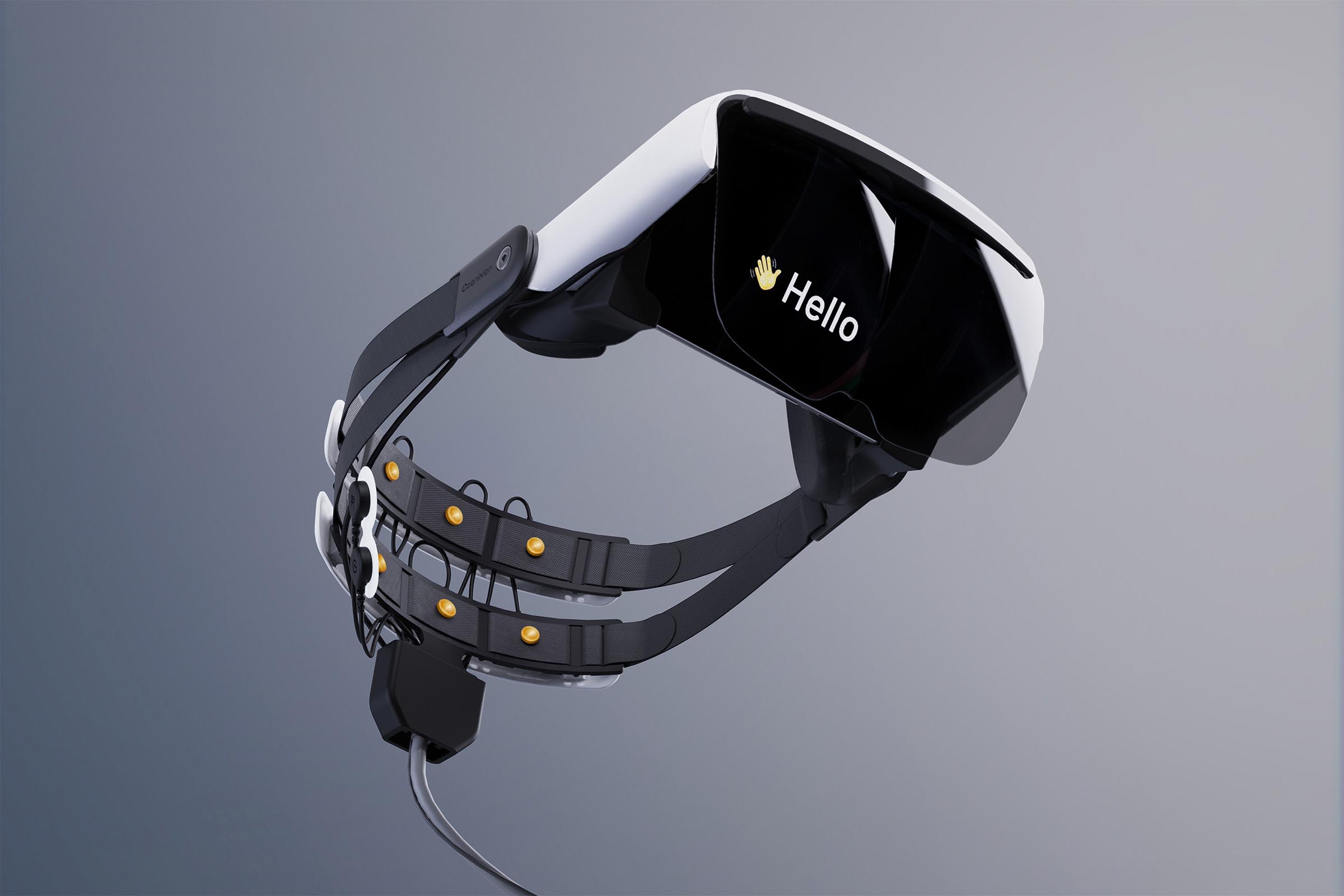
Cognixion has developed an EEG that detects neural activity in the visual cortex as users focus on text displayed on a screen. Eye tracking identifies the intended option, while the EEG signal acts as a deliberate confirmation, removing the need to hold a gaze to make a selection. That alone can significantly speed up communication.
The system also uses AI to suggest responses based on conversational context, allowing users to select complete phrases instead of typing individual words. For people with limited eye movement, Cognixion is developing an EEG-only mode.
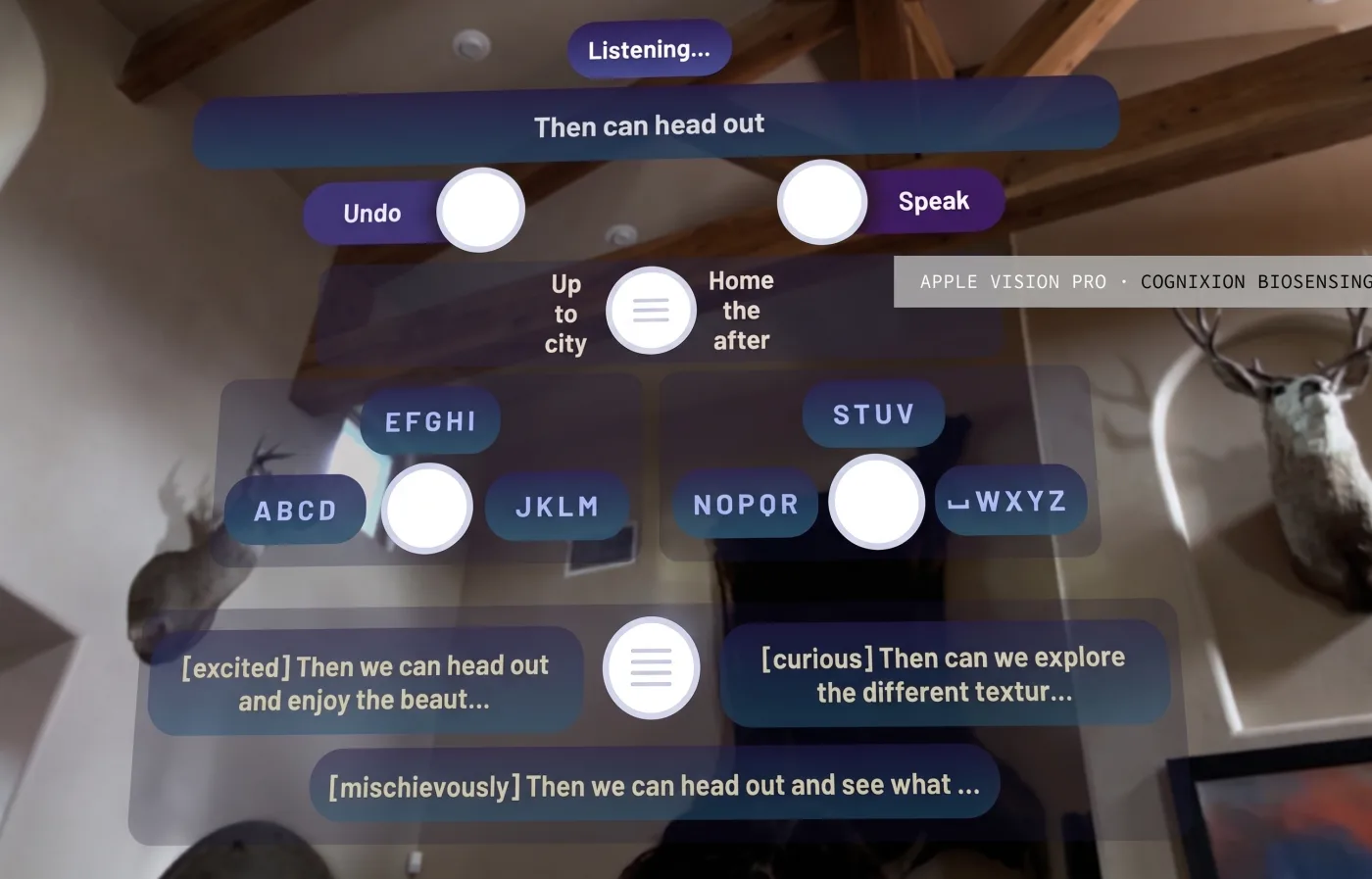
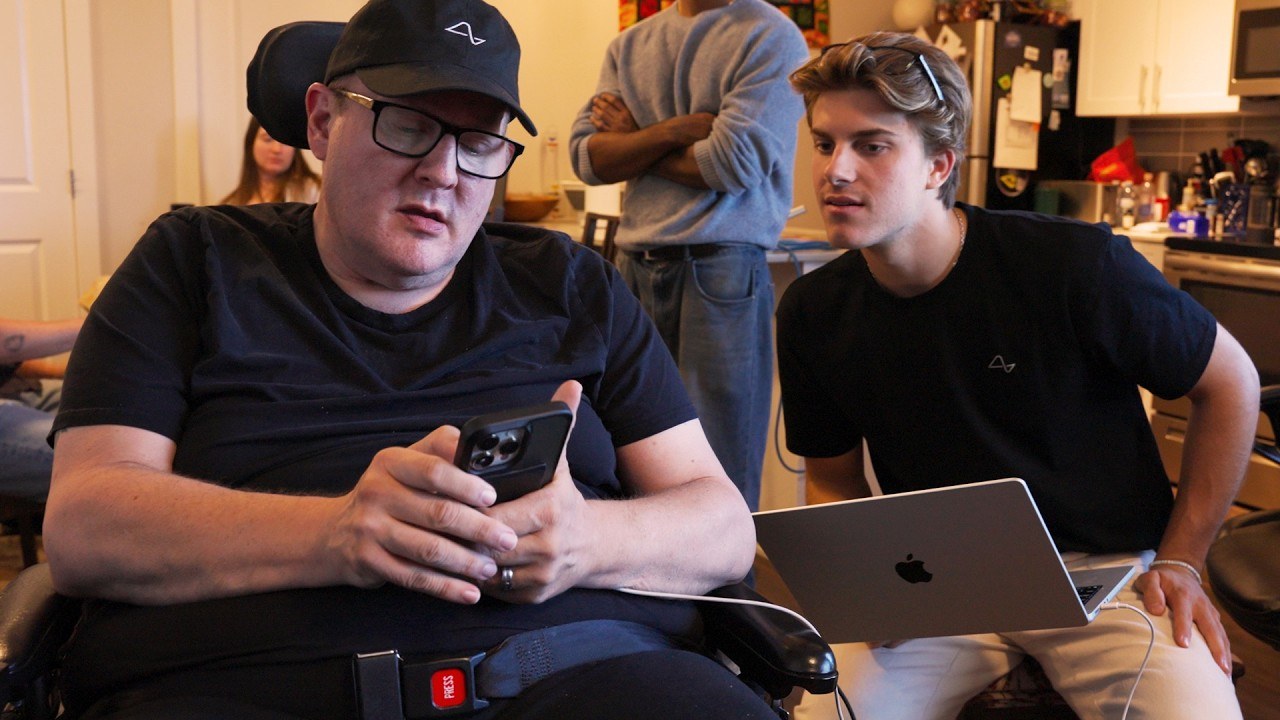
CHOICE builds on two earlier feasibility studies, which used Cognixion's proprietary Axon-R headset before Cognixion integrated its EEG tech with Apple's Vision Pro headset. The second study involved home use across three participants with ALS and one with chronic stroke. Across participants, median communication rate was 8.6 words per minute. One participant with late-stage ALS achieved 12.3 median WPM, compared with 4.5 WPM using their existing eye-tracking device.
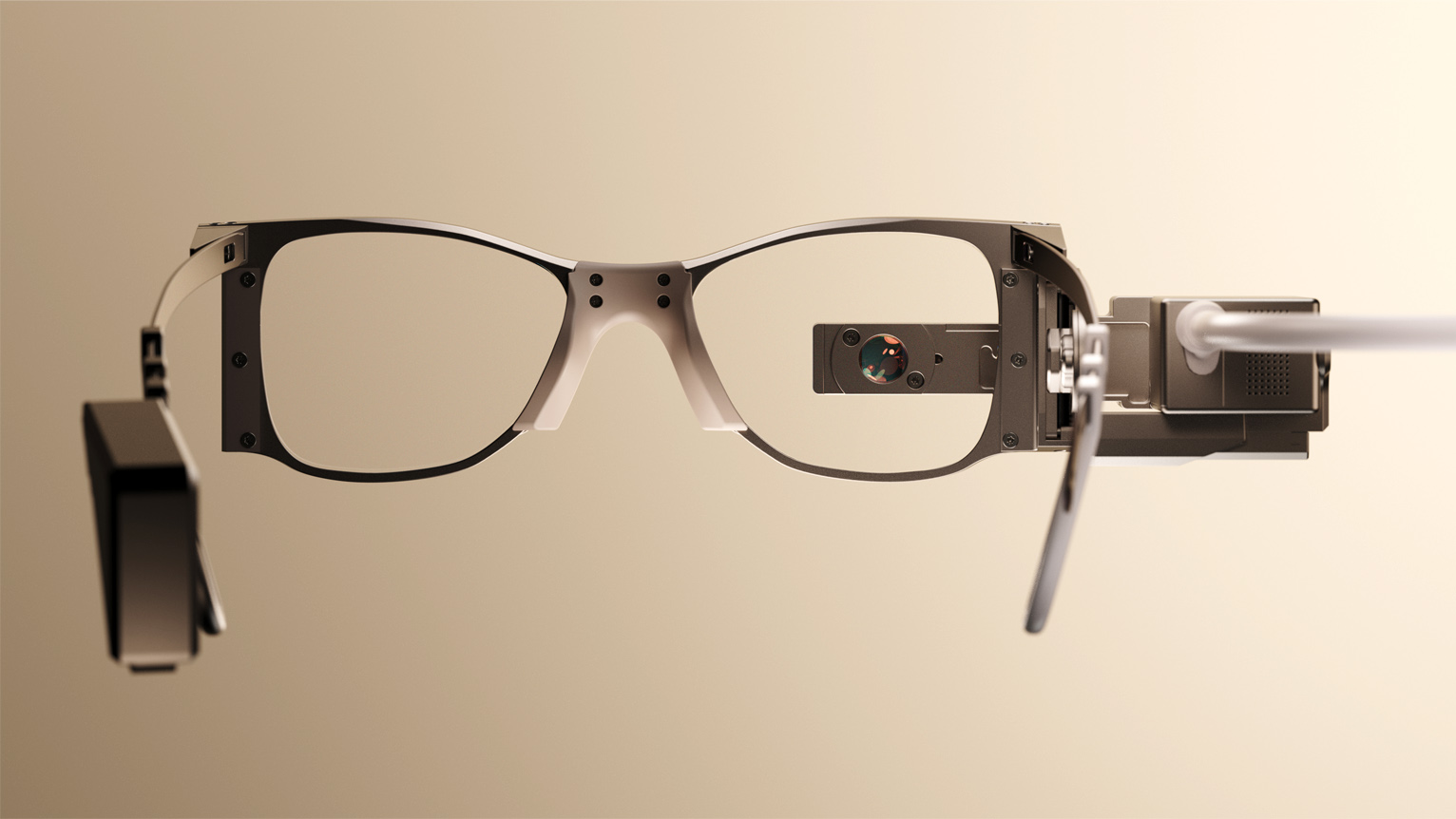
The earlier study also revealed practical challenges. Caregivers initially needed around 45 minutes to set up the system, which fell to 10-15 minutes with experience. Cognixion is now targeting setup times below five minutes and introducing lighter augmented-reality glasses alongside a tablet-based configuration.
CHOICE will follow 30 adults with ALS over 12 weeks, comparing three communication setups. Sessions will take place at home three to five times per week, with participants alternating between assigned devices and periods where they can choose their preferred system.
"CHOICE asks a simple question. When people have their own device right there, which one do they reach for?" says Cognixion founder and CEO Andreas Forsland.
As a primary endpoint, Cognixion will track voluntary usage time, measuring how often participants choose to use each device. Communication speed, accuracy, usability, and caregiver burden will be assessed as secondary outcomes. "A lab score shows what someone can do. Usage shows what they choose to do when their own device is right there," says Forsland.
To supplement the limited information that can be extracted from non-invasive EEG, Cognixion's places considerable emphasis on personalised AI models trained on contextual clues. “When generative AI composes the phrases, you don't need a huge bitrate,” says Forsland. “A few reliable selections per minute can carry a conversation."
Yet that raises questions about how much control users retain over their conversations. In response, Cognixion is developing an Author-of-Record protocol, requiring users to confirm AI-generated responses before they are spoken. In the earlier feasibility study, acceptance rates for suggested phrases varied between 5% and 42%.
Looking ahead, Forsland believes non-invasive BCIs could eventually replace conventional eye tracking for many users, while coexisting with implanted interfaces. “Eye gaze is the sensor of last resort. BCI will improve it in the near term and eventually replace it for many people, providing an option both before eye tracking is needed and after it stops working.”
Cognixion's longer-term ambition is to develop a modular interface that adapts as patients' abilities change. Users could move between eye tracking, EEG, and muscle-based inputs, while accessing the same software through tablets or augmented-reality glasses.
Beyond spoken communication, the platform already supports messaging, media, and smart-home control. Forsland also points to research at the University of Waterloo, where Cognixion's earlier Axon-R system was used to control a powered wheelchair, as an example of how the technology could eventually extend farther into spaces currently addressed by implanted devices.
Produced with support from