The UK’s Advanced Research and Invention Agency (ARIA) has committed £50 million across ten selected projects in its Massively Scalable Neurotechnologies (MSN) initiative. The programme supports the search for an interface that avoids invasive neurosurgery, can be delivered in a 30-minute outpatient visit, and can sense, interpret and adjust brain circuits.
Over three years, the ten teams will investigate new ways of interacting with neural pathways without opening the skull. Approaches range from modified immune cells and nasal bacteria to targeted inhaled particles and soft robotics navigating fluid spaces around the brain. ARIA hopes to support surgery-free technology that can continuously monitor the brain, report biomarkers and precisely adjust activity.
ARIA sees surgery as the main barrier stopping neurotech from reaching more people, limiting who can be treated, when and where. Even proven neurotechnologies such as deep brain stimulation (DBS) for Parkinson’s disease reach only around 0.1% of people living with the condition each year.
ARIA argues that making high-performance neurotechnology more accessible could provide three benefits. Patients could be treated earlier, potentially improving long-term outcomes. Wider use would generate real-world brain data that lab models can’t provide, helping researchers understand diseases and find new treatment targets. Finally, care could move into outpatient clinics and local communities, reducing dependence on specialist hospitals.
DBS illustrates the challenge. "[It] requires specialist surgery to place electrodes deep within the brain," explains Stephen Hicks, Science & Technology Lead for the Scalable Neural Interfaces team at ARIA. "There is the burden on the patient, the expertise required, and the cost of delivering it. All of those things make it difficult to scale.”
“It means opening the skull and passing electrodes through brain tissue, often while the patient is awake,” says Nicolette Driscoll of NeuroBionics, one of the ten funded teams. “Understandably, most people won’t consider that until they’re desperate.”

Driscoll’s team is developing a comparable therapy from inside the brain’s veins, using a catheter in a procedure closer to placing a stent. Done this way, she says, DBS could reach more patients, much earlier in their disease.
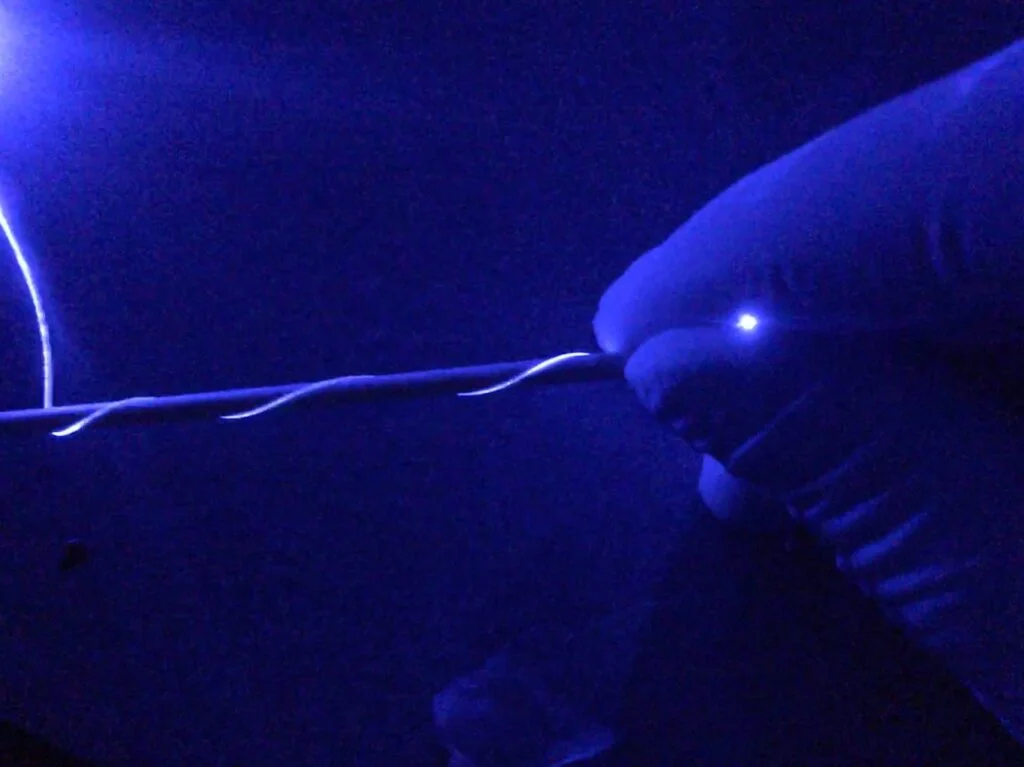
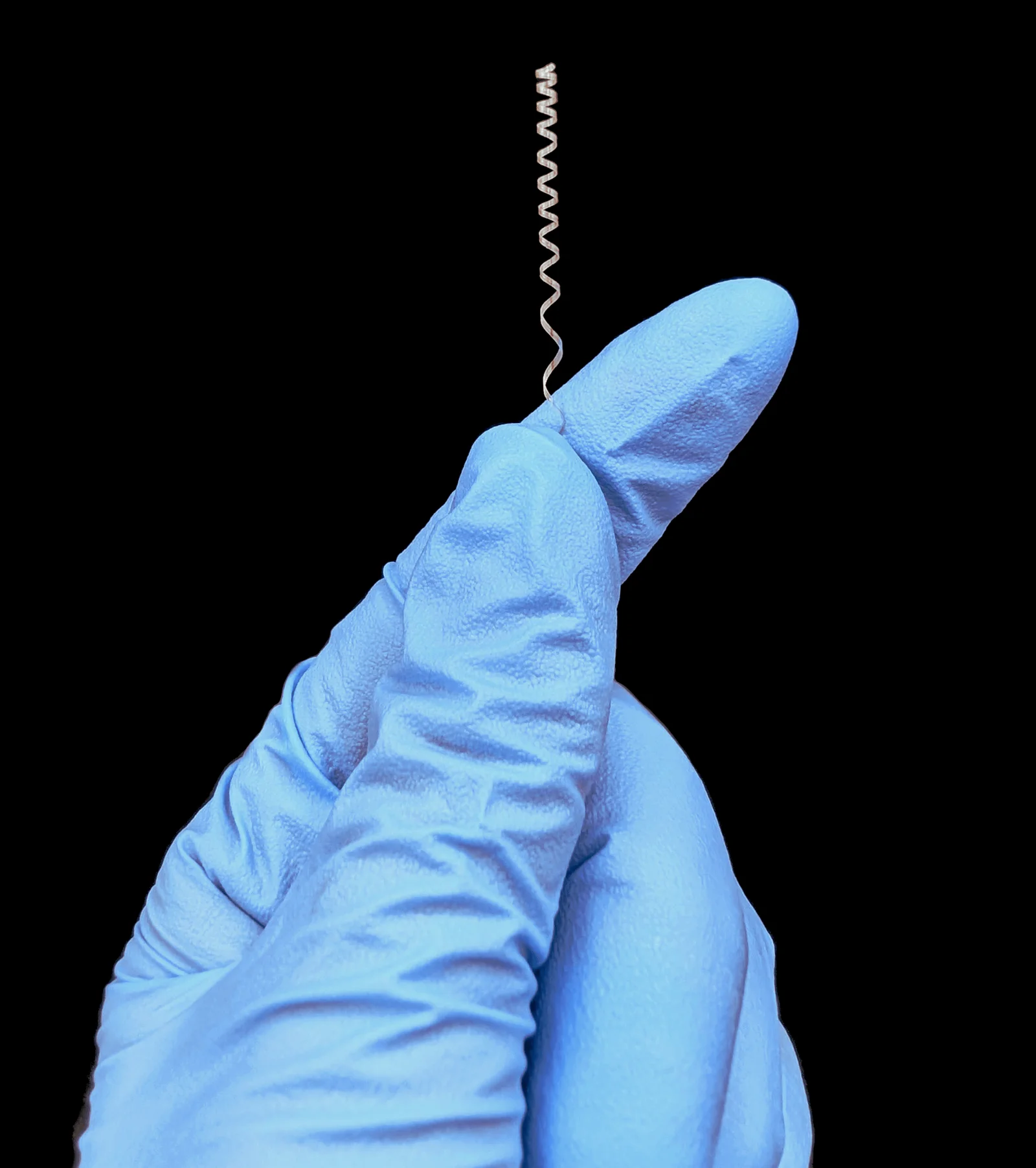
The team uses hair-thin, flexible fibres with built-in electronics, small enough to travel through the brain’s winding vessels. Several deep veins run alongside established DBS targets, so electrodes can sit close to them without passing through brain tissue.
The trade-off is that the device can only go where the vessels go. Over the ARIA project, the team will look to prove safety and precision. “If we can show both, we’ll have a strong case that endovascular DBS is a real alternative to open brain surgery,” she says.
NeuroBionics is one of ten very different approaches. The ARIA-backed teams fall into three main categories. Three are building electronic devices, such as a soft vine-like robot that travels through the fluid around the brain to place a wireless deep brain implant. Four are engineering living biology, including immune cells designed to find and calm overactive brain circuits.
The remaining three use tiny particles, such as an inhaled treatment that could travel from the lungs towards the brainstem. Eight of the ten initiatives are designed to deliver therapy or modulate neural circuits, while only two focus primarily on monitoring brain activity; despite ARIA’s ambition to create a system capable of both.
All ten projects are currently in Phase 1 and only a subset of the most promising concepts will advance to Phase 2. This next stage will focus on demonstrating performance in disease models and gathering the preclinical evidence needed to move towards human trials.
Driscoll sees immense value in ARIA's collaborative framework. “We’re working on shared problems, such as targeting, safety, and how to show that a therapy is working, and we can learn from each other’s successes and failures far faster than we could in isolation.”
The programme’s portfolio is split equally between UK-based institutions and global partners. Five initiatives are based in the UK, spanning Leeds, Edinburgh, UCL, Imperial and DART Biosciences. The other five comprise two teams from MIT, EPFL in Switzerland, NeuroBionics and Cultivarium. The latter two are setting up UK subsidiaries to run the work.
“Our programme encourages overseas deep tech startups to establish UK companies, sharing international expertise across ecosystems,” notes Hicks. For Driscoll, a deciding factor was access to cross-disciplinary talent. “Endovascular DBS sits at the intersection of fields that rarely overlap, and in the UK we found world-class experts in each of them,” she explains.
Her network includes interventional neuroradiologist Dr Shah Islam, temporal interference stimulation pioneer Dr Nir Grossman, and large-animal research capabilities at the Royal Veterinary College. ARIA is also working with Newcastle University and the MHRA to map out and streamline regulatory frameworks for these novel technologies.
The programme is designed to back ideas that would struggle to find funding elsewhere. “It’s often hard for highly novel, high-risk ideas to find their footing, even when they have the potential to produce a breakthrough,” says Hicks. By bringing together scientists and engineers who might never have worked together, ARIA hopes to seed new fields of research and companies in the UK.
This is still early-stage research, and many of these ideas may not work. Hicks is clear that an interface which is much easier to deliver will not be enough on its own. “If it never reaches a patient, we haven’t achieved what we set out to do,” he says.
“We also have to understand the clinical evidence, the regulatory pathway and what would make a health service able and willing to adopt it. That’s why we’re thinking about those questions alongside science, right from the start.” The next three years will show which routes into the brain are worth following.
Produced with support from