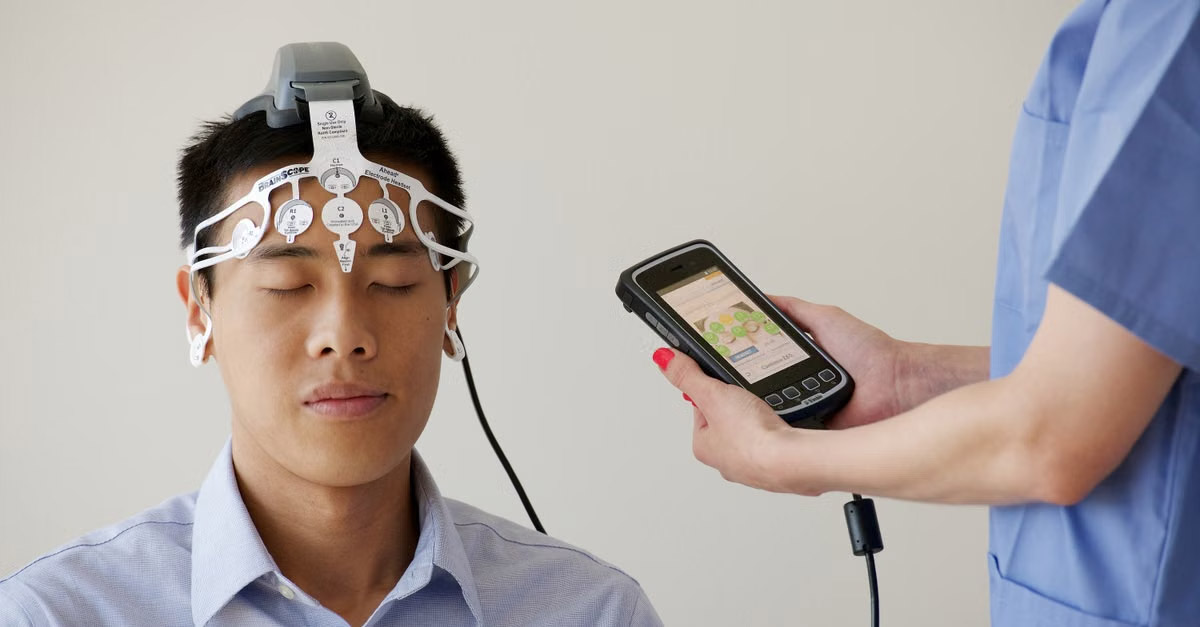

Epilepsy affects millions worldwide, yet seizures remain difficult to capture and characterize. The diagnostic gold standard often requires several days of continuous EEG and video monitoring in a specialist epilepsy unit, making the process costly, burdensome, and inaccessible to many patients. These limitations have driven a wave of companies developing wearable, remote, and implantable technologies for seizure detection and monitoring.
On 28 July 2026, University of Utah spinout Epitel announced a $26 million Series B to expand REMI, its wireless EEG monitoring system. Co-led by Catalyst Health Ventures and Genoa Ventures, the round will support commercial expansion and wider provider adoption. It builds on a $12.5 million Series A raised in 2022 and five FDA 510(k) clearances, most recently an expansion allowing REMI to be used in patients as young as one.
Epitel’s product combines the REMI remote EEG monitoring system with REMI Vigilenz, its AI model for identifying potential seizure activity. Four adhesive, single-use sensors are placed externally on the scalp to record the brain’s electrical activity. The signals are transmitted wirelessly to Epitel’s software platform for storage and clinician review.
REMI Vigilenz analyses these recordings and highlights sections that may contain electrographic seizure activity, helping clinicians review extended datasets more efficiently. REMI can continuously record brain activity for up to 30 days. By comparison, inpatient epilepsy monitoring typically lasts between four and seven days.
Epitel has prioritised usability through a reduced EEG montage consisting of four sensors and ten derived channels. Conventional clinical systems commonly use 19 or more scalp electrodes connected by wires. The reduced montage provides less spatial coverage, but makes longer-term monitoring outside the hospital more practical. Validation studies have reported seizure-detection sensitivities ranging from approximately 77% to 90%, depending on the study design and method of analysis.
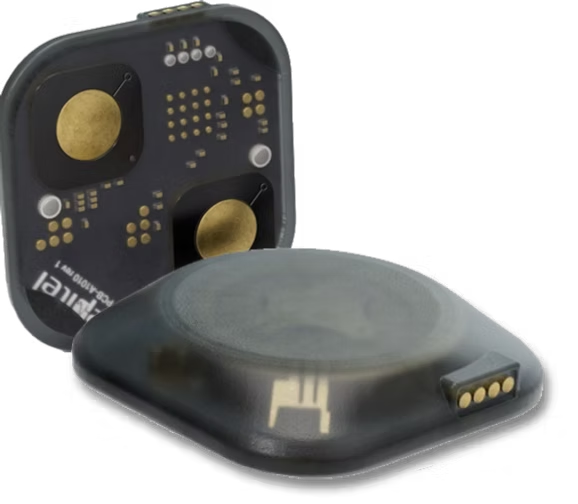
In March 2025, Epitel received FDA clearance to use REMI in patients aged one year and older, extending its previous indication from patients aged six and above. REMI Vigilenz remains indicated for analysing recordings from patients aged six and older. This gives the non-invasive system access to younger populations than implantable monitoring technologies from UNEEG and Epiminder, which have primarily been developed and studied in adults.
The Series B will support broader commercial adoption of REMI across age groups. Epitel also plans to expand its sales, marketing, and customer-experience teams as it works to increase uptake among hospitals and clinical teams.
Access to EEG remains uneven. A 2018 analysis found that only 27% of US hospitals had EEG capability, leaving many patients dependent on specialist centres. They can face long waits, burdensome hospital stays, and monitoring periods that still fail to capture a seizure. Neurotechnology companies are addressing different bottlenecks across the epilepsy care pathway, from improving access within hospitals to enabling longer-term monitoring at home.
Companies like Ceribell, Zeto, Braincapture, and NeuroBell focus primarily on hospital-based care, prioritising rapid deployment and ease of use. Startups including mjn-neuro and Theta Neurotech are developing non-invasive ambulatory systems that allow patients to monitor or anticipate seizures outside clinical settings.
Subcutaneous implants from UNEEG Medical, recently 510(k) cleared, and Epiminder extend monitoring over months or years, to capture rarer seizures and generate longitudinal data on individual patients.
While many companies optimise for either hospital workflows or home monitoring, Epitel’s strategy spans both. Its reduced montage does not provide the spatial coverage of a full EEG system, but supports rapid deployment and longer recording periods across clinical and ambulatory settings. As wireless full-montage systems such as Zeto ONE make hospital EEG easier to deploy, REMI’s ability to support remote monitoring over several weeks may become increasingly important to its differentiation.
Epitel may also benefit from reaching patient groups underserved by existing ambulatory technologies. NeuroBell recently raised $5.5 million to support the US launch of its neonatal seizure monitor, but the product is designed for use in neonatal intensive care units. REMI’s combination of ambulatory monitoring and clearance for patients as young as one gives Epitel an unusually broad position in the market.
Its non-invasive design also avoids the surgery and stricter patient selection associated with subcutaneous implants, broadening its potential reach. Over time, systems such as REMI could complement implantable EEG by identifying patients who require more intensive monitoring. This would position wearable EEG between short-term hospital assessment and surgically implanted long-term solutions.
.svg)