
Parkinson’s symptoms are known to change substantially over the course of a day. But treatment decisions are usually informed by short clinical assessments and patients recalling what happened between appointments. Wearables are beginning to fill that gap, tracking changes in movement and medication response as patients go about their daily lives.
This month, Empatica received FDA 510(k) clearance for its Health Monitoring Platform for Parkinson’s Disease Monitoring. The system combines Empatica’s EmbraceMini wearable and clinical software infrastructure with technology from PKG Health, which it acquired in October 2025. The clearance brings PKG’s established Parkinson’s monitoring algorithms onto Empatica’s broad monitoring platform as competition around continuous motor monitoring continues to grow.
The FDA cleared Empatica’s Parkinson’s platform on August 14 under the 510(k) pathway. The clearance covers the broader monitoring system, including EmbracePlus, EmbraceMini, Empatica Care, PKG Monitor, and the company’s Care Portal. Empatica says it marks its 12th FDA clearance since the company was founded in 2014.
The platform is built on the EmbraceMini, a 15-gram wearable with an accelerometer, gyroscope, magnetometer, and ambient-light sensor. It continuously collects movement data, processed through Empatica’s software and converted into measures of bradykinesia, dyskinesia, tremor, sleep, and medication compliance. Clinicians can review those patterns through the Care Portal, alongside medication timing and changes in motor state.
Much of that Parkinson’s technology comes from PKG Health, which Empatica acquired in October 2025. PKG developed the Personal KinetiGraph, a wrist-worn monitoring system that first received FDA clearance in 2014 and has since been used to track Parkinson’s symptoms across several days outside the clinic.
Empatica says its algorithms have appeared in more than 70 peer-reviewed publications and are used across more than 150 hospitals and clinical sites. A 2024 independent review found that studies of PKG generally reported sensitivities above 90% and specificities between 83% and 92.9% when measuring core motor disorder symptoms including bradykinesia, dyskinesia, and tremor.
Parkinson’s adds another clinical indication to a portfolio that spans epilepsy monitoring and clinical research. Empatica’s EpiMonitor is worn day-round and can detect possible generalized tonic-clonic seizures and alert caregivers. Empatica’s broader Health Monitoring Platform is deployed across pharmaceutical studies and remote research. The PKG acquisition extended that infrastructure into movement disorders and gives Empatica a second major neurological monitoring application.
Parkinson’s is particularly suited to continuous monitoring because patients often report moving between bradykinesia, tremor, dyskinesia, and better motor control as medication levels rise and fall. Clinical assessments capture only a short window of the disorder, while patient diaries rely on accurate recall. Wearables are employed to add a more continuous and objective data record between appointments.
Under the hood, PKG turns wrist acceleration into motor-state scores every two minutes. Its algorithms analyse the spectral power of low-frequency movement, peak acceleration, and periods without movement, weighting those features to distinguish bradykinesia from dyskinesia. The scores are then aggregated across several days and compared with reference ranges, creating a profile of how a patient’s motor state changes over time.
The wider market already includes several dedicated systems. A 2024 systematic review identified PKG, STAT-ON, Kinesia 360, KinesiaU, and PDMonitor, with PKG carrying the largest published evidence base. Meanwhile, Kneu Health has since received FDA clearance for smartphone-based tremor measurement, while companies like Machine Medicine and Mon4t are developing video-based motor assessment.
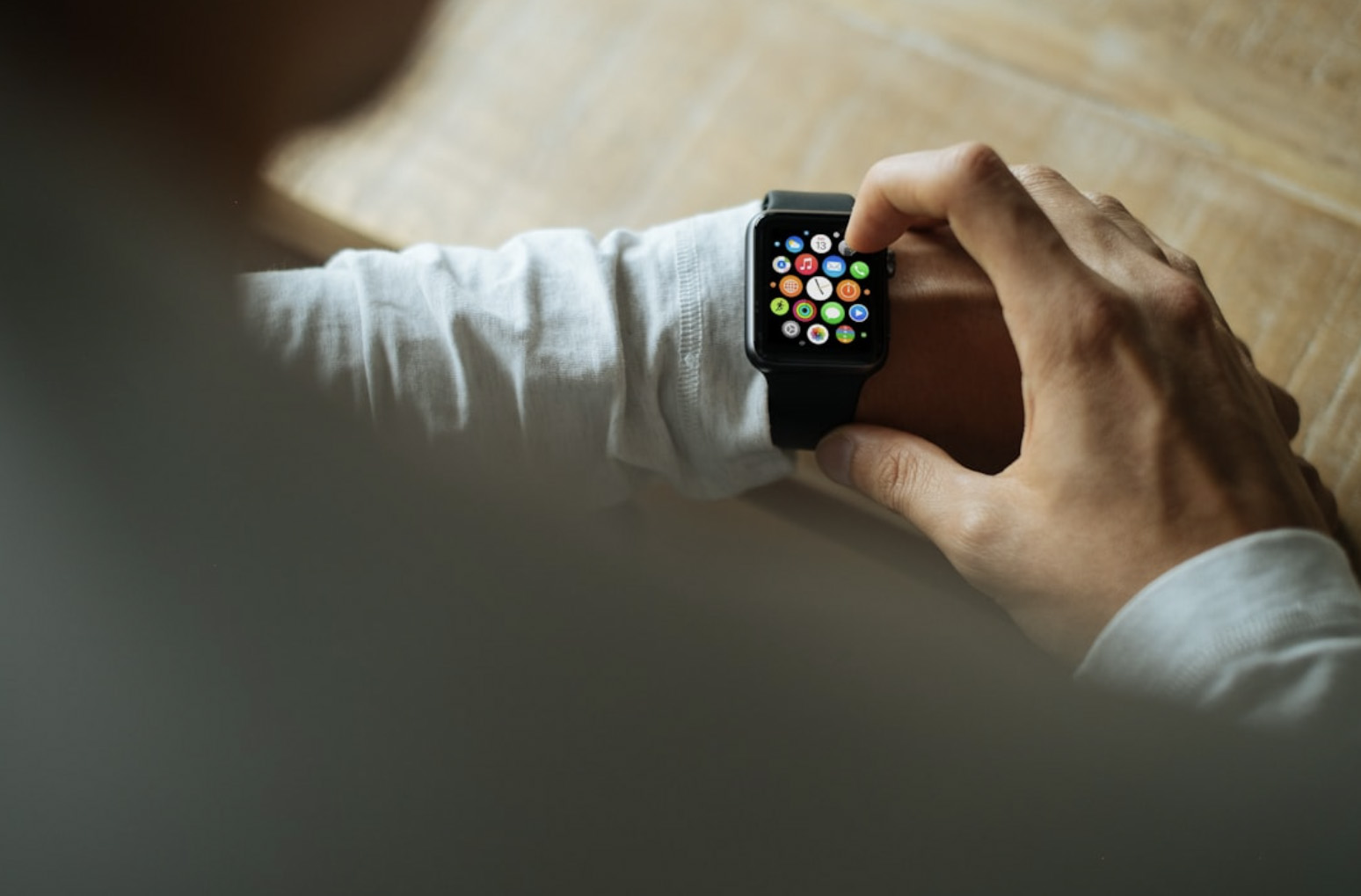
Other companies are moving Parkinson’s monitoring onto consumer wearables. Rune Labs and H2O Therapeutics received FDA clearances in 2022 for Apple Watch-based systems, while Nordic Kinetics received clearance for Sine in June 2026. Empatica enters that market with established Parkinson’s algorithms, tested clinical hardware, and a broader remote-monitoring platform already used across neurology and clinical research.
.svg)