

Clee Medical has closed its Seed funding round to support the development of Neuro Access, an intraoperative platform providing real-time, high-resolution visualisation of the brain. Surgical planning typically relies on pre-operative MRI to determine pathological tissue and localise relevant brain structures, but neurosurgery is much more dynamic.
Once the skull is opened, soft tissue displacement, commonly known as brain shift, can cause intraoperative anatomy to deviate significantly from pre-operative imaging. “In procedures where millimeters matter, such as neuromodulation, biopsy, or accessing deep lesions, knowing precisely where you are and what tissue you are encountering is critical,” notes Matthew Lapinski, CEO of Clee Medical. “Our goal is to bring imaging directly to the point of contact with brain tissue. We believe bringing this level of imaging and intelligence directly to the surgical tip will redefine how neurosurgeons navigate the brain.”
Clee’s Seed round was led by HTGF (High-Tech Gründerfonds), with participation from Zürcher Kantonalbank, Kickfund, FONGIT, and Venture Kick, alongside continued backing from existing partner and investor the Wyss Center Geneva. The new capital will support Clee Medical in accelerating the development and clinical validation of Neuro Access.
Neuro Access delivers ultra-high-resolution, real-time imaging without contrast agents or radiation, directly from the surgical instruments, allowing surgeons to visualise micro-anatomy and vasculature at the exact point where the device is advancing. With the new capital, the company plans to move into scalable hardware manufacturing and begin clinical validation. “We are moving fast,” Lapinski says. “A major mission with this new funding is completing our first-in-human clinical study.”
Beyond its initial applications in functional neurosurgery and neuro-oncology, Clee Medical sees a broader horizon. Many neurosurgical targets remain underutilised today, not because they lack clinical value, but because reaching them safely is extremely difficult. Deep-seated lesions, for example, often require traversing critical brain structures where “even small errors can have serious consequences,” Lapinski explains. By providing micron-scale visualisation directly along the surgical trajectory, Lapinski believes Neuro Access could significantly improve surgeon’s confidence when navigating these delicate pathways.
Neuromodulation is another frontier. Interest is growing in new deep brain stimulation targets, such as Brodmann area 25 for treatment-resistant depression, but many of these structures remain difficult to resolve with existing intraoperative imaging. Early data, Lapinski says, suggests the platform can visualise almost all tissues in real time, a capability that could enable a new generation of focused neuromodulation therapies. “Ultimately, our vision is to make previously inaccessible parts of the brain safely reachable,” Lapinski says.
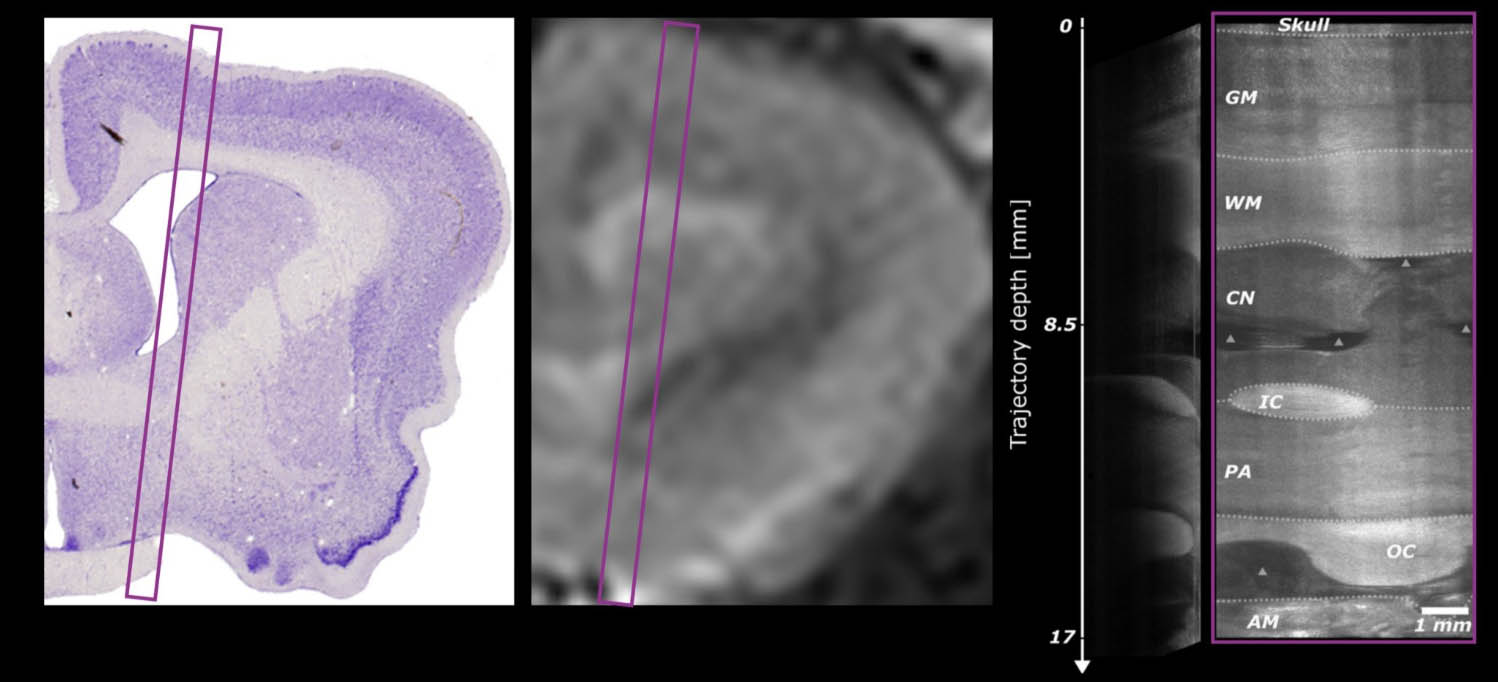
The core imaging modality behind Neuro Access is optical coherence tomography (OCT), a minimally invasive technique that can help neurosurgeons visualise brain anatomy and critical structures in real time during stereotactic procedures. While OCT provides rich structural information, interpreting the signal in real time during surgery is inherently challenging. This is where machine learning becomes central. Clee Medical is developing algorithms that automatically segment tissue structures within the signal to highlight anatomical boundaries, vasculature, and tissue transitions in real time.
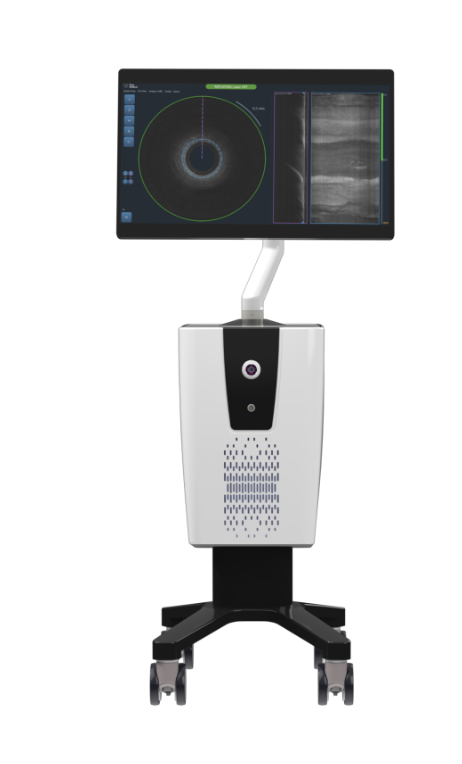
In a DBS procedure targeting the subthalamic nucleus, for instance, the system can recognise characteristic tissue signatures along the trajectory and provide visual feedback to confirm the surgeon is approaching the intended structure. In oncology applications, similar models could flag transitions between healthy and pathological tissue. “The goal is to provide real-time intelligence that helps surgeons navigate with greater confidence,” Lapinski says, “leading to faster surgeries, increased capacity, and more consistent outcomes for patients.”
The round marks an important milestone for the Wyss Geneva spin-out, founded in October 2024, which has moved quickly from early development into a defined product and clinical validation plan. It has already been recognised within Switzerland’s innovation ecosystem, including a Top 100 Swiss Startups listing in 2025 and selection for the Venture Leaders Medtech 2025 programme.
Produced with support from

%20copy.jpg)





.svg)

