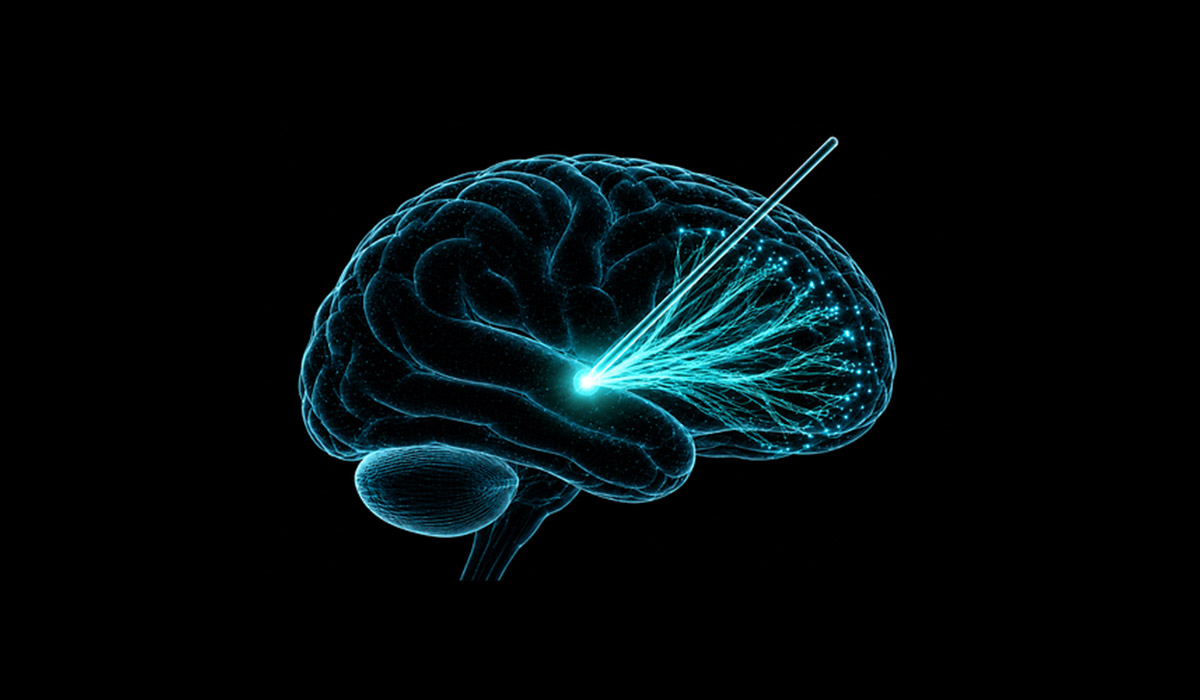
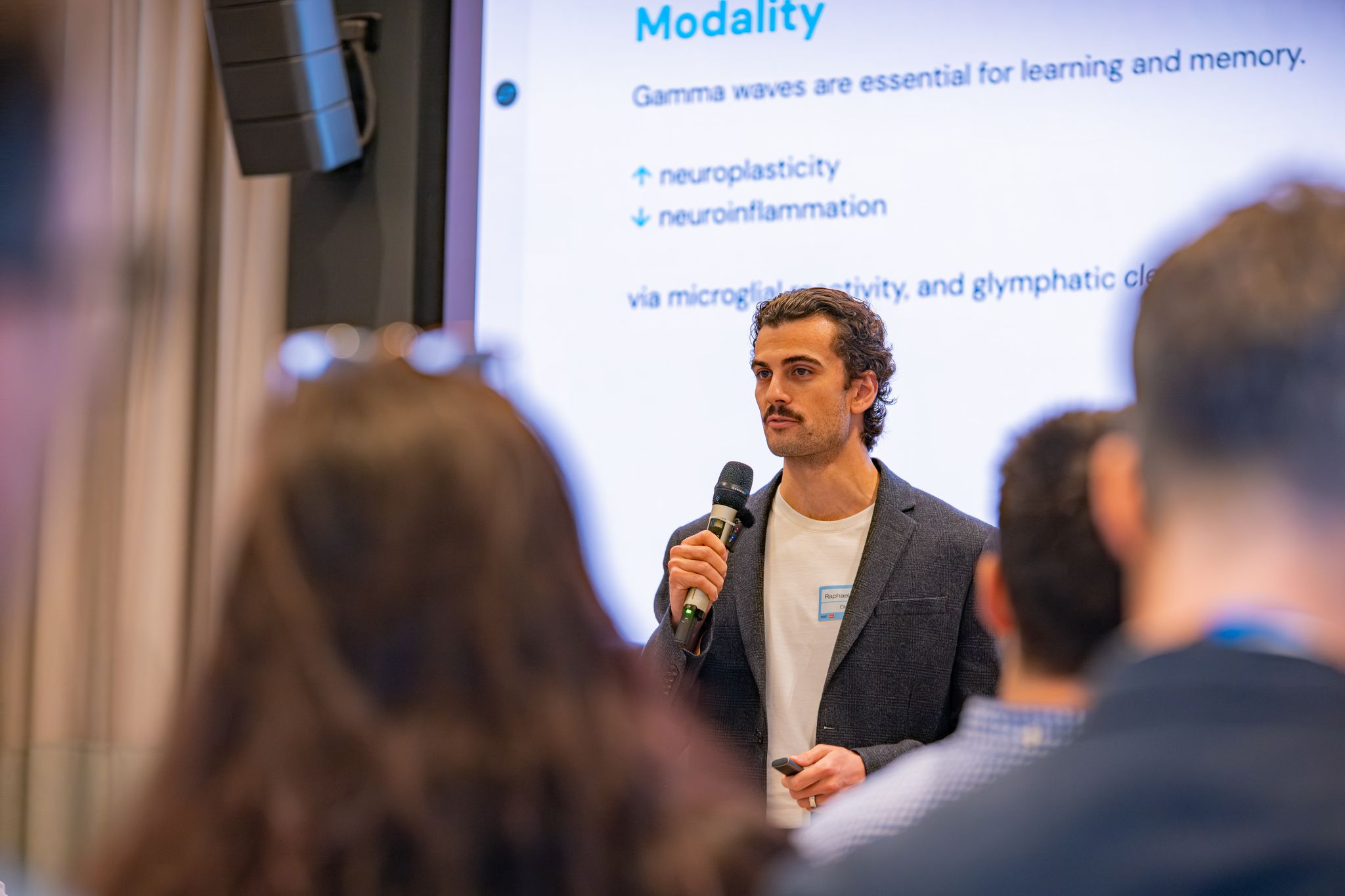
Sensory stimulation is becoming a closely watched neurotech modality. In Alzheimer’s, where disease-modifying treatment remains limited, stimulating the brain with synchronized light and sound could offer a new way to intervene. The stimulation entrains gamma rhythms in the brain, which researchers are investigating for a range of downstream neuroprotective and neurorestorative effects
Paris- and San Francisco-based Clarity is exploring a virtual reality-based approach to sensory stimulation. The startup has now published early feasibility results in 11 people with mild cognitive impairment or mild Alzheimer’s disease. The single-session study found the platform was well tolerated, produced stronger neural responses than sham, and showed an exploratory improvement in memory performance.
Clarity’s study enrolled 11 people with mild cognitive impairment due to Alzheimer’s disease. Each participant completed a single session using the company’s VR-based platform while EEG measured their brain activity. The setup compared active 40 Hz audiovisual stimulation with sham stimulation across immersive environments of varying complexity.
The clearest result was neural target engagement. Active stimulation produced significantly stronger EEG responses at 40 Hz than both baseline and sham conditions, showing that the platform could entrain gamma activity in people already experiencing Alzheimer’s-related cognitive impairment. All participants completed the session, with no serious adverse events or treatment discontinuations reported.
The researchers also tested memory during the session. Participants learned associations between videos and words under either active or sham stimulation, before completing recognition and delayed-recall tasks. Material presented during active stimulation was remembered more accurately across the exploratory measures, providing an early behavioral signal alongside the EEG findings.
The study forms an early feasibility signal, with larger and longer trials still needed to determine whether repeated use can translate into durable clinical benefit.
Clarity’s approach builds on the same basic principle as other 40 Hz sensory stimulation systems, but changes how that stimulation is delivered. Instead of asking patients to spend an hour watching flashing lights and listening to synchronized sounds, the company embeds stimulation into immersive videos and cognitive tasks inside VR.
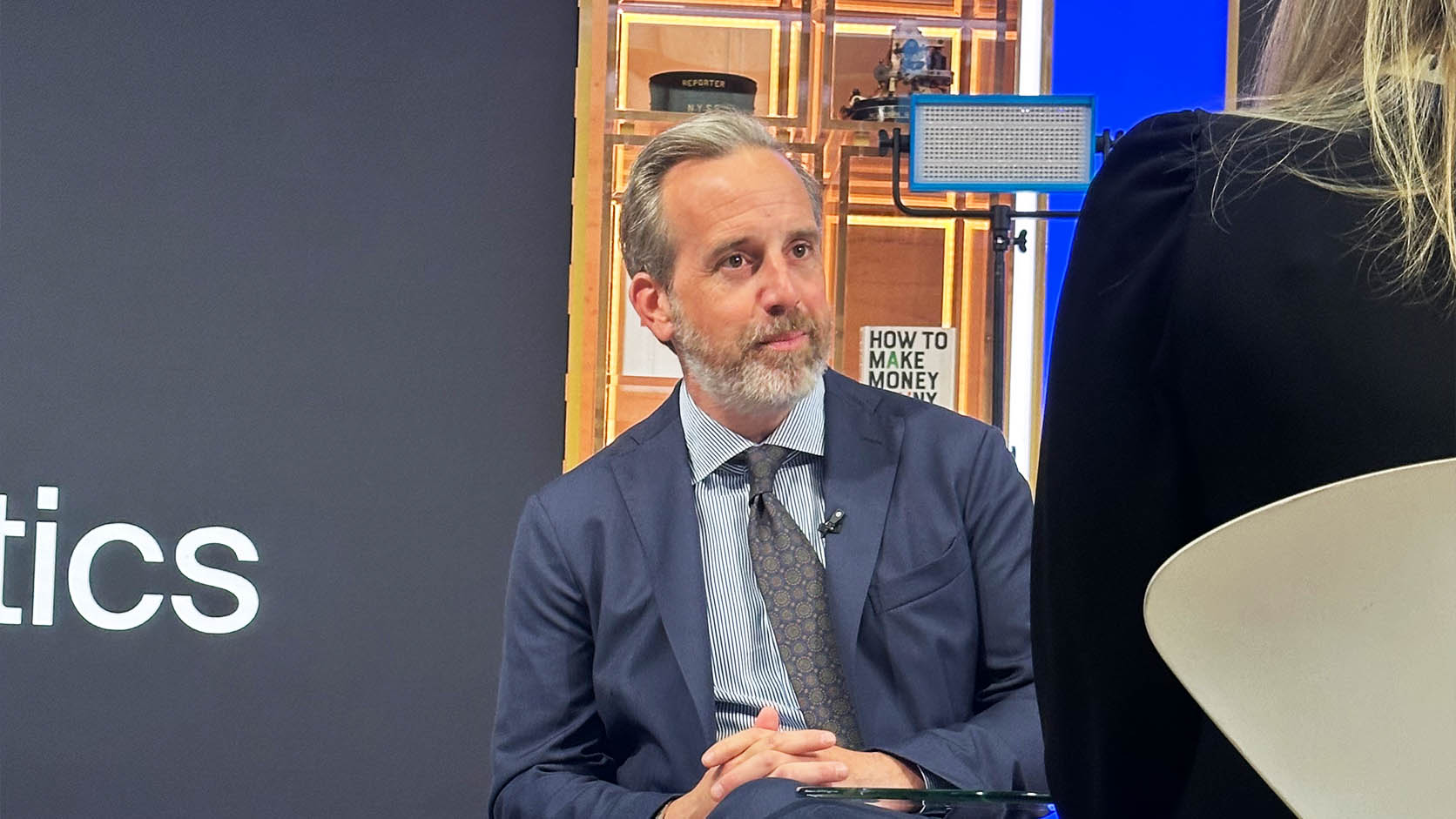
Content is intended to become part of the intervention itself. “The user experience is not just random content,” CEO Rafael Certain explains on the Neurofounders Conversation podcast. “It’s content that is modified and designed in a way that can actually induce the activity in the right areas.” Clarity is exploring tasks targeting functions such as associative memory and processing speed.
The longer-term platform could also add a measurement layer. Certain described Clarity’s vision as a “home-based brain clinic,” combining treatment with longitudinal measures of patient activity and progress. The company is exploring signals including gaze, voice, user interactions, and EEG, which could eventually help adapt stimulation and provide clinicians with data collected between visits.
Clarity is entering a field where Cognito Therapeutics leads on capital and clinical progress. Its pivotal HOPE study has enrolled 673 people with mild-to-moderate Alzheimer’s and will produce a readout soon. Cognito’s Spectris system similarly delivers synchronized light and sound at home for around one hour each day. It will provide a major test of whether sensory stimulation can translate into durable cognitive and functional effects.
For Certain, 40 Hz stimulation is only the starting point. “Those data will not only help us improve treatment delivery, but also help us connect our ecosystem to other products like implants, drugs, and monitoring tools in patients’ homes,” he says. That plays into the vision of becoming “a go-to platform that can coordinate the healthcare journey of patients with Alzheimer’s and other indications.”
.svg)