
The AI industry has an energy problem. Global data center electricity demand is on track to nearly double by 2030, and the chips driving that growth are scaling faster than the grid can keep up. As the industry looks for a new, efficient solution, attention is turning to the original model for intelligence: the human brain.
Emerging from stealth mode in June 2026, Flourish just announced a $500M raise at a reported $2.5B valuation, before showing any product or revenue. The New York-based company, backed by Jeff Bezos, Lux Capital, Catalio Capital, and GV (Alphabet's venture arm), aims to reproduce the efficiency and structure of the human brain’s “core algorithm” to address AI's mounting energy problem.
Just a few weeks after launching fundraising discussions, Flourish closed the $500M round. Anchored by a $50M investment from Jeff Bezos, who previously invested in the neurotech field through Synchron, the company also has backing from Lux Capital, GV, and Catalio Capital. At a reported valuation of $2.5B, Flourish was priced at 5 times the funds raised from the round.
The company was created in 2024 by co-founders Rob Williams and Thomas Reardon. Williams is a member of Amazon’s “s-team”, working on Amazon’s Alexa voice assistant. Reardon built Internet Explorer at Microsoft, and later earned a PhD in neuroscience from Columbia University. He went on to found the neurotech startup CTRL-labs, which he sold to Meta in 2019 for a sum between $500M to $1B.
The idea for Flourish came from Catalio Capital, the firm that co-founded the company alongside Williams and Reardon. Catalio’s Dr. Jacob Vogelstein previously conceived and led MICrONS, a US intelligence program launched during the Obama administration aimed at reverse-engineering one cubic millimeter of the brain at single-neuron resolution. That program is a direct precursor to Cortex AI, the company’s core connectomics research effort.
Williams pitched Flourish to Bezos in December 2025, stating, “[Flourish] solves the two most difficult problems facing AI today: power efficiency and continuous learning. We are building Cortex AI, the first synthetic intelligence system designed to match the computational capacity, learning efficiency, and power budget of the human brain.”
Flourish’s thesis is that instead of scaling transformers, reverse engineering the brain’s connectomics is a more efficient way to solve AI’s hardest problems. The project’s in-house electron-microscope wet lab focuses on mapping pathways between neurons in the cortical column, circuits studied as the brain’s basic information processing units. The company has not yet named a chip partner, published a benchmark, or shipped a product.
AI training compute, the computing power required to train an AI model, is estimated to grow 4-5x per year. Even as the energy efficiency of AI hardware improves by 40% annually, demand for compute power will outpace these gains. By the same estimate, the largest frontier training runs may reach 4-16 gigawatts by 2030, an amount of energy that could power millions of US homes. Frontier training, the process of training the largest, most advanced AI models, is the key challenge of scaling data centers.
A typical ChatGPT query using GPT-4o requires approximately 0.3 watt-hours. Though the exact number is contested, it is roughly equivalent to the amount of energy the human brain uses in one minute. Flourish's target for Cortex AI is a system that runs on 20 to 50 watts, a small fraction of the power a single AI chip draws to process a query today. Power draw alone doesn't determine the energy cost of a query, but since Flourish has not published data on the speed of the system, an exact comparison cannot yet be made.
Part of the reason the brain is so efficient is that it only activates the specific neuronal pathways it needs when it needs them. A transformer works the opposite way, running constantly and sending information back and forth between separate memory and processing chips. This shuffling of information makes queries extremely expensive, and helps explain why investors are wagering $500M on Flourish’s ability to find the brain’s “core algorithm.”
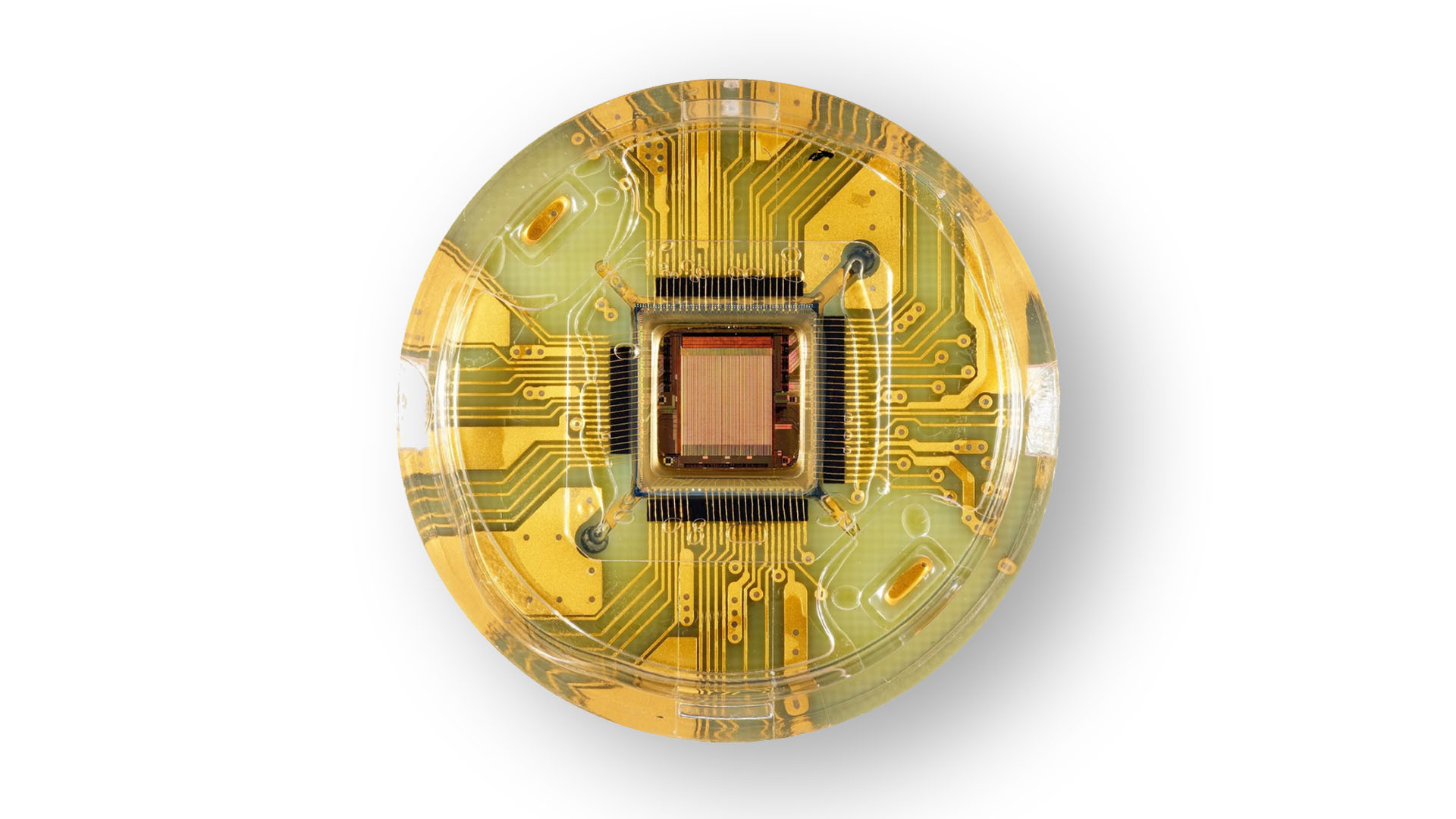
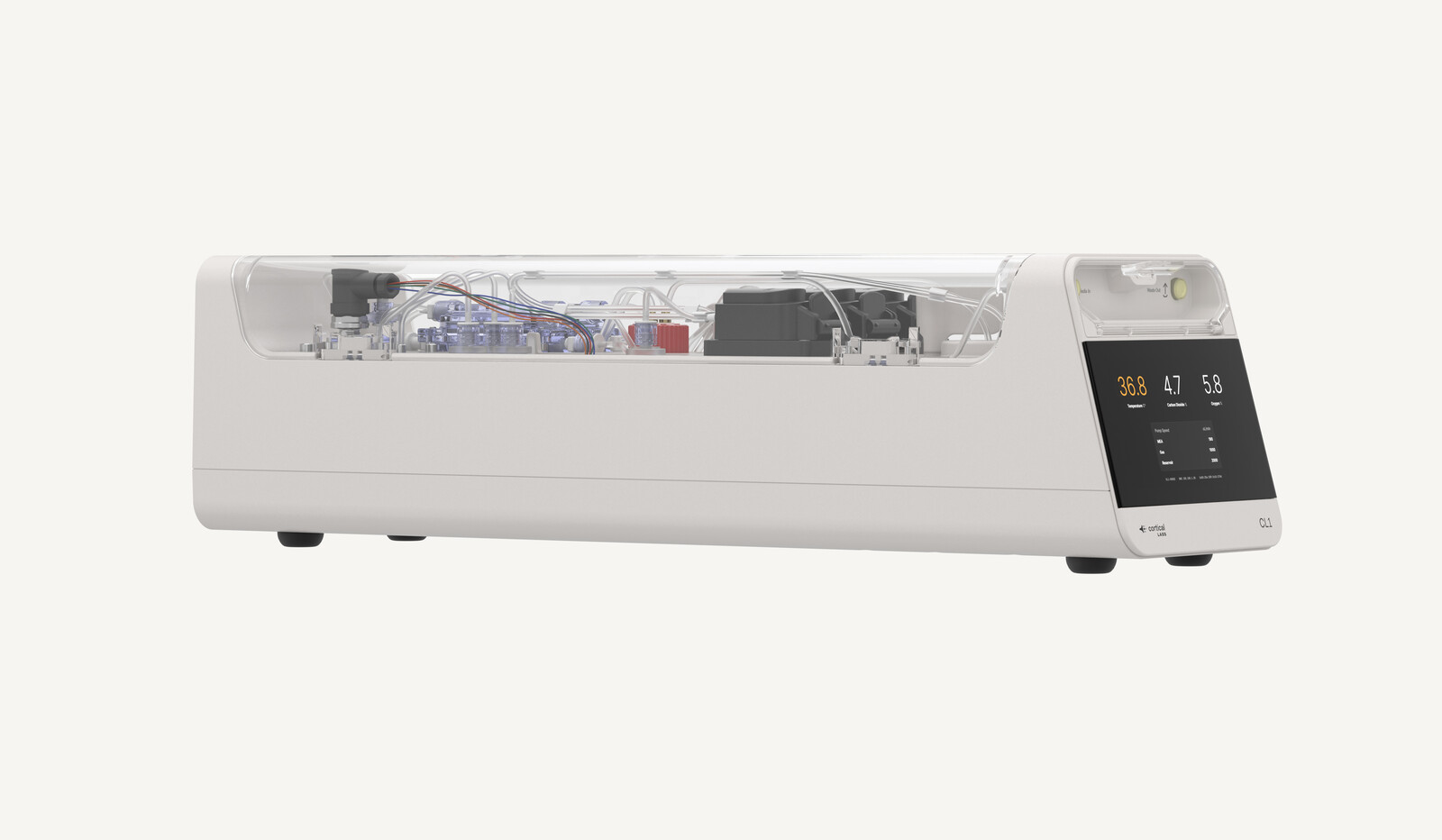
Flourish is part of a broader push to make computing more brain-like, though each company approaches the problem from a slightly different angle. The Biological Computing Company recently raised Series A funding and uses living neuronal networks to generate biologically derived software adapters for machine learning models. Cortical Labs and FinalSpark are pursuing a more literal version of biological computing, running computation directly on living neurons. Flourish sits closer to the biomimetic end of that spectrum, not building with neurons but trying to extract a more efficient way to compute from the brain.
Watch our webinar on biocomputing, with Cortical Labs and FinalSpark, below.
.svg)