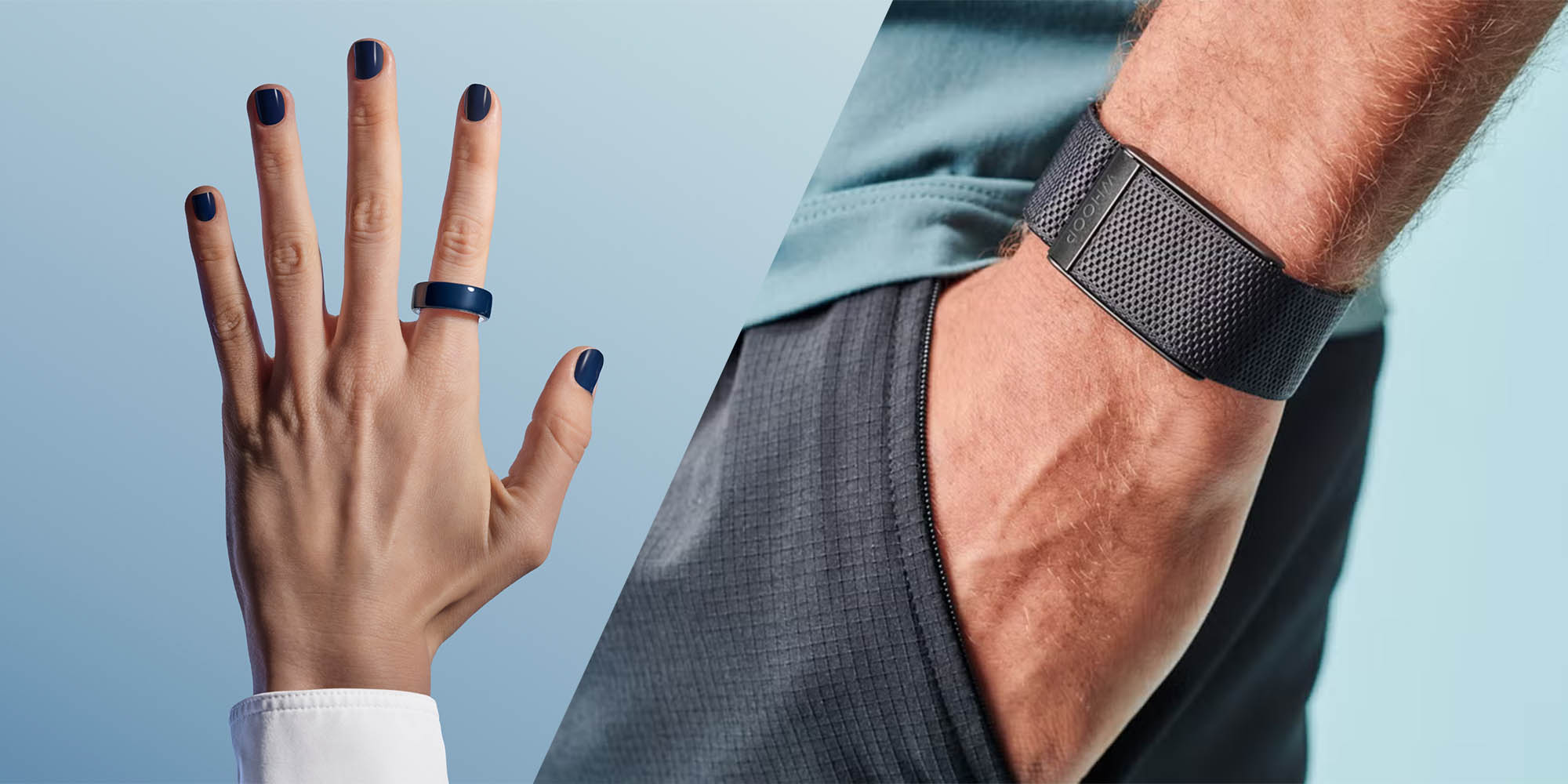
Just a few years ago, WHOOP and Oura still sat closer to the niche end of fitness tracking. Now it is hard not to know someone wearing one. After WHOOP announced a massive $575 million funding round in late March, pushing its valuation above $10 billion, and with Oura having crossed the $5 billion mark earlier, the questions around both companies are getting bigger. They have capital to deploy, growing IP portfolios, and a widening set of acquisitions and health ambitions. When do WHOOP and Oura start measuring the brain?
If you trace the public record across products, patents, acquisitions, and research, the answer appears to be: not soon. At least not through new form factors built to measure cognitive states directly. Both companies are doubling down on the form factors they already own, using machine learning and proxy models to turn existing signals into brain-adjacent insights. For Oura, that is showing up in an expanding stress stack, growing AI interpretation layer, and developments in new interface models. WHOOP is following a similar path through research linking wearable data to mental health, while backing from Mayo Clinic and Abbott suggests its ambitions now extend well beyond sleep scores and HRV.
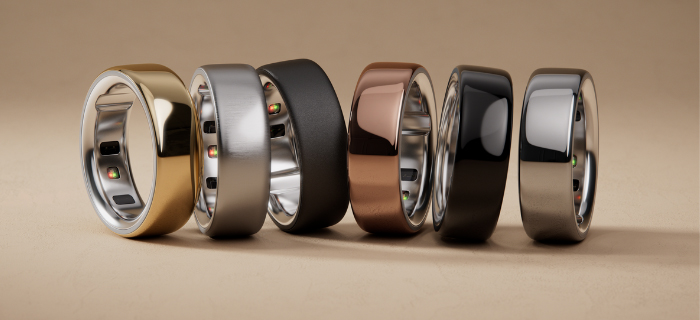
Oura has graduated from its early identity as a sleep wearable company. It is increasingly operating like a scaled health platform, built around its subtle ring. In November 2024, Oura raised $200 million in Series D funding at a $5.2 billion valuation, with Dexcom, best known for continuous glucose monitoring, investing $75 million as part of a metabolic health partnership. Later that year, Oura Ring 4 reinforced the same logic. Rather than expanding into new form factors and sensor modalities, Oura doubled down on its characteristic ring with a refined sensing platform and a broader health story.
Oura’s clearest expansion toward neuro-adjacent territory can be found in its growing stress stack. What began with a handful of stress-related features in 2023 has expanded into metrics like Daytime Stress, Resilience, and Cumulative Stress, with the latest layer focused on chronic stress, broader health impact, and burnout prevention. The underlying model still relies on ring-native proxy signals such as HRV, heart rate, temperature trends, and motion; metrics that correlate with the body’s response to strain.
A second neuro-adjacent signal regards the shifting balance from sensing to interpretation at Oura. Oura Advisor, rolled out in 2025, uses member data, manual inputs, and prior interactions to generate contextual guidance. On April 8, 2026, Oura introduced its first proprietary AI model for women’s health as a custom model built on top of Oura Advisor, health-sensing algorithms, and extensive biometric tracking. That model currently provides no structured outputs regarding cognitive states; but with billions of user hours logged, it is fair to assume research is already under way.
The March 2026 acquisition of Doublepoint also fits the neuro-adjacent pattern. Doublepoint specializes in AI-driven gesture recognition and was acquired to help Oura design and ship future AI-led experiences and UX formats. That places the company inside a broader race around new neuro-adjacent interface layers, also visible in Apple’s Q.ai acquistion and Meta’s neural-band product. Increasingly, consumer tech brands focus on making devices more responsive to neural intent and subtle bodily signals.
Oura’s strategy still looks firmly ring-first. Rather than moving toward a second form factor built for true brain readings, it is making the ring more capable as both an interaction layer and an interpretation layer, increasingly capable of informing its users around their cognitive states.
WHOOP has similarly moved beyond its earlier identity as a performance-first wearable. On March 31, 2026, the company raised $575 million at a $10.1 billion valuation. Investors now also arrived from the medical world, in the form of Abbott and Mayo Clinic, while WHOOP framed the raise around AI and predictive models of health rather than simply performance tracking. The product stack has widened in step. WHOOP 5.0 added Healthspan, cardiovascular features, wearable blood pressure monitoring, ECG, and deeper lab integration.
Future WHOOP products could credibly use those measurements to infer mental health states. In July 2025, the company published findings from a large longitudinal study combining more than 300,000 monthly mental health surveys from over 170,000 members with roughly 7.9 million days of wearable data. The study used validated survey tools for stress, anxiety, and depression, then compared those scores against WHOOP-derived measures such as HRV, resting heart rate, sleep timing and consistency, and physical activity. Members with higher HRV, lower resting heart rate, and more consistent sleep patterns reported lower symptoms across all three categories.
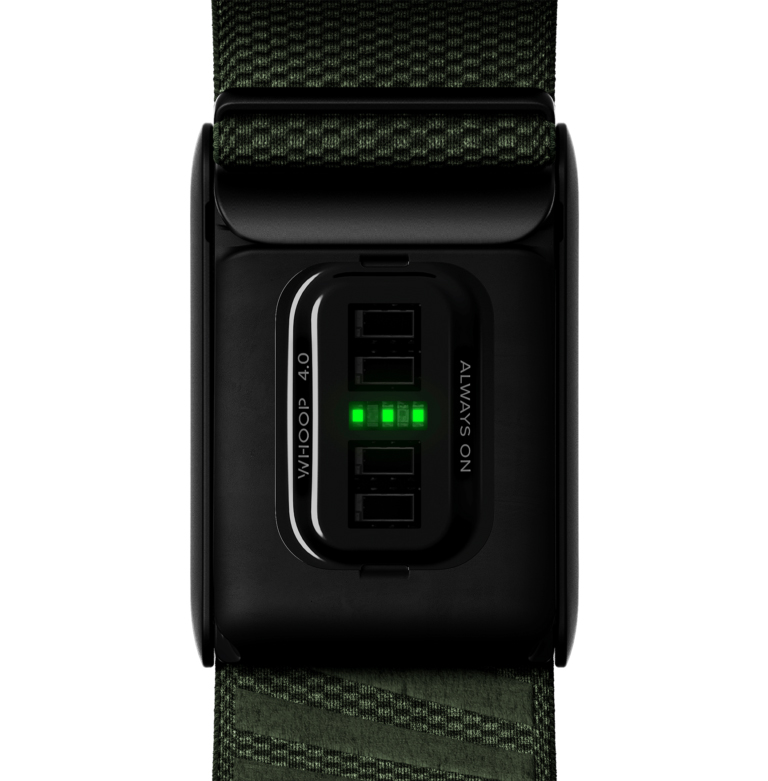
That is still a long way from measuring the brain directly. WHOOP's findings were not derived from neural activity, but downstream physiological patterns that tend to move with mental state. Even so, the logic is commercially powerful. If subjective stress reliably precedes elevated resting heart rate, reduced HRV, and more irregular sleep, then a wrist wearable does not need EEG to become informative. It only needs to show that peripheral physiology can reveal something meaningful about resilience, strain, and early shifts in emotional state.
And that may be where WHOOP chooses to stop short. The closer a wearable gets to making definitive health claims, the closer it moves toward regulated device territory. The FDA made that clear in July 2025, when it warned WHOOP that blood pressure estimation was not a “low-risk function.” The agency softened the broader landscape in January 2026 by updating its General Wellness guidance and explicitly allowing more room for non-invasive wearables, including wrist-worn products, to output measures like blood pressure under a wellness framing. But the WHOOP letter still shows where the boundary sits: not necessarily in what a device measures, but in the clinical meaning a company suggests those measurements carry.
.svg)