

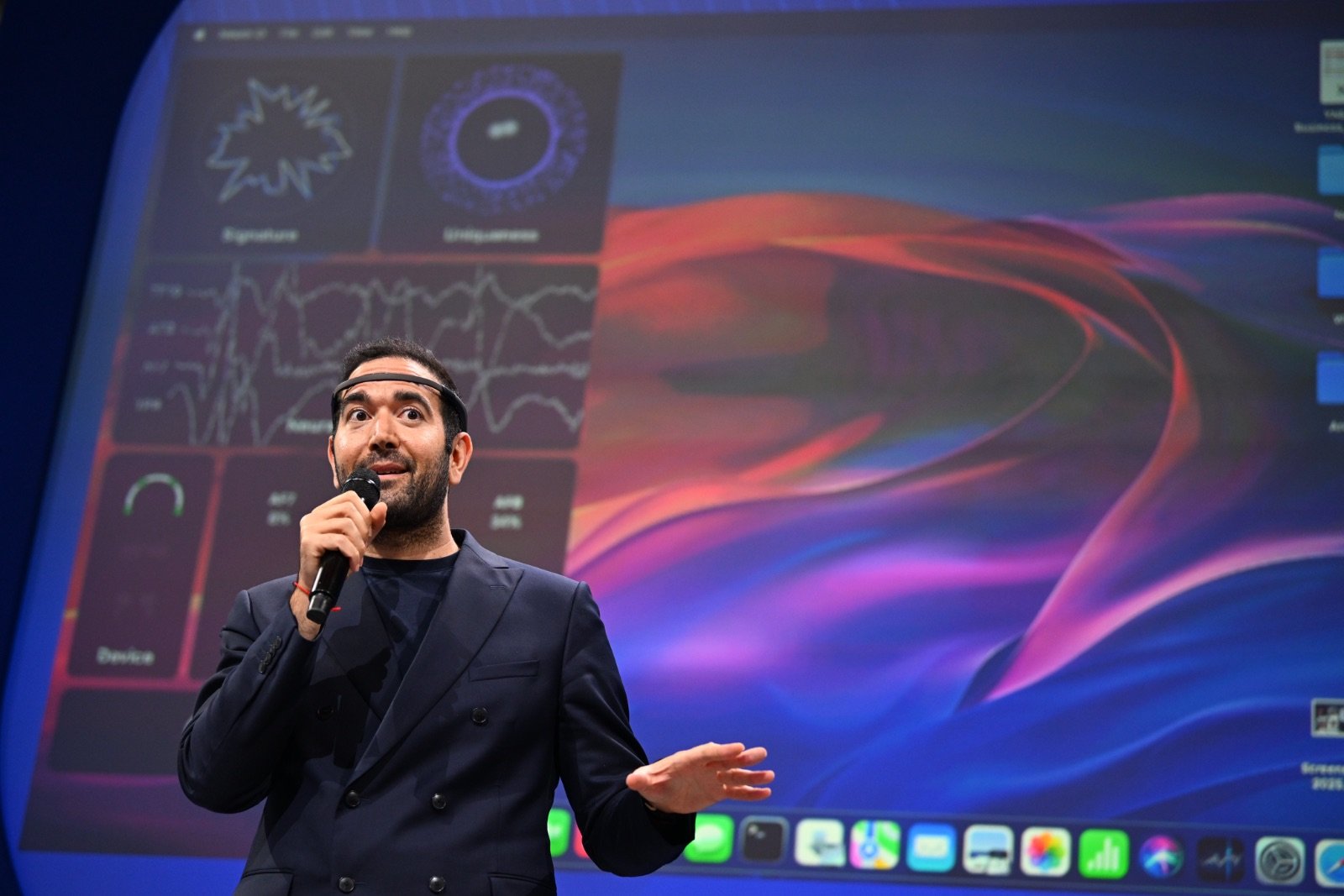
Consumer neurotech still has few clear uses for the average person. The most compelling neurotech applications remain clinical, while consumer wearables struggle to move much beyond focus scores, meditation feedback, and broad cognitive measures. Sabi, a new San Francisco-based consumer neurotech company, wants to challenge that boundary. Last week, the company emerged from three years in stealth with a beanie it claims turns thoughts into text.
That claim is ambitious. Most progress in speech decoding has come from invasive BCI groups, where systems placed inside the cortex can capture richer neural signals. Even there, accuracy remains imperfect and word-per-minute counts fall far below natural speech. Meanwhile, EEG teams have made progress in device control, but speech decoding through a consumer-grade wearable remains a much harder target. For Sabi, the wager is that advances in sensor density, signal quality, and AI models can now move EEG far beyond its historical limits.
The neurotechnology field has seen a wide range of innovation, but to date, a neuro-beanie has not been seen before. Yet, the beanie form factor is central to Sabi’s design. Historically, EEG systems have suffered from poor spatial resolution, limiting high-bandwidth uses like speech decoding. Sabi believes that by attaching EEG sensors to practically every fibre of the beanie, and then combining that with advanced machine learning trained on brain foundation models, it can reach the resolution required for thought-to-text.
And according to Sabi CEO Rahul Chhabra, thought-to-text is the only way to make neurotech actually interesting to consumers. “If you think about it, across all computers, phones, and any kind of input devices, you essentially have two big controls," he explains. "One is the mouse and one is the keyboard. And we essentially want to replace both of them. You should be able to talk to a screen on a computer with just your thoughts.”
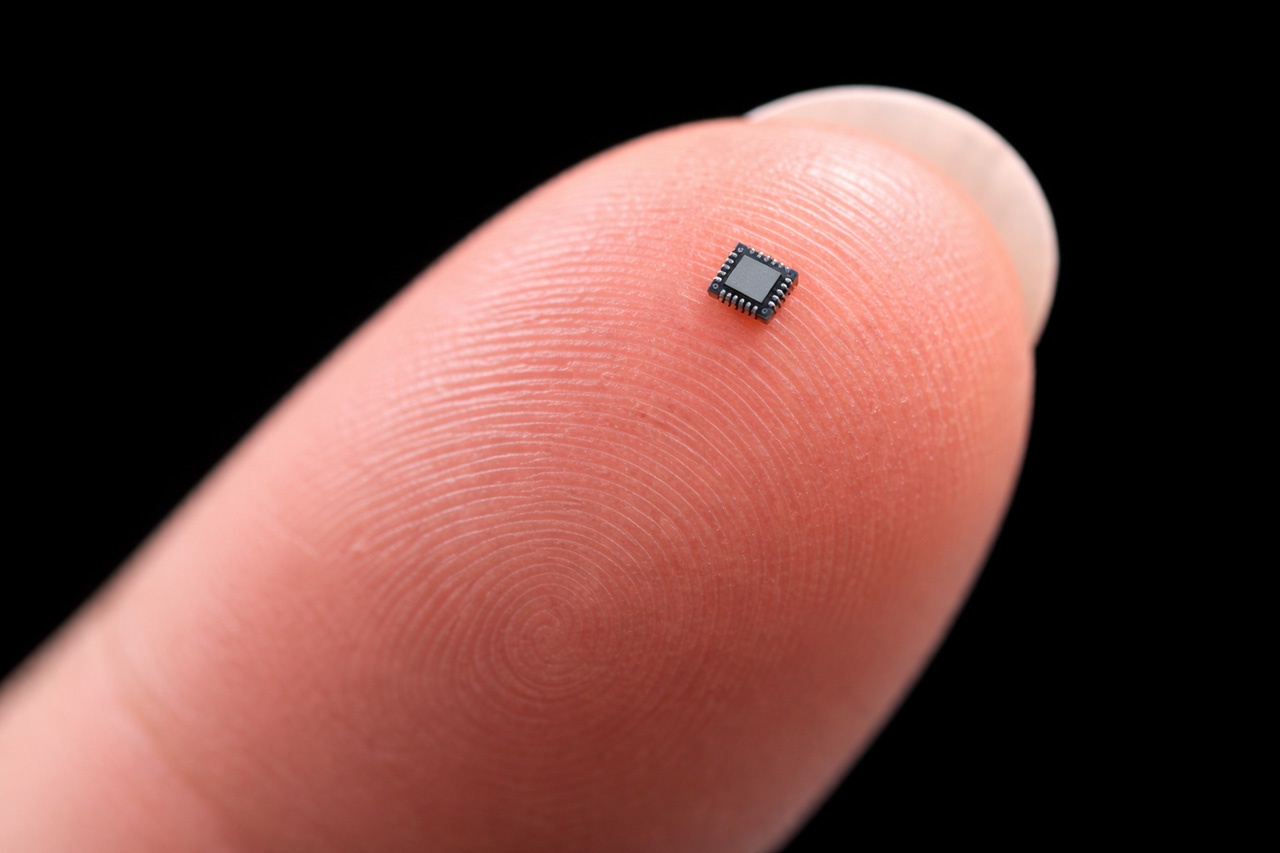
Chhabra explains that his beanies will have up to 100,000 miniaturized EEG sensors embedded. “The extremely high density of sensors ensures that you get to be able to triangulate the sources that are producing the neural activity a lot better. And I think that’s sort of what you would call a spatial scaling law for neural decoding.”
Those sensors will also have to be wearable and waterproof, ensuring the beanie can be used, worn, and washed . “There’s washability, there’s breathability, there’s thermal control,” Chabbra explains. And that is just version one. “We’re launching in winter, and the beanie is the most natural form factor. But I think obviously the baseball cap is the more dominant wearable cap version. So we definitely want to get there too.”
Sabi claims to have already reached 30 words per minute with reasonable accuracy. The most advanced invasive projects, including Stanford’s inner speech team, have reached around 70-80 words per minute, while natural speech sits around 140-180. That means Sabi is still far from a seamless thought-to-text interface, decoding at a rate slower than typing. Still, if validated, its 30 words per minute claim is unprecedented in an EEG form factor.
That is not where the challenge of thought-to-text ends. With inner speech, one central concern often returns, both practically and ethically: how do you know when to start reading? Stanford’s inner speech team addressed that problem by mapping an internal ‘passcode’ which users have to think of to enable the array to start reading.
Chhabra does not see that as a viable consumer solution. “The good part about reading the brain is that you read the brain. And so, if there is an intention to communicate, I think we can implicitly read that. You don’t have to say a specific word.”
Brain-computer interfaces are spreading across society at lightning speed. It has been more than a decade since Musk’s chip-in-brain ambitions entered mainstream media. And while most of the field has now embraced a less sensationalist narrative, Sabi believes the world is ready for an incremental step. One where consumers finally see the possibilities of combining state-of-the-art AI, brain foundation models, and wearable sensors.
Yet there is a reason that the biggest BCI players are choosing clinical use cases first. Patients with motor and speech impairments receive the most value from neurotech innovation and provide an ethical arena to test what such technology can achieve. The focus is on improving lives also provides a clear ethical and practical boundary around what the tech should do.
Chhabra explains that by going through the consumer market first, Sabi can still one day enter that clinical arena. “Achieving the standards of how a regular everyday consumer would be wearing it automatically makes sure that, at least for clinical applications, the product is really good.” Chhabra says. He continues by noting that speech decoding companies like Neuralink and Paradromics are not (yet) direct competitors.

And still, it is hard to see why Sabi would not compete, if its product truly does what it claims. A non-invasive interface that reaches such resolution across everyday contexts could be used for more than typing emails with your thoughts. You can imagine going from thought-to-text into thought-to-action, starting with mobile device control and extending into practically any modality where thoughts offer a more frictionless input.
That also makes Sabi a company to watch carefully. The claims are ambitious, and there is a reason this has not been done before. State-of-the-art EEG sets cap out at around 1024 sensors. Sabi wants to embed 100,000.
Traditional sensors are large and do not respond well to real-world use. Sabi says its beanies work all day, every day, for every user, no matter their lifestyle, head shape, or hair texture. And reaching 70 words per minute has been a major challenge, even for leading intracortical research teams. Sabi claims to have already reached half that number without entering the brain.
The goal is big, the type that could credibly take consumer neurotech from the fringes into a real consumer sphere. But consumer neurotech has not just suffered from a lack of use cases. It is also a category where ambitious claims often become narrower products at launch. With Sabi planning to release its beanie before the end of the year, the key question is whether the final product can truly match its current technical ambitions.
Produced with support from

%20copy.jpg)





.svg)

