
Big Tech is moving devices out of our pockets and onto our bodies. Rings, watches, glasses, headbands, earbuds; sensors are everywhere. Yet interacting with these systems still routes back through the phone, a touchscreen, or a voice command. Tech developers are now looking to break that interface barrier by linking users’ intent directly to device control. In the last year, Meta released an EMG Neural Band, Apple acquired silent speech tech, and Oura invested in a gesture-based input layer.
Neural sensing’s integration in consumer tech is starting with control, one of the clearest use cases today. It directly improves products people already use, rather than requiring new devices or consumer habits. By reading user intent and state, these systems support explicit actions like skipping, selecting, or scrolling, while enabling adaptive experiences based on attention, fatigue, and workload. Over time, those same sensors generate the large-scale datasets needed to take the tech into a range of new consumer-facing applications.
At the start of the century, computing moved from the desk into our pockets. This decade, it is moving onto the body and into everyday environments. Yet the interface layer has not kept up. Many of these devices are controlled through phones, small screens, voice commands, or awkward buttons. That is creating strong interest in more efficient ways to translate user intent into device control. The near-term goal is a better interface. But over time, the larger opportunity is creating devices that measure and adapt to the user’s cognitive and physiological state.
So far, the clearest commercial example is Meta’s Neural Band. Meta’s long-term AR/XR strategy depends on interaction moving beyond phones and screens; its Ray-Ban smart glasses have become the strongest expression of that bet. But control remains a bottleneck. In 2019, Meta acquired CTRL-Labs for a reported $500 million to $1 billion to address that gap. Last year, that team produced an EMG wristband that turns subtle hand gestures into control commands for Meta’s smart glasses.
.webp)
Meta is not the only large tech firm that has invested in the interface problem. In 2022, Snap acquired French EEG startup NextMind to support long-term AR research inside Snap Lab. NextMind developed a developer kit that used neural activity to enable users to interact with computers and AR/VR systems by focusing on visual targets. But the acquisition appears to have remained mostly an IP investment. Snap discontinued NextMind’s hardware after the deal, and there has been little visible product translation into Spectacles since.
UX investments are also showing up in smaller consumer wearables. Earlier this year, Oura acquired Doublepoint, a Helsinki-based startup developing AI-driven gesture recognition for wearables. Doublepoint’s technology uses biometric and motion signals to detect subtle hand movements, enabling devices to be controlled by gestures. In that sense, it achieves the same control as Meta’s Neural Band without reading the electrical signals that reveal a user’s intent directly.
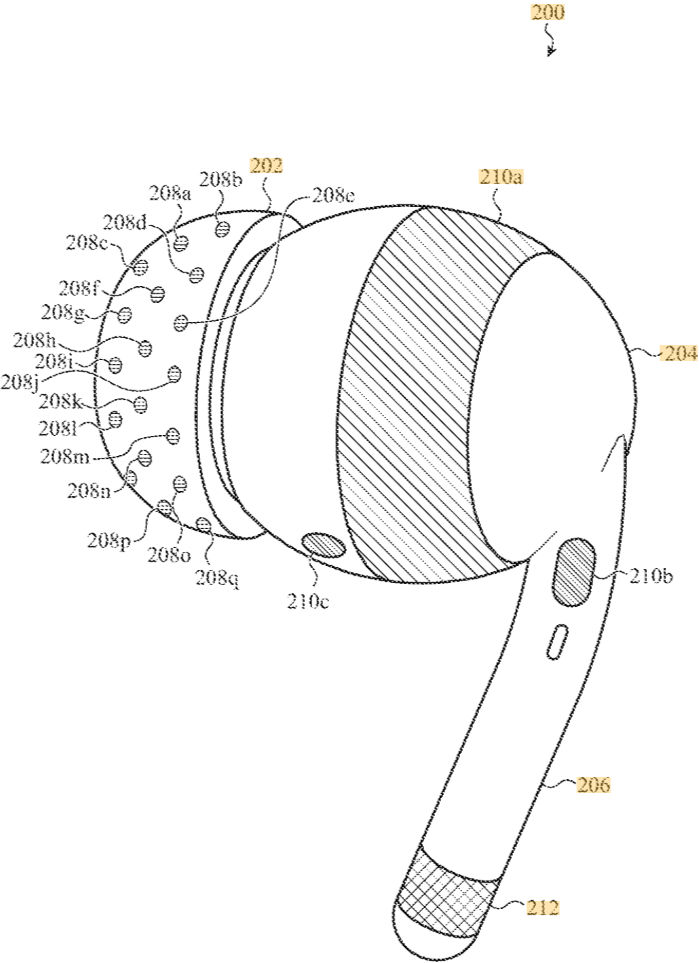
Apple moved in the same direction when it acquired Israeli startup Q.ai for around $2 billion. The start-up develops technology for detecting whispered speech, difficult audio environments, and silent communication. The IP provides a natural fit with AirPods, Siri, and future wearables. Separately, a 2023 Apple patent application describes an AirPods variant with integrated electrodes that could measure EEG, EMG, EOG, ECG, heart rate, and other signals. If productized, that kind of sensing could support both device-control and future health-tracking applications.
Measuring user intent can be divided by form factor, underlying technology, or the type of control it enables. The clearest commercial efforts today focus on explicit device control. These systems aim to replace buttons, screens, and voice commands by detecting what a user wants to do, whether through a small gesture, muscle signal, or neural signature, and mapping that signal to a predefined device command.
Not every approach to explicit control needs to measure brain or muscle activity directly. Doublepoint maps small hand gestures to device commands through a technology called an inertial measurement unit (IMU). Meanwhile, Apple’s acquisition, Q.ai, focuses on enabling silent speech commands by measuring facial micromovements.
But most investment in the explicit control category has gone into EMG. Electromyography measures the electrical signals produced by muscles, extracting a clean measure of motor intent. Most variants focus on wrist-based EMG, where sensors detect subtle finger or hand movements before they become large, visible gestures. Beyond Meta, Israeli startup Wearable Devices has produced the Mudra Band, which lets users map custom gesture commands to any compatible device.
More sophisticated is adaptive control. Here, a device passively measures the user’s cognitive or physiological state and adjusts its behavior accordingly. The user does not issue a command. Instead, the experience changes based on inferred context, such as whether someone is tired, overloaded, focused, distracted, relaxed, or under stress. That could mean earbuds lowering volume when fatigue is detected, a headset simplifying an interface under high cognitive load, or a notification system waiting until the user is more receptive.
For adaptive control, EEG adds the signal layer that proxy inputs cannot reach. Gesture systems can tell a device that a user has moved. EMG can detect the motor signal behind that movement. EEG can indicate whether the user is alert, fatigued, engaged, or cognitively loaded while the interaction happens.
But EEG is rarely used alone. Most interface stacks consist of broader ExG systems, combining brain activity with electrical signals from the eyes, jaw, and face. EOG can capture gaze shifts, while EMG-like signals can detect jaw or facial activity. Those signals may be better suited to simple commands, while EEG provides the cognitive context for adaptive experiences such as fatigue, focus, overload, or readiness.
Swiss start-up IDUN Technologies is among the firms pioneering in-ear EEG for UX control. The company spun out of ETH in 2017, developing Dryode®, a new flexible, soft, and biocompatible material for measuring high-quality ExG. Dryode® was tested with selected partners, including OpenBCI, before IDUN started working on its own product line for consumers and developers.
At this year’s CES, IDUN previewed the latest iteration of its in-ear EEG line, the IDUN Guardian 4. The earbuds contain dry-contact EEG sensors in each eartip, which, combined with EOG for eye movement and EMG for jaw clenching, provide users with a long list of real-time classifiers. IDUN’s ambition is to go full wireless in its next iteration, the Guardian 5, expected to be released in 2027.
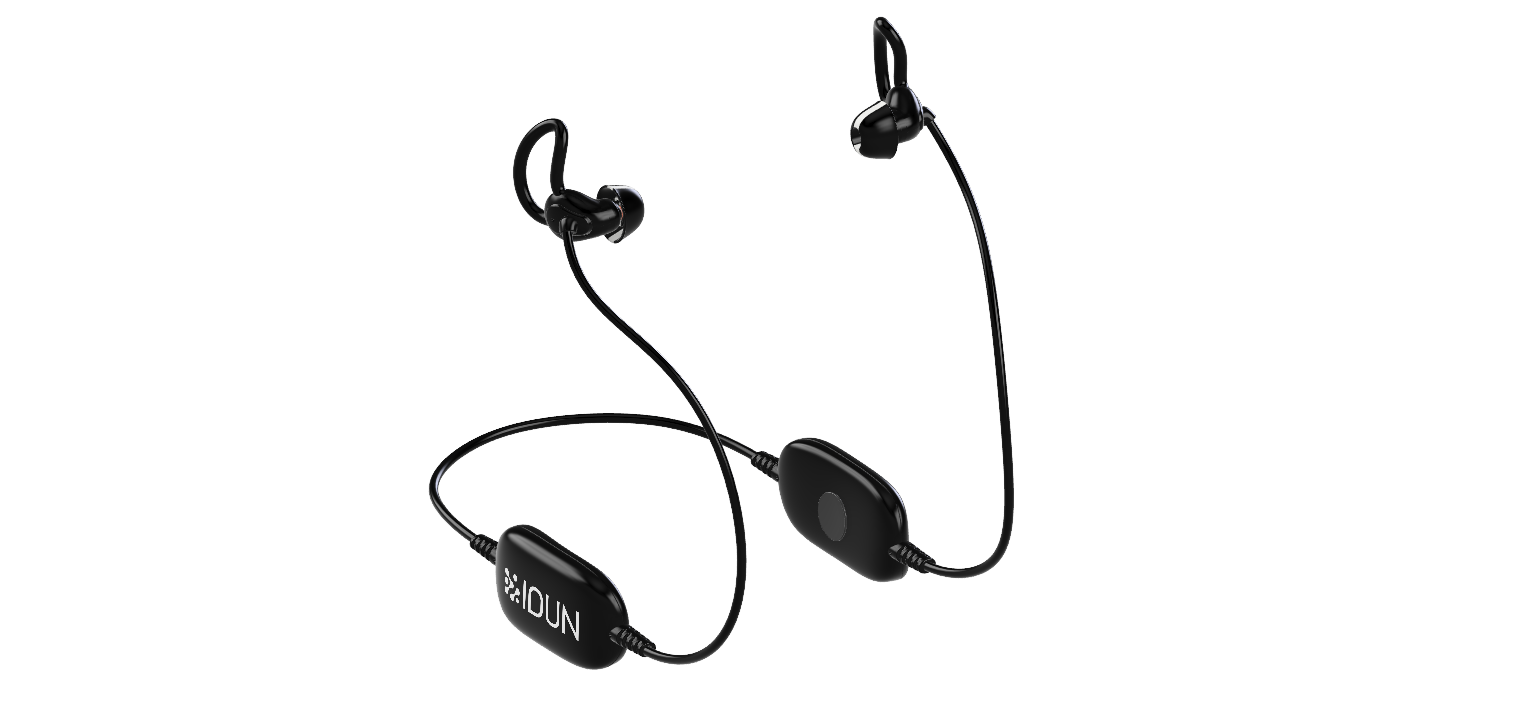
The IDUN Guardian 4 integrates Qualcomm’s Snapdragon S7 audio platform, moving parts of the classifier stack onto the device itself. That edge-processing layer is key for UX control, where jaw clench, eye movement, and adaptive audio features need to respond in real time with exceptionally low latency.
IDUN’s near-term UX strategy starts with simple, low-friction control. Its CES demo showed hands-free music interaction, with local low-latency classifiers working through embedded audio controls to control music from the earbuds. The first layer uses jaw activity and eye movement. A jaw clench can start or stop the music player, while eye movement can skip a song. IDUN has also previewed more advanced UX uses, including a Pong demo controlled by eye movement.
IDUN’s differentiated layer is adaptive control. Here, the earbuds directly infer the user’s cognitive state. These measurements are presented in a Cognitive Intelligence Platform, showing metrics around readiness, relaxation, fatigue, engagement, focus, sleep, and longer-term neural trends.
Parts of that stack are accessible through SDK and API access, allowing developers and OEMs to stream EEG and IMU data, access real-time classifiers, and build their own neuroadaptive applications. The software layer turns the earbuds from a closed sensor into an integration platform. Developers start with concrete UX features today, while building the longitudinal datasets needed for more personalized adaptive functions over time.

In the next few years, consumer devices are likely to incorporate a wide range of low-friction control layers. Hand gestures, eye movements, jaw clenches, and silent speech will make it easier to interact with devices without reaching for a phone. For simple commands, that shift does not require full brain sensing. Many near-term controls can be handled by EMG, IMU, EOG, microphones, or proxy signals.
But the larger opportunity sits beyond explicit control alone. By integrating EEG and broader EXG sensing into familiar form factors, consumer tech firms can soon build devices that respond not only to what users do, but to the state they are in. And those measurements–continuous, real-world neural and physiological data–help build the models required to unlock a new generation of neural sensing applications.

Exploring In-Ear EEG is a five-part article series exploring the current landscape of consumer in-ear EEG technology. The series is produced in partnership with IDUN Technologies, a Swiss start-up leading the push for full-wireless in-ear EEG technology. The series covers the core use cases of in-ear EEG today, the main form factors of consumer ExG, and the overall market in 2026.
Read the full series.
.svg)