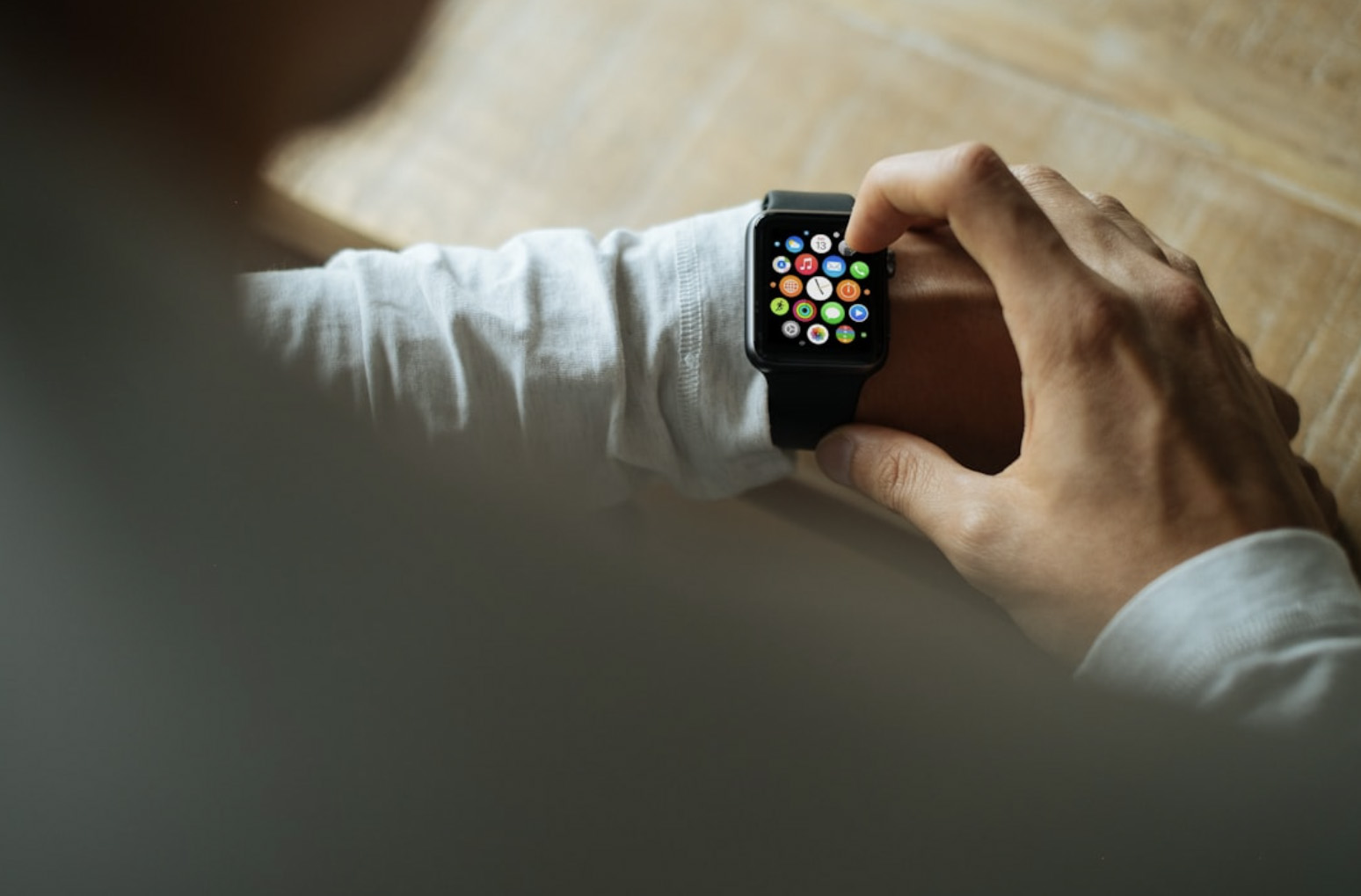
Rune Labs, the company behind StrivePD, has announced the launch of a new Parkinson’s AI companion. Called StrivePD Guardian, the feature continuously analyzes real-time data to provide context-aware guidance on symptoms, medications, day-to-day experiences, and care goals. Built on years of data gathered through Rune Labs’ FDA-cleared Apple Watch integration, the launch marks a shift from monitoring toward patient-facing features designed to support daily functioning.
Neurotech and artificial intelligence are already closely intertwined. Most companies in the space use AI somewhere in the stack, whether to clean EEG signals, detect patterns in neurological data, or support closed-loop personalization. Rune Labs points to a more specific pattern. As neurotech companies deploy monitoring tools across clinical populations, they begin to accumulate proprietary longitudinal datasets that can be used to unlock new layers of product value. In that model, first-mover advantage comes not only from launching the tool first, but from owning the data needed to improve it over time.
StrivePD Guardian is introduced as a personalized AI companion for people living with Parkinson’s disease, their caregivers, and clinicians. Built on Rune Labs’ longitudinal dataset of wearable-derived data and FDA-cleared symptom algorithms, it continuously analyzes real-time inputs to provide guidance around symptoms, medications, day-to-day experiences, and care goals.
Amy Franzen, appointed as Rune Labs CEO in January of this year, describes, “people with Parkinson’s live with symptoms that change hour-to-hour. StrivePD Guardian provides support in those moments, translating continuous symptom changes into clearer understanding, better management, and more productive clinical visits.”
The product is structured around a set of specialized AI agents. Those agents cover medication support, symptom interpretation, coaching, journaling, and data visualization.
“Because StrivePD Guardian is trained on proprietary, continuous wearable datasets, it can interpret ‘off times’ and dyskinesia with a level of precision that general-purpose AI models simply cannot achieve,” says William Newby, Rune’s Vice President of Product and Strategy.
The launch builds on a multi-year product arc. StrivePD received FDA clearance in 2022 as an Apple Watch-integrated monitoring app passively collecting tremor and dyskinesia data through Apple’s Movement Disorder API. The company first started layering AI into that foundation in September 2024, when it launched GenAI-powered clinical reports through StrivePD.
A broader product pattern is now taking shape across neurotech. A company launches a monitoring tool within a defined clinical indication, often through a wearable or app that can collect continuous data outside the clinic. Over time, that product creates a proprietary longitudinal dataset tied to a specific patient population. The next layer is adding intelligence that cannot simply be replicated by competitors–AI features that use the rich datasets to improve interpretation, personalization, forecasting, or day-to-day support.
Rune fits that pattern closely. The company first built the monitoring layer through StrivePD, its FDA-cleared Apple Watch-based Parkinson’s tracking app. Guardian is the next layer built on top of that installed base: a conversational interface that derives its intelligence from years of disease-specific patient data.
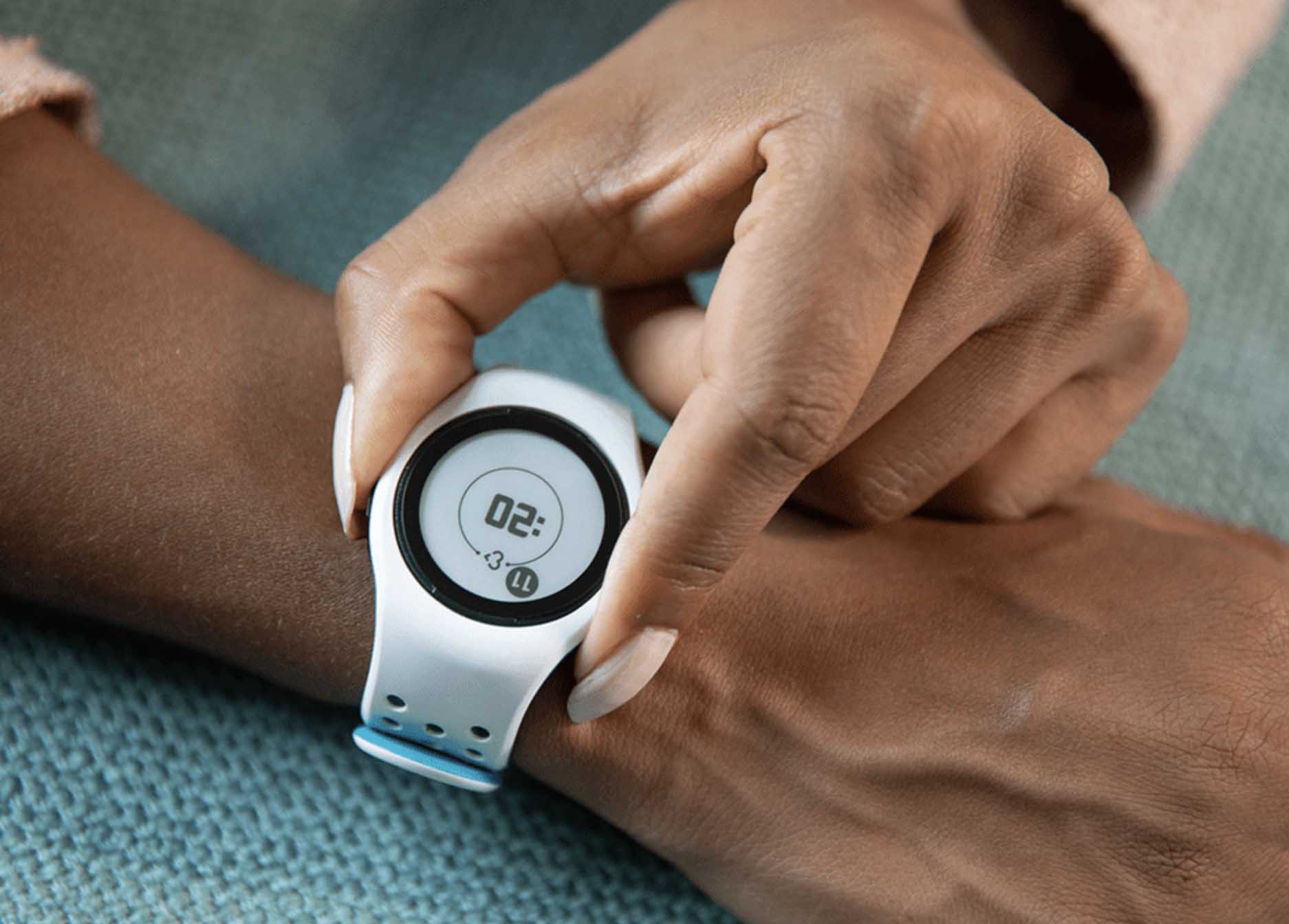
A similar arc is taking shape in seizure prediction. MIT-spin out Empatica released its first FDA-cleared epilepsy monitoring wearable in 2018. The wrist-worn device captures physical proxies of seizure patterns, warning users and caregivers of onset. The company is now running a study to build an AI-based seizure forecasting tool, and explicitly frames that effort as an extension of the monitoring base it established over the last eight years.
The same logic is beginning to appear in sleep. Beacon Biosignals acquired Dreem in 2023, received FDA clearance for the Dreem 3S wearable EEG headband, and later secured FDA authorization for a change control plan that allows ongoing updates to its sleep-staging algorithm. Its product is less patient-facing than Rune and Empatica, but it reflects the same structural dynamic. Regulatory access to a clinical wearable cohort creates room for continuous improvement without restarting the process each time.
As wearables spread across clinical neurology, the first company to establish a cleared foothold in a defined indication may gain more than early revenue or brand recognition. It may also gain the right dataset at the right time: real-world, longitudinal, indication-specific, and difficult for later entrants to replicate quickly.
.svg)