

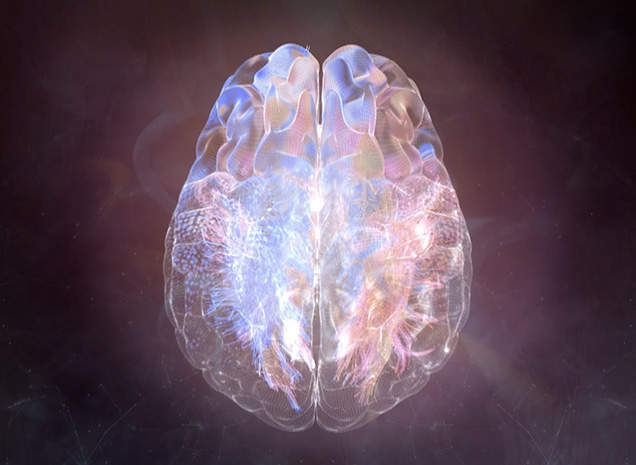
Sydney-based Omniscient Neurotechnologies has raised $27.2 million in Series D funding to expand hospital adoption of Quicktome, its brain-mapping platform. The technology has been described as “Google Maps for the brain,” using connectomic maps to help surgeons understand how an individual patient’s brain is wired before an operation.
The round was co-led by OIF Ventures and Australia’s National Reconstruction Fund Corporation, with participation from existing backers including Will Vicars and Gina Rinehart. Omniscient CEO Stephen Scheeler framed the funding around clinical scale, stating that AI can turn “the vast complexity of the human brain into clear, actionable intelligence” and help bring precision brain medicine to patients, physicians, and partners in the US and worldwide.
Standard MRIs show the physical structure of the brain, but not how it functions. This creates risk during surgery, especially near areas involved in language, movement, memory, or emotion. Because those networks are often hard to see on a standard scan, a surgeon can accidentally damage them, leaving a patient with lasting changes to personality, memory, speech, or movement, even when the operation itself goes to plan.
Quicktome is designed to address this by using AI to transform MRI data into a detailed map of each patient’s brain networks. It traces pathways linked to critical functions and makes them visible to neurosurgeons during surgical planning. From an operational perspective, hospitals do not need major new equipment. The platform runs through a cloud-based workflow and uses imaging data already collected as part of standard pre-surgical protocols.
A companion product, Quicktome FC, goes a step further by showing functional connectivity across those networks. Both Quicktome and Quicktome FC are FDA-cleared, with Quicktome cleared in 2021 and the Quicktome Software Suite receiving FDA clearance in 2023.
The company’s strongest foothold is brain tumour surgery, where the stakes are high because surgeons are operating near critical functional networks. A recent study cited by Omniscient reported that connectome-guided planning, used alongside a minimally invasive tubular retractor approach, was associated with significantly fewer new neurological deficits in deep-seated tumour cases.
The raise also coincides with a development that could prove equally important for adoption. CPT code 1039T is set to take effect on July 1, 2026, creating a billing pathway for connectomic analysis. In the U.S. healthcare system, CPT codes are the billing language used to report medical procedures and services. Without a specific code, hospitals can struggle to charge for a new workflow, which creates a financial barrier to adoption.
That has been a core hurdle for Omniscient. Even if surgeons found the technology useful, hospitals still needed a clearer reimbursement route for the work involved. The new CPT code helps address this by giving providers an official way to report connectomic analysis. It is still a Category III code, which means it applies to an emerging technology rather than a widely established procedure. That makes it less automatic than a permanent Category I code, but it gives hospitals and payers a framework to track use and build evidence around clinical value.
A significant portion of the Series D funding will go toward expanding Omniscient’s U.S. sales and clinical support teams. The remainder will support new clinical applications, including tools for deep brain stimulation in conditions such as Parkinson’s disease. Stroke has also been identified as a further market, extending the company’s strategy beyond brain tumour surgery and into broader neurological care.
On the longer horizon, Omniscient is exploring applications in mental health and brain-computer interfaces. Quicktome is already being used at BCI trial sites to help identify optimal placement for implants. OIF Ventures described the platform as “a rare deep-tech breakthrough,” backing the company’s ambition to scale connectomic mapping into a global standard of care.
Produced with support from

%20copy.jpg)




.svg)

