

Few people currently live with implanted brain-computer interfaces, which are still investigational medical devices. But the research behind them is reaching new scales. Over the past two weeks, Neuralink reported 50,000 hours of human neural recordings, Precision Neuroscience published an atlas of neural activity from 70 patients, and Paradromics demonstrated four years of stable recordings in animals.
The three companies are presenting the milestones across different contexts. Neuralink is using the data to train foundation models that can improve decoding and usability for its Neuralnauts. Precision is building a functional atlas to support more generalizable neural decoding across patients and brain regions. For Paradromics, the results are further evidence of the long-term reliability of its implant.
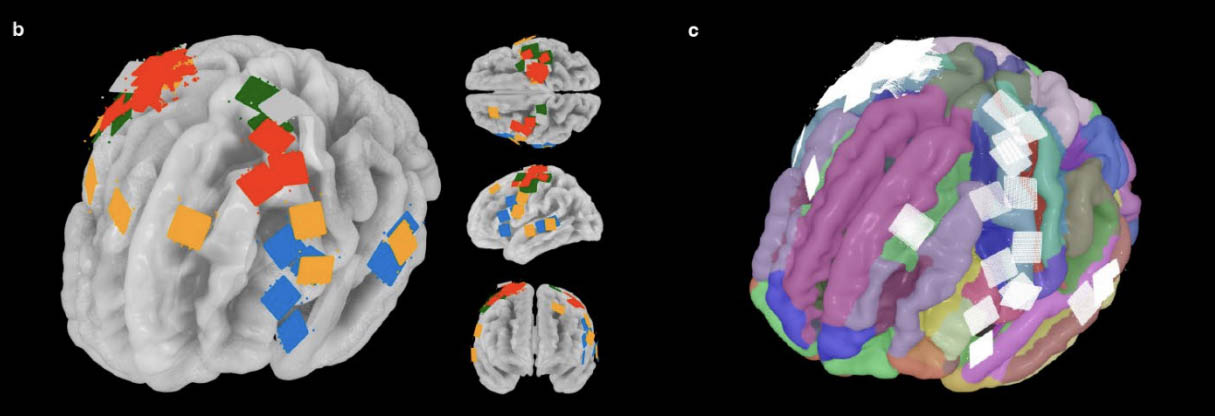
Precision Neuroscience published the growing atlas of the human nervous system in a new preprint. The dataset contains more than 180 hours of synchronized neural and behavioral recordings from 70 patients across 12 medical centers. It includes recordings from over 87,000 individual microelectrodes deployed across more than 100,000 anatomical locations.
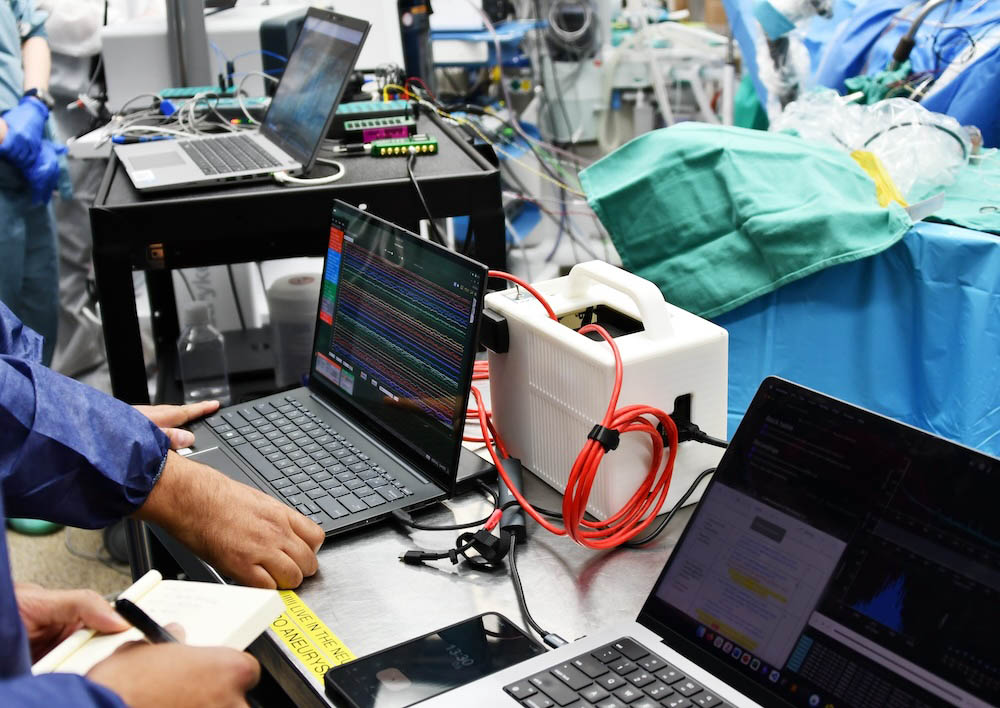
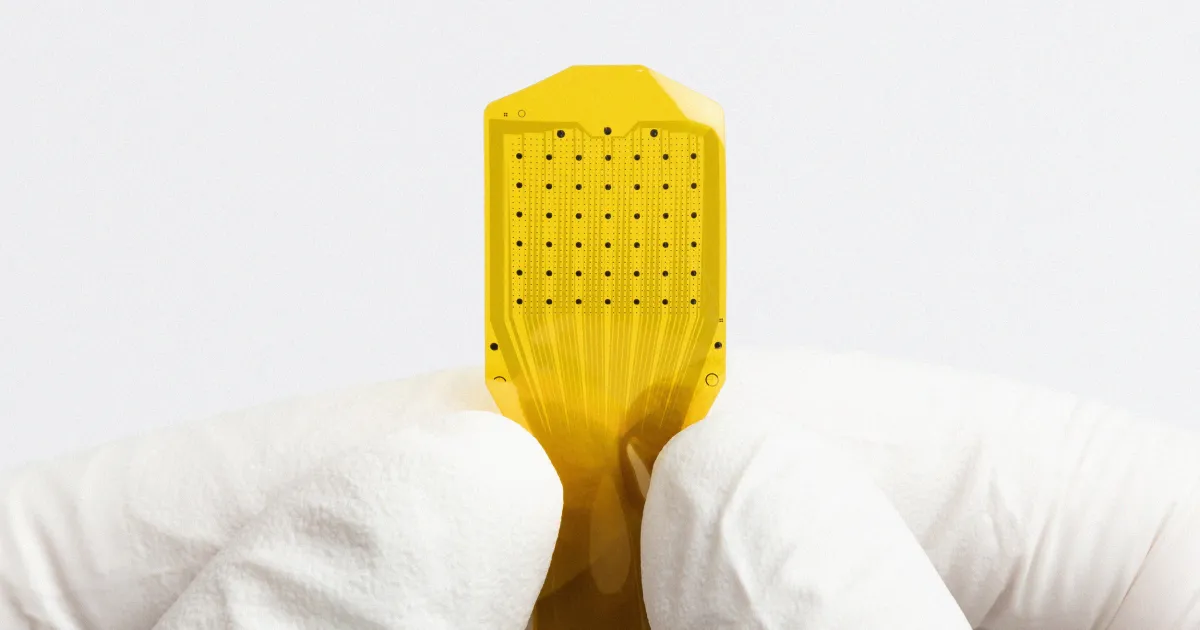
The data were collected using Precision's Layer 7 Cortical Interface, a thin-film electrode array placed on the brain's surface. Supporting up to 1,024 recording channels, the system is currently cleared for temporary use, including during brain tumor removal and epilepsy surgery. This allows Precision to collect recordings from different brain regions across a large patient population.
Precision has now completed more than 100 patient procedures across 18 institutions, and recently announced a $250 million Series D.
The recordings are of high resolution. Researchers could distinguish the cortical representations of individual fingers, detecting changes in sensory responses across distances as small as 0.8 mm. These fine-scale patterns could also be identified across different patients, demonstrating how high-density recordings can reveal consistent features of functional brain organization.
The atlas extends beyond the cortex. Researchers recorded responses from the trigeminal root, dorsal columns, and thoracic spinal cord, structures that have historically been difficult to access with high-density electrophysiology.
Precision ultimately wants to use these recordings to build what it calls a whole-brain interface.
“[Early] framing imagined the whole-brain interface as a hardware milestone. We believe it is, more fundamentally, a data milestone. [...] What matters is whether, across subjects, tasks, brain regions, and time, you can build a reference that is functionally complete. That is what the atlas is designed to become," said co-founder and Chief Science Officer Benjamin Rapoport.
Chief Data and AI Officer Craig Mermel suggested that the implications extend beyond clinical applications. “Brain-computer interfaces are becoming a platform-level tool,” he said. “The artificial intelligence community has always watched the space closely in anticipation of this moment of convergence. Precision will have more to say on that very soon.”
Paradromics posted an update on its implants. The intracortical electrodes have maintained stable neural recordings for more than four years in animals. The results come from two sheep implanted with research versions of its Cortical Module, with recordings collected at 1,470 and 1,443 days after implantation.
The electrodes, which penetrate 1.5 mm into the cortex, were placed in the animals' auditory cortex. Researchers played different tones and measured whether the recorded neural activity could still be used to identify the sounds. Across four years, signal-to-noise ratios remained stable, with sustained decoding performance and no observed electrode migration. The recordings were collected periodically throughout the study.
In a separate study, Paradromics evaluated its fully implantable Connexus system in six sheep. The devices accumulated more than 6,100 active hours during an initial 26-week study, with follow-up extending to nearly two years. Signal quality remained stable, while decoding accuracy averaged approximately 80%, compared with 14.3% expected by chance.
"It's possible to achieve both performance and longevity in one architecture," said founder and CEO Matt Angle. Long-term reliability is an important challenge to advancing permanent BCIs. Any device failure could necessitate additional brain surgery.
The findings come as Paradromics advances its first human clinical study. In June, the company completed its first permanent Connexus implantation at the University of Michigan. In September, it reported that the participant had used the implant to generate text and synthesized speech in real time.
Neuralink is using its growing dataset to improve the experience of its implanted users. In an October 1 update, the company reported more than 50,000 hours of human neural recordings, including over 9,000 hours from its first participant alone. Neuralink is using this largely unlabeled data to pretrain decoders that can better accommodate changes in brain activity over time.
The approach is already showing results. For some participants, recalibration has fallen from around 10 minutes per day to 10 minutes per week. Six participants also achieved personal records in cursor-control performance, with one reaching 11.32 bits per second. The models currently rely on participant-specific data, while broader generalization remains under development.
Produced with support from

%20copy.jpg)





.svg)

