

Last week, Neurofounders and Neurotech Futures hosted a webinar on brain foundation models, exploring how advances in large-scale AI are starting to reshape the way brain data is modeled. Joining the conversation were Dan Furman, CEO of Arctop, and Dimitris Sakellariou, CEO of Piramidal, bringing perspectives from the consumer and clinical sides of the field.
Large language models became powerful by learning broad representations from enormous amounts of text and applying them across many tasks. Brain foundation models pursue a similar goal with EEG, looking to generalize across devices, people, tasks, and brain states. But while language has words, sentences, and grammar, brain activity is continuous, highly variable, and only partly understood. Furman and Sakellariou discussed what generalization means, how EEG models are scaling, and how wider distribution of brain-sensing devices could shape the field.
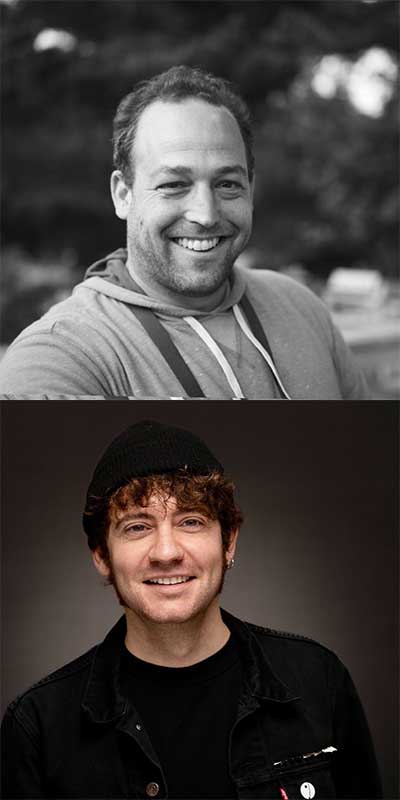
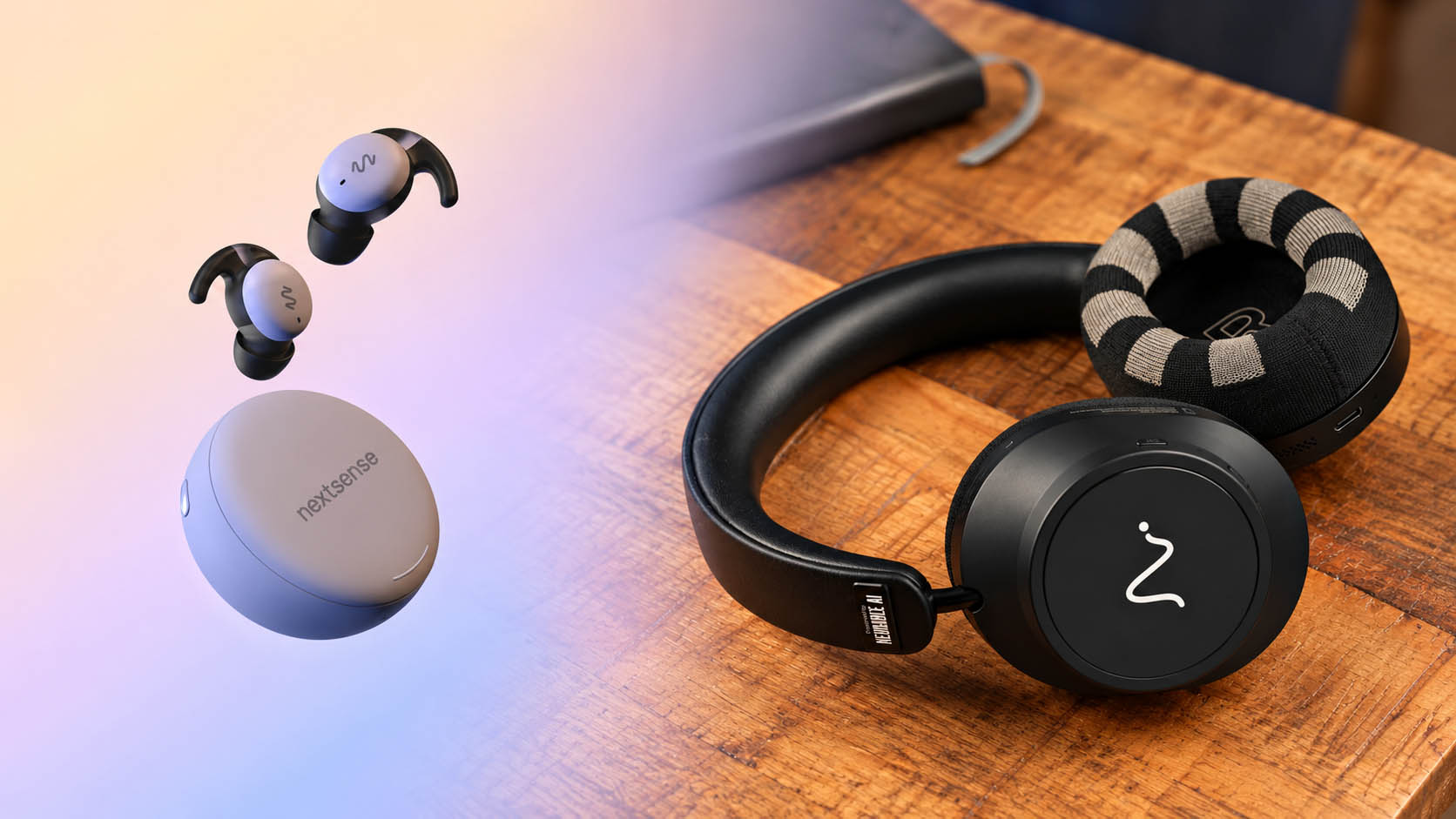
Dan Furman is the CEO of Arctop, a neurotechnology company developing software for consumer brain-sensing devices. Arctop works across form factors including headphones, earbuds, and glasses, using EEG models to translate brain activity into measures such as cognitive load, attention, and enjoyment.
Dimitris F. Sakellariou is the founder and CEO of Piramidal, which develops large-scale foundation models for EEG and applies them to clinical use cases. The company has pretrained its models on more than three million hours of EEG and is building regulated tools designed to support clinicians in interpreting recordings and identifying abnormalities at scale.
The defining promise of a brain foundation model is generalization. EEG models have traditionally been built around specific datasets, devices, patient groups, and tasks. A foundation model generalizes across those boundaries, reducing how much retraining and feature engineering is needed when the setting changes.
For Piramidal, that means generalizing across both hardware and physiology. “You want generalizability as far as hardware is concerned. Then you want generalizability as far as the human physiology is concerned,” Sakellariou said. The same model should be able to work across different electrode setups, sampling rates, and recording lengths, while also accounting for variation between people.
There are still limits to that universality. “There’s a lot of anatomical, physiological uniqueness that you just need to control,” Furman said. “There’s drift that happens across sessions, where the drift is bigger than some of the effects you’re looking for.” Arctop still calibrates its models to individual users, showing that a general model can reduce adaptation while working with individual variability.
Piramidal uses a broad underlying model, then constrains it for specific clinical applications. “We want to deploy those models under harnesses that are defined by doctors,” Sakellariou said. Each tool still needs its own validation and regulatory pathway, but transfer from the foundation model can shorten the work required to build the next one.
Language models benefit from structure that is already well defined. Text can be broken into letters, words, sentences, and documents, giving models clear units to learn from. EEG has no equivalent vocabulary. Brain activity is continuous, dense, and only partly understood, making it much harder to decide what the model should treat as a meaningful unit.
“In language, the grammar’s much clearer than in the brain,” Furman said. “There’s a lot of work for the whole field altogether in figuring out what is the atomic unit, what is the word, what’s the sentence.” Sakellariou made the same point from the data side. “What is our definition of a word for the brain language? What’s our definition of a letter for a brain language?” he wondered.
That creates a fundamental challenge for scaling models. EEG can record hundreds or thousands of samples every second across processes that unfold over milliseconds, minutes, or an entire day. Sakellariou said the field is still at the beginning of understanding how to segment that stream and turn it into useful representations.
Scale has become one of the main ways to describe progress in foundation models, usually by reporting more data and more parameters. Piramidal has pretrained on more than three million hours of EEG, representing around 450 terabytes of data. Sakellariou said the company is seeing both model size and data volume improve downstream performance.
But the field still does not know what the right kind of scale looks like. “The answer is we don’t know,” Sakellariou said when asked whether hours, data diversity, or model size matters most. EEG is unusually dense, and the representation problem remains unresolved, meaning that simply adding more samples does not guarantee that a model is learning the most useful structure.

Furman was similarly cautious about using headline numbers as a measure of progress. “It’s maybe a red flag or at least orange flag if someone’s talking about the parameters of their model or data,” he said. A smaller model that captures the right structure could still outperform a much larger one. For Furman, the bigger warning sign is certainty. “Almost for me, the only red flag is pure certainty,” he said, reflecting how early the field still is in understanding how brain models scale.
Training better brain models will also depend on collecting data beyond controlled labs and narrow clinical settings. Furman argued that one of the main constraints today is the distribution of devices. Most existing EEG data comes from specific contexts, such as patients being monitored for a disorder or consumers using a device for meditation. Wider adoption of EEG-enabled headphones, earbuds, and glasses could expose models to a much broader range of everyday brain activity.
Furman described this as a flywheel between hardware distribution and model performance. “More devices coming online, different contexts of the data, which serves to annotate and label and give the machine a deeper understanding of what the brain data means,” he said. More varied data could then improve the models, support new applications, and create more reasons for brain-sensing devices to reach users.
Watch the full webinar below. This webinar was co-produced with Neurotech Futures.
Produced with support from

%20copy.jpg)




.svg)

