
Elite sports are changing. Athletes now train against heart rate, HRV, sleep, recovery, lactate, and other objective markers that make load and readiness easier to track. Yet measuring the brain during sports has not reliably been cracked. Coaches infer fatigue, focus, or cognitive strain through behaviour and downstream proxies, but direct brain-adjacent measures have stayed largely outside everyday training workflows. A new wearable project from India looks to change that.
Temple, a new startup from billionaire entrepreneur Deepinder Goyal, has raised $54 million to pursue the thesis that hemodynamic signatures can reliably be measured and provide useful insights into aging and exercise. The pitch arrives with significant founder visibility and a broad hiring push, but also with substantial early skepticism. Goyal’s broader theory linking aging and brain blood flow has drawn criticism from clinicians, while Temple’s unusual hiring criteria, including body-fat thresholds for applicants, have added a second layer of controversy. Among renewed interest and funding in brain wearables, Temple is entering with noise.
Deepinder Goyal, best known as the founder of Zomato, is now putting his time into Temple, a health hardware startup positioned around continuous measurement of cerebral blood flow in elite athletes. The company has raised a reported $54 million at a $190 million valuation. Temple is hiring across hardware, embedded systems, sensor algorithms, computational neuroscience, BCI engineering, neural decoding, and neuroimaging-related machine learning.
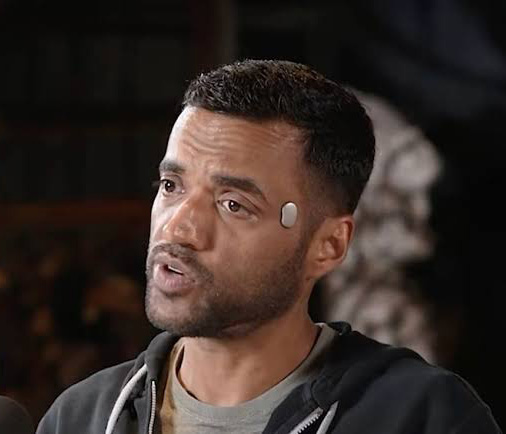
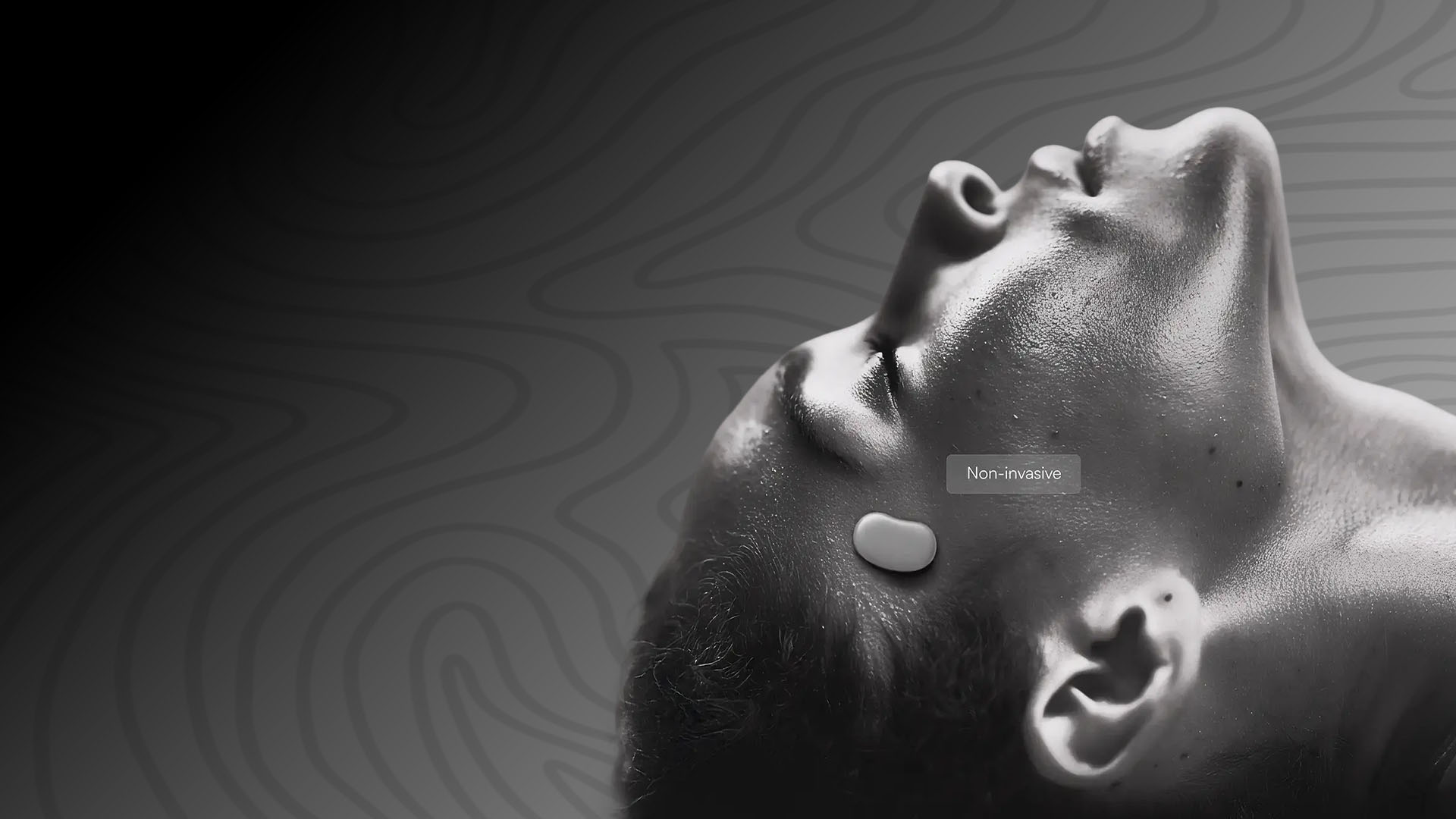
The hiring plan and funding point to a serious push towards miniaturized neuro-wearables, but core technical details remain limited. Temple has not publicly disclosed the measurement approach in meaningful detail, leaving open whether the device relies on deeper optical hemodynamic measurement like fNIRS or a more superficial vascular readout. Goyal is also yet to explain which concrete performance metrics the device is meant to provide athletes.
Part of the attention around Temple comes from the broader theory Goyal has attached to the project. Before the current athlete-facing framing was announced, he publicly linked the device to a “Gravity Ageing Hypothesis,” arguing that gravity reduces blood flow to the brain over time and that this contributes meaningfully to aging. Critics, including clinicians quoted in Indian publications, argued that the hypothesis oversimplifies cerebral physiology and overlooks mechanisms such as autoregulation that help preserve brain perfusion.
Temple has since attracted a second layer of criticism around company culture. Reports on its hiring process noted that applicants are required to meet body-fat thresholds, or to commit to reaching them during probation, suggesting a level of alignment inside the firm that extends beyond the usual performance rhetoric. That framing is reinforced by the structure of Temple’s first round, which Goyal described as coming entirely from friends, family, and employees.
Temple’s premise sits within an existing push toward wearable cerebral hemodynamics, a category that already has visible reference points. Kernel develops Flow, probably the most comprehensive time-domain fNIRS wearable, though not intended for regular consumer use. Muse and Mendi do bring hemodynamic measurements into consumer devices, providing data on cognitive effort, oxygenation, and neurofeedback. Optical brain sensing is being miniaturized, productized, and tested across different levels of fidelity and ambition, though no known products develop hemodynamic measuring in an exercise context.
More relevant is what optical claims Temple can realistically make. Standard fNIRS is used to track changes in oxy- and deoxyhemoglobin, providing slow readouts of cortical effort, cognitive load, and sustained fatigue. In a compact temple-worn form factor, that route is harder to interpret cleanly, since conventional cortical fNIRS generally depends on greater source-detector separation, while smaller optical layouts are more exposed to superficial vascular signals.
More flow-oriented methods, such as diffuse correlation spectroscopy, sit closer to continuous cerebral blood flow measurements and could in principle support use cases around perfusion trends under exertion, heat, altitude, or recovery stress. The open question is whether Temple is measuring something genuinely brain-sensitive, or building performance inferences on top of a more superficial vascular signal.
Optical measurement comes with a familiar set of constraints. Signal quality has to hold up against motion, superficial scalp blood flow, and the broader noise of real-world use, while staying interpretable enough to support more than an interesting chart. That leaves two hurdles. One is technical, whether the device can measure something meaningful in the brain outside controlled settings. The other is commercial, whether that signal changes a coaching, recovery, or readiness decision in a way that simpler tools do not already cover.
Temple enters a competitive landscape that extends well beyond neurotechnology. It has to compete against the wider performance stack already shaped by WHOOP, OURA, and Garmin, alongside power, lactate, muscle oxygenation, and EEG-based neuroperformance tools. Meanwhile, sport-specific brain wearables begin to emerge, with companies like Atlas positioning multimodal sensing around mental clarity and behavioural performance.
Do cerebral hemodynamic measurements earn a place in that landscape, adding a useful new layer to fatigue, recovery, and cognitive strain? Or is Temple another case of founder conviction and capital arriving before a clear use case?
Produced with support from

%20copy.jpg)




.svg)

