
Decoding intended speech is emerging as one of the most promising applications of brain-computer interfaces. Speech restoration is increasingly shifting from proof-of-concept demonstrations towards systems that can be deployed safely and at scale. Minimally invasive subscalp EEG implants may offer a promising avenue to scale speech decoding, especially in light of recent FDA clearances for similar devices in the epilepsy monitoring space.
Melbourne-based BCI startup Fluent raised $2M AUD to support the development of InScribe, a neural interface comprising a subscalp EEG device and multimodal AI to decode attempted speech. Fluent is a spin-out of the same University of Melbourne lab as Epiminder and Synchron. The university backed Fluent via the Genesis Pre-Seed fund, alongside Pacific Channel and other investors. Funding will support Fluent’s first in-human studies later this year, as well as regulatory submissions and the expansion of its engineering team.
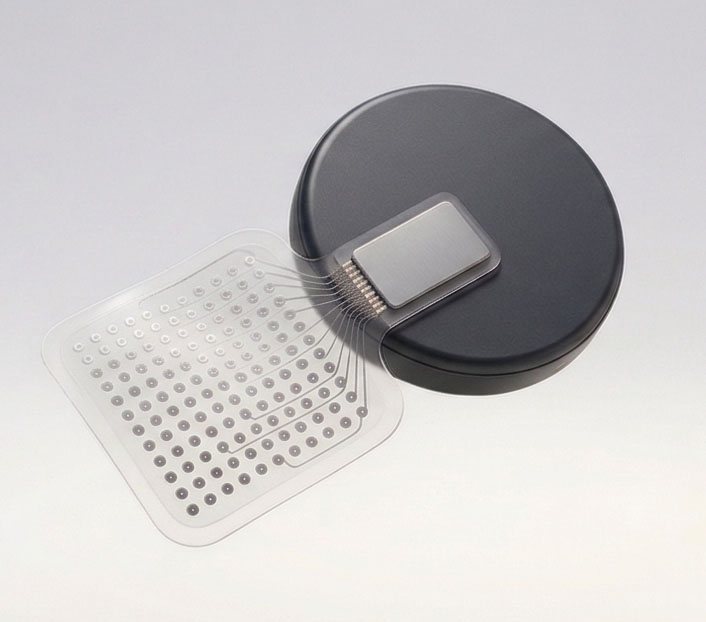
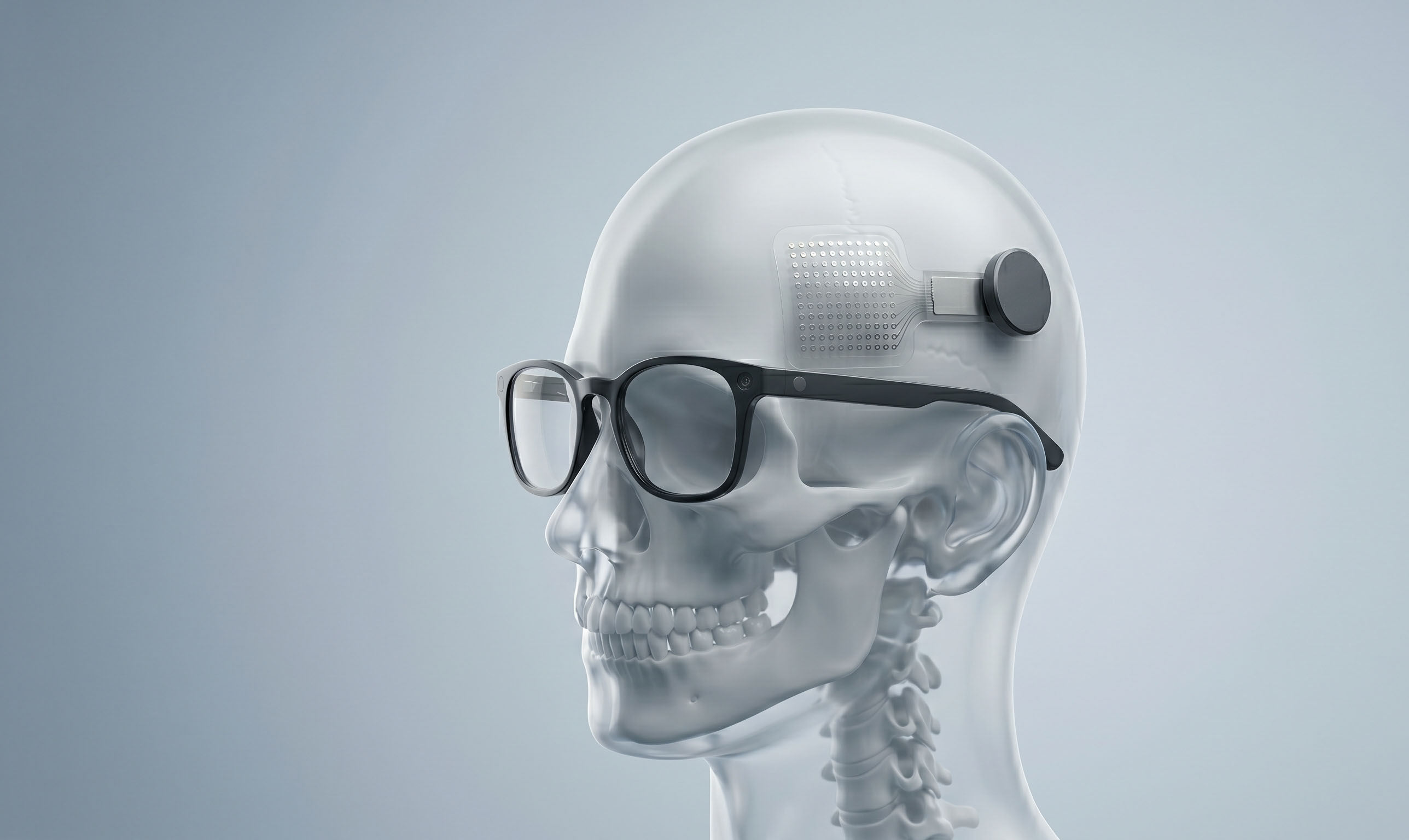
InScribe is a compact device that sits under the skin but above the skull, in what CEO Tim Mahoney describes as the “Goldilocks zone” of invasiveness, providing the right balance between risk and reliability. For speech decoding, the company's primary focus, InScribe will sit above the sensorimotor cortex. The technology uses EEG to map phonemes, distinct speech sounds of which there are approximately 40 in the English language, onto patterns of speech-related muscle activation. Data from Mahoney’s PhD demonstrated that monitoring outside the skull is sufficient to detect these activations.
Whilst a subscalp device is less invasive than intracranial recordings, the scalp attenuates the signal, reducing its quality. To tackle this, InScribe uses LLMs and multimodal AI as an “error-correction” step, providing context when there is low confidence in the output’s accuracy. A balance is required to resolve ambiguities without overriding the user’s intended speech, something Fluent says they will be “fine-tuning” over time. Its multimodal AI could leverage memory from previous conversations to improve prediction, even integrating images from the surroundings when combined with wearables.
The ultimate aim is to decode at the speed of speech. But in the current approach, the end of the first sentence may provide context that informs decoding of the second. Therefore, the user will need to finish articulating before the output is produced, at least in initial versions. Mahoney recognises that speed is only useful if the output is sufficiently accurate, stating that “correctly identifying the user’s intent comes first, speed comes second.”
“Surface electrode recordings have reliability problems outside of controlled laboratory and clinical environments,” Mahoney recognises. However, Fluent found that inside the lab, such recordings achieve similar signal quality to subscalp EEG. Thus, the company has already started building its dataset with ongoing collection of high-density non-invasive EEG. In addition, collaborations with Japanese company Araya are expanding the data even further. Fluent plans to start in-human trials later in 2026.
Mahoney’s primary aim for Fluent is to solve the unmet need in patients with disabilities that impair speech, such as ALS, MS, TBI, and stroke. Fluent positions InScribe as a “low-risk set-and-forget” alternative to the intracortical implants employed by Neuralink and Paradromics. Though Fluent follows in the footsteps of subscalp EEG approaches used by Epiminder and UNEEG, few other companies are using this approach for speech decoding.
Fluent’s approach is not only a scientific bet but a regulatory one. Companies such as Epiminder have demonstrated the tolerability and longevity of the hardware, as well as showing that the FDA is willing to clear these devices as Class II. This gives Fluent a clearer path to market.
As Fluent’s current datasets are drawn from healthy participants, an important question is how well its models will generalise to people with severe speech impairment. Mahoney points to successful speech decoding from the sensorimotor cortex using intracortical recordings, and is confident that the same signal is present in many of these populations.
Fluent plans to expand its data collection to include patients with a range of speech impairments whilst training models to learn the latent representations of phonemes rather than participant-specific electrode activity, allowing knowledge to transfer more readily between users.
Fluent has not shied away from their long-term vision of “transforming human-AI interaction for all.” They are careful to distinguish attempted speech from thought decoding, stating that by focusing on the control of speech-related muscles, InScribe is “bypassing the more abstract stages of inner thought,” which have no phonemic representation. While the primary goal is speech restoration, the company hopes to provide a completely frictionless way to communicate with each other and technology more generally, pointing to ambitions beyond clinical populations.
Produced with support from

%20copy.jpg)




.svg)

