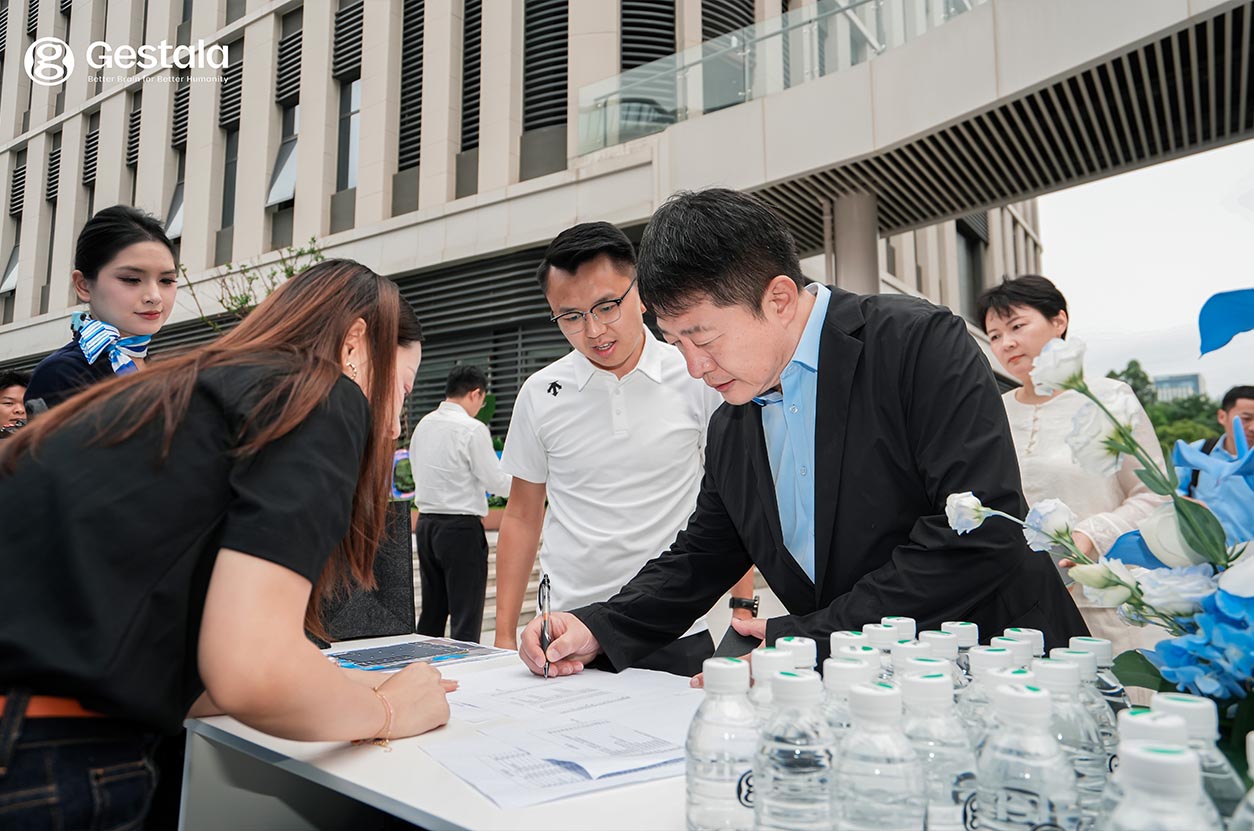
The first half of 2026 saw over 30 financing rounds for Chinese neurotech startups. More than 10 of those rounds crossed the RMB 100 million mark (±15 million USD). One of the most closely watched companies in that group, Gestala, has now added another entry to the funding streak. On July 3, the ultrasound brain interface startup announced a RMB 420 million Angel+ round, around 62 million USD.
Gestala officially launched in January and had already raised a RMB 150 million angel round by March. The company is developing ultrasound-based brain interfaces, initially targeting chronic pain while building toward longer-term read and write capabilities. Alongside the new funding, Gestala opened a 16,000+ m² headquarters and self-described ultrasound BCI “Super Factory” in Chengdu, as well as inaugurating a second headquarters in Shanghai focused on NeuroAI and brain foundation models.
Gestala's latest RMB 420 million round was led by Huaying Capital. New investors included C Capital, HongShan, Lens Technology, China Electronics Health Fund, Sinovation Ventures, Lingang Sci-Tech Investment, and Fudan-linked Furong Capital, while several existing investors increased their positions. The round follows a RMB 150 million angel financing announced in March, bringing Gestala's total funding to RMB 570 million (±84 million USD) within six months of its official launch.
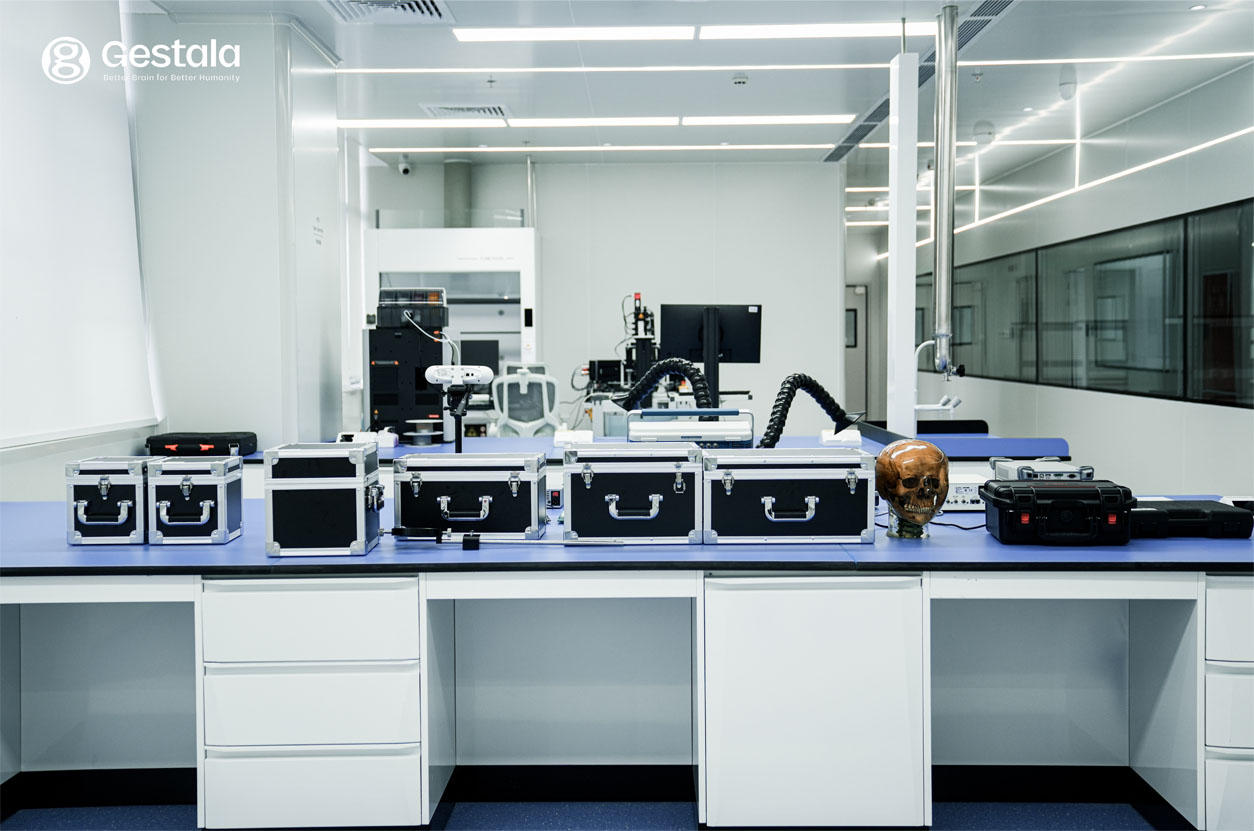
That capital is already being put to work. On June 26, Gestala opened its global headquarters and the first phase of what it calls an ultrasound BCI “Super Factory” in Chengdu's Tianfu International Bio-City. The 16,000+ m² site combines neuroscience and animal research, product development, and manufacturing, with facilities designed for the development, testing, and production of Class II and Class III active medical devices.
A week later, Gestala formally opened a second headquarters in Shanghai, alongside a NeuroAI Innovation Center. The site sits in Minhang's Brain Intelligence World cluster, which reportedly hosts 61 BCI and neurotech companies, with total funding of the cluster surpassing the 1 billion RMB mark. The Shanghai operation is focused on brain foundation models, multimodal neural data, and wider NeuroAI research.
Gestala is framing the two cities as different parts of the same platform. CEO Phoenix Peng described Chengdu as the place to take ultrasound BCI “from the laboratory to industrialisation,” while Shanghai will explore the path “from brain data to brain intelligence.” The split gives Gestala one base for building and translating ultrasound devices, and another for the data and models it hopes will eventually sit around them.
Gestala is developing a transcranial ultrasound neuromodulation platform, initially targeting chronic pain. The system is being developed as a stationary clinical device, with a later wearable helmet envisioned for home use under physician guidance. Gestala has said it plans to unveil the first-generation system and publish initial clinical data by the end of 2026, alongside preparations for a Class III medical device pathway in China.
The underlying thesis is that focused ultrasound could reach deeper and more spatially specific brain circuits through a non-invasive interface. Chronic pain provides an early test case, with independent human studies showing that low-intensity focused ultrasound targeting the dorsal anterior cingulate cortex can modulate activity and alter pain perception. CEO Phoenix Peng came to this thesis after co-founding implantable BCI company NeuroXess.
Gestala’s longer-term ambition goes beyond stimulation. The company describes its goal as building systems with potential “whole-brain read and write” capabilities, pairing focused-ultrasound neuromodulation with functional ultrasound imaging. Functional ultrasound tracks small changes in cerebral blood flow associated with neural activity, which could eventually provide a readout for identifying brain states and directing stimulation in a closed loop.
Gestala is among the best-funded and most innovative startups within China's broad BCI push. The country identified brain-computer interfaces as a future industry, while national roadmaps have highlighted ultrasound sensing, AI-based neural decoding, and multimodal data collection as development priorities. China is already backing invasive BCI companies including NeuroXess, StairMed, and NeuCyber, alongside non-invasive platforms such as BrainCo. Gestala diversifies that cohort through its unique ultrasound thesis.
.svg)








%20copy.jpg)