

Fareon has published a new analysis from its first-in-human study of Microtesla Magnetic Therapy (MMT), suggesting that a treatment delivered to the brain may also be associated with biological changes elsewhere in the body. Using blood samples from participants in its randomised, sham-controlled Long COVID trial, researchers identified biomarker changes associated with inflammation, cellular injury, and repair.
Founded in 2019 and based in San Francisco, Fareon is a biophysics company developing noninvasive treatments for brain and mental health conditions, with MMT as its main focus. The new study, conducted in collaboration with Mount Sinai and Vero Bioscience, builds on results from the same 30-person trial published earlier this year, which found the treatment well tolerated and reported improvements across measures of memory, attention, and mood. The latest analysis examines what happens biologically alongside those clinical changes.
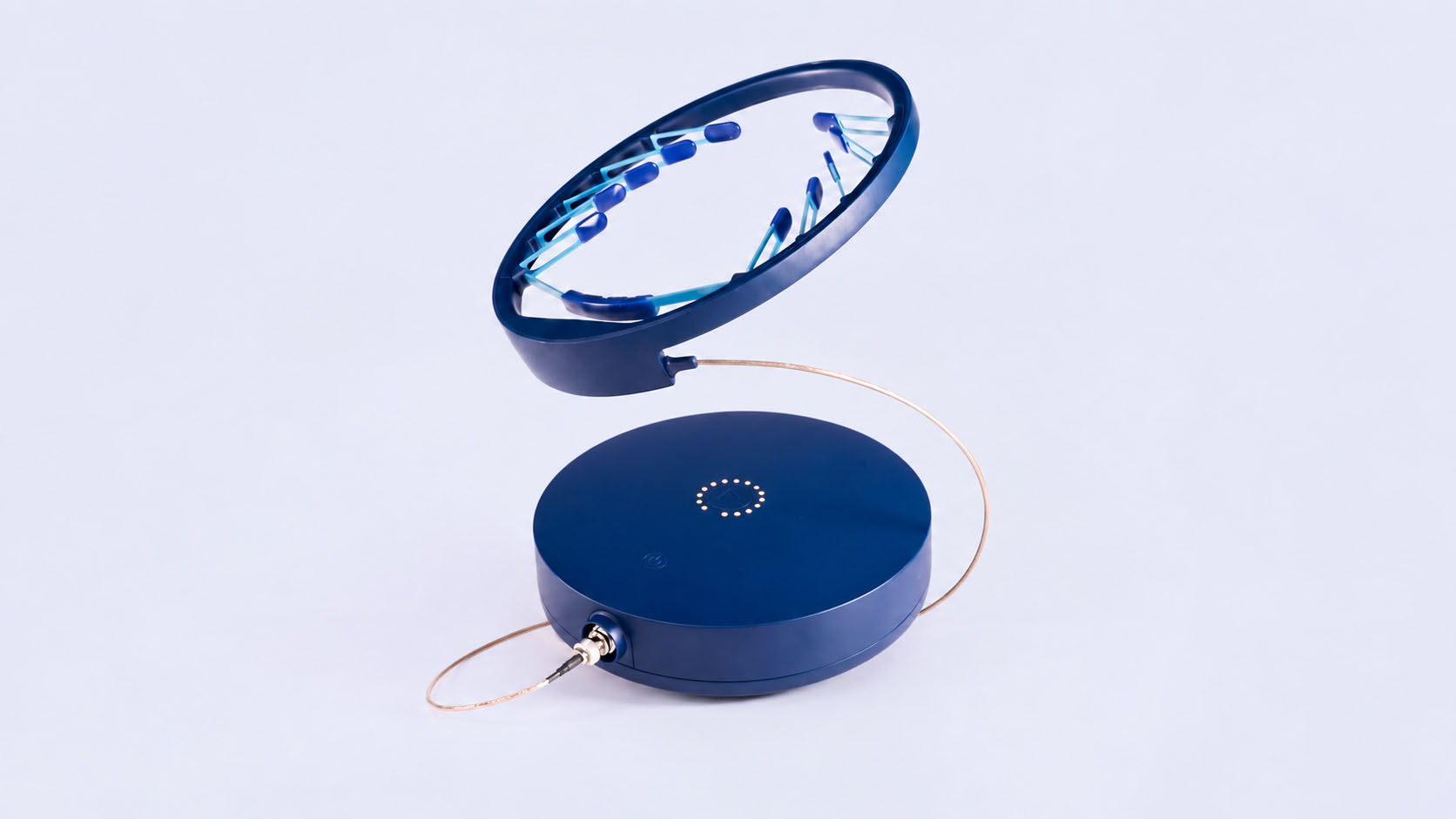
Fareon is developing noninvasive treatments for brain and mental health conditions. Its main product, Fareon Restore, is a head-worn device that delivers MMT, a very low-strength, nonthermal electromagnetic field designed to reach the whole brain rather than a single region.
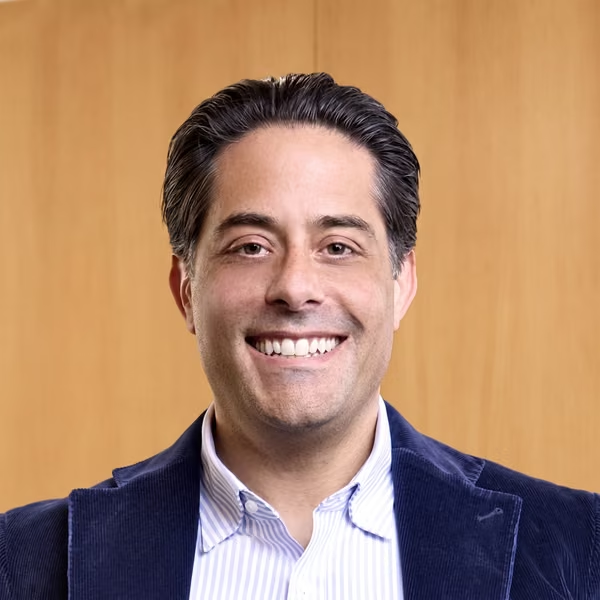
This differentiates it from more familiar approaches such as transcranial magnetic stimulation (TMS). TMS uses stronger magnetic fields at lower frequencies, typically targeting specific cortical regions to alter neuronal activity. Blake Gurfein, CEO of Fareon, explains that “MMT is fundamentally different, as it delivers low-intensity, high-frequency magnetic fields broadly across the brain, affecting neurons among many other cell types.”
Fareon’s proposed mechanism is that this broader stimulation can influence processes linked to inflammation, oxidative stress, and cellular repair. Because the device is designed to be worn at home rather than used in a clinic, the company is also positioning MMT as an approach that could be easier to scale than clinic-based stimulation.
Gurfein said the team had expected a narrower result. “We initially thought the effects might be relatively constrained to brain-related markers, since MMT is delivered only to the brain,” he said. “Instead, we saw a much broader shift spanning inflammation, cellular injury, and repair and remodeling.”
Researchers analysed blood samples from 30 trial participants, comparing samples collected before treatment and after four weeks. They identified 17 proteins that changed more consistently in people who responded to MMT than in non-responders or the sham group, with the overall pattern spanning markers linked to inflammation, cellular injury and repair.
One of the proteins, HHIP, decreased in responders and increased in non-responders. HHIP inhibits Hedgehog signalling, a pathway involved in tissue repair and remodelling, making it one of the signals the researchers highlighted for further study. Fareon says the broader protein profile could also inform its work across conditions including mild cognitive impairment, post-concussion syndrome, bipolar disorder and Long COVID-related cognitive symptoms.
The team also applied a model that estimates biological age from blood proteins. Participants who received MMT showed a trend toward lower predicted brain age and whole-body age, although the result was no longer statistically significant after adjustment for multiple comparisons. Gurfein said the findings give Fareon a set of biological signals that can now be tested in larger studies.
Brain treatments are typically assessed through a combination of symptom questionnaires, cognitive tests and other clinical measures. These can capture whether patients are improving, but they offer limited insight into the biological changes accompanying that response.
Blood biomarkers could provide an additional readout. If specific proteins consistently change alongside clinical improvement, they could eventually help researchers track treatment response and better understand how MMT is acting in the body. For Fareon, this study provides an early set of candidate markers to investigate further.
The current analysis comes from a feasibility trial designed primarily to assess safety and tolerability, so markers such as HHIP remain candidates rather than validated measures of treatment response. Larger studies will be needed to determine how consistently these biological changes track with clinical outcomes.
Fareon is now planning larger trials in Long COVID, alongside early studies in other brain conditions linked to inflammation and cellular injury. The biomarker work gives the company an additional set of measures to carry into those studies alongside more traditional clinical outcomes.
Produced with support from

%20copy.jpg)




.svg)

