
Spinal cord stimulation has been used for decades to manage chronic pain after injury. More recently, neurotech companies have started using the modality to restore functions such as hand movement, standing, walking, and blood pressure control. ONWARD Medical built one of the broadest platforms in the space, spanning non-invasive stimulation, implants, and a brain-controlled version of the technology.
ONWARD has now implanted the first participant in EIGER, a new feasibility study applying its ARC implantable system to restore standing and walking after spinal cord injury. The study will enroll up to 12 people across subacute and chronic cohorts, including participants injured within six weeks of enrollment. The feasibility study will inform a future pivotal trial.
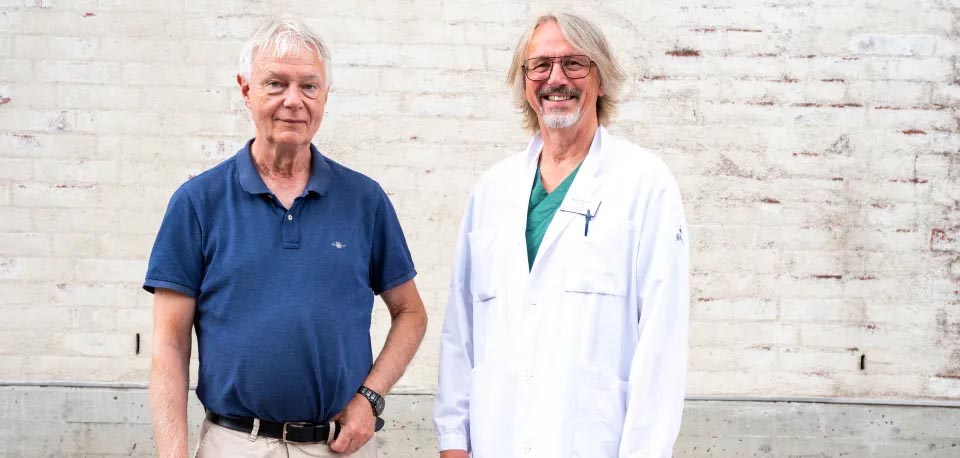
The EIGER study is being conducted at CHUV in Lausanne and the Swiss Paraplegic Centre in Nottwil, with ONWARD co-founder and neurosurgeon Jocelyne Bloch directing the first procedure. Up to 12 people with subacute or chronic SCI will be enrolled. For the first time in ONWARD’s mobility program, the study will include people within six weeks of injury, extending ARC-IM into the subacute recovery period.
ONWARD grew out of an EPFL and CHUV research program led by Bloch, Grégoire Courtine, and collaborators. Founded as G-Therapeutics, the startup merged with US-based NeuroRecovery Technologies in 2019 before becoming ONWARD Medical in 2020. The company went public on Euronext Amsterdam and Brussels in 2021, raising €75.2 million in its IPO.
Its first commercial product was ARC-EX, a non-invasive system that improves hand strength and sensation after cervical spinal cord injury. The FDA cleared it in December 2024, followed by a CE Mark in 2025 and expansion into home use. In the first quarter of this year, ONWARD supplied 70 ARC-EX systems, reaching more than 100 clinics across the US and Europe and generating €2 million in revenue.
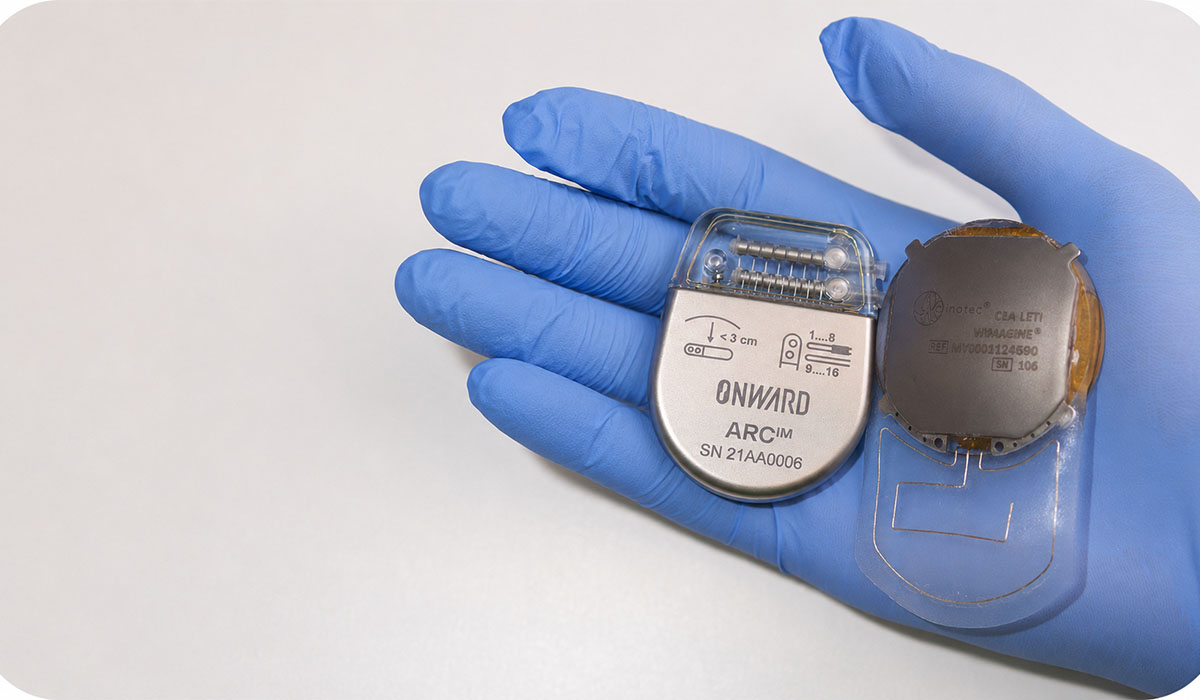
ARC-IM takes ONWARD’s approach into an implanted platform, using purpose-built epidural leads to target different spinal regions. The system is already used in the pivotal Empower BP study for blood-pressure regulation, while EIGER will support a future pivotal trial for mobility restoration. ONWARD is also developing ARC-BCI, which pairs the implant with brain-controlled stimulation. In April, the company raised €40.6 million, extending its cash runway into Q1 2028.
Spinal cord stimulation has been used clinically since 1967, when the first system was implanted to treat chronic pain. Conventional SCS places electrodes in the epidural space and connects them to an implanted pulse generator. Stimulation then modulates pain signals. The field has since expanded into high-frequency, burst, and closed-loop systems, but pain remains its largest application.
Restorative SCS uses the technology differently. After spinal cord injury, neural circuits below the injury can remain intact, even when communication from the brain is severely disrupted. Stimulation increases the excitability of those networks, allowing residual brain signals and sensory feedback to recruit them more effectively. Modern systems increasingly target specific dorsal roots associated with functions such as hand or leg movement.
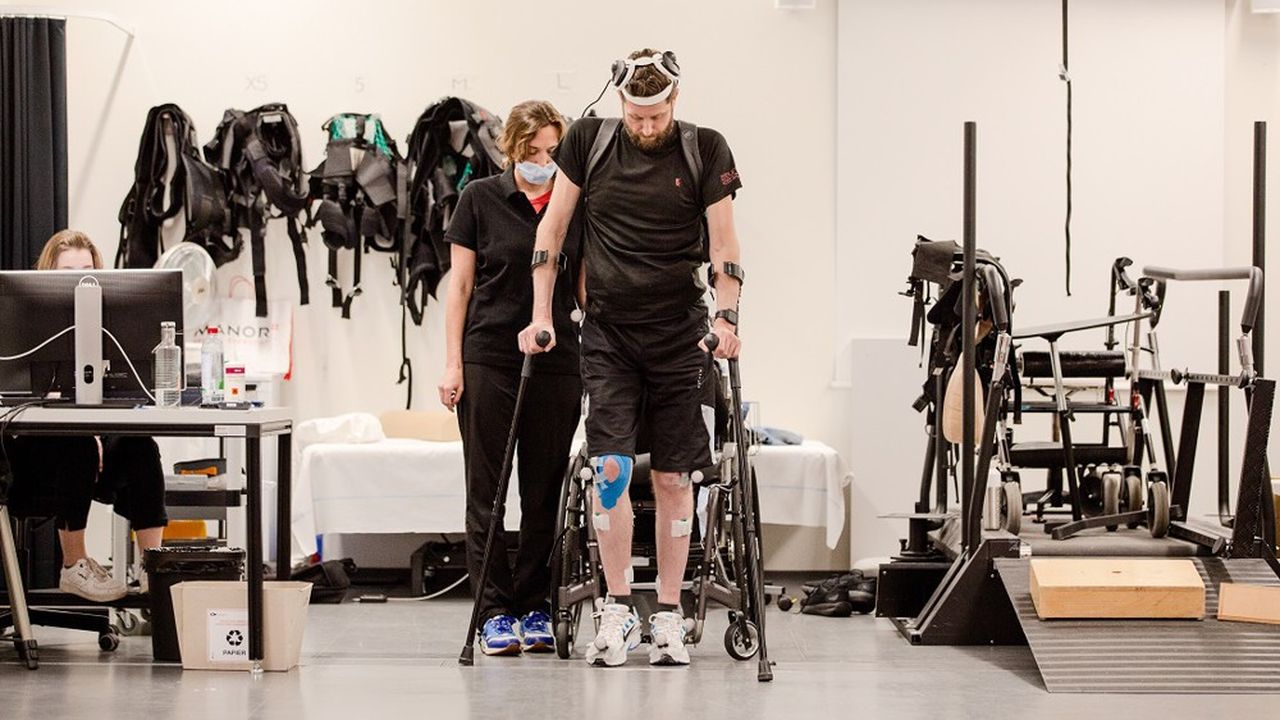
The approach was developed through a series of studies using increasingly specialized hardware. In 2011, researchers showed that epidural stimulation could enable standing and voluntary movement in a participant with motor-complete paraplegia. Work led by Courtine and Bloch later introduced more spatially and temporally targeted stimulation, before a 2022 study used a purpose-built electrode array to enable three participants with severe paralysis to stand, walk, cycle, and swim with stimulation.
A small commercial field is now forming around restorative SCS. ANEUVO’s non-invasive ExaStim system received FDA clearance in March 2026 for improving hand strength and sensation after incomplete cervical SCI, followed by SpineX’s xStep in April. Both entered through the regulatory category created by ONWARD’s ARC-EX authorization, while ONWARD continues further into implanted stimulation through ARC-IM and eventually brain-controlled stimulation through ARC-BCI.
Produced with support from

%20copy.jpg)





.svg)

