


In 1860, the world's first dedicated neurological hospital opened at Queen Square in the UK. Modern neurosurgery would later emerge there, and for more than a century, Britain played a leading role in neurological research and innovation. That history helped lay the foundations for today's neurotech ecosystem, including deep academic expertise, an underrated entrepreneurial pipeline, and a public health system with the potential to support technologies at national scale.
Neurotech itself spans a broad and still-evolving field, from technologies that record from the nervous system to those that stimulate it, using implanted or non-invasive approaches. The question now is how far the UK's advantages carry in neurotech, where bottlenecks sit, and whether the ecosystem being built around them can translate scientific strength into globally significant companies and technologies.
One of the UK's clearest advantages is its concentration of scientific and technical talent. Jacques Carolan, Programme Director at the Advanced Research + Invention Agency (ARIA), points in particular to the entrepreneurial ambition emerging from universities and research institutions.

“One of the things that has most struck me since joining ARIA is the depth of entrepreneurial talent across the UK. Brilliant people are coming out of PhDs and master’s programmes who want to take ambitious ideas beyond academia and established industry, and build something new,” he says.
That pipeline is built on a deep research base. In 2023, the UK made up 0.8% of the world's population but produced 6% of its research publications. That academic depth is particularly relevant to neurotech, which sits across neuroscience, engineering, data science and AI, and increasingly depends on teams that can work across those disciplines.
The growth of the UK's AI sector is adding another layer to that talent base, while Carolan also points to a workforce that is both dense and relatively less expensive than comparable talent pools in the US.
Dorian Haci, CEO of MintNeuro, similarly sees the UK's science and technology talent as exceptional but chronically undersold, arguing that the country is particularly well positioned within Europe for this kind of work. That combination of technical depth and entrepreneurial ambition is already visible in the UK's university spinout ecosystem. MintNeuro, itself an Imperial College London spinout working at the intersection of electronics and neuroscience, is one example of that cross-disciplinary strength moving out of academia.
The appetite appears to extend beyond a handful of companies. Seth Bannon of Fifty Years, one of ARIA's activation partners, has publicly noted receiving close to as many applications from the UK as from San Francisco. These signals point to a country that is producing scientific talent, ambitious founders and a growing base of deeptech spinouts.
But turning this talent into companies of global scale still depends on access to capital, commercial infrastructure, international partnerships and markets beyond the UK.
.jpeg)
The Medicines and Healthcare products Regulatory Agency (MHRA) and the National Health Service (NHS) form much of the structural backbone of UK healthcare, and each offers a different advantage for neurotech.
Dr Luke Bashford, Scientific Director of the newly established National Centre for Neurotechnology and Neurorestoration, points to the NHS as a particular strength. The system is already a major platform for clinical research, while its national scale creates a clear pathway for early-stage neurotechnology studies to expand across multiple sites. Few other health systems can offer the same level of integration.
That advantage is reinforced by the MHRA's engagement with the sector. During COVID, the MHRA became the first regulator in the world to approve an mRNA COVID vaccine. Approval times later fell from 273 days to 122 days between 2022 and 2025, while commercial interventional trial initiations rose 37% in the most recent year.
Bashford, who has run studies through regulators on both sides of the Atlantic, reflects that "the MHRA is a world-renowned regulator, and you couldn't ask for better partners in developing the progression of novel human neurotechnologies into clinical research and care".
ARIA, the MHRA and Newcastle University are now working together to make the regulatory process more accessible and better suited to modern neurotechnologies. Combined with the NHS's clinical infrastructure, this gives the UK a potentially important advantage in moving technologies from early human studies towards wider clinical deployment.
The main bottleneck appears after approval, in the gap between a device being cleared and patients gaining access to it.
Once the MHRA judges a device safe and effective, it may still need to pass a National Institute for Health and Care Excellence (NICE) cost-effectiveness review before NHS funding follows. That can require further evidence, and even once funding is secured, adoption at scale is not guaranteed.
Cochlear implants illustrate the problem. Despite regulatory approval, access in the UK depended on charity funding for years; until clinicians and the British Cochlear Implant Group lobbied the Department of Health to fund the evidence needed for commissioning. Part of the challenge is that NICE's cost-effectiveness threshold is not entirely fixed, leaving companies uncertain about what evidence will ultimately be enough. The innovator also carries much of the risk and cost of generating it.
Clearing NICE introduces another layer of fragmentation. The UK has far fewer neurologists than the European average, contributing to long referral and waiting times, while companies may still need to work with each of England's 42 Integrated Care Boards to drive adoption locally.
That makes commercial rollout resource-intensive. In the US, manufacturers have a clearer incentive to invest heavily in clinician education because winning hospital and payer contracts depends on it. In the UK, that investment can be spread across dozens of local pathways, leaving clinicians less aware of new therapies and referral routes under-used even after the formal hurdles have been cleared.
As Carolan puts it, the UK has "neurotechnology ideas that are incredibly differentiated," but "the missing piece is how we scale that”. Proposals for conditional commissioning could offer one route forward, allowing patients to access promising technologies while further evidence is gathered.
Capital is part of the UK's neurotech challenge, but the distinction may be less about how much money is available than the type of risk investors are prepared to take. For early-stage neurotech companies, timelines to clinical validation and revenue can stretch over many years, while UK investors often place greater emphasis on when revenues will begin to materialise.
That picture is starting to shift. Schemes such as SEIS and EIS have long supported early-stage investment, while newer deep-tech investors including Empirical Ventures and Albion VC are backing companies with longer development cycles. Even so, the UK has a smaller pool of capital built around the decade-long timelines and highly asymmetric outcomes common in US venture investing.
There is also a cultural dimension that extends across much of Europe. In the US, a founder starting a fourth company after three failures may be viewed as someone who has learned what not to do. In the UK, failure can carry more lasting reputational weight. That risk aversion can shape both founder behaviour and investment decisions.
The NHS National Centre for Neurotechnology and Neurorestoration at Newcastle Hospitals was established to help more technologies make the transition from research into clinical use. It is the first NHS centre offering dedicated expertise across the full neurotechnology clinical trial pathway, operating through a hub-and-spoke model with partners around the country.
Bashford places its value in the long development period between first-in-human and clinical standard of care, an R&D phase he describes the UK as "unrivalled globally" in supporting. The Centre is designed to bring clinical, regulatory and commercial questions into that process much earlier.
That can also help de-risk companies before they raise further capital. Bashford describes founders entering funding conversations already knowing when and how their device will be used, what it will cost, and what the regulatory pathway looks like, having worked through those questions with the National Centre and MHRA.
Its early assessment group also works directly with NICE, giving innovators health economic modelling and guidance on the deployment data NICE is likely to require. The aim is to build those requirements into development plans early, before companies reach the commissioning stage.
The Centre's reach extends internationally through reciprocal partnerships across the US and Europe, allowing UK-developed technologies to move into overseas study sites while UK patients can participate in trials led from abroad. It also brings academics, clinicians, companies and people with lived experience into the same network, giving it a role in shaping policy as well as running clinical research.
As Bashford puts it, it's "an ecosystem that is tailored to meet the evolving needs of modern neurotechnologies, so innovation can be supported quickly from the earliest idea of a start-up right the way through to deployment in the NHS and beyond."
US government funding, particularly through DARPA, helped create the technical foundations that many of today's leading neurotech companies have built on. ARIA is now trying to create similar conditions in the UK. As Carolan puts it, he wants "a significant neurotech company effort, something of the scale of the large companies we are seeing in the US and China”.
That company has yet to emerge, but some UK startups are pursuing a different route to scale. Haci draws an analogy with ARM, the British semiconductor company whose chip architecture sits inside much of the world's mobile hardware. His argument is that Britain does not necessarily need to build the next Neuralink. It could build technologies that become part of the infrastructure behind many neurotech systems.
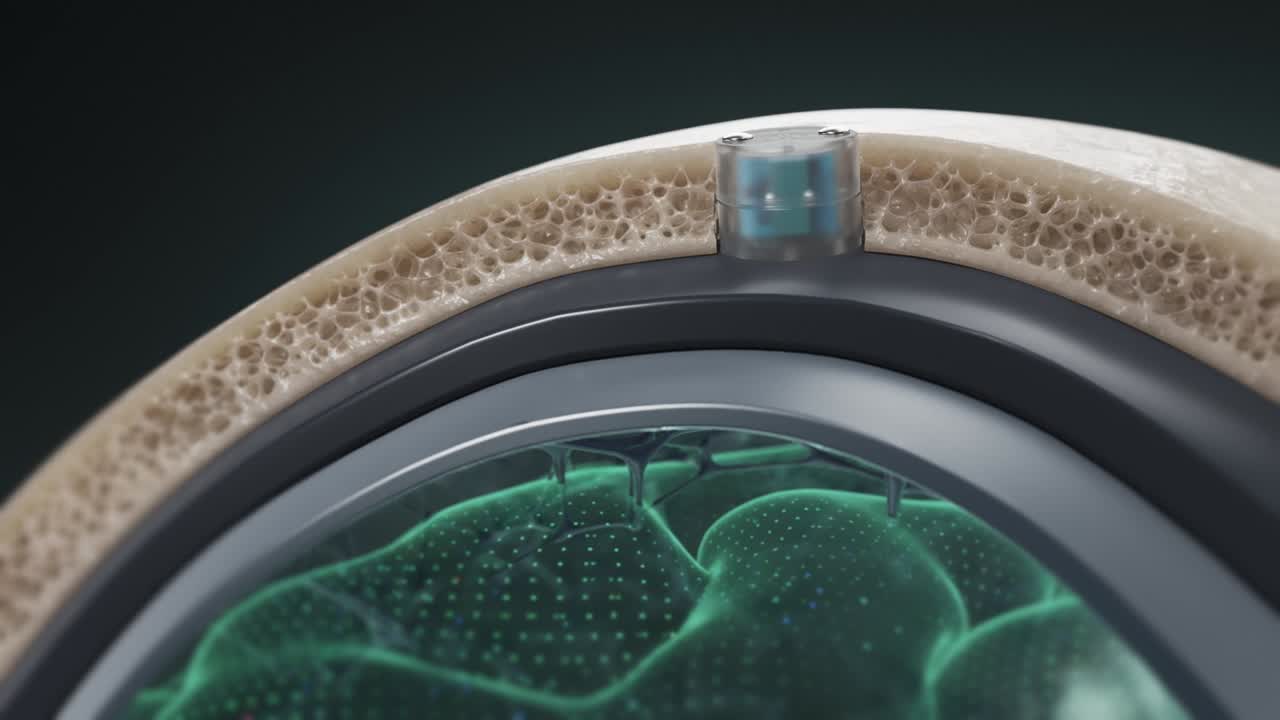
MintNeuro's work with US-based Motif Neurotech offers an early example. Through an ARIA-funded collaboration, MintNeuro is developing components that support Motif's implant platform. As Carolan puts it, "Mint's technology is enabling them to miniaturise the ASICs in a way that they need to reach the goals of our programme," pairing UK hardware expertise with a US company building towards commercial deployment.
Whether this becomes a broader model remains open. A growing base of spinouts from institutions including Imperial, UCL and Newcastle creates the possibility that more UK companies become critical suppliers of neurotechnology hardware, software and IP, even when the eventual route to market runs through the US or elsewhere.
"There's not one lever you can pull, and it creates that change. It is a multi-point attack: technology capabilities, regulation, educating policymakers, infrastructure,” Carolan says. That is also a useful way to understand where UK neurotech now stands.
The country already has many of the underlying ingredients: deep neuroscience research, a dense technical talent pool, a growing group of specialist investors and startups, an increasingly engaged regulator, and new infrastructure designed specifically to move neurotechnologies from research into clinical use.
What happens next will depend on whether those pieces begin to reinforce one another. More companies will need to make the jump from academic spinout to commercial scale, new technologies will need clearer routes through commissioning and adoption, and capital will need to stay with them for longer development cycles.
The foundations are stronger than the size of the UK's current neurotech industry might suggest. As Bashford states, "if you're a nanotechnology innovator in the UK there is more appetite, engagement and facilities than you will find almost anywhere else in the world."





.svg)