

The field of health and wellness is continuously evolving. Where a good diet and exercise were once considered enough, many people now use devices that monitor, analyze, and intervene in their personal health journeys. With the arrival of two well-funded wellness companies, the field is evolving once more. Clinical body imaging is increasingly positioned as a preventative measure to optimize health.
The past two months have brought two notable headlines. Midjourney announced a new health division offering full-body ultrasound scans through dedicated studios. Not long after, Neko Health raised $700 million in Series C funding to accelerate the international rollout of its preventative health studios. Meanwhile, a similar trend is emerging in neurotechnology, although at a smaller scale. Here, brain imaging is no longer reserved for clinical purposes and could soon become an extension of the personal health journey.
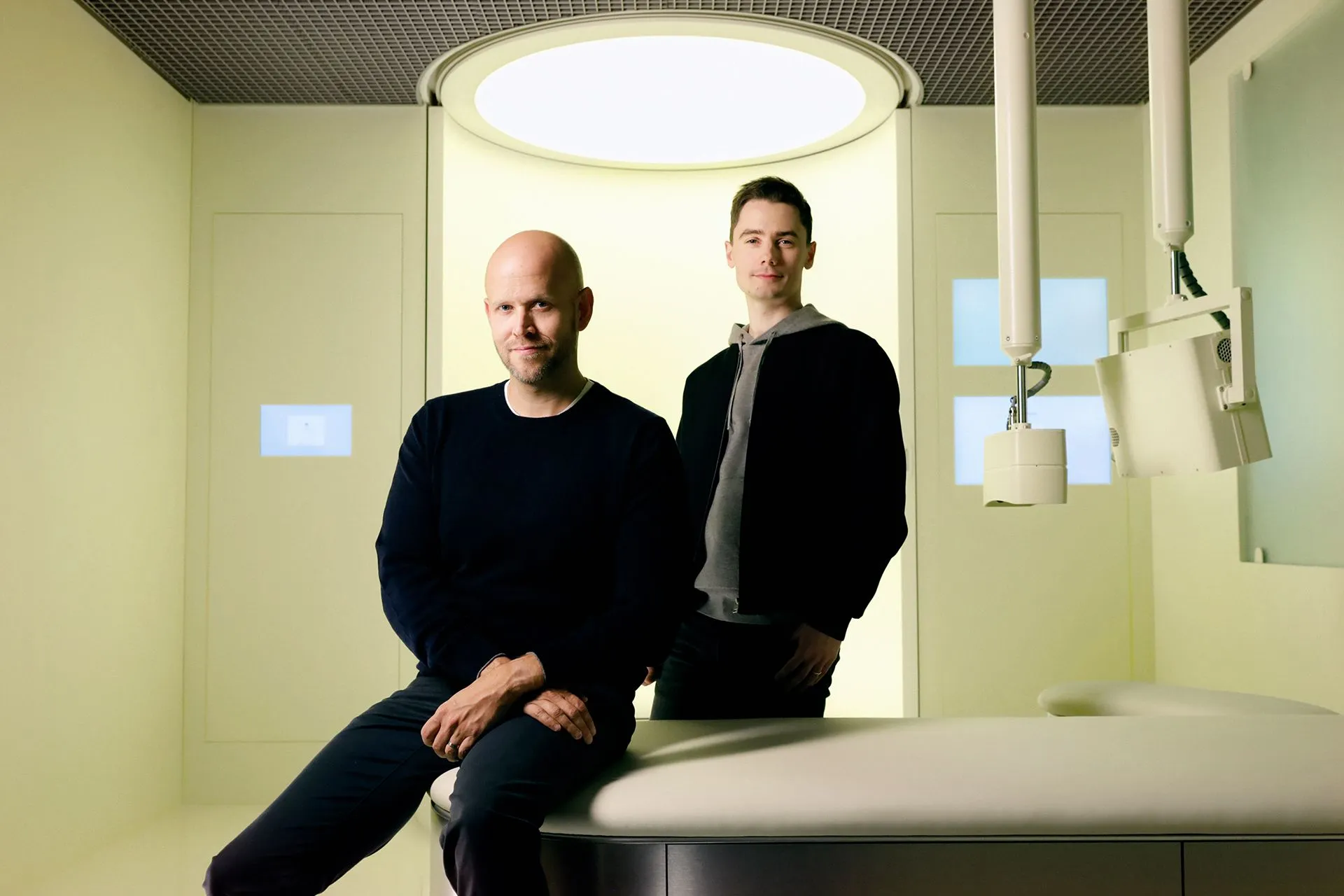
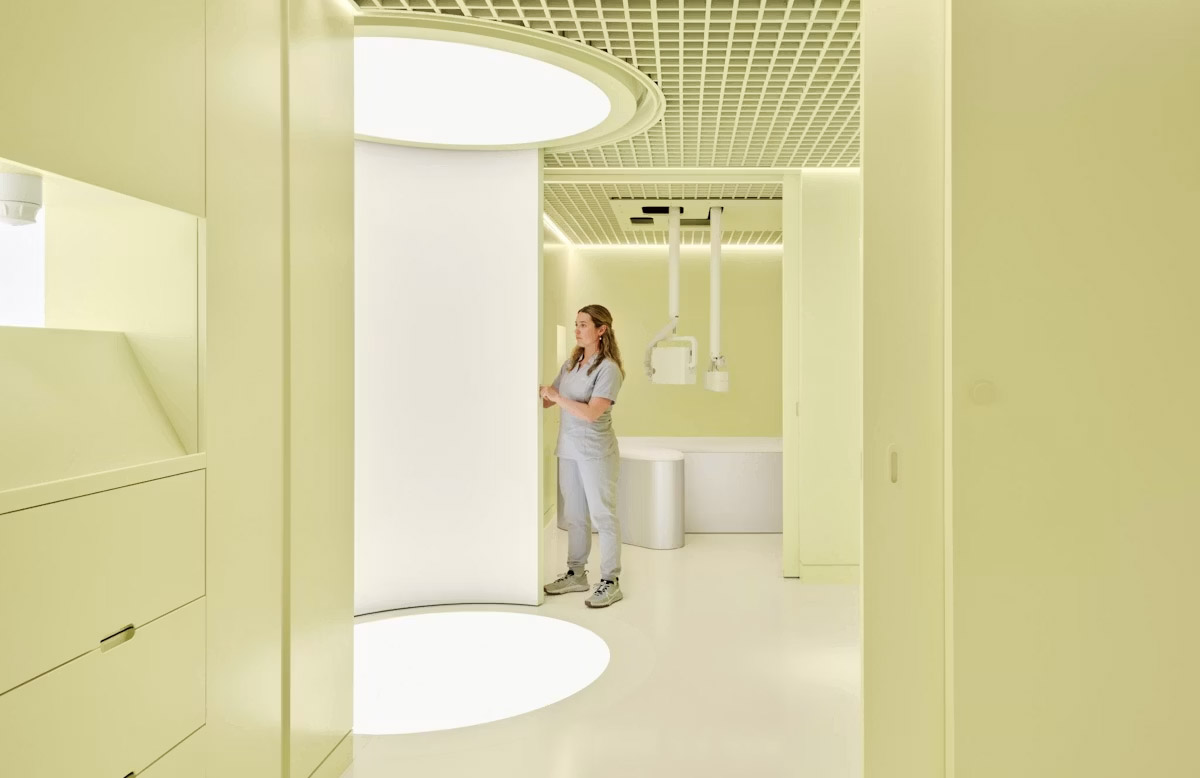
Neko Health was founded in Stockholm in 2018 by Spotify founder Daniel Ek and entrepreneur Hjalmar Nilsonne. Neko opened its first health centre in 2023, where one-hour assessments combine imaging with blood analysis, body-composition measurements, and an in-person consultation. The scan, which is targeted at healthy consumers and meant to be repeated annually, captures data across the skin, heart, circulation, and metabolic health, with results processed during the appointment.
The company has since expanded across Sweden and the UK, completing more than 100,000 scans while another 350,000 people have registered or joined its waitlist. In July, Neko raised a $700 million Series C led by Lightspeed Venture Partners and co-led by O.G. Venture Partners. The Financial Times reported a valuation of nearly $7 billion. Neko will use the funding to open its first US locations, beginning with New York, while continuing its European expansion.
Midjourney joins the scene at an earlier stage. The AI company has launched Midjourney Medical, developing a full-body ultrasound system that lowers the user through warm water and captures acoustic measurements from multiple angles. These measurements are reconstructed into a three-dimensional map of body volume, initially showing the distribution of muscle, fat, and other tissue. Its current prototype takes more than 20 minutes, although the company is working toward a 60-second scan. The resulting map would be stored in an app, allowing users to track how their body changes over time.
The first Midjourney Spa is expected to open in San Francisco around the end of 2027, combining the scanner with hot tubs, saunas, and cold plunges. The prototype currently uses 40 imaging modules from Butterfly Network, which is supplying its Ultrasound-on-Chip technology under a five-year agreement worth up to $74 million. The same chips are used by Forest Neurotech, which recently licensed its IP to Sam Altman's consumer ultrasound startup, Merge Labs.
A small group of neurotech companies is now applying a similar model to the brain. One of them is MYndspan, an English startup bringing magnetoencephalography (MEG) into preventative brain health. Its 45-minute assessment combines a lifestyle questionnaire and cognitive testing with a ten-minute recording of the magnetic fields produced by neural activity. Users receive measures of functional brain age, brainwave activity, network connectivity, and neural stability, creating a baseline that can be compared with future scans.
The company was founded in 2020 by Caitlin Baltzer and Janne Huhtala, both former executives in the clinical MEG industry. MYndspan initially launched through Aston University’s scanning facilities in Birmingham, with concussion monitoring among its first applications, and is now preparing a dedicated flagship centre in London. In May, company researchers published a study showing that resting-state MEG patterns could distinguish people with Parkinson’s disease from healthy controls, although MYndspan’s consumer reports remain strictly non-diagnostic.

Connectome is pursuing a similar vision in a more portable form. The Zurich-founded company uses functional near-infrared spectroscopy (fNIRS) to offer repeatable assessments of cognitive performance. Its scans use low-level infrared light to measure changes in blood oxygenation across the cortex while users complete tasks testing attention, working memory, and cognitive flexibility. The results are combined with contextual data from wearables, allowing users to monitor how their cognitive performance changes over time.
Founded by Lucas Scherdel and Rufus Mitchell-Heggs, Connectome has moved from its initial research and clinic partnerships into a public-facing service. In July, it opened a brain-performance studio in Soho, London, while offering the same measurement platform to sports teams, longevity clinics, and performance programmes. The company raised a $2 million pre-seed round earlier this year and has worked with Imperial College London on LUCID, a longitudinal study involving healthy adults across three scanning sessions.
The first preventative brain-scanning services have formed around fNIRS and MEG for practical reasons. Both are non-invasive, repeatable, and can produce standardized measures without requiring a specialist to interpret anatomical images. Modalities like MRI and fMRI remain more expensive and infrastructure-heavy, while PET requires an injected radioactive tracer, making each less suited to wellness assessments. EEG has already moved further toward wearables, where it is increasingly used for continuous monitoring rather than appointment-based scanning.

Produced with support from

%20copy.jpg)





.svg)

