
Wearables have made heart rate, sleep, and recovery easier to track, but cognitive state remains harder to quantify. There are still few trusted readouts for cognitive load, attention, or mental fatigue outside controlled settings. Austrian startup Somareality is trying to close part of that gap with eye tracking, using patterns in pupil size, gaze, saccades, and fixation behavior as proxies for cognitive state.
Somareality, founded in 2020 by Adrian Brodesser and Michel Varilek, turns eye movement into a real-time readout of mental fatigue, attention, and focus. The company has spent five years building and validating its biomarkers in demanding professional environments, including surgical theatres, cockpits, and elite sports training, and already generates over €2 million in B2B revenue. It recently raised a €3M+ Series A, which will fund several next steps, including bringing the technology to consumers.
Somareality works with signals across three main areas. Pupil dilation provides a physiological marker for attention and focus, driven partly by the locus coeruleus, a brainstem structure involved in arousal and norepinephrine release. Fixation duration, or how long the eye lingers on a point, indicates more effortful processing. Saccadic velocity and frequency, the speed and rate of the eye’s jumps between fixations, shift under cognitive load and fatigue, offering a real-time proxy for attentional capacity.
Historically, one of the core problems with eye tracking as a biomarker has been noise. Pupils dilate in response to light as well as effort, making it difficult to separate cognitive signals from environmental effects outside controlled settings. Somareality addresses this with a real-time brightness model, filtering out the reflexive response to light.
"All our algorithms are context-agnostic," founder and CEO Adrian Brodesser explains. "Everything works based on eye tracking data alone, in real time." Calibration takes roughly 30 seconds, and internal validation shows eye tracking can classify fatigue with around 89% accuracy. For non-clinical use, speed and trend detection may matter more than diagnostic precision, making slightly lower accuracy an acceptable tradeoff for preventative use cases.
Somareality primarily focuses on aviation, surgical training, professional sport, and defence. Clients include Lufthansa and the Austrian Armed Forces. In surgical training work with research partner Pupil Labs, eye tracking showed measurable differences in cognitive load between expert and novice surgeons performing the same cardiac procedure. Since launching its first biomarker in 2024, Somareality reports more than €2 million in B2B revenue among this client base, with revenue more than doubling in 2025.
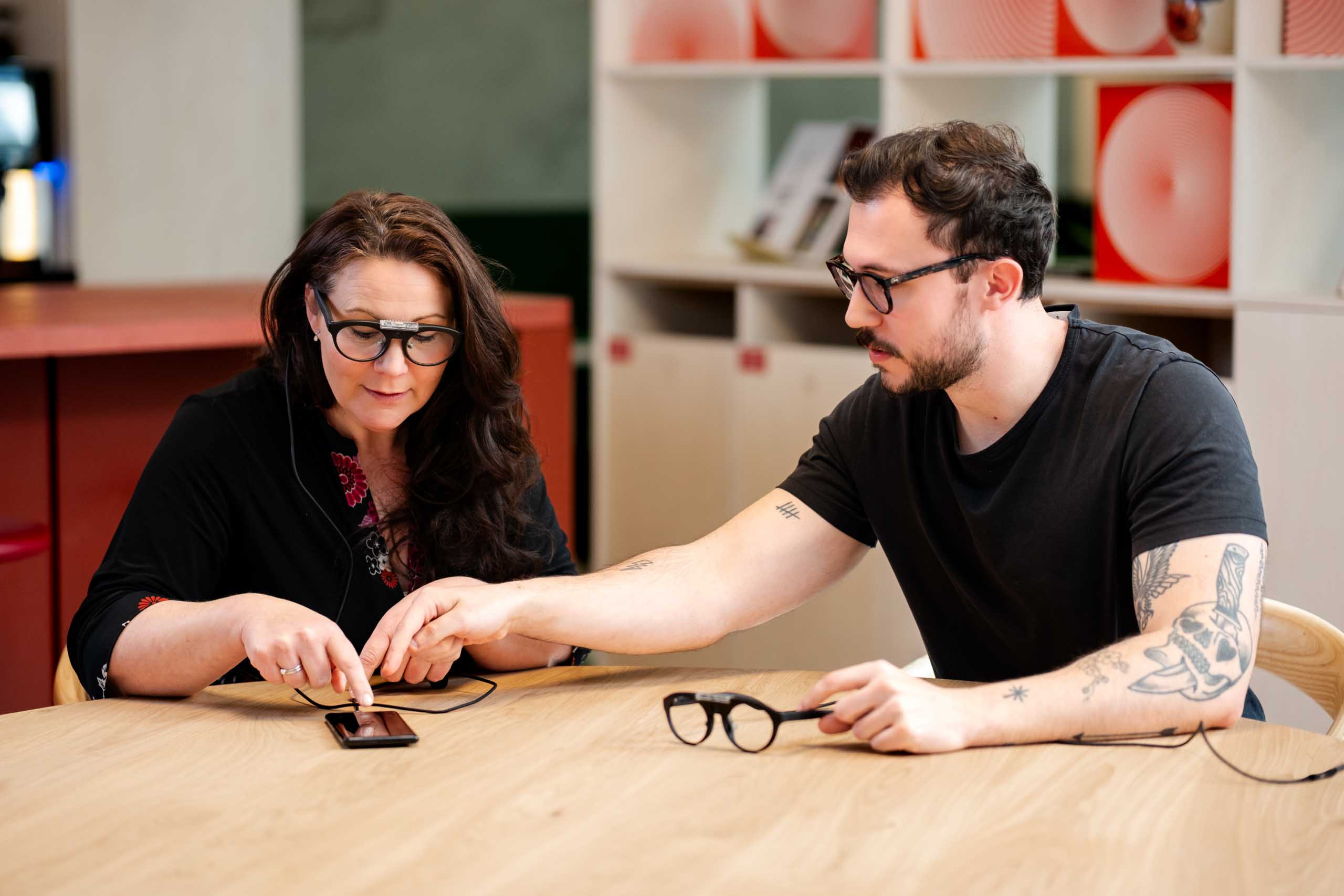
In June, Somareality closed an oversubscribed Series A led by Catalyst Romania, with participation from existing investors MT-Lab, RDY Ventures, Moondust Ventures, and Gateway Ventures. The capital will support expansion across B2B markets, longitudinal cognitive health studies, and development of a consumer product.
When asked what investors are backing, Brodesser said "in the recent year we got approached by big tech to help build the first cognitive health wearable." He did not specify which company, but the approach suggests larger players see eye tracking as a feature worth integrating.
Longitudinal research will test whether eye tracking can produce a continuous measure of cognitive health, rather than context-specific one-off readings. The wellness framing keeps Somareality outside regulated clinical diagnostics for now, giving the company a less constrained path to market.
Brodesser is deliberate about Somareality’s choice for eye tracking over EEG. "I am convinced that we need to look beyond EEG to get cognitive insights beyond the laboratory setting. With smart glasses and general head-worn wearables now seeing wide adoption, eye tracking is the perfect sensor that is already integrated in a lot of devices."
Somareality is not alone in the space. Neurotrack has built eye-tracking-based cognitive assessment tools for pharma and clinical trials. BioEye is pursuing passive cognitive monitoring through smartphones. Tobii, the dominant eye-tracking hardware player, is already embedded in the VR and AR headsets most likely to become consumer cognitive wearables.
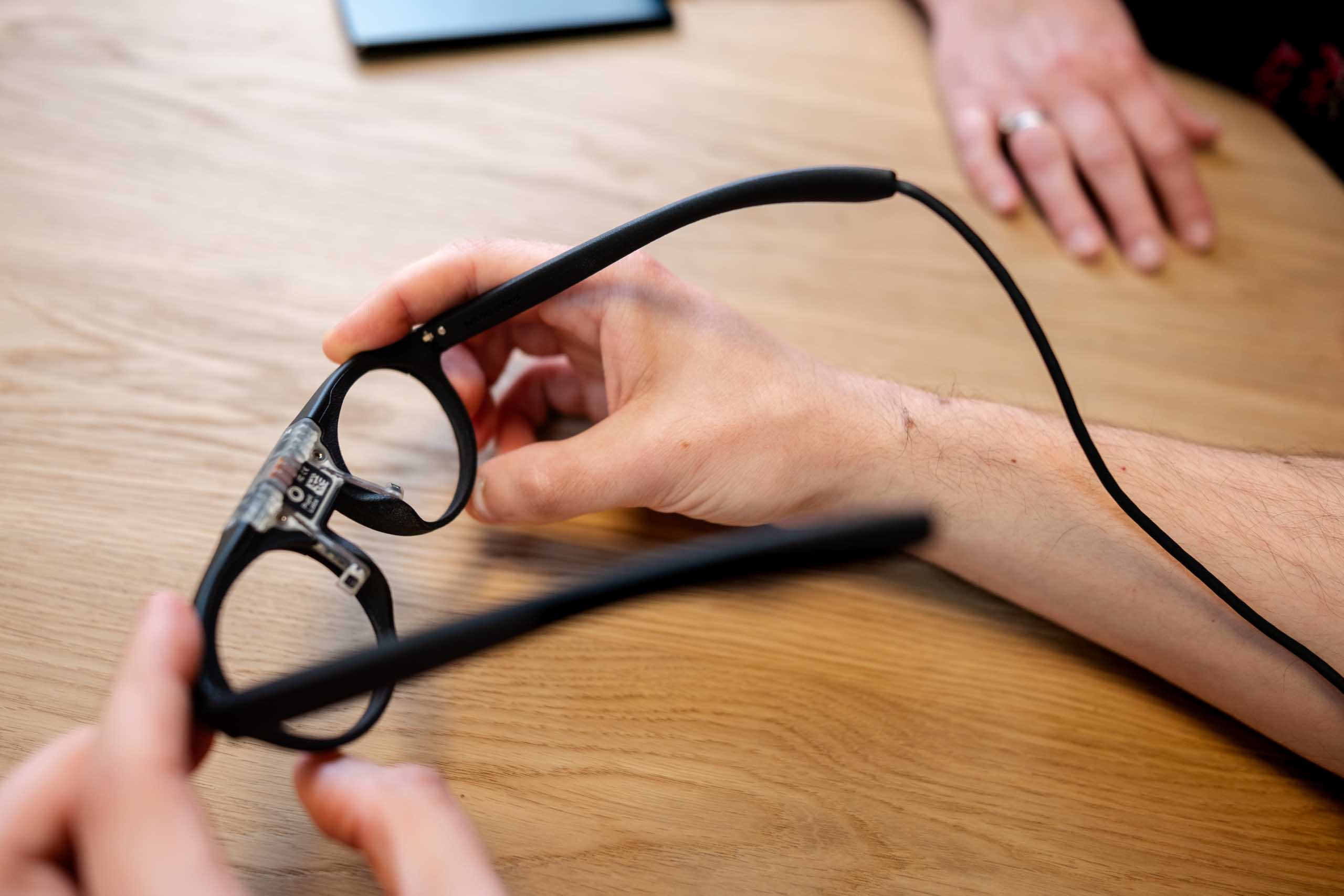
Nothing technically prevents Tobii, Meta, or Apple from building cognitive biomarker algorithms on hardware they already control. Somareality’s edge, its founders argue, lies in over ten peer-reviewed publications, validated enterprise customers, and years of domain-specific training data that cannot be quickly replicated.
Brodesser's long-term vision goes beyond their current wellness ambitions. "In five years, personal cognitive insights will be as common as cardiovascular insights, enabling early detection of neurodegenerative diseases at scale while also helping users navigate the digital overload and attention switching we experience in our modern lives," he says. It is a vision built on a technology that, by Brodesser’s own admission, cannot see into the brain itself and has so far only been tested on healthy people. Whether eye tracking can carry that weight remains an open question. This raise gives Somareality the runway to find out.
.svg)





.jpeg)