Brain-computer interfaces have drawn some of the largest venture checks in the medtech sector over the past years. And some of the newest entrants to the scene have been chasing a novel premise: that ultrasound will define the next generation of BCIs. Aleph Neuro, a research lab focusing on ultrasound-based brain imaging for a “telepathic future,” is one of the recent companies making this wager.
A core bottleneck in BCI technology is resolution. Existing neuroimaging tools cannot non-invasively map brain activity at the scale a general-purpose interface may require, limiting researchers’ ability to interpret activity beyond the regions and functions already well understood. Aleph’s imaging work is aimed directly at that gap, alongside companies such as Merge Labs and Gestala. But while these companies are converging on ultrasound as a technical approach, they may ultimately be pursuing very different applications.
Ultrasound’s appeal comes from its versatility: the same underlying physics can be used both to decode brain activity and to influence it non-invasively. Functional ultrasound imaging (fUS) measures neural activity indirectly by tracking changes in cerebral blood flow, rather than recording electrical signals directly as electrode-based BCIs do.
The technique was first described in a 2011 paper from biophysicist Mickael Tanter’s lab. Focused ultrasound, a related but distinct approach, works in the other direction, using precisely targeted acoustic energy to modulate neural activity. These capabilities make ultrasound exceptionally versatile within neurotechnology, supporting approaches that range from brain imaging to neuromodulation.
Aleph Neuro sits on the imaging end of that spectrum. The company describes itself as a research lab and in June 2026, it announced that it had obtained the highest-resolution 3D images of the human brain ever taken from outside the skull. It also published its imaging pipeline as open source on GitHub. The images relied on an injected contrast agent, which Aleph describes as a “step in the journey” toward contrast-free imaging and, ultimately, its much broader vision of a telepathic future.
The longer-term ambition goes beyond producing better images. Aleph ultimately wants to turn neurovascular ultrasound into a general-purpose, non-invasive brain interface capable of capturing activity across large parts of the brain at high resolution. Its current work on contrast-free imaging and larger neurovascular datasets is intended to move toward decoding increasingly complex and distributed patterns of brain activity, eventually inferring information that today would require invasive interfaces or remain inaccessible altogether.
Aleph was co-founded by Raffi Hotter, who previously developed neurotechnology instrumentation in Adam Cohen’s lab at Harvard. The company has not announced a conventional venture round, and no confirmed investment figures have been publicly disclosed as of this writing.
Aleph is not the only company betting on ultrasound as a foundation for brain-computer interfaces. Forest Neurotech has already built a device designed to both image brain activity and deliver neuromodulatory stimulation across large volumes of the brain. Gestala is similarly pursuing ultrasound for “whole-brain reading and writing.” Merge Labs, an OpenAI-backed company that grew out of Forest and shares several of its founders, is pursuing its own approach towards “bridging biological and artificial intelligence.”
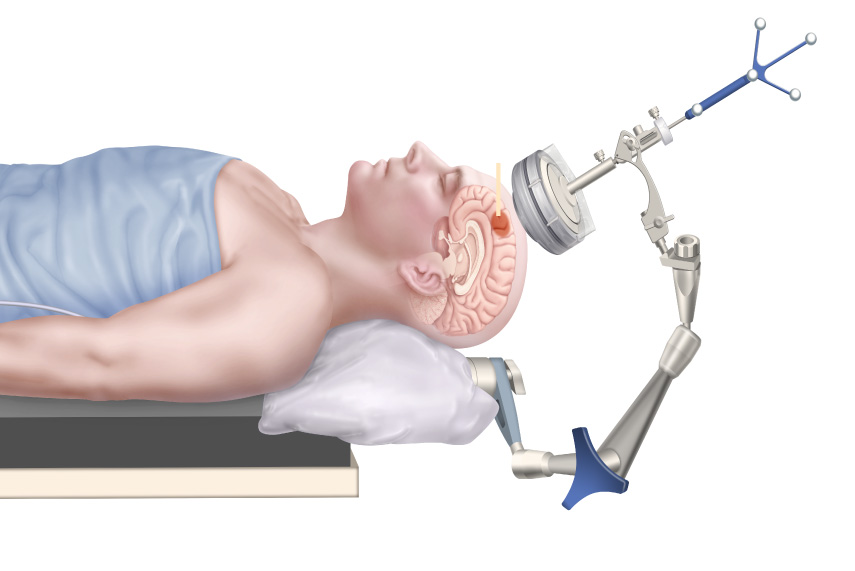
The maturity of ultrasound technology varies widely depending on the application. As a way to deliver energy into tissue, it is already well established. High-intensity focused ultrasound (HIFU), for example, can heat and destroy precisely targeted tissue deep in the brain and is used clinically to treat movement disorders. At lower intensities, focused ultrasound is being investigated both as a form of neuromodulation and, when combined with microbubbles, as a way to temporarily open the blood-brain barrier for therapeutic delivery.
Using ultrasound to image and ultimately decode brain activity is a different challenge. Functional ultrasound measures a proxy for neural activity through changes in blood flow rather than recording the electrical activity of neurons directly. The skull is a major technical obstacle: its thickness and irregular structure attenuate and distort ultrasound waves, making it harder to preserve the resolution and sensitivity required for a general-purpose interface.
Human evidence also remains early. Functional ultrasound has produced high-resolution recordings in people where the skull has been removed or replaced with an acoustically transparent window, while transcranial imaging through the intact skull remains much less established. Aleph’s June 2026 result pushed that boundary by producing a highly detailed 3D vascular image through an intact human skull; although it was an imaging milestone that used an injected contrast and did not demonstrate functional neural decoding.
But not all companies are trying to build the same thing. Gestala describes a platform for whole-brain reading and writing, with therapeutic and broader brain-interface ambitions. Forest is developing a whole-brain interface for both imaging and stimulation. Merge is pursuing higher-bandwidth interfaces combining ultrasound, biology, and AI. Aleph sits closer to a general-purpose non-invasive interface capable of decoding distributed brain activity, which it frames as viable a path toward telepathy.
.svg)









%20copy.jpg)