

Oura is having the kind of month that makes every move feel big. The company reportedly filed for a US IPO after launching Oura Ring 5 and achieved a valuation of around $11 billion. It has scaled significantly over the years, selling millions of rings and playing a growing role in the health wearable category. This success is now drawing competition, with wearables increasingly moving toward clinical readings and expanding up the body into the territory of measuring brain health.
Last month, Oura announced two partnerships that push the ring further into that clinical-adjacent territory. A new study with Cambridge Cognition will use Oura Labs to pair cognitive assessments with sleep, activity, stress, and physiological data from the ring. Separately, a ResMed sleep partnership will give US Oura users access to sleep education, assessment tools, virtual consultation options, and ResMed’s sleep care network.
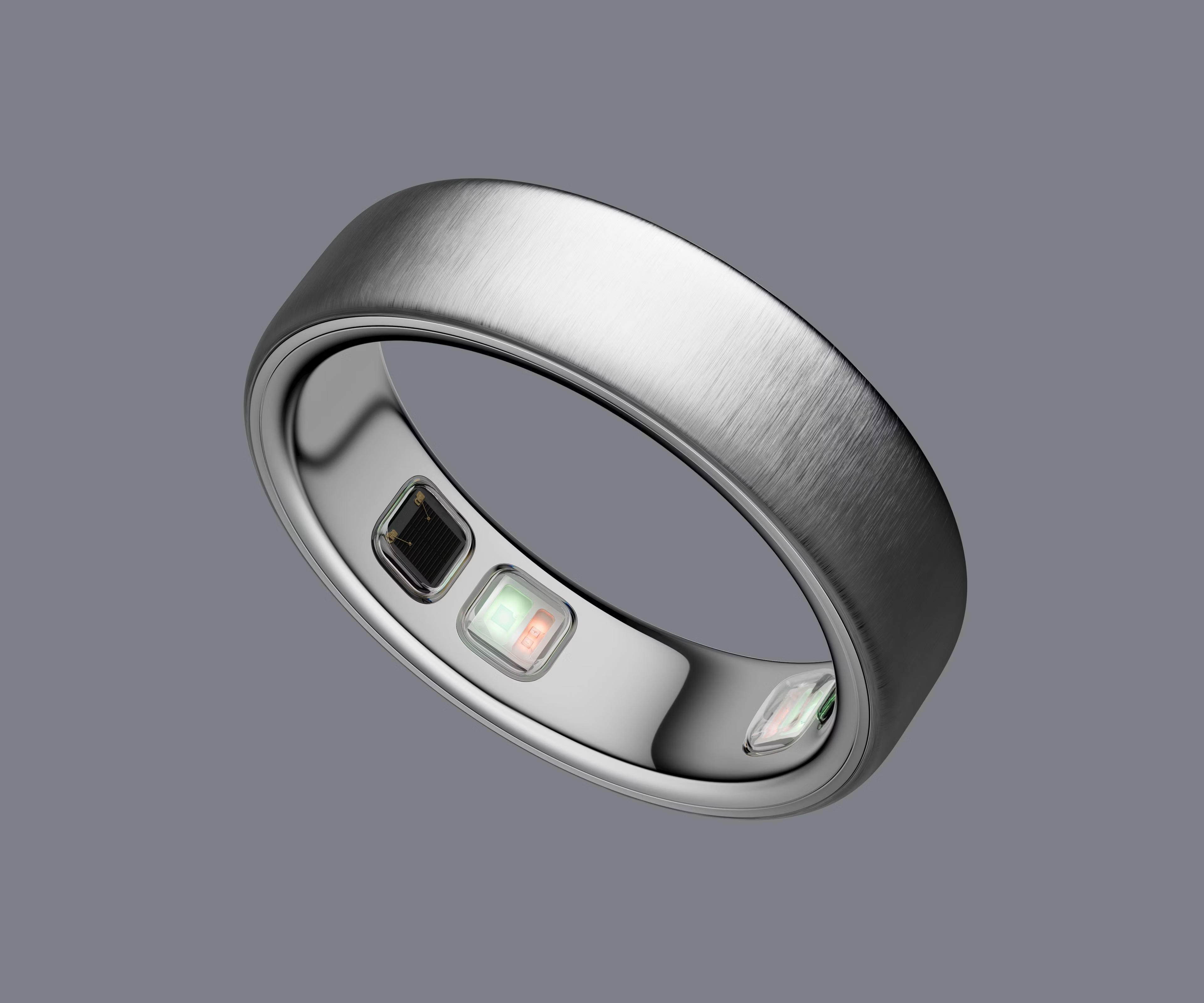
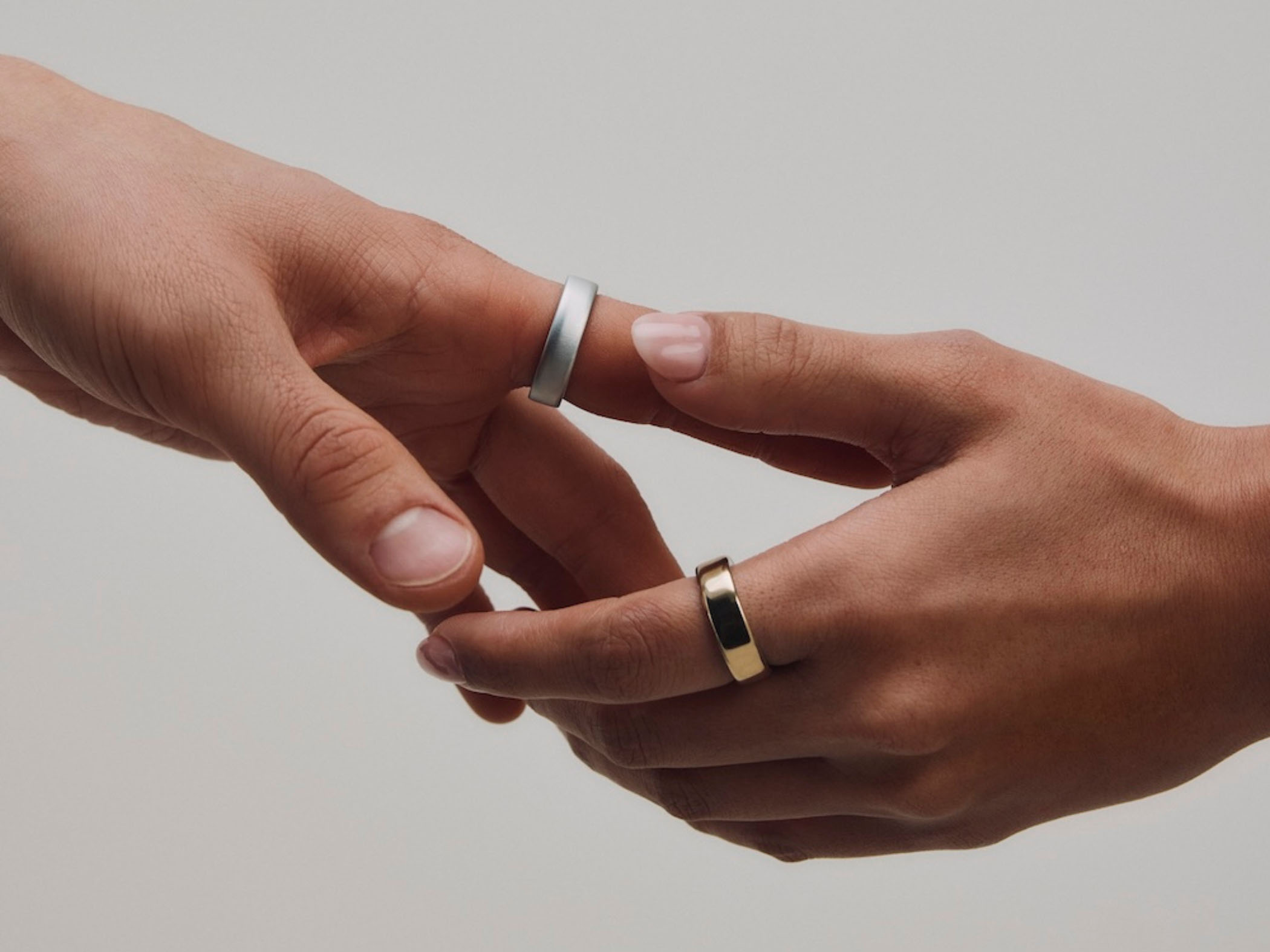
On the 28th of May, Oura announced the Oura Ring 5, its smallest ring to date. The device is 40% smaller than its 4th iteration, includes redesigned low-profile sensors, and incorporates 12 signal pathways. The update addresses one of the main critiques of the ring form factor, as many users find the current ring bulky, uncomfortable, and frankly unfashionable. Beyond creating a more comfortable all-day fit for its existing customers, the smaller design may also open Oura to users with smaller hands.
On the software side, Oura introduced a new Health Radar, GLP-1 Insights, Live Activity Tracking, data deletion tools, and new Oura Labs work with Counsel Health. Health Radar is the most clinically adjacent feature in that group, showing users significant changes across their metrics and adding Blood Pressure Signals and Nighttime Breathing to the UI. The feature gives users guidance around rest, lifestyle changes, or healthcare evaluation, while explicitly refraining from formal diagnoses.
On the same day as the new product release, Oura announced a brain health study with Cambridge Cognition, a UK neuroscience company developing cognitive assessment tools used in research and pharma. The IRB-approved study will run through Oura Labs and integrate Cambridge Cognition’s CANTAB assessments into the Oura app. Up to 45,000 Oura members will be able to complete short cognitive assessments while the ring collects sleep, activity, stress, and physiological data over time.
The study gives Oura a more explicit cognitive measurement layer than its existing stress, readiness, and recovery features. Existing sensors can infer cognitive states to some extent through peripheral signals such as heart rate, HRV, temperature, respiratory rate, and movement. The Cambridge Cognition study adds self-reported active measures such as memory, focus, and reaction time, and places those scores next to the continuous biometric record already collected by the ring.
Oura’s second recent move is its sleep health partnership with ResMed, a leading producer of medical devices for sleep conditions. Announced on May 19, the partnership gives Oura members access to sleep education, assessment tools, virtual and in-person provider options, and materials to support conversations around their sleep with healthcare professionals. The entry point is Oura’s nighttime breathing data, which can surface repeated breathing disturbances during sleep and nudge users towards clinical evaluation.
For ResMed, the partnership provides access to Oura’s growing consumer base already engaged with sleep tracking. For Oura, ResMed provides a route into more formal sleep care and tests an indirect model of clinical endpoints, where the ring stays out of diagnostic device territory and steers clear of FDA regulation. Members are directed toward education, screening, and care options, while the ring remains positioned as a wellness product.

Not all sleep wearables sit squarely in that wellness camp. Apple received FDA clearance for sleep apnea notifications in compatible Apple Watch models, while Samsung’s Sleep Apnea Feature received De Novo authorization as an over-the-counter software medical device.
For ResMed, the partnership came shortly after it acquired Noctrix Health, where it added Nidra TOMAC Therapy, an FDA De Novo classified treatment for moderate-to-severe restless legs syndrome, to its portfolio. Oura is now explored as an entry funnel into that sleep ecosystem, while ResMed continues expanding the downstream care portfolio.
For Oura, this is not the first partnership of its kind. Dexcom, a company known for continuous glucose monitoring, invested in Oura and is working to connect glucose data with sleep, stress, heart health, and activity signals. Meanwhile, Oura’s new GLP-1 Insights feature lets users track medication schedules, side effects, weight, and ring-derived biometrics without stepping into diagnostic territory. For now, the model is care navigation first.
Produced with support from

%20copy.jpg)





.svg)

