Switzerland is becoming one of Europe’s more visible neurotech hubs. With EPFL, ETH Zurich, the Wyss Centre, and strong clinical research networks, the country is producing a cohort of neurotechnology startups with serious technical depth. Neurosoft Bioelectronics, a Geneva-based BCI company spun out of EPFL, is one of the clearest examples. Today, the company announced a $7.5 million oversubscribed seed round to advance its soft, stretchable brain interfaces.
The round was led by Skybound Venture Capital, with participation from Protocol Labs, IAG Capital Partners, Connecticut Innovations, and others. It brings Neurosoft’s total funding to more than $20 million and follows a strategic partnership with Science Corp, one of the more prominent US BCI companies. Neurosoft has tested its interface in 10 patients across two ongoing clinical trials. The seed funding will support clinical work while also financing early US commercialization.
With its new funding round, Neurosoft has attracted a more US-facing investor base. Skybound Venture Capital led the $7.5 million oversubscribed seed round, with participation from Protocol Labs, IAG Capital Partners, Connecticut Innovations, and others, bringing total funding to more than $20 million. The proceeds will support deployment in human patients and US commercialization of the company’s first brain interface.
Protocol Labs is a notable name among the investors. Its PLC Neurotech portfolio includes major BCI names such as Paradromics, Precision Neuroscience, Science Corp, Synchron, and Merge Labs, placing Neurosoft in the same investment orbit as several of the most visible US interface companies.
Founded in 2020, Neurosoft was spun out of EPFL’s Laboratory by Nicolas Vachicouras, Ludovic Serex, Florian Fallegger, and Prof. Stéphanie Lacour. The company emerged from a specific materials problem of how to make neural interfaces that can sit on soft biological tissue without behaving like rigid electronics. Neurosoft has since moved from materials development into early clinical testing. Its flexible interface has been used in 10 patients across two ongoing clinical trials at UTHealth Houston and UMC Utrecht.
.webp)
“Our soft electrode platform, paired with a streamlined regulatory pathway, gives us access to neural data at a quality and scale no other approach can safely match today,” says Nicolas Vachicouras, CEO and Co-Founder of Neurosoft Bioelectronics. “That data is the foundation for improved clinical outcomes, and a cortical foundation model that will help shape the next generation of brain interfaces. The investor support we’ve seen in this round validates that we’re on the right path.”
The round follows Neurosoft’s strategic partnership with Science Corp, announced earlier this year. Through the multiyear agreement, Neurosoft gains access to Science’s Ecosystem, a clinical-grade platform spanning neural electronics, software, application development tooling, and testing infrastructure. Science frames this model as a way to reduce the cost and time required to reach first-in-human studies. They estimate the cost of full-stack BCI development at $75 million to $100 million, while first-in-human work through its platform is possible for as little as $5 million.
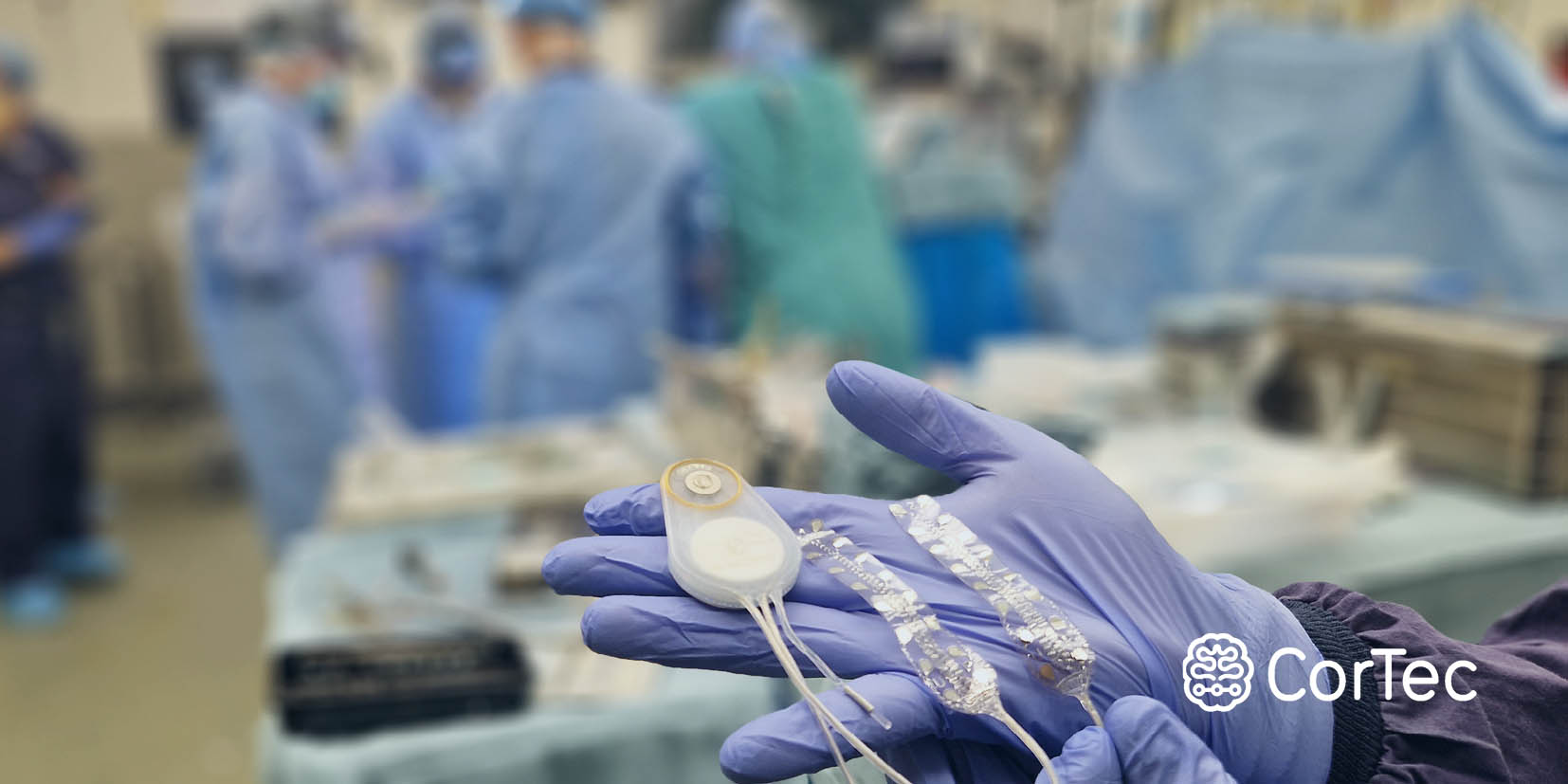
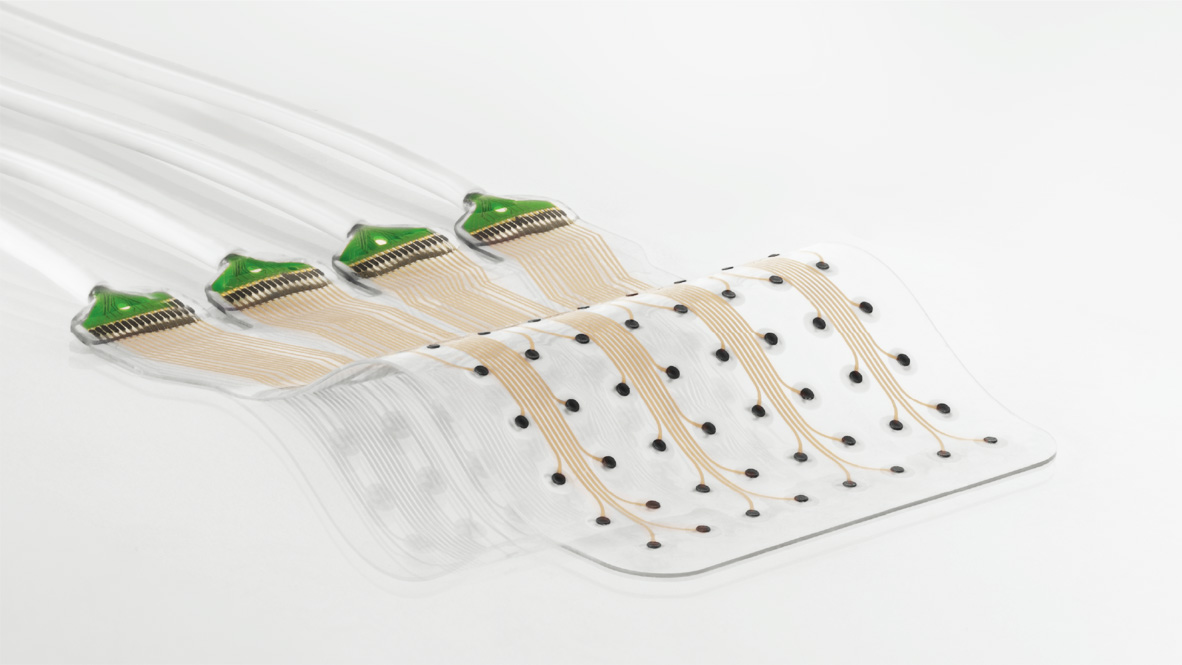
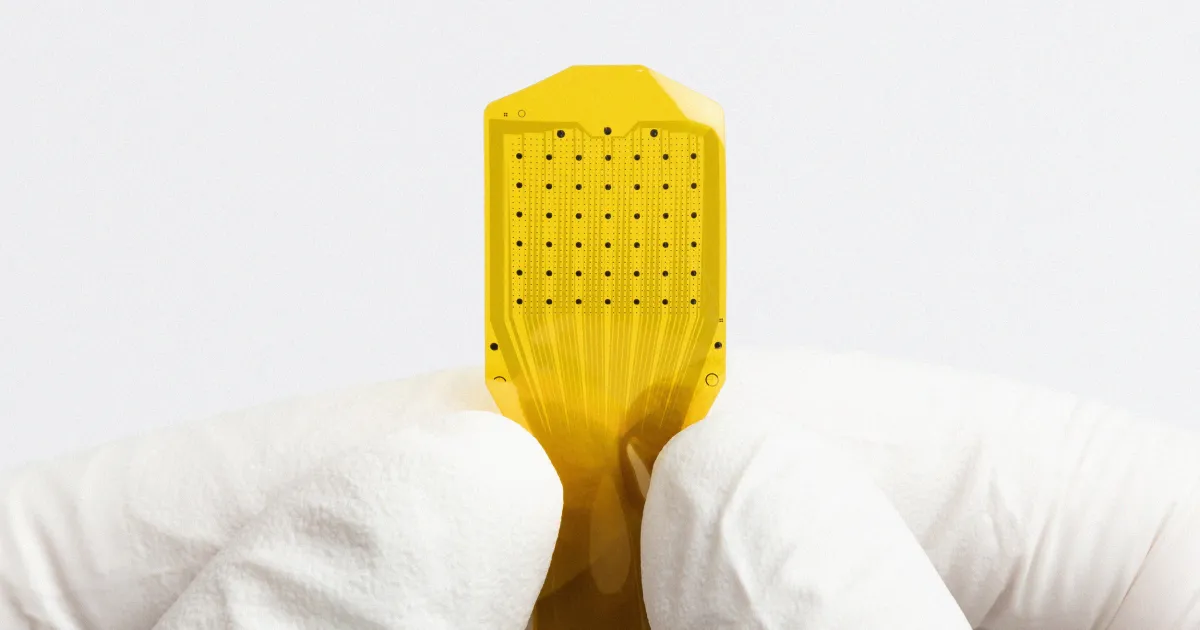
Neurosoft is building a soft, elastic electrode platform that sits on the cortical surface without penetrating brain tissue. The company’s electrodes are said to be up to 1,000 times more compliant than other flexible interfaces and cover up to 30 times more cortex. Neurosoft describes its interfaces as 1,000-100,000 times softer and 5 times thinner than alternatives. That design looks to reduce the mechanical mismatch between electronics and neural tissue, while allowing the device to fold, unfold, conform to the surface, and reach sulci.
Neurosoft’s platform is being developed across several product directions. SOFT ECoG is aimed at sub-chronic applications such as epilepsy surgery guidance and cortical monitoring during resection surgery. MINDZ extends the interface into a minimally invasive brain implant. SOFT TINNIT applies the platform to severe tinnitus through a fully implantable closed-loop neuromodulation system. Synapsuit moves toward assistive BCI by combining soft interfaces, AI decoding, and a wearable exosuit for arm and hand movement.
The company is part of a broader Swiss neurotechnology pattern. EPFL, ETH Zurich, Campus Biotech, the Wyss Center, and Switzerland’s medtech manufacturing base have helped create a strong foundation for complex neural hardware companies. Neurosoft sits alongside a growing set of Swiss neurotech companies, including ABILITY Neurotech, IDUN Technologies, Aleva Neurotherapeutics, and others.
.svg)








%20copy.jpg)