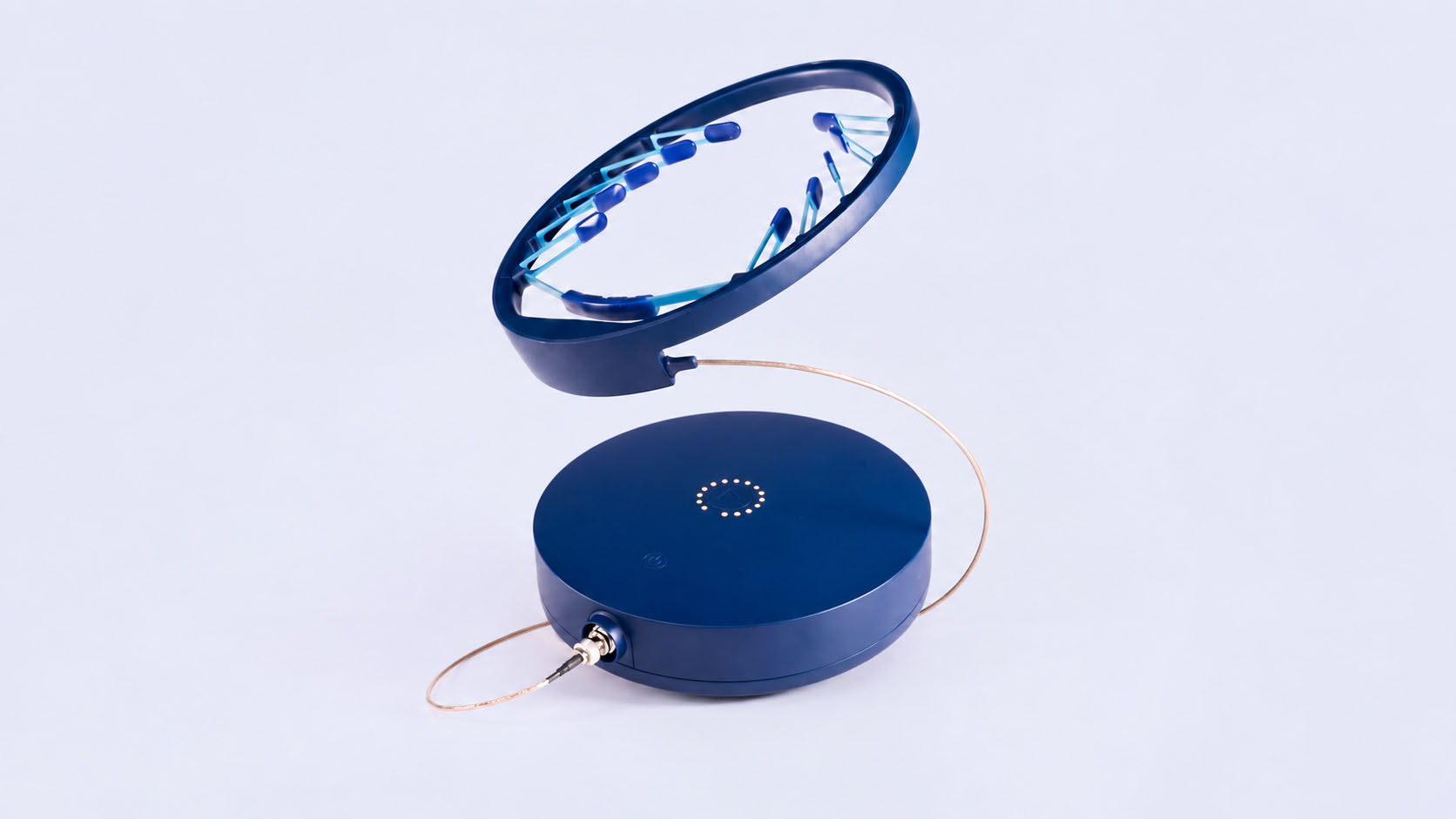

The FDA has granted Premarket Approval to Neurolief for its Proliv Rx system, clearing the device as an adjunctive treatment for adults with major depressive disorder. The approval places Proliv Rx in the FDA’s highest-risk regulatory category and authorizes its for at-home prescription use under physician supervision. PMA approvals remain rare in neuromodulatory devices, particularly in systems intended for home use, making the clearance notable on regulatory grounds alone.
Yet, the timing is also striking. Neurolief’s approval follows shortly after the FDA cleared Flow Neuroscience’s MDD device, marking two home-based neuromodulation systems entering the U.S. market in close succession. Neuromodulation for depression is now positioned within a changing regulatory and clinical context, where non-invasive, physician-directed therapies are increasingly being evaluated outside traditional clinic-only settings.
The FDA has approved Neurolief’s Proliv Rx through the Premarket Approval (PMA) pathway, the agency’s most stringent route for medical devices. The clearance applies to adjunctive treatment of adults with major depressive disorder who have not responded sufficiently to antidepressants and places the device in the FDA’s Class III (high-risk) category.
Proliv Rx is prescription-only and designed for use at home under physician supervision. PMA approval indicates that the FDA reviewed direct clinical evidence of safety and effectiveness for this specific use, a higher regulatory bar than is typical for most non-invasive neurodevices. Flow Neuroscience’s MDD headset was also recently cleared through the FDA’s PMA pathway.
Neurolief's approval is supported by data from the MOOD Study, a randomized, placebo-controlled, multicentre trial in adults with treatment-resistant depression. The study evaluated both safety and effectiveness in the population, meeting the requirements for PMA review. While detailed results and outcomes have not been widely published in regulatory announcements, the FDA’s decision indicates that the overall risk-benefit profile was judged acceptable for the intended use and setting.
Neurolief brings prior regulatory experience to this approval. The company previously received FDA clearance and CE marking for its Relivion system for migraine treatment. It also maintains a strategic relationship with BrainsWay, a publicly listed neuromodulation company best known for its deep transcranial magnetic stimulation (dTMS) systems. BrainsWay has previously invested in Neurolief and disclosed an option to acquire the company in the future.
Neurolief’s Proliv Rx is built around Combined Occipital and Trigeminal Afferent Stimulation (eCOT-AS), a form of peripheral nerve stimulation. Instead of applying current across the scalp to influence brain tissue directly, the system stimulates sensory nerve pathways from the face, forehead, and back of the head that feed into the brainstem. From there, signals move into broader thalamo-cortical and limbic networks associated with mood, arousal, and autonomic regulation.
This approach differs fundamentally from Flow Neuroscience’s FL-100 headset, which uses transcranial direct current stimulation (tDCS) to directly target frontal cortical regions, particularly the dorsolateral prefrontal cortex. Flow’s underlying hypothesis is that gradually shifting activity in these control regions can reduce depressive symptoms over time. Neurolief’s approach works from the periphery inward, using repeated stimulation of sensory pathways to influence deeper mood-related circuits indirectly. Both systems are non-invasive and home-based, but they act on different parts of the networks implicated in depression.
Within the broader treatment landscape, Proliv Rx sits below clinic-based neuromodulation in terms of intensity and procedural burden. Transcranial magnetic stimulation (TMS) delivers focal cortical stimulation under tightly controlled, clinic-based protocols. Electroconvulsive therapy (ECT) operates at the most intensive end of the spectrum, involving anesthesia and global network disruption, and is typically reserved for severe or refractory cases. Home-based systems like Proliv Rx trade precision and rapid relief for accessibility and repeated, lower-intensity use under medical supervision.
The recent sequence of FDA decisions suggests increasing regulatory comfort with that trade-off. Devices such as Proliv Rx and Flow’s FL-100 headset are being assessed as medical therapies despite their home-use form factors, with regulatory scrutiny extending beyond the device itself to how treatment is delivered over time. Their clinical impact will be shaped by how consistently they can be used in real-world settings, how protocols are followed outside the clinic, and what longer-term evidence emerges once these systems move into broader use across the U.S.
[Cover image credit: Neurolief]
.svg)








%20copy.jpg)