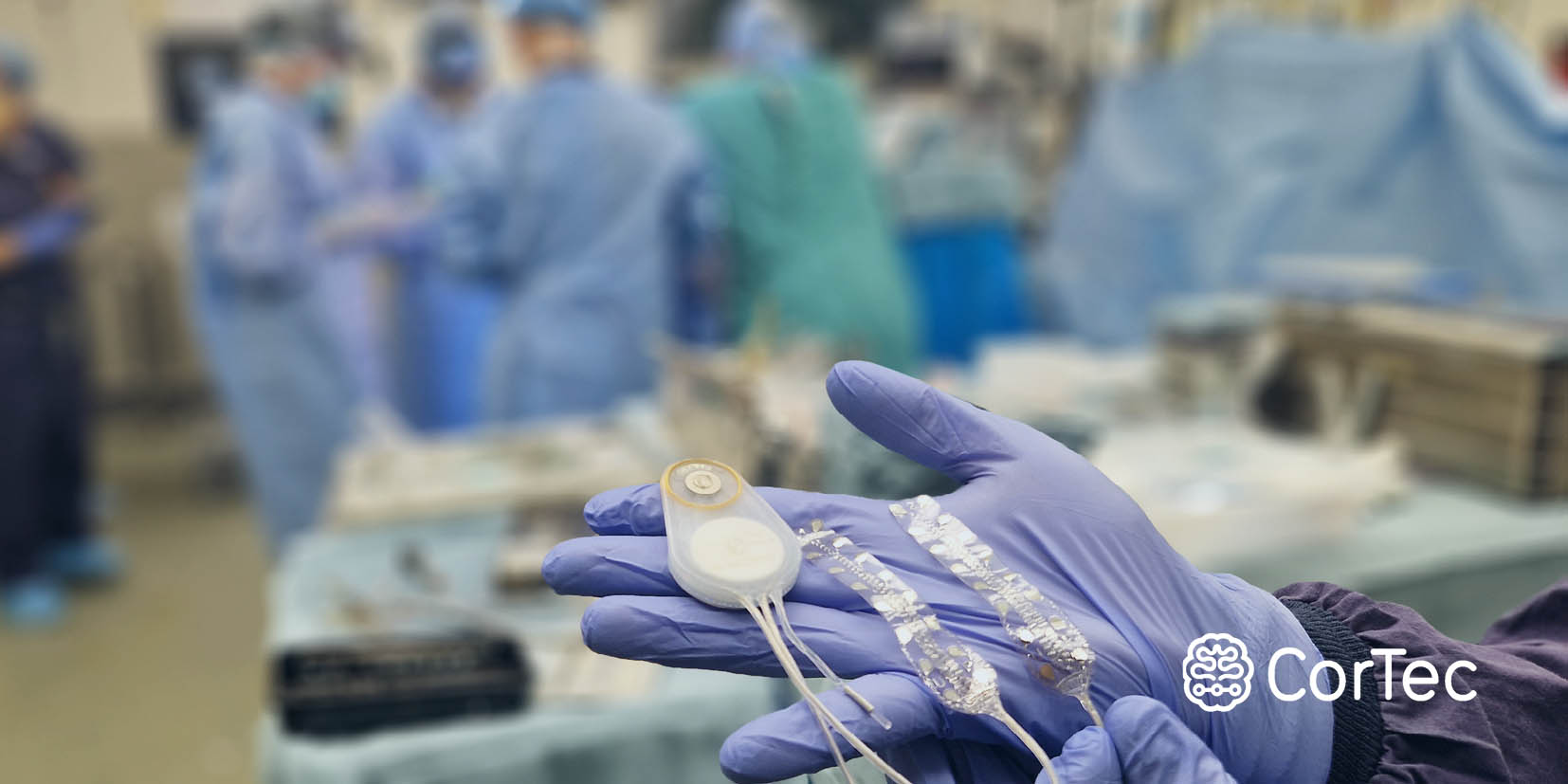

China’s national neurotech push is starting to show output. Over the past year, brain-computer interfaces became a strategic priority in a seven-ministry program focused on creating globally competitive firms by 2030, then again in Beijing’s latest five-year plan for future industries. The domestic market is growing at roughly 20% annually, while more than 10 invasive trials are already active and at least 50 patients are expected to enroll in 2026. Last week, that push culminated in the first ever commercial BCI approval.
China approved the brain computer interface for quadriplegia linked to cervical spinal cord injury. The approval follows a second Chinese headline. Shortly after Merge Lab’s $250 million ultrasound-focused seed round, China saw the launch of Gestala, a firm developing a non-invasive ultrasound device aimed at read-write brain interfaces. China is pushing on across both invasive and non-invasive routes, with Chinese firms increasingly moving into the same lanes as Western leaders and, at times, moving at a faster pace.
Last week, China approved the market launch of what is described as the world’s first commercial BCI medical device. The device was developed by Shanghai-based Borui Kang Medical Technology (English name ‘Neuracle’). It is intended for people with quadriplegia caused by cervical spinal cord injury, with the device looking to restore partial hand-grasping ability by decoding motor intent and driving an external assistive glove.
The system sits in a more clinically pragmatic part of the BCI landscape than the intracortical implants that usually dominate media headlines. It is a minimally invasive extradural implant with wireless communication, designed to decode motor signals while avoiding some of the burden associated with intracortical approaches. Eligible patients are reported to be adults aged 18 to 60 with cervical spinal cord injury, diagnosed at least a year earlier and stable for six months after treatment.
The evidence base disclosed so far is still relatively thin, but the approval is still a meaningful clinical signal. Trial results point to improvement in hand function and quality of life among treated patients. The underlying technical stack is not clear. Most public reporting in English sits at the level of regulator notices, company-linked reporting, and press coverage rather than providing peer-reviewed dataset and technical white papers that can meaningfully be benchmarked against Western peers.
China now has more than 10 active invasive BCI trials, plans to enroll at least 50 patients in 2026, and has already begun incorporating some BCI-related treatments into pilot medical insurance programs in a few provinces.
Before the approval, another Chinese headline reached international attention. Chinese startup Gestala launched two months ago and just raised a $21.6 million seed round to build a non-invasive ultrasound BCI that combines brain reading and stimulation without surgery. Founder Phoenix Peng is pitching the platform as a way to avoid implant risk while still reaching deeper neural targets than surface EEG can usually access. Chronic pain is the first indication, with broader ambitions in depression, PTSD, OCD, stroke rehabilitation, Parkinson’s, and Alzheimer’s. A first-generation prototype is targeted for later this year.
Gestala joins a growing list of Chinese neurotech startups competing with the West. China’s neurotech stack stretches from BrainCo’s capital-backed non-invasive systems to NeuroXess’s frontier implant work and newer modality bets like Gestala. BrainCo recently raised more than $200 million before filing for a Hong Kong IPO and has already pushed consumer-oriented device lines to 100,000 units.
StairMed, meanwhile, has raised RMB 1.1 billion over the past year and is preparing multicenter registration trials for its 256-channel invasive BCI system. NeuroXess sits closer to the high-performance implant race that has drawn most of the attention in the US, while Gestala extends the picture further by adding a next-generation non-invasive thesis.
Cleanly mapping Chinese firms to US efforts is not possible, but there are some analogues worth mentioning. Borui Kang is the clearest Chinese analogue to Neuralink in strategic terms: both are building paralysis-focused interfaces aimed at restoring function through external device control, even if the technical approaches and public profiles differ. NeuroXess belongs in that same conversation, but closer to the high-performance dimension chased by Neuralink, where signal quality and decoding capability are among the most important company goals.
Synchron and Precision sit in adjacent but distinct lanes, both pursuing less surgically burdensome paths into clinical use, with Synchron pushing the minimally invasive story and Precision moving through a more conventional medtech channel via Medtronic. That matches Borui Kang’s ambition of restoring function in a minimally-invasive manner. Gestala, by contrast, maps much more cleanly to Merge Labs: both are next-generation ultrasound-based interface bets built around AI and a willingness to move beyond today’s electrode-centric BCI model.
.svg)








%20copy.jpg)