The 2026 World Economic Forum in Davos marked a tipping point for global health and economic policy. Brain health was reframed by WHO Director-General Dr. Tedros Adhanom Ghebreyesus as the “defining challenge of the 21st century”. By formalising Brain Capital as an economic asset, Davos granted global markets permission to treat the brain as essential economic infrastructure. Davos propels the brain out of traditional medicine and positions cognition as a non-negotiable asset for national competitiveness.
The return of the “Brain House” pavilion served as a focal point for this shift, bringing together neuroscientists, tech entrepreneurs, and global policymakers. One session, “Transforming Brain Health: Translational Innovation for a New Global Era,” convened leaders from Eli Lilly, Roche, and the Wellcome Trust to examine the future of healthcare, with a specific focus on biomarker-enabled prevention and the use of digital tools to detect neurodegenerative disease years before symptoms appear.
Ahead of the 2026 World Economic Forum in Davos, a landmark report released by the McKinsey Health Institute (MHI), The Human Advantage: Stronger Brains in the Age of AI, positioned brain health as a macroeconomic concern rather than a purely clinical one. The report argues that reclaiming 260 million Disability-Adjusted Life Years (DALYs) through improved brain health interventions could generate a $6.2 trillion GDP upside by 2050, explicitly linking population-level cognition to long-term economic performance.
Beyond these headline figures, the report goes on to define “Brain Capital” as the intersection of brain health (preserved neurological and mental functioning, rather than diagnosed disease) and brain skills (cognitive resilience, creativity, and adaptability). Its true contribution, however, lies less in the definition itself than in elevating brain health to a non-negotiable economic pillar. This framing provides a market-based rationale for increased R&D investment in preventative technologies rather than downstream treatment.
To translate this framing into action, the report identifies two levers that function as market signals for de-risking the sector. The first is Investing at Scale, transitioning brain health funding from speculative grants to institutional-grade capital. The second, Mobilising Stakeholders, looks to move brain health beyond healthcare systems and into the agendas of finance ministries, CEOs, and labour departments.
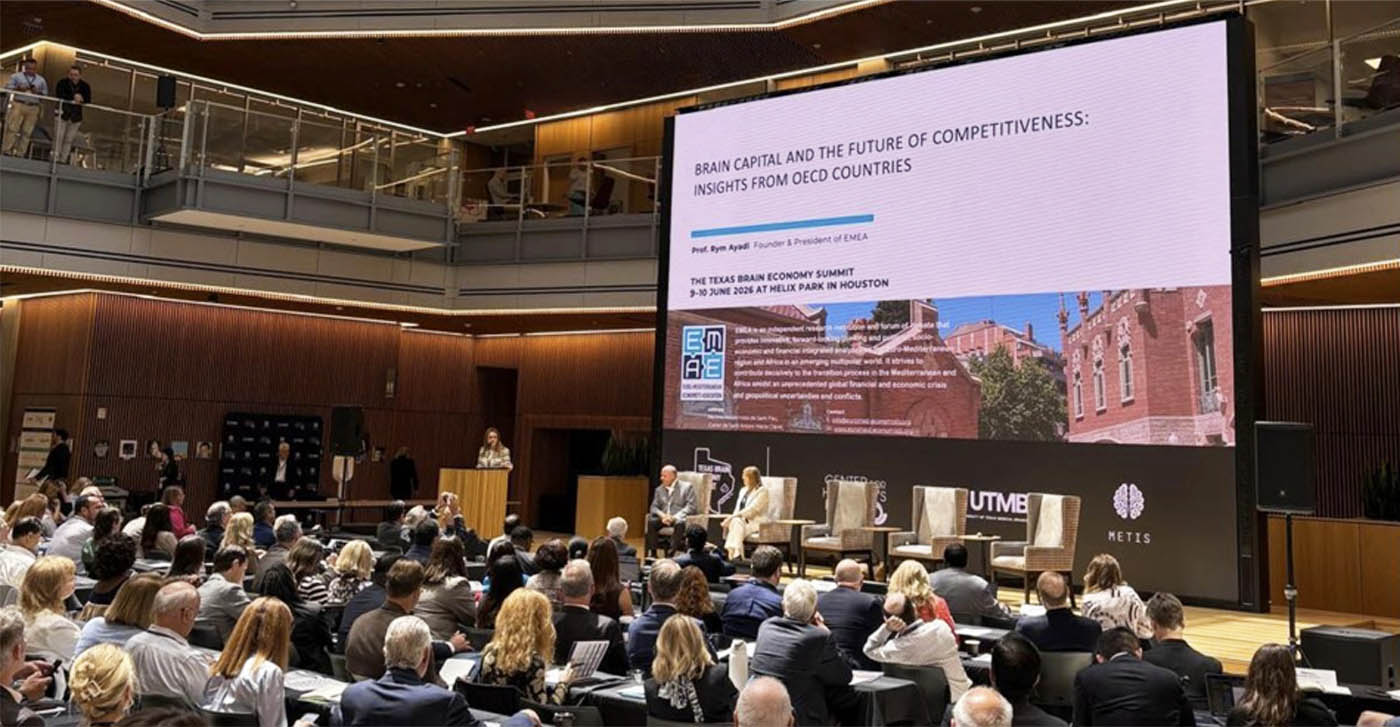
A concrete step in elevating brain health from a clinical issue to an economic and policy priority was the launch of the Global Brain Economy Initiative (GBEI) at Davos by Rice University and UTMB (The University of Texas Medical Branch). Positioned as an enabling layer for the Brain Capital agenda, the GBEI aims to establish the practical metrics and financing frameworks needed to translate brain research into scalable, real-world impact.
With this institutional groundwork in place, the Brain Capital agenda is increasingly focused on driving public–private partnerships (PPPs), aligning state funding, philanthropy, and venture capital to build momentum. The McKinsey report points to significant potential for companies that can quantify workforce resilience through concepts such as “Brain Care Scores,” positioning brain health as a lever for national productivity. This shift from diagnosis to prevention could create a new class of customers, including insurers seeking to reduce chronic disease risk and employers aiming to improve workforce performance.
However, while Davos provided clear validation that brain health now matters at the highest economic and policy levels, the emphasis on prevention currently outpaces our biological understanding of the mind. Many of the proposed metrics and interventions remain only partially grounded in neural data. As a result, the Brain Capital agenda risks remaining aspirational until the gap between high-level policy ambition and the scientific ability to reliably measure and map brain function is closed.

This limitation was implicitly acknowledged in Davos. Dr. Tedros concluded that the goal is to move beyond the absence of disease toward a world in which every person can achieve their “full cognitive, emotional, and social potential.” Brain Capital is framed as one mechanism to support this ambition, linking health outcomes to economic performance, but its success ultimately depends on whether prevention can be translated into evidence-backed, actionable systems.
The urgency of resolving this gap was underscored by George Vradenburg, Chairman of UsAgainstAlzheimer’s, who warned during the Davos sessions: “The mega-trend of aging demographics makes our current system unsustainable. Without a radical shift toward innovation and prevention, the economic weight of neurodegeneration will bankrupt even the strongest nations.”
.svg)





.jpeg)


%20copy.jpg)