
The latest update from Neuralink caps off a year filled with neurotech progress. On November 25, Neuralink announced that it had received FDA authorization to begin LINK, the first US pivotal trial of an implantable BCI. The study marks a major step toward potential FDA approval for its N1 implant.
LINK will evaluate the safety and effectiveness of Neuralink's system for digital device control in people with severe ALS-related paralysis. Earlier this year, China already approved Neuracle's implanted BCI for restoring hand grasping in people with spinal cord injuries. However, progress remains uneven. Also this month, competitor Synchron paused clinical trial enrollment after identifying a performance issue with its Stentrode implant.
LINK follows Neuralink's ongoing early feasibility trials in the US, Canada, UK, and UAE. The pivotal trial will evaluate the Telepathy system, which uses N1, an implanted intracortical array, to translate neural activity associated with intended movements into commands for computers and other digital devices. Following the green light, Neuralink has opened recruitment on its website.
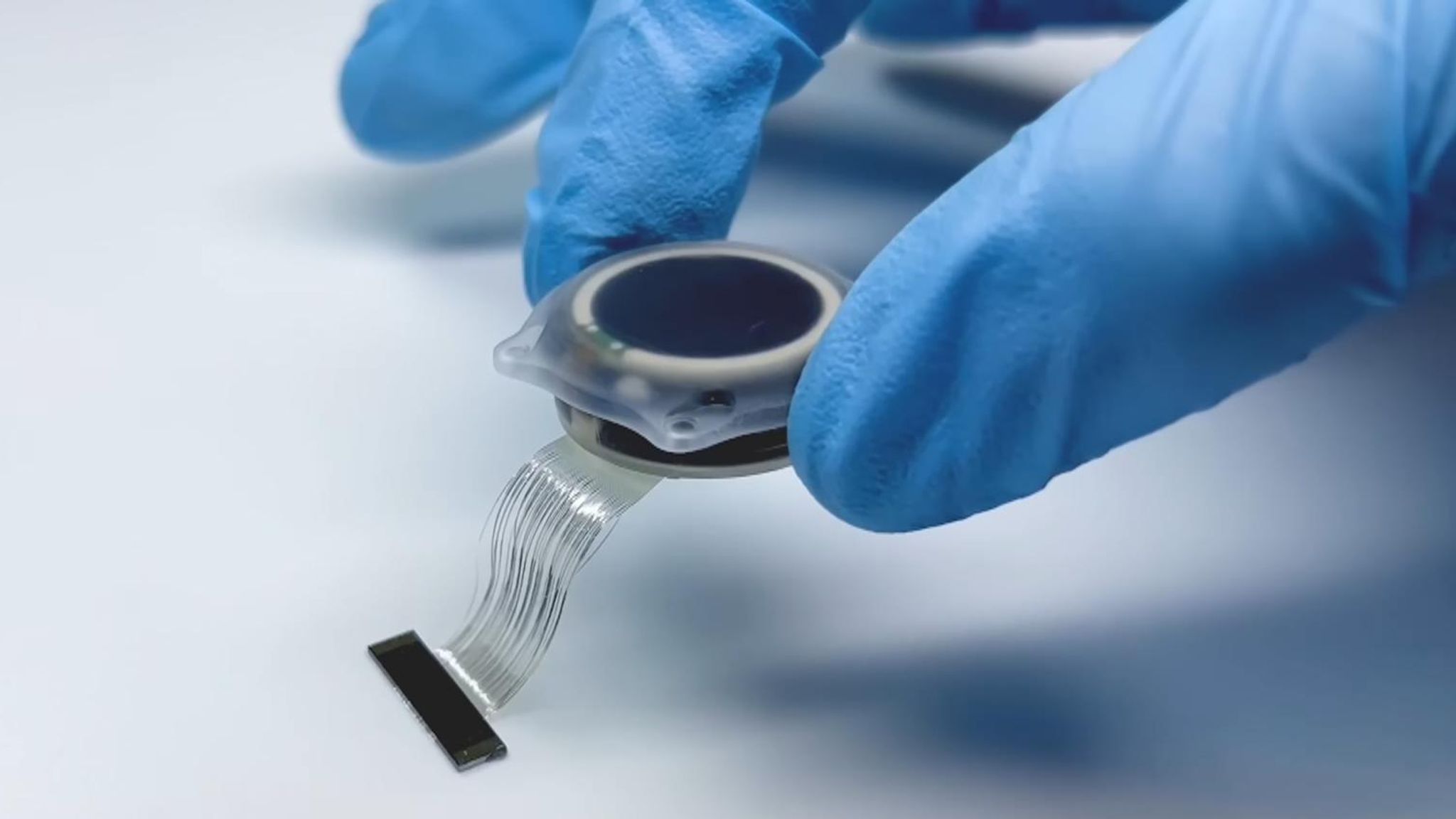
Neuralink began human trials in January 2024, when Noland Arbaugh became the first participant to receive its N1 implant. The device records neural activity through 1,024 electrodes distributed across 64 flexible threads, inserted into the motor cortex using the R1 surgical robot. In June, the company performed its first transdural implantation, inserting the threads without opening the dura.
Neuralink's program has now expanded to more than 30 participants, who have accumulated thousands of hours of real-world use.
Neuralink early trials have demonstrated increasingly sophisticated device control. In October, Neuralink reported a cursor-control performance of 11.32 bits per second, alongside new decoding methods that allowed participants to operate the system for weeks without recalibration. The pivotal study will place greater emphasis on clinical effectiveness, including how reliably participants perform everyday tasks and communicate independently.
FDA authorization for LINK allows Neuralink to collect clinical evidence for a potential marketing application. High-risk implanted devices typically follow the FDA's premarket approval pathway, which requires evidence of safety and effectiveness. Pivotal trials generally enroll more patients than early feasibility studies, although Neuralink has not disclosed LINK's planned enrollment or duration. The company has also not announced a targeted commercial launch date or future pricing.
In the category of severe paralysis, Neuralink competes with Synchron. Synchron’s Stentrode avoids open-brain surgery, using an electrode array implanted through a blood vessel near the motor cortex. The company has previously published results for digital device control, reporting no serious device-related adverse events over 12 months. In November 2025, Synchron raised $200 million to advance clinical development.
Despite that progress, Synchron paused enrollment in trials of its second-generation Stentrode across the US, Canada, and Australia. The decision, revealed by WIRED earlier this month, followed a performance issue involving the lead connecting the electrode array to the implanted electronics. Synchron said the issue was unrelated to safety and that the pause was voluntary. It is now upgrading the system before resuming recruitment, with no revised timeline announced.
Other US developers are expanding their clinical programs. Paradromics completed its first long-term Connexus implantation in June and demonstrated real-time speech decoding in September. In October, it received FDA authorization to expand recruitment nationwide. Meanwhile, Precision Neuroscience received FDA clearance for temporary use of its cortical electrode array in 2025. The company has since performed more than 110 patient procedures across 18 institutions and recently expanded its research network to Abu Dhabi.
Beyond assistive device control, several companies are already commercializing implanted BCIs. China's Neuracle received approval for its implanted motor BCI in March and had sold 13 systems by September. In July, Science received European approval for its PRIMA retinal implant, designed to restore central vision. Science recently raised a $400m Series D to advance commercialization and move towards an FDA clearance.
In this maturing industry, longevity data is becoming more important. A November BrainGate analysis spanning 20 years of research found that implanted arrays maintained recordable neural signals for up to 7.3 years in humans. A separate study reported stable single-neuron recordings over 1,240 days in a stroke participant. In October, Paradromics and CorTec each reported more than four years of stable electrode recordings in animal studies, using penetrating and surface arrays, respectively.
Produced with support from