For months, the neurotech field had been awaiting results from Cognito Therapeutics’ pivotal HOPE trial. The Cambridge-based company develops Spectris, a headset that uses synchronized light and sound at 40 Hz to stimulate gamma-frequency brain activity and slow Alzheimer’s progression. HOPE enrolled 673 participants across approximately 70 US sites, testing one hour of daily treatment at home over 12 months.
On November 16, Cognito announced that HOPE had missed its primary endpoint of slowing cognitive and functional decline in the overall mild-to-moderate Alzheimer’s population. However, a prespecified subgroup with mild disease showed 56% slower functional decline and 47% slower worsening on a combined measure of cognition and function. The findings follow a $105 million Series C in March and recent leadership appointments, as Cognito prepares to discuss a potential FDA authorization pathway.
Cognito's technology originates from research at MIT, where neuroscientists Li-Huei Tsai and Ed Boyden began investigating whether gamma-frequency stimulation could influence Alzheimer's pathology. In a 2016 study, researchers found that 40 Hz light stimulation reduced amyloid accumulation and altered microglial activity in mouse models. The findings led to further research combining light and sound, and eventually to the founding of Cognito in 2016.
The company first tested its approach in OVERTURE, a six-month study involving 76 people with mild-to-moderate Alzheimer's disease. The results suggested slower deterioration in daily function, cognition, and brain volume. HOPE expanded the research into a randomized, double-blind, sham-controlled trial, with participants receiving either active stimulation or sham treatment. Its primary endpoint was iADMARS, a measure combining cognitive performance and everyday functioning.
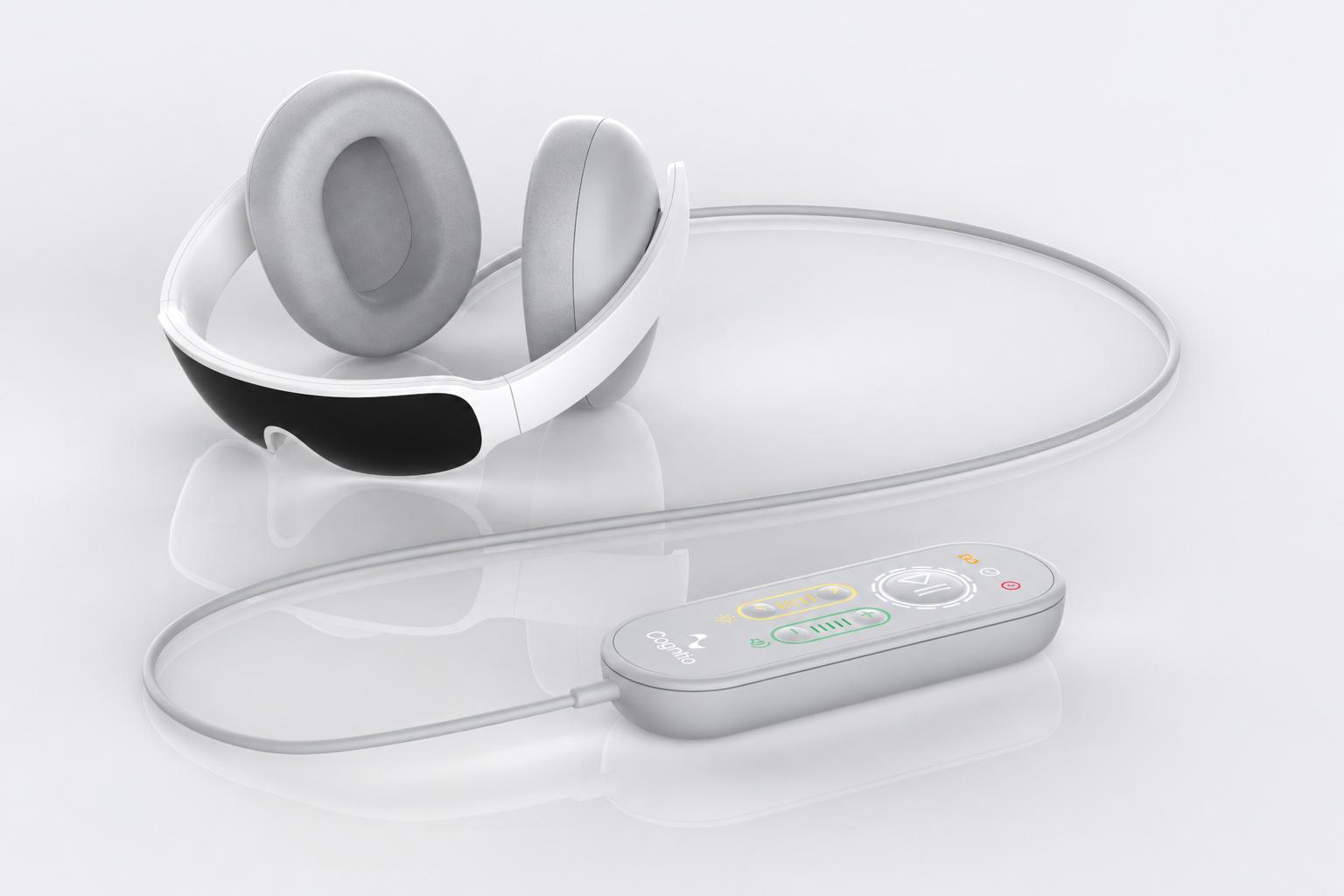
While HOPE missed that endpoint in the overall population, Cognito reported more favorable results in a prespecified subgroup of 395 participants with mild Alzheimer's disease.
Functional decline, measured by ADCS-ADL, was 56% slower than sham, with a 2.03-point difference (p=0.016). On the CDR-SB scale of dementia severity, participants showed 47% slower worsening, with a 0.58-point difference (p=0.004). However, the subgroup's iADMARS result was not statistically significant, and the reported p-values were not adjusted for multiple comparisons.
Cognito also reported a generally favorable safety profile. Device-related adverse events occurred in 18.3% of participants receiving active treatment, compared with 15.5% in the sham group. Headaches and tinnitus were among the most common effects, while seizures were reported in 0.9% and 0.3% of participants, respectively. No unanticipated adverse device effects were reported.
Cognito started the year with substantial financial backing, closing a $105 million Series C. That funding was earmarked to support clinical development, regulatory preparation, and a potential commercial launch.
In a July interview with Neurofounders, CEO Christian Howell explained that Cognito approaches development much like a pharmaceutical company, investing heavily in biomarkers, imaging, and clinical evidence alongside its device engineering.
The company has also been actively expanding clinical partnerships. In March, Cognito partnered with Ochsner Health to develop new models for Alzheimer's care, including a proposed Brain Health Index combining EEG, biomarkers, and patient-reported data. Similar collaborations with WVU's Rockefeller Neuroscience Institute and the Rhode Island Life Science Hub are intended to support further research and treatment delivery.
Just days before the results, Cognito announced three senior leadership appointments. Joe Perekupka, formerly CEO of digital therapeutics company Freespira, joins as Chief Commercial Officer; former ResMed CTO Urvashi Tyagi takes over technology development; while Dave Watson, previously at Apellis Pharmaceuticals, becomes Chief Operating Officer. The appointments strengthen Cognito's preparations for a potential commercial launch.
The HOPE results represent a significant setback for those plans. After years of development and substantial investment, Cognito's pivotal study failed to demonstrate a statistically significant benefit on its primary endpoint. The favorable findings in patients with mild Alzheimer's offer a potential path forward, but it remains unclear whether the FDA will consider the subgroup evidence sufficient for authorization or require further clinical trials.
Cognito now plans to discuss a De Novo authorization pathway focused on early symptomatic Alzheimer's disease, while continuing its HOPE open-label extension to collect longer-term data. In July, Howell had anticipated an early-2027 submission and possible authorization by mid-2027. That timeline is now uncertain following the pivotal readout.
Produced with support from