

Over the last decade, sleep monitoring has gone from a niche interest among health enthusiasts to a daily routine for millions. Wearable sensors embedded in watches, rings, bands, and even mattresses provide consumers with actionable sleep scores every night. Yet most approaches measure sleep indirectly, using peripheral signals such as movement, heart rate, and SpO2. With the introduction of brain-sensing headphones, the sleep-monitoring market is now moving toward direct measurement.
Proxy signals can be reasonably accurate in estimating sleep stages. But sleep is fundamentally a brain state. Through all-night measurements of neural activity, EEG goes beyond proxies, measuring REM and NREM directly and capturing sleep signatures that peripheral sensors cannot detect. A possible next step is closed-loop intervention, where EEG earbuds measure sleep throughout the night and deliver adaptive audio in response to improve sleep metrics in real time.
Specialized watches and wearable sensors have allowed regular consumers to track their sleep for a while now. But in recent years, popular wearables like the Apple Watch, Oura Ring, and WHOOP have made it a habit for millions. Eight Sleep is among the startups that show just how large the business of sleep has become. The New York-based company produces smart mattress covers that integrate continuous heart rate, HRV, and temperature measurement, while adjusting the bed’s surface temperature through the night. Its current Pod 5 Core starts at roughly $2,900, and the company was recently valued at $1.5bn.
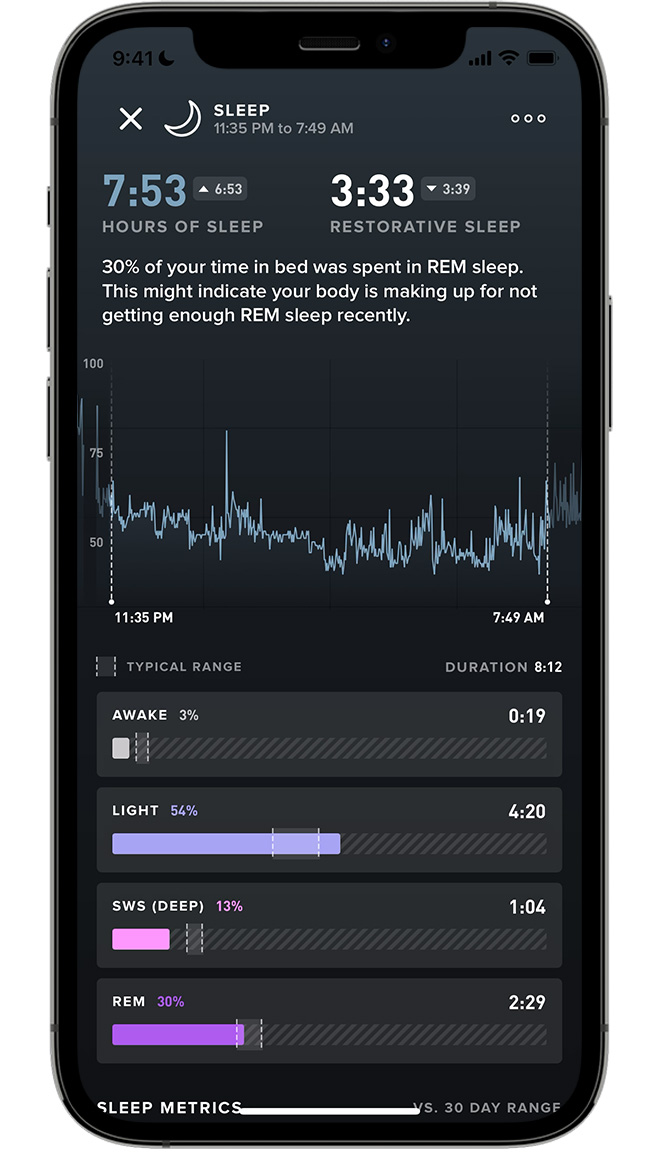
Yet most consumers track their sleep through one of many wearable devices meant to be worn all day. The fastest-growing wearables, Oura and WHOOP, integrate sleep into a wider platform of physical health. Their sensor stacks combine overlapping inputs such as heart rate, HRV, respiratory signals, SpO2, temperature, and movement. These signals estimate sleep quality through correlates of sleep, including pulse, breathing, oxygenation, nightly movement, and temperature changes.
Those proxy measurements are useful for tracking sleep habits like circadian regularity, broad sleep-wake patterns, and recovery trends. But as sleep products move from basic tracking toward detailed staging, sleep quality, and intervention, a more direct measure of brain activity is required. EEG has been used to monitor sleep in labs for decades; a range of neurotech startups is now taking that signal out of the lab and integrating it into everyday wearables.
About a decade ago, Dreem’s EEG headband was among the most prominent early examples. The French company was acquired by Beacon Biosignals in 2023 after raising more than $57m and recording more than two million nights of sleep. Dreem’s headbands are no longer sold to consumers, leaving room for newer EEG sleep companies such as Elemind and Somnee, alongside a separate cohort focused on the earbud form factor.
In-ear manufacturers, including Ozlo, NextSense, and IDUN Technologies, believe earbuds are a more logical sleep interface because they are already familiar as audio devices and noise-blocking earplugs. They also create a path beyond measurement alone, allowing sleep products to send audio back to the user and eventually modulate sleep in response to the signals being measured.
When it comes to sleep measurement, EEG alone is not considered the gold standard. Clinical sleep monitoring traditionally uses polysomnography, or PSG, which combines brain sensing, eye movements, muscle activity, and additional channels capturing breathing, heart rate, oxygenation, and movement. This sensor-dense stack can measure a broad range of sleep features, but is also labor-intensive and difficult to scale outside clinical settings.
In a more compact and scalable form factor, EEG captures the neural layer that sits at the center of sleep staging without recreating the full PSG setup. These measurements are best divided across the macroarchitecture and microarchitecture of sleep. The macroarchitecture of sleep looks at the different stages and cycles throughout the night, including REM and NREM (stages N1 to N3). Proxy measurements do a reasonable job of approximating parts of this structure, especially whether a user is awake or asleep. But a more detailed readout of what happens inside those stages is mostly out of reach.
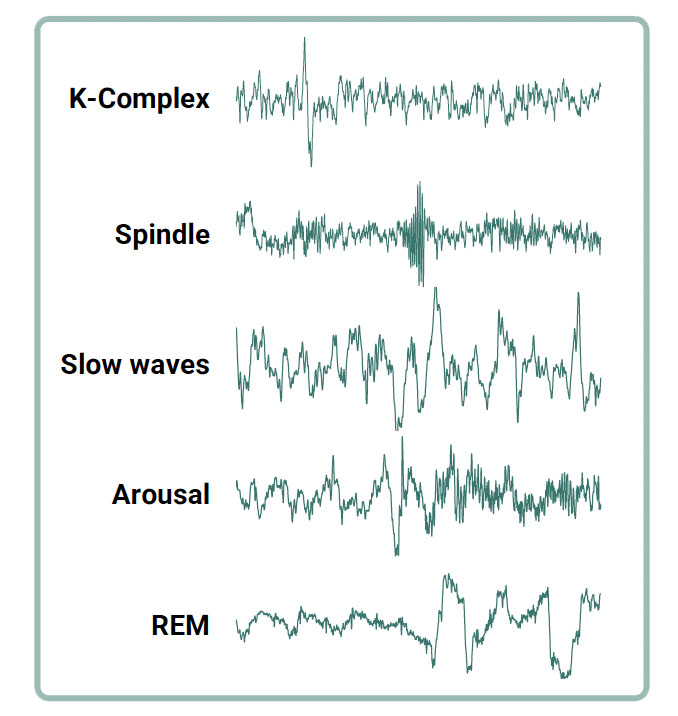
The microarchitecture of sleep divides stages into individual sleep-related events. K-complexes, sleep spindles, slow-wave activity, arousals, and REM-related activity can all be extracted from EEG’s electrical measurements. These features are not decorative. They provide insight into sleep stability, depth, sensory processing, fragmentation, and memory-related processes.
This is where proxy-based systems hit a ceiling. Movement, heart rate, and temperature can correlate with sleep depth or recovery, but they do not contain the neural signatures themselves. Better algorithms may improve estimates, but they cannot turn peripheral signals into direct evidence of spindles, K-complexes, or slow-wave activity. EEG is the signal layer that captures those events directly.
Zurich-based startup IDUN Technologies tested EEG against the gold standard, PSG. In an in-house pilot study, the company compared PSG recordings with IDUN Guardian in-ear EEG recordings. The IDUN Guardian reported 97% sensitivity for detecting sleep-stage epochs overall, while category-level performance varied, with 78% for wakefulness, 76% for light sleep, and 74% for deep sleep. Its sleep-quality metrics also closely tracked PSG-derived measures, with strong correlations reported for sleep onset latency (SOL), total sleep time (TST), wake after sleep onset (WASO), and sleep efficiency (SE).
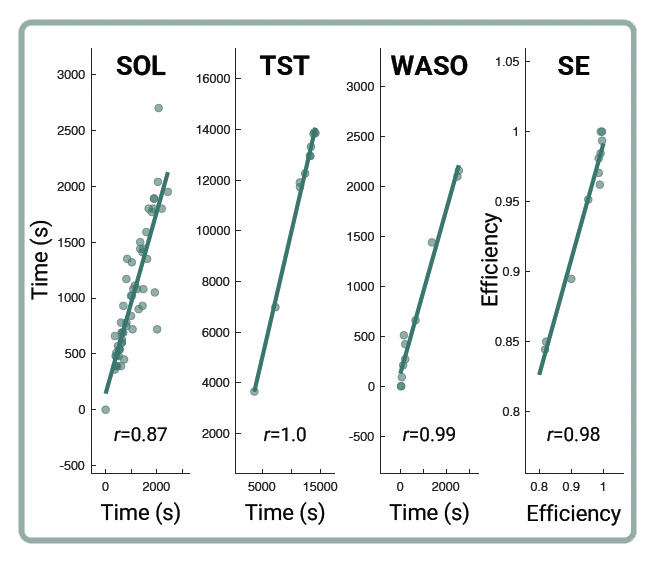
The main limitation IDUN found in EEG was rapid eye movement (REM) sleep. The IDUN Guardian reported much lower average REM accuracy, which IDUN partly attributes to the absence of a separate EOG channel, a signal that sleep technicians usually rely on for REM classification. To counter the limitations of a single in-ear EEG setup, most sleep tracking tech integrates a range of complementary signals like IMU, PPG, and audio measurements. The company looks to test this assumption and earlier results in a future validation study featuring a larger cohort.
EEG-based sleep monitoring is already marketed through a range of neurotech startups. But while they explicitly pushed EEG sleep monitoring out of the lab to consumers, recent innovation is making sleep EEG relevant again inside research and clinical settings. Dreem, the EEG headband acquired by Beacon Biosignals in 2023, received FDA 510(k) clearance for prescription sleep assessment in home and healthcare environments, including 30-second sleep scoring and summary sleep metrics.
Beacon is applying that clearance in its partnership with pharmaceutical company Takeda, where Dreem’s tech is used for at-home sleep monitoring in clinical trials for sleep disorders. Another French EEG startup, Naox Technologies, is following a similar clinical path. Last February, its in-ear EEG system received FDA 510(k) clearance to acquire, record, and transmit brain activity from the ear in healthcare or home settings, although not specifically as a sleep-staging device.
The clinical angle extends beyond sleep staging alone. At-home EEG is already proving useful in drug trials, longitudinal sleep studies, and neurological disease monitoring, where repeated PSG is expensive and difficult to scale. Sleep apnea is a particularly clear use case. A condition plaguing an estimated one billion people, EEG adds key information around arousals, sleep fragmentation, and sleep architecture. Similar logic applies to neurodegenerative research, where sleep spindles and slow-wave activity are increasingly studied as non-invasive markers linked to cognition and Alzheimer’s disease progression
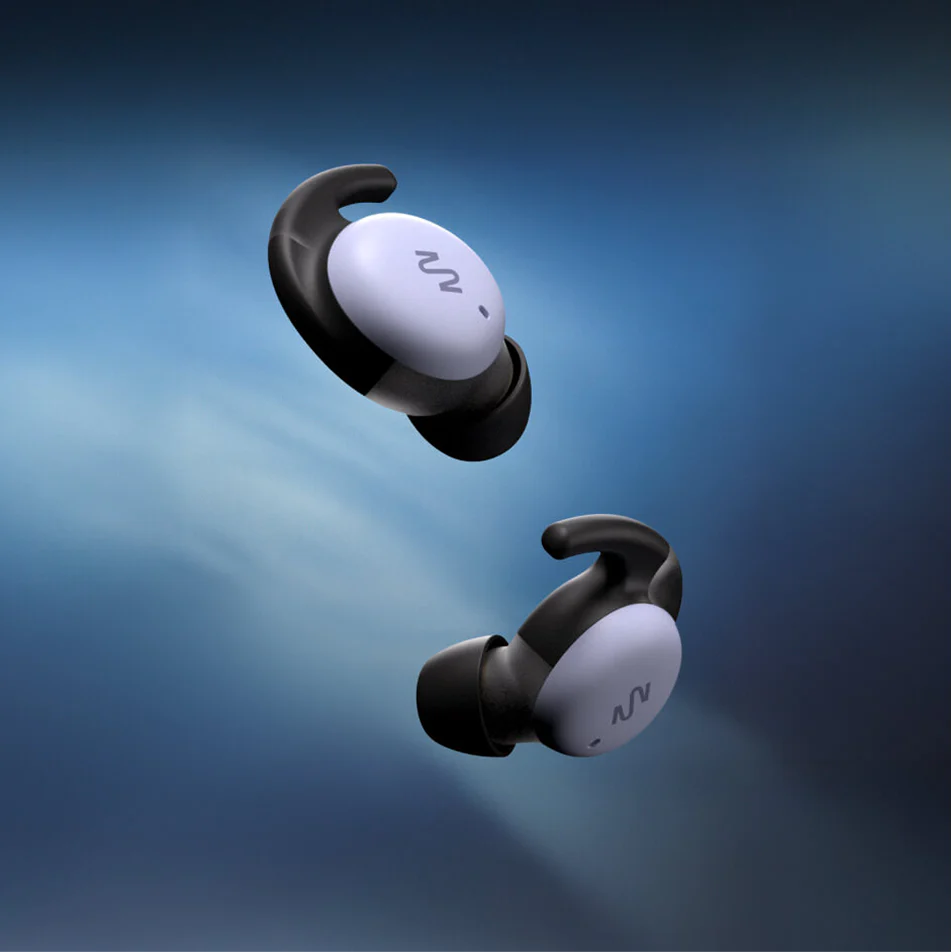
Beyond providing better metrics and data for consumers, researchers, and clinicians, audio modulation is increasingly explored in sleep tech. Earlier this year, NextSense launched its Smartbuds, featuring EEG-based sleep measurement and sound-based intervention. The earbuds detect sleep stages in real time and deliver gentle sound pulses designed to support deeper sleep.
Sleep spindles and slow-wave oscillations are specifically targeted because of their link to sleep-dependent memory consolidation. During deep NREM sleep, slow oscillations appear to coordinate the timing of spindle activity, creating windows in which information may be transferred and stabilized across memory networks. Closed-loop auditory stimulation detects those relevant signatures, delivering sound at a precise moment, and then measuring whether the brain’s response is strengthened. Research suggests that such closed-loop auditory stimulation can boost slow oscillation amplitude and sleep spindle power, although optimal timing and effect sizes remain open questions.
IDUN Technologies is among a cohort of startups exploring EEG for sleep monitoring. The company spun out of ETH Zurich in 2017 and develops the materials, sensor integration stack, and software/data infrastructure needed to scale in-ear EEG. Its Dryode® material, a flexible, soft, and biocompatible material for measuring high-quality ExG, was first brought to market in 2019 through OpenBCI-compatible electrode kits, before becoming a core component in its own line of EEG earbuds.
At CES this year, IDUN launched the latest iteration of its earbud series, the IDUN Guardian 4. IDUN is positioning the earbuds as a broad brain-sensing platform, combining Analog Devices’ biopotential front end for signal acquisition with Qualcomm’s Snapdragon S7 Sound platform for audio, connectivity, and on-device processing. In its next iteration, IDUN Guardian 5, the startup looks to go full wireless.
In sleep monitoring, IDUN has worked with partners that push IDUN Guardian beyond passive tracking. With Takeda, IDUN has worked on sleep EEG biomarkers, positioning home EEG as a research tool in a similar style to Beacon’s use of Dreem. Its work with DeepSleep and Segotia extends the platform toward audio-based intervention, using relevant sleep signatures to test stimulation timing, response, and adaptation over time.
The IDUN Guardian also includes IMU data alongside EEG, which can help contextualize neural signals, flag motion artifacts, and support features around restlessness, sleep position, and wake-related movement. Its SDK and API tools give partners access to raw EEG and IMU data, live streams, signal-quality checks, real-time classifiers, and data export. Companies can build their own sleep monitoring tools, dashboards, and product features on top of the platform, then improve those models as more longitudinal user data is collected.

A growing range of consumers no longer accept sleep as a black box. This group of early adopters increasingly relies on wearable sensors that turn rest into metrics, trends, and sleep scores. As more wearable tech enters the market, those sleep scores are becoming easier to produce and harder to differentiate.
In that landscape, EEG offers a differentiated signal. By measuring both the macro- and microarchitecture of sleep, it provides insights that proxy measurements are unable to access. By combining these measurements with audio output, EEG earbuds can respond to sleep, modulating it in real time. And with that, the next generation of sleep products will not be differentiated by more sleep scores. It will be built around the ability to measure brain activity directly, model it over time, and eventually intervene with precision.

Exploring In-Ear EEG is a five-part article series exploring the current landscape of consumer in-ear EEG technology. The series is produced in partnership with IDUN Technologies, a Swiss start-up leading the push for full-wireless in-ear EEG technology. The series covers the core use cases of in-ear EEG today, the main form factors of consumer ExG, and the overall market in 2026.
Read the full series.
Produced with support from

%20copy.jpg)





.svg)

