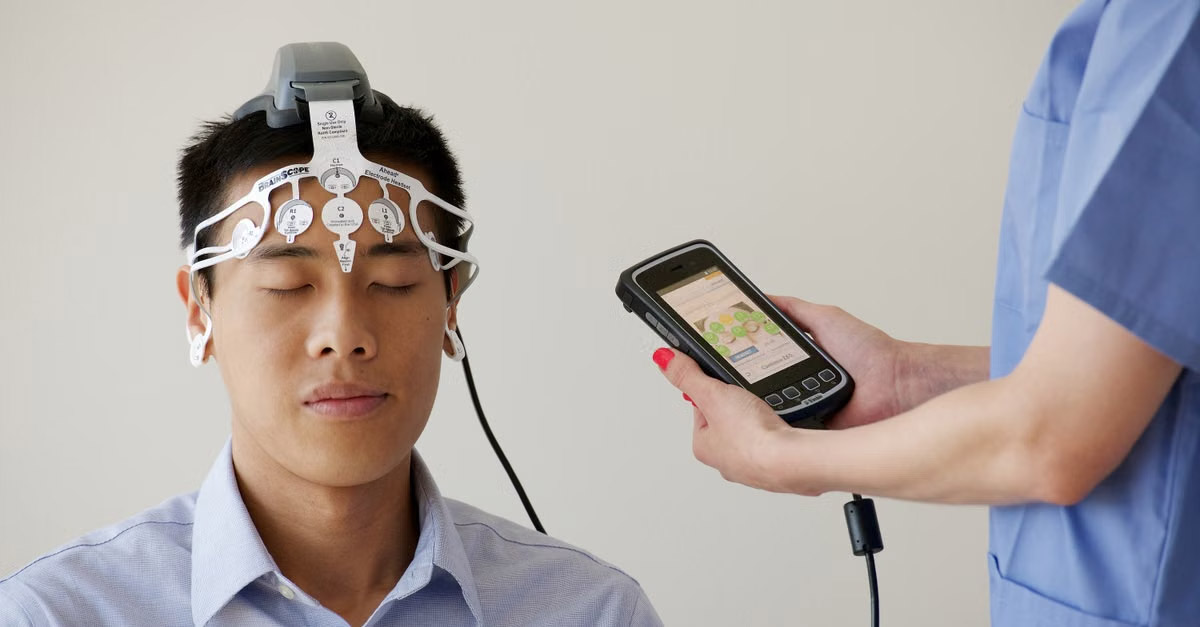
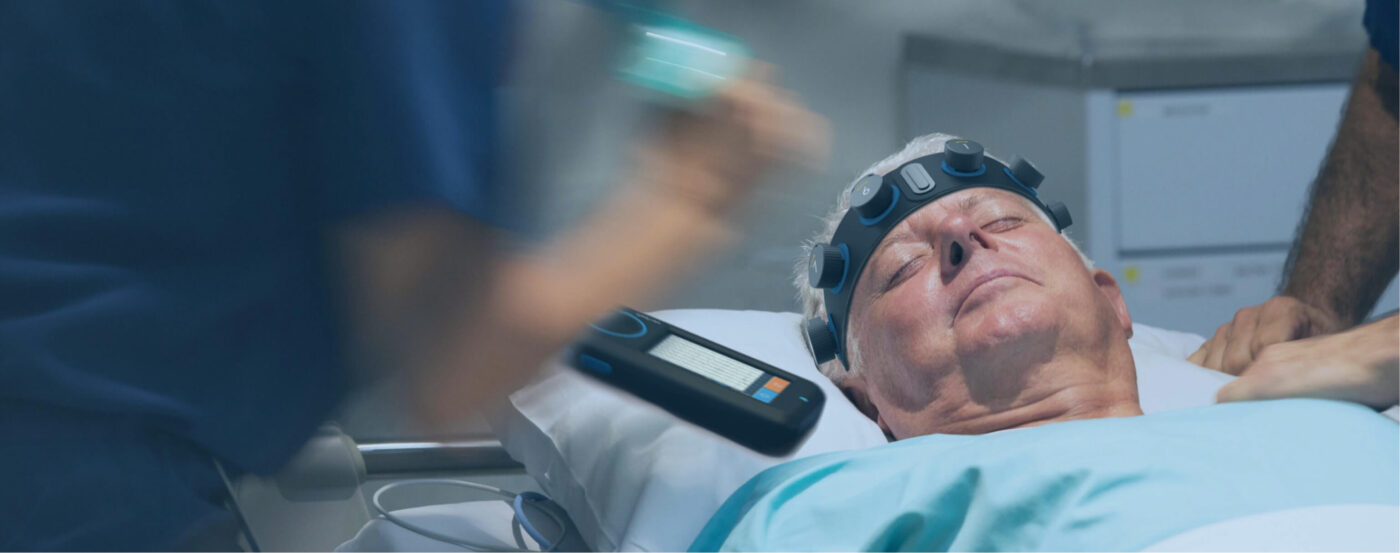
A recent Neurofounders funding review showed that while EEG is the most frequently used modality on the Startup Map, it has attracted the least funding this year. And still, it has been an exceptional year for clinical EEG. Following UNEEG’s FDA clearance for subcutaneous monitoring and Epitel’s funding round for wearable EEG, Ceribell has now announced a series of milestones for its point-of-care EEG platform.
Alongside strong Q2 revenue growth, up 33% year over year, Ceribell announced two new FDA clearances. Its Epileptiform Abnormality Detection and Artifact Reduction algorithms can now be used clinically. The streak continued with CMS expanding reimbursement for Ceribell’s Delirium Monitor. Across those milestones, a broader ambition is surfacing. Ceribell wants to make EEG the next routinely monitored vital sign inside the clinic.
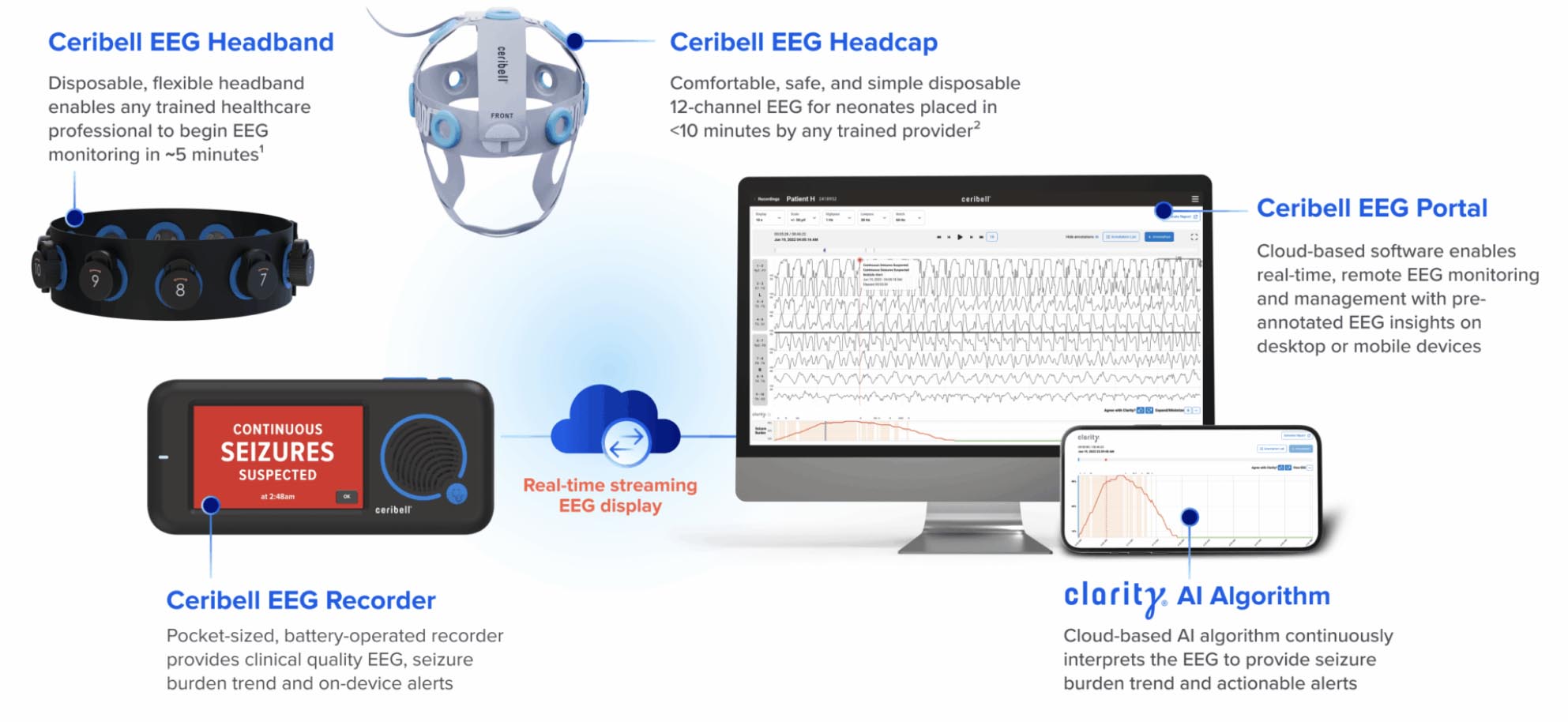
Founded in California in 2014 by Jane Chao and Stanford neurologist Josef Parvizi, Ceribell set out to make EEG more accessible in intensive care units and emergency departments. Its platform combines a rapidly applied EEG headband and portable recorder with software that allows clinicians to start monitoring at the bedside within minutes.
The company received its first FDA clearance in 2017, began commercial sales in 2018, and later introduced AI algorithms for continuously detecting seizure activity. Ceribell went public in 2024 and has since grown its platform to more than 700 active hospital accounts.
Seizure detection has remained at the center of that growth. But Ceribell is increasingly moving beyond seizures. In December 2025, the FDA cleared its Delirium Monitor, which continuously analyzes EEG for patterns associated with delirium in critically ill adults. The algorithm was validated using EEG and clinical assessments from 225 adults across prospective critical-care studies, and adds a second distinct neurological use case to the same point-of-care system.
Earlier this month, CMS granted the Delirium Monitor a New Technology Add-on Payment of up to $2,171 per eligible Medicare inpatient case, effective October 1. The payment sits on top of the standard inpatient reimbursement for qualifying cases and is designed to support adoption of new technologies while longer-term reimbursement pathways develop.
The platform’s expansion is happening on top of a growing core business. Ceribell reported $28.1 million in Q2 revenue, up 33% year over year, while its active account base reached 712. Full-year guidance was subsequently increased to between $114 million and $117 million. Ceribell can continue working on adding indications and use cases to an EEG system that is already deployed and used across hundreds of hospitals.
Ceribell’s platform is broadening quickly. Its system can monitor for seizures and delirium, while an LVO stroke monitor received FDA Breakthrough Device designation earlier this year. Large Vessel Occlusions restrict blood flow to large regions of the brain, rapidly changing cortical electrical activity. Ceribell is developing continuous EEG monitoring to flag those changes in hospitalized patients, where sedation or critical illness can make stroke harder to recognize.
Following the recent reimbursement decision, CEO Jane Chao described the broader goal as establishing EEG as an “essential new vital sign for better brain care.” That ambition is emerging elsewhere too. Zeto is sponsoring 2026 studies in stroke, delirium, and epilepsy, including continuous monitoring of neurological deterioration and machine-learning-based delirium assessment. According to CEO Florian Strelzyk, “across stroke, delirium, and epilepsy, the common challenge is making EEG practical in real-world care”
The hardware strategies are less similar. Ceribell’s current headband uses 10 electrodes to produce eight EEG channels, prioritizing rapid application and continuous bedside monitoring over the spatial coverage of conventional EEG. Zeto ONE instead fits 21 electrodes in the standard 10–20 configuration while targeting setup in under five minutes. Ceribell now appears to be closing that gap, with a next-generation platform planned for 2027 that adds new headbands, video, ECG and longer-term monitoring.
.svg)