

Productivity is increasingly treated as a variable to optimize. Many knowledge workers are building systems around their focus, employing AI notetakers and scheduling assistants while installing smart lighting, ergonomic office setups, audio modulation, and wearing adaptive earbuds. These tools can shape the workplace environment and reduce friction. But until recently, they could not provide a direct view into the cognitive state they are trying to support.
Brain-sensing earbuds are starting to change that equation. By embedding dry electrodes into headphones and earbuds people already wear at work, neurotech firms turn neural readings into actionable metrics around attention, fatigue, readiness, and cognitive load. Some of those metrics can map onto established paradigms around attention, reaction time, and workload. But productivity itself is too context-dependent to collapse into one brain-derived score. The real value is in building contextual intelligence that helps users understand how they work, rest, and respond to intervention throughout the work day.
Each year, the global economy loses an estimated $10 trillion to low engagement and lost productivity. That helps contextualize the growing interest in the brain economy concept. Here, brain capital, the brain health and skills that support attention, learning, resilience, and productive work, is elevated to an economic resource to optimize.
While productivity has been an economic priority long before that concept was developed, AI is now adding a more personal pressure point. Knowledge workers are increasingly looking for ways to protect focus, manage fatigue, and optimize the cognitive states that shape their value in an AI-mediated workplace.
Subtle productivity hacks are already scattered across the workplace. Walk into a coworking space, and you will find few people not wearing noise-cancelling headphones, drinking caffeine, switching between Claude-assisted workflows, or working across multiple monitors. Others rely on Pomodoro timers and breathwork to manage their attention. Productivity is already treated as a variable to optimize, but most tools still rely on subjective feeling.
Wearables are starting to add data to that picture. Wrist-worn devices such as Whoop, Fitbit, and Apple Watch measure body states through signals such as heart rate, HRV, sleep, activity, and stress-related physiology. These systems can support metrics around recovery, readiness, and strain, giving users a clearer picture of the physical conditions that shape performance. But a gap around cognitive states remains. Neurotech addresses that gap more directly, with a growing set of consumer products measuring features of focus, mental effort, or cognitive performance from brain activity itself.
Focus-measuring headbands and headphones are still far from standard workplace tools. One reason is that focus feels intuitive in the moment but is still hard to pin down as a clear measurement target. Most focus scores compress several validated constructs, including sustained attention, mental effort, fatigue, alertness, and engagement, into a single product-facing metric that either does not hold up in practice or is hard to act on.
That does not mean the neural signal is empty. EEG research has long linked oscillatory activity across frequency bands to specific components of cognition. Alpha-band changes are often associated with attentional fluctuations, Theta activity with working memory and cognitive load, and Beta activity with alertness, engagement, and task-related activation.
A 2022 meta-analysis of cognitive workload studies found that workload was associated with changes across alpha, beta, and theta power, with frontal theta standing out as one of the stronger workload-related markers. Other studies using ear-centered EEG have also classified bounded states such as drowsiness, attention, and mental effort.
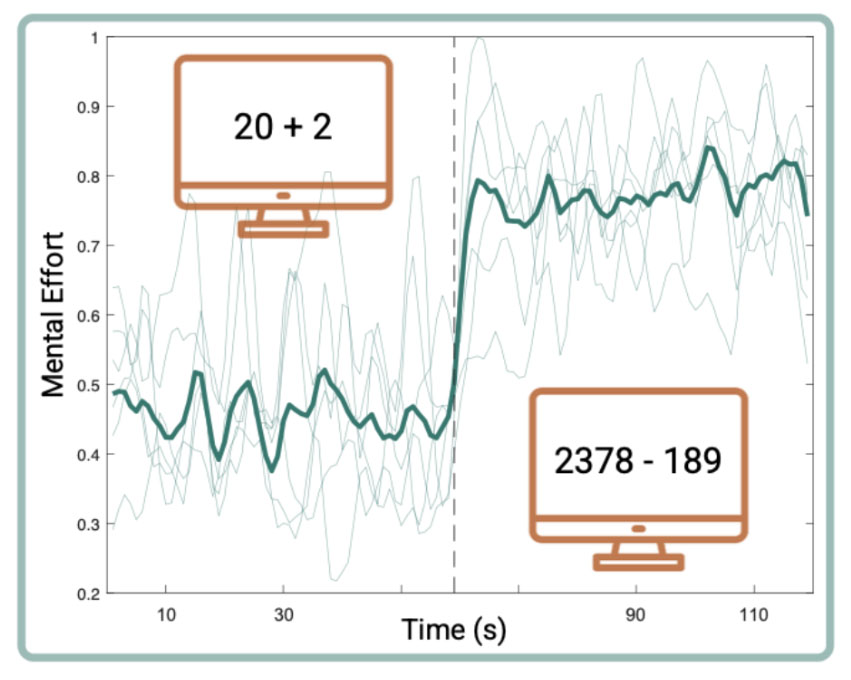
IDUN Technologies, a Swiss in-ear EEG company, has tested that theory in a preliminary in-house study. Nine subjects completed easy arithmetic tasks before moving to more difficult calculations. Using in-ear dry electrodes from IDUN Guardian earbuds, the company’s mental workload algorithm consistently showed an increase in estimated mental effort during the harder task period.
But the lack of a gold standard “focus measurement” makes productivity hacking one of the harder targets for consumer products to get right. Sleep has a bounded measurement window and established reference standards, with actionable insights and a clear accuracy test. Meanwhile, using neural signatures for UX control has immediate success conditions, such as whether a gesture paused music or skipped a track. Focus changes with task type, time of day, motivation, sleep history, stress, environment, and personal baseline.
That measurement problem is already shaping the first generation of productivity features. Instead of trying to turn focus into one integrated score, most consumer neurotech products start with micro-features: short focus sessions, brain breaks, neurofeedback games, adaptive audio, light stimulation, and before-and-after feedback. These are easier to explain and test because they create bounded moments where users can measure, train, or modulate a cognitive state.
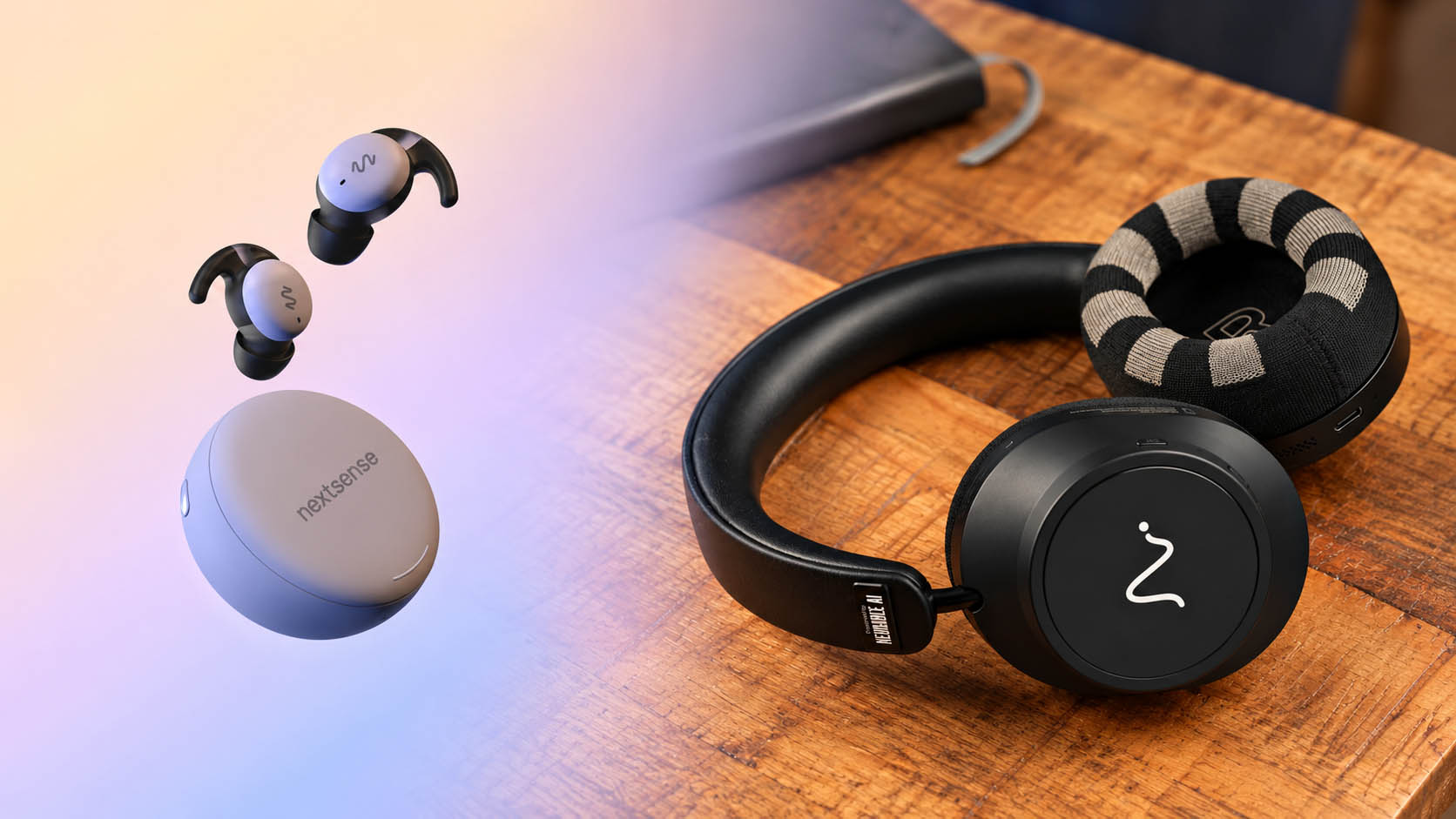
When it comes to measuring features of focus, the best-known example is Neurable. Its MW75 Neuro headset is built around twelve dry EEG sensors inside premium headphones. The device tracks brain activity during work sessions and turns readings into features such as focus tracking, brain breaks, and daily cognitive insights. Other consumer neurotech products measure focus features through adjacent modalities. Mendi, for example, uses functional near-infrared spectroscopy to measure changes in prefrontal blood oxygenation, then gamifies the experience to nudge users toward stronger focus-related activation.
While companies like Mendi motivate users to train their focus over longer time spans, other companies develop experiences that modulate cognitive state more directly. Brain.fm and Endel show how neuroscience-validated soundscapes can be designed to promote focus, relaxation, and sleep. Sens.ai takes a more explicitly neurotech route, combining neurofeedback, light stimulation, and structured brain-training sessions.

A handful of players are combining both sides, measuring neural signatures of focus-related states and then delivering an intervention to shift them. BRNLIT.AI is a new entrant in that space. The Swiss firm has developed a light stimulation app that uses a smartphone flashlight to deliver personalized flicker patterns aimed at entraining focus-related brain rhythms. Users first complete a recording session, where IDUN Technologies’ EEG earbuds capture their optimal natural brain activity. The stimulation protocol is then personalized to the individual user, turning light exposure into a measured focus intervention.
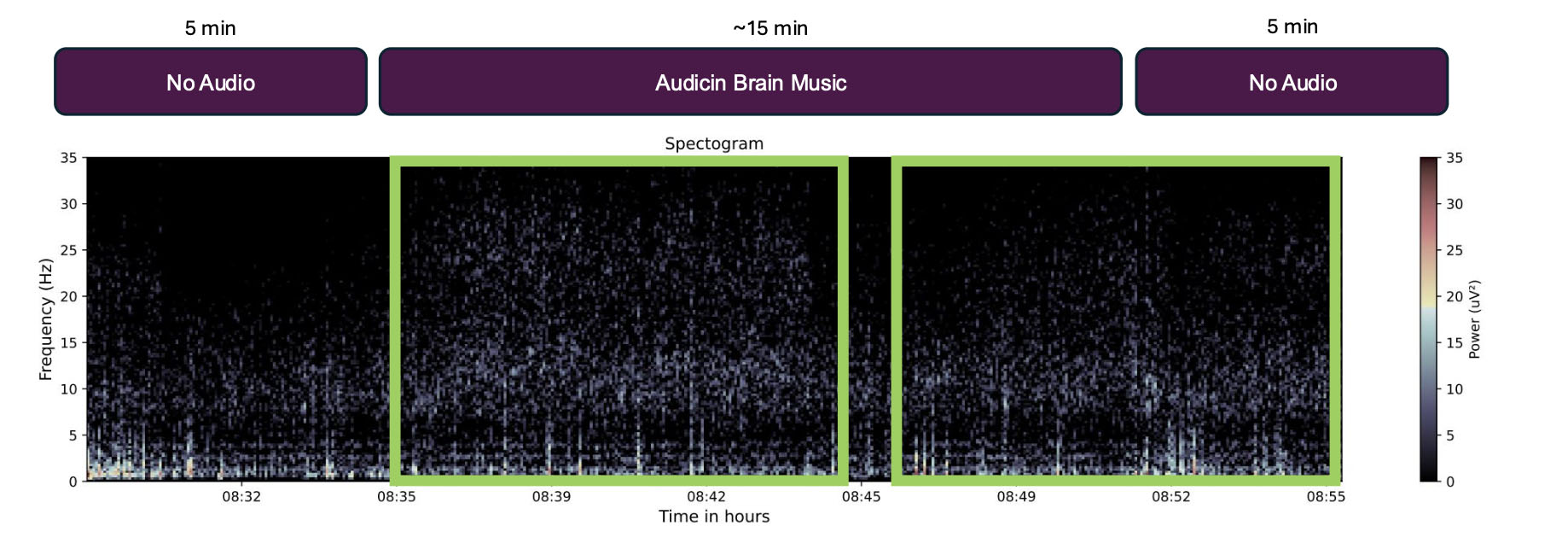
The same closed-loop logic is explored with audio. IDUN Technologies completed a pilot with Audicin around personalized brain music, using IDUN Guardian to quantify how the music affected brain activity during focus and relaxation sessions. The initial proof of concept reported enhanced beta activity during the Audicin session, a measure pointing to increased cognitive engagement. It shows a returning concept, where a baseline is captured before delivering an intervention, measuring the response, and refining the protocol over time.
That is where micro-features begin to benefit from contextual intelligence. A single focus score has limited value if it is detached from the user’s day. It becomes more actionable when the system understands time of day, sleep history, meeting load, prior effort, intervention type, self-report, personal baseline, and adjacent physiological signals from other wearables. The long-term opportunity is building systems that connect brain, body, and behavior and learn how each user works, rests, and responds across repeated sessions.
IDUN Technologies is among the startups trying to bring EEG into everyday cognitive-state monitoring. The company spun out of ETH Zurich in 2017 and has built much of its stack around the materials, sensor integration, and software infrastructure needed to scale in-ear EEG. Its dryode® material, a flexible, soft, and biocompatible material for measuring high-quality ExG, was first commercialized through OpenBCI-compatible electrode kits before becoming a core component in IDUN’s own brain-sensing earbud line.
Earlier this year, IDUN previewed IDUN Guardian 4, the latest version of its earbud platform. The system combines Analog Devices’ biopotential front end for signal acquisition with Qualcomm’s Snapdragon S7 Sound platform for audio, connectivity, and on-device processing. In its next iteration, IDUN Guardian 5, the company is working toward a full-wireless version of the same platform.
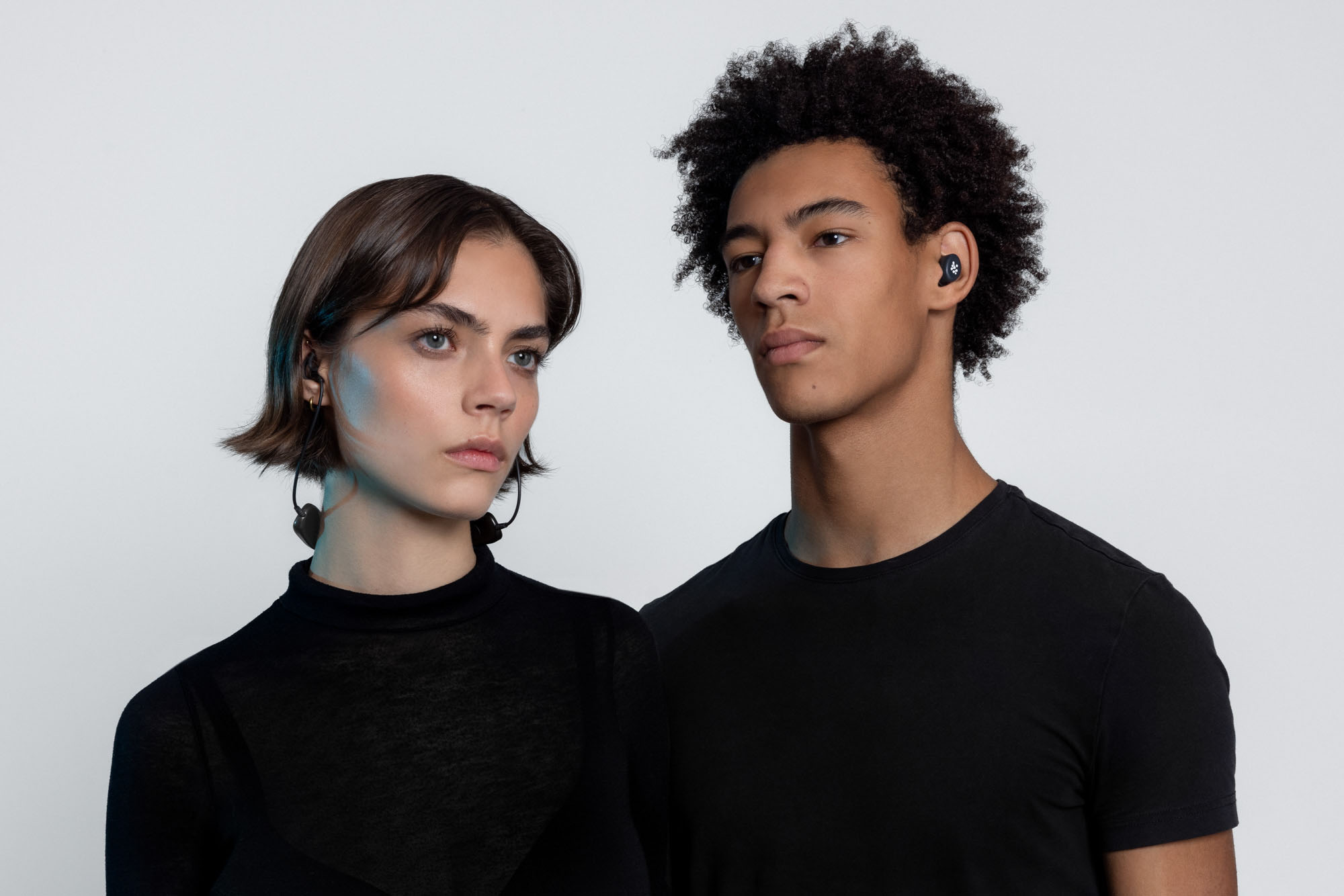
IDUN’s most concrete productivity use case starts with interaction rather than focus measures. By combining EEG sensors with eye movement, jaw movement, and IMU data, IDUN has built an earbud stack that can support hands-free and voice-free device control. For users who already wear earbuds through much of the workday, that creates a low-friction interface layer. A jaw clench can pause music, while eye movement can skip a track, reducing the need to reach for a phone, keyboard, or voice assistant during focused work.
Beyond concrete UX interactions, IDUN is working toward a Cognitive Intelligence Platform. The platform is designed to track cognitive metrics across the day and provide the data layer for more personalized neuroadaptive applications. Its measurement structure spans three levels: cognitive readiness for the user’s current state, cognitive trends for day-to-day change, and longitudinal metrics for longer-term patterns.
For consumer electronics companies, IDUN offers SDK and API tools that make this stack accessible beyond its own applications. Partners can access raw EEG and IMU data, live streams, signal-quality checks, real-time classifiers, and data export. That allows companies to build their own focus tools, adaptive audio experiences, cognitive dashboards, and neuroadaptive product features on top of IDUN Guardian. As more longitudinal data is collected, those applications can move beyond one-off measurements toward more personalized models of how users work, rest, and respond to intervention.
Daytime productivity is increasingly seen as a consumer opening for brain-sensing wearables. The behavior already exists; people already use earbuds, software, caffeine, light, audio, and routines to manage work, energy, and recovery. For consumer electronics firms, a credible product path starts by developing bounded features, such as readiness checks, adaptive audio, brain breaks, light stimulation, focus sessions, and intervention feedback.
Over time, those loops can become a configurable cognitive toolset based on contextual intelligence. A developer may want deep-work protection, a founder may want meeting-load recovery, a student may want study readiness, and a creative worker may want support for rhythm and flow. Brain-sensing earbuds can adapt based on cognitive signals with context, feedback, and personal routines. That bridge will turn everyday earbuds from shipping early focus features toward becoming fully personalized, brain-aware devices.
Exploring In-Ear EEG is a five-part article series exploring the current landscape of consumer in-ear EEG technology. The series is produced in partnership with IDUN Technologies, a Swiss start-up leading the push for full-wireless in-ear EEG technology. The series covers the core use cases of in-ear EEG today, the main form factors of consumer ExG, and the overall market in 2026.
Read the full series.
Produced with support from

%20copy.jpg)






.svg)

