
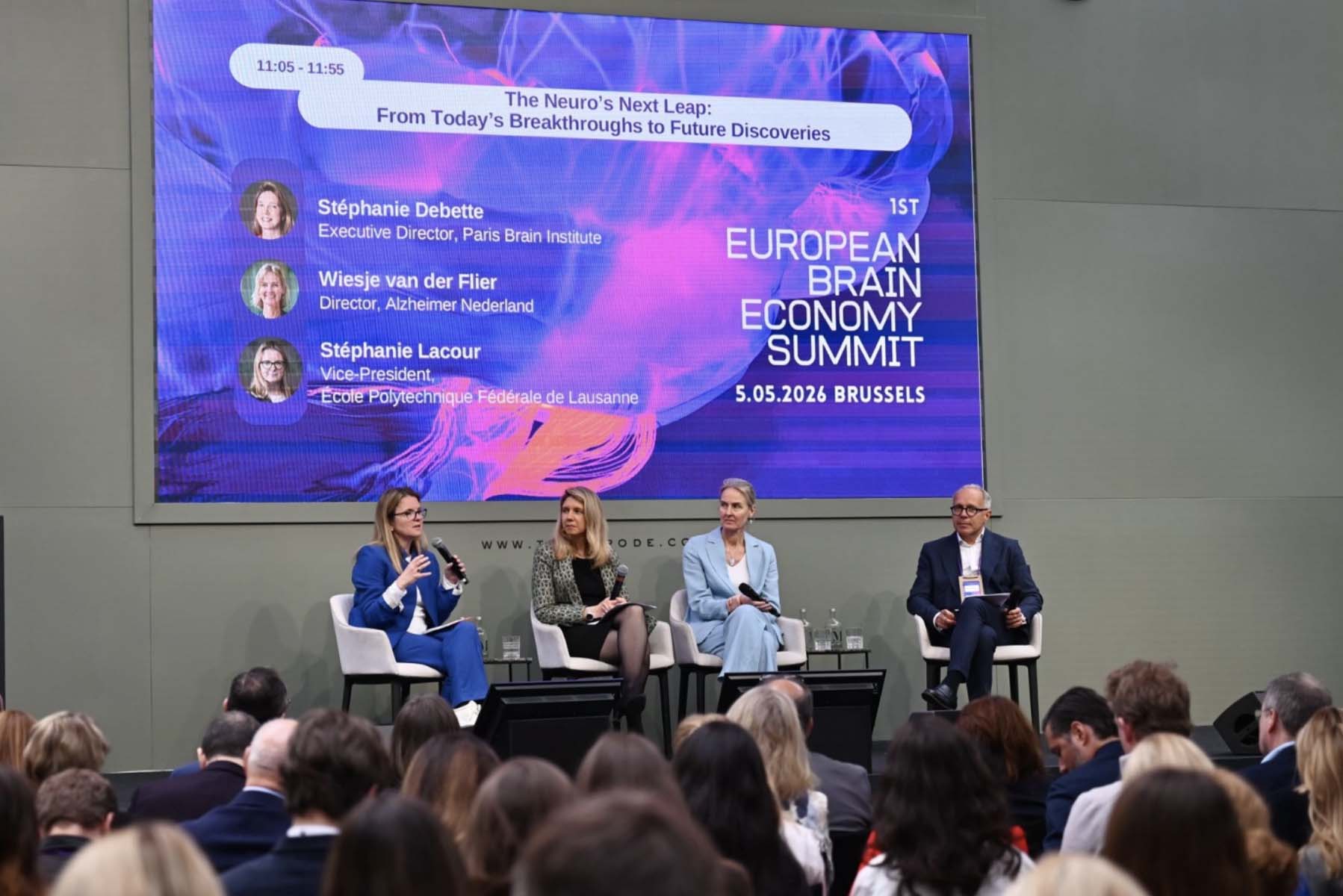
The first European Brain Economy Summit took place this week in Brussels, signalling a shift in how the brain is understood. Across sessions spanning innovation, investment, neurotechnology, and policy, speakers framed brain health and brain skills as economic resources linked to productivity, resilience, and human flourishing.
Running through these discussions was a central question: what will it take for Europe to position itself as a global leader in the brain economy? The region has deep scientific capacity, substantial public investment, and a growing neurotechnology ecosystem. The task now is converting those assets into scalable companies, clearer markets, and coordinated policy.
Ageing populations, technological acceleration, and environmental instability are creating what speakers described as a “cognitive inflection point”. The brain economy emerges as a response to this. It repositions brain capital, the combination of brain health and brain skills, as a foundational driver of economic output and long-term growth. Estimates from McKinsey suggest a multi-trillion-dollar opportunity, with up to $26 trillion in value if improvements in brain health and productivity are fully realised.
"Brain health is seen as a latent life issue; but true impact happens across the life course. For example, 70% of risk factors going into dementia are modifiable." William Heisel, director for global services, institute for health metrics and evaluation.
A defining theme of the summit was the move from a preservation mindset, focused on treating disease and extending lifespan, to an enhancement mindset centred on supporting brain performance and human flourishing across the life course. This moves away from treating brain health as a cost centre to recognising brain capital as a driver of productivity, resilience, and innovation.
Modern economics is working with the wrong model of the human being. Human capital reduces people to skills and education and assumes near-limitless output, and brain health is treated as an externality. This ignore a basic constraint that our cognitive capacity is finite, fragile, and shaped by health and environment.
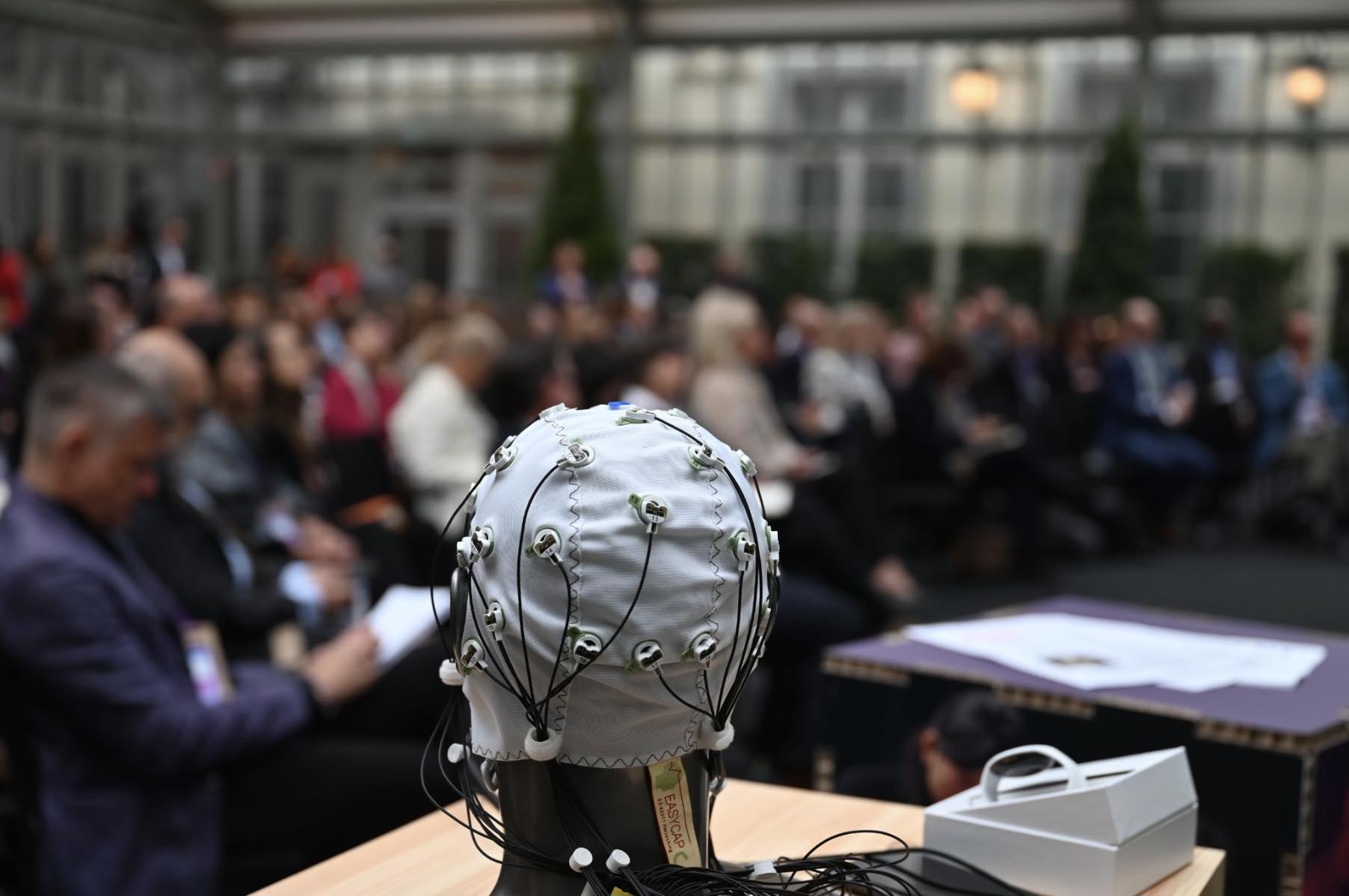
“The Brain Capital Index demonstrates a shift from human capital to brain capital and exposes an execution gap between skills and productivity” Rim Ayadi, President, Euro-Mediterranean Economists Association Co-Founder, Brain Capital Alliance
According to the Euro-Mediterranean Economists Association (EMEA) we have been mischaracterising this asset for the last 60 years or so, which leads to a distortion between potential and realised productivity. Brain health and brain skills are not static assets and closing this gap requires treating brain health not as an externality, but as an endogenous driver of economic growth.
This is where EMEA’s Brain Capital Index comes in, treating the brain as both an economic asset and a point of vulnerability. The Index builds on traditional human capital metrics but expands them into three domains: brain health, brain skills, and brain capital indicators. Crucially, brain capital should not be forced into a single category. It is both a population health indicator and an economic one.
As the field is still in its formative stages, and the process of defining these metrics is itself part of the innovation cycle. For example. future iterations of the Brain Capital Index could incorporate aspects of Nassim Nicholas Taleb’s concept of antifragility by assessing not only resilience, but also the capacity of individuals and institutions to adapt and strengthen through challenge. Such an approach would reinforce the.
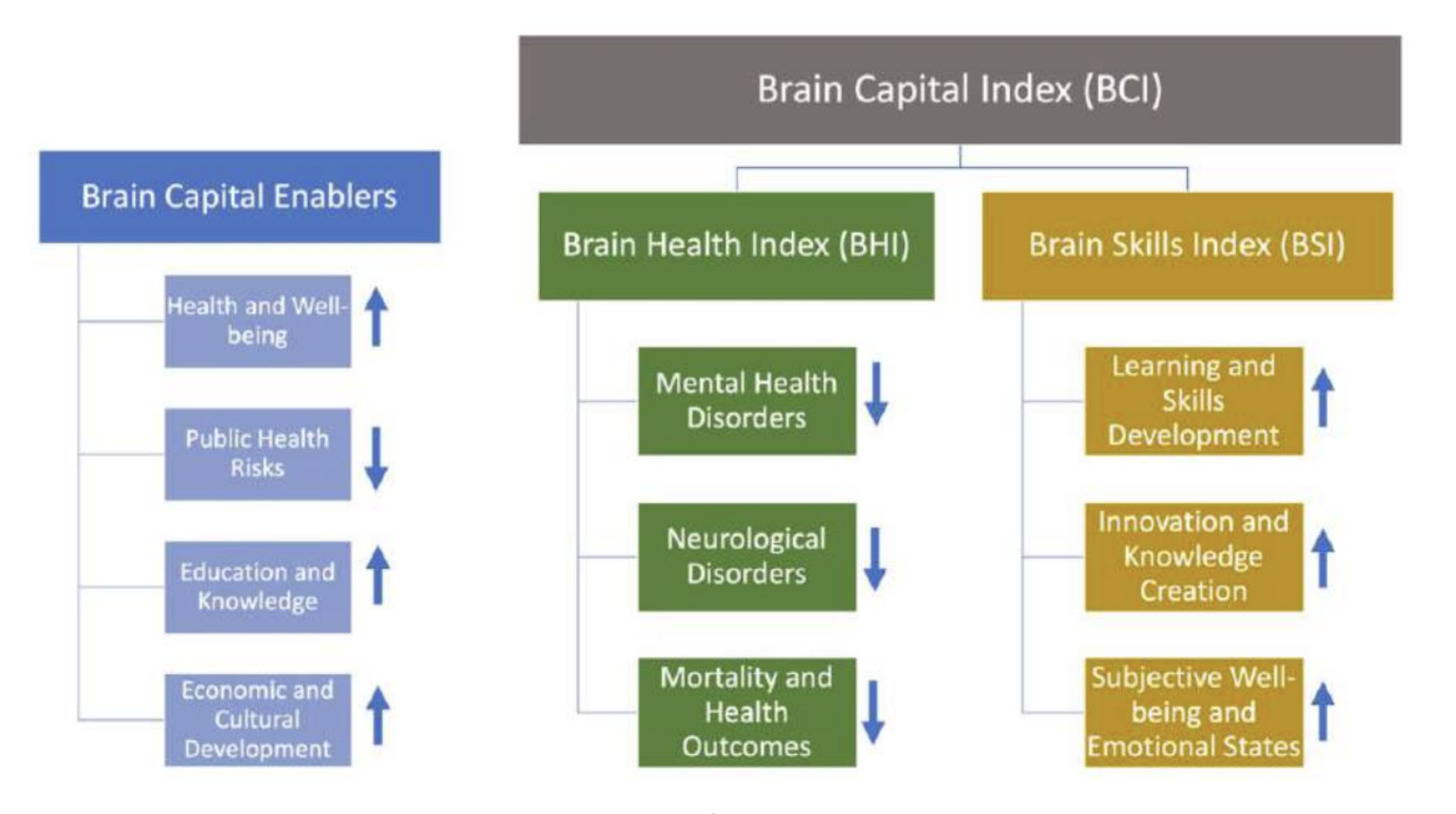
The summit highlighted a period of rapid acceleration in neuroscience and neurotechnology. Improved neuroimaging and biomarkers are enabling earlier detection and more continuous monitoring of brain health. AI-driven analytics are helping decode complex neural data, revealing patterns linked to cognition and disease. Brain organoids are strengthening preclinical research, while wearable and non-invasive technologies are extending measurement into real-world settings.
In this field Europe has a strong scientific base and a growing neurotech ecosystem in neurorehabilitation, neuromodulation, and cognitive monitoring such as CorTec, a German BCI company.
The opportunity for Europe sits in translating laboratory breakthroughs into scaled commercial and clinical deployment. The constraint is not early innovation, but scale-ups. Companies often struggle to transition from validated prototypes into deployed, regulated, and manufacturable systems at scale.
Estimates from McKinsey suggest that the EU already invests approximately $2.4 trillion annually in brain capital. Despite this scale, investment per person remains about 50% lower than US levels. However, this is not simply a matter of underinvestment, but reflects inefficiencies in how capital is allocated across neuroscience, mental health, and neurotechnology ecosystems.
As Shiva Dustdar, Director of the European Investment Bank argued, this reflects an “asymmetric risk perception” problem. Limited understanding of neuroscience among investors and policymakers leads to an overestimation of risk. They only see long R&D cycles, high failure rates and non-linear returns. This leads to underinvestment in high-potential areas such as early intervention, brain monitoring, and preventive neurotechnology, despite their long-term economic value in terms of future productivity. Addressing this requires “science in finance”; embedding scientific literacy into investment decisions to correct distorted risk assumptions.
In parallel, Europe’s funding landscape remains heavily reliant on one-off grants and linear academic funding cycles. These mechanisms are poorly suited to long development horizons. Increasingly, there is recognition that blended finance models, combining public, private, and institutional capital, will be necessary to support the scale and duration of brain science innovation.
One remaining structural barrier is the fragmentation of regulatory and reimbursement pathways across Europe. As Rym Ayadi summarised, “Europe doesn’t have a capacity problem but a conversion problem.” The central challenge is not generating ideas or funding but converting both into scalable systems.
Over all, there was a clear need for a shared language within the brain economy. The evidence linking brain health to productivity is increasingly robust, but definitions across stakeholders remain inconsistent. Terms such as brain health, brain capital, cognitive performance, and mental health are often used interchangeably, despite referring to distinct but interdependent concepts. Without a shared language, measurement, policy, and investment will remain misaligned.
Alongside this, there is a growing need to strengthen what can be described as brain literacy across the population. Brain literacy is the extent to which the public, as well as non-specialist stakeholders, understand core concepts, terminology, and implications of brain-related science and economics. This includes not only awareness of brain health, but also a more structured understanding of how cognition relates to productivity, wellbeing, and long-term societal performance.

What distinguished EBES was not just the range of topics discussed, but their integration into a single operating model. Neuro-architecture, adolescent brain development, women’s neurological health, and human-AI collaboration were all treated as interconnected components of the brain economy.
Across the summit, a broader structural paradox emerged. As Jochen Reiser, the President of University of Texas Medical Branch, highlighted, health systems are generating vast volumes of data (136 terabytes per day), while cognitive demands are rising rapidly due to automation, information overload, and the integration of AI into decision-making.
This reflects a systems-level view in which brain capital is shaped simultaneously by context, institutions, and technology. However, investment priorities are a concern. If only a small share of resources is directed toward prevention and early intervention, Europe risks underinvesting in the areas most likely to generate long-term economic and societal returns.
The summit concluded with the adoption of the Brussels Brain Economy Pledge, moving the discussion from broad framing toward institutional coordination and execution. The pledge positions brain capital as a societal and economic asset in the age of AI, with emphasis on investment, early intervention, human-machine complementarity, and measurement through the Brain Capital Index.
For Europe, the value of the pledge will depend on what follows. It gives the brain economy a clearer institutional language and places brain health, cognition, and productivity within the same strategic frame. The harder task is translating that language into funding mechanisms, regulatory pathways, and interventions that can support brain health, creativity, judgement, and adaptability at scale.
The summit was convened by a coalition of organisations spanning policy, neuroscience, economics, and investment, including NeuroCentury, the Brain Capital Alliance, the European Brain Council, Rice University’s Baker Institute for Public Policy, the Global Brain Economy Initiative, McKinsey Health Institute, EMEA, and RISE Research Institutes of Sweden.
.svg)





.jpeg)


%20copy.jpg)