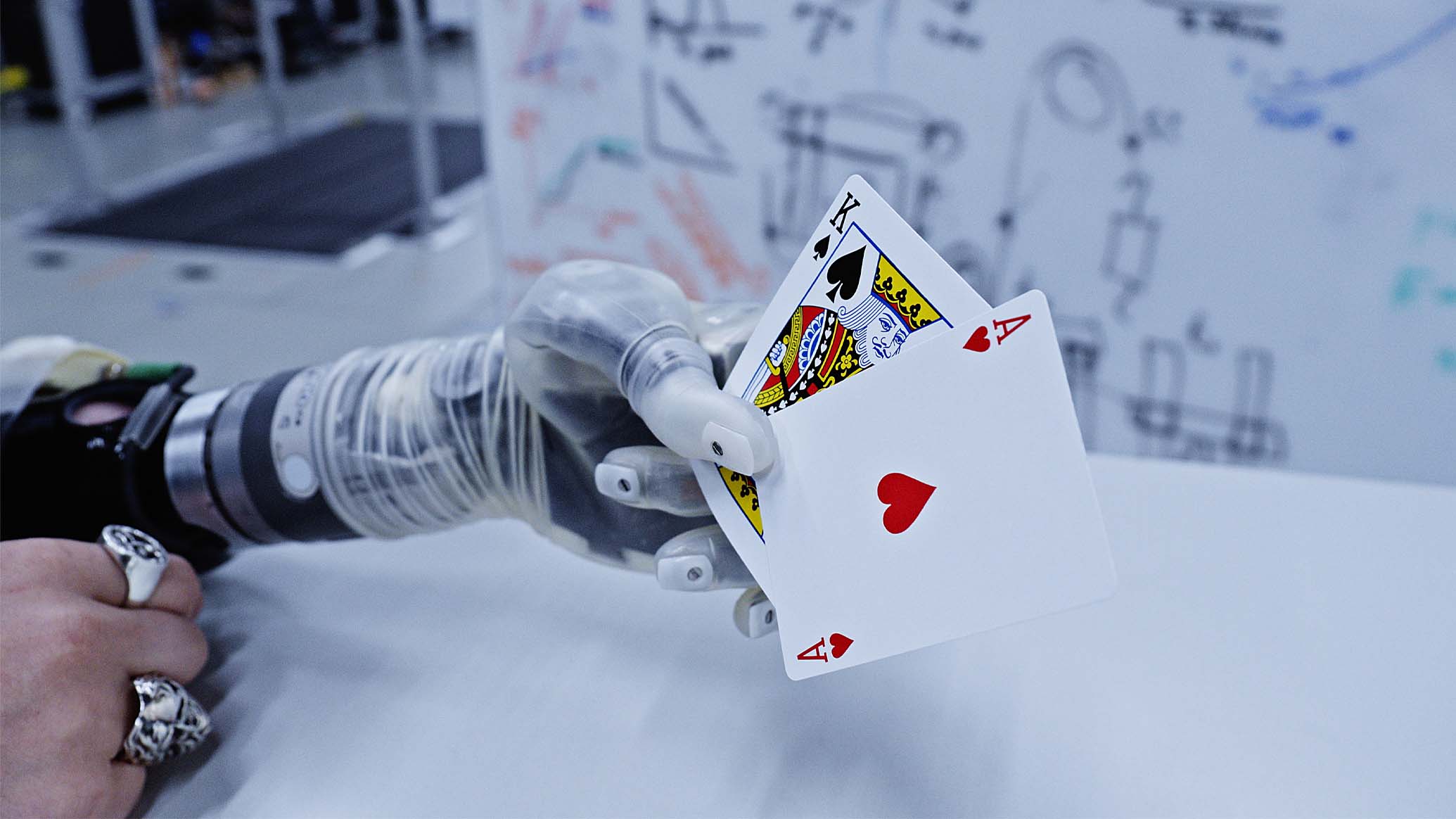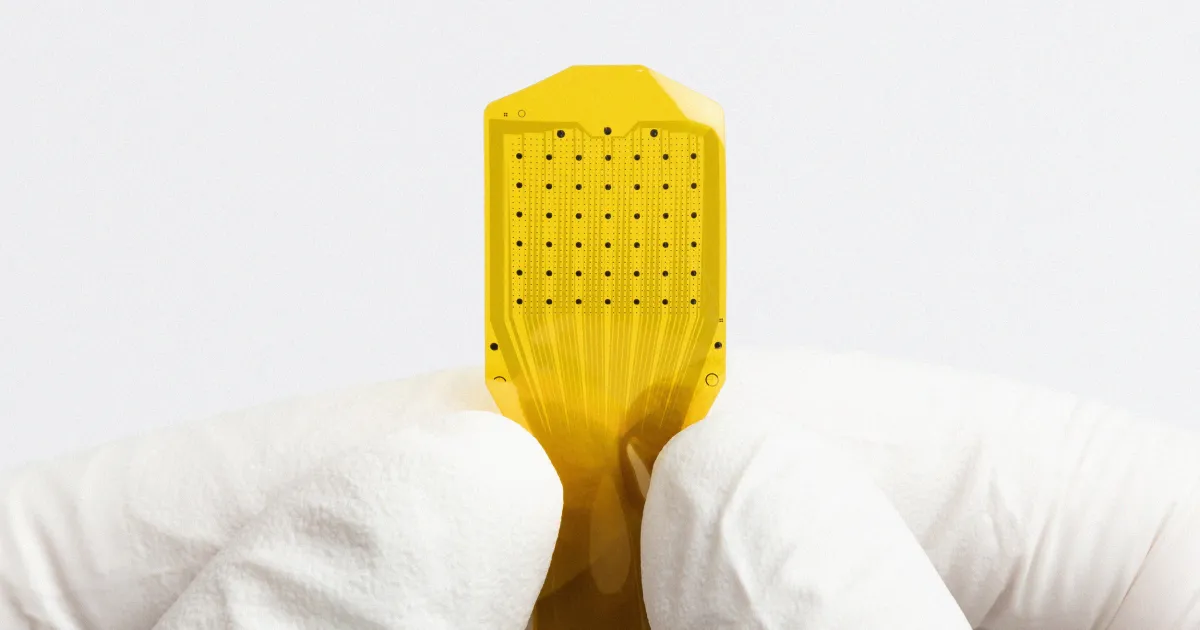

INBRAIN Neuroelectronics, the Barcelona-based startup developing graphene-based brain-computer interfaces, has announced a non-exclusive collaboration with Mayo Clinic. Under the agreement, Mayo clinicians will test INBRAIN’s devices in ethically approved clinical studies, aiming to generate real-world evidence and accelerate validation. At the same time, INBRAIN is establishing a U.S. presence with offices in Boston and on the West Coast.
The move signals a major step for graphene BCIs, a technology long touted for its conductivity, flexibility, and biocompatibility but rarely advanced beyond early-stage research. By pairing its platform with Mayo Clinic’s clinical muscle, INBRAIN is positioning itself not just as a European pioneer but as a global contender in the emerging race to bring brain-computer interfaces into regulated therapeutic use.
INBRAIN Neuroelectronics, founded in Barcelona in 2019, is developing the world’s first graphene-based BCI platform. Its goal is to move beyond today’s rigid metal and silicon electrodes by building ultra-thin, flexible interfaces that can decode neural activity and deliver adaptive stimulation with higher fidelity and long-term stability. Branded as “BCI therapeutics,” the company’s platform is aimed at neurological disorders where existing implants are often insufficient, including Parkinson’s, epilepsy, and stroke rehabilitation.

For a neurotech startup, few partners carry more weight than Mayo Clinic. The institution runs one of the largest deep-brain stimulation programs in the U.S. and has been at the center of translating experimental neurotechnologies into clinical use. Its clinicians have published extensively on surgical neuromodulation, long-term patient monitoring, and adaptive stimulation protocols. Partnering with Mayo gives the company a translational framework that has already brought other neurodevices through the pathway from feasibility to FDA clearance.
That makes this collaboration less of a headline gesture and more of a signal about stage. INBRAIN has completed initial feasibility work in Europe; with Mayo, it is moving into the infrastructure of regulated human trials in the U.S. A Boston office places the company within the country’s densest cluster of hospitals, universities, and investors, while a West Coast hub ties it to commercialization and industry networks. In this context, Mayo’s involvement becomes an accelerant, positioning INBRAIN to compete in the same translational race as Synchron or Precision, but with a distinct materials-science approach.
Most brain-computer interfaces rely on metal or silicon electrodes, technologies that can record and stimulate neurons with reasonable precision but suffer from mechanical mismatch with brain tissue. Over time, rigid implants can trigger inflammatory responses, cause scarring, and degrade in signal quality. Invasive systems like Utah arrays and ECoG grids deliver high-bandwidth data but at the cost of neurosurgery, while non-invasive options like EEG or fNIRS are safer but constrained by poor spatial and temporal resolution. This tradeoff has long defined the limits of BCI translation.
On the materials side, the problem comes down to physics and biology: traditional metals are conductive but brittle, while silicon-based probes are stiff relative to neural tissue, creating micromotions that the immune system walls off. Graphene, by contrast, is atomically thin, mechanically flexible, and chemically stable in biological environments. Its high charge-carrier mobility allows for low-impedance recording and efficient stimulation at far smaller electrode sizes, opening the door to denser arrays with better long-term fidelity. In theory, this could bridge the gap between the fidelity of invasive systems and the safety demands of chronic human use.
Graphene is a one-atom-thick sheet of carbon arranged in a repeating hexagonal pattern, similar to a honeycomb. Beyond its reputation as a “wonder material,” it offers properties that make it especially promising for brain interfaces: high electrical conductivity, mechanical flexibility, and strong chemical stability.
For recording and stimulation, these qualities matter. Graphene electrodes can be fabricated at smaller sizes while maintaining low impedance, which translates into clearer neural signals and more efficient stimulation. The potential for denser electrode arrays means researchers could capture richer patterns of brain activity without the noise or degradation typical of conventional materials.
INBRAIN’s BCI-Tx platform builds on this foundation. It pairs graphene-based electrodes with adaptive algorithms that decode neural signals in real time and deliver responsive stimulation back to the brain. The system is designed as a closed loop: monitoring activity, adjusting therapy continuously, and reducing the need for manual recalibration. The company’s initial focus is Parkinson’s disease, where today’s deep-brain stimulation devices are effective but blunt, with plans to expand into epilepsy and post-stroke rehabilitation.
INBRAIN has raised $124 million to date, backed by European deeptech and healthcare investors such as Aliath, Asabys, IMECXpand, Vsquared, and the EU Innovation Council. Mayo Clinic is also among its supporters, a sign of confidence that bridges financial, clinical, and translational interests. The funding has enabled INBRAIN to grow from a university spin-out into a company advancing both engineering and regulatory milestones.
Early feasibility work has already begun in Europe, with the company piloting its devices in patient populations. The new Mayo partnership and Boston hub now provide an entry point into the U.S. clinical ecosystem, the world’s most influential market for neurotechnology.
Within the competitive landscape, each of the players is advancing along a different path. Neuralink has implanted its first patient and is testing high-channel-count arrays with robotic surgery, Synchron is further along with multiple patients using its stentrode for communication tasks, and Precision has begun pilot implants of its thin-film cortical grids.
INBRAIN is positioning itself at the threshold between European feasibility and U.S. clinical translation. It is less a question of access route or robotics, and more about proving that graphene-based interfaces can progress into the same regulated spaces where the future of BCI therapeutics will be decided.
.svg)