Europe has emerged as a major neurotechnology hub. Around 38% of identified neurotech companies are based on the continent, supported by a strong network of universities and research institutes. That base is gaining political attention, with the European Commission discussing neurotechnology alongside fields such as AI and quantum computing. This year, a new European Partnership for Brain Health was launched to mobilise around €500 million over the next decade.
The European Brain Council sits at the centre of Europe’s neurotech ecosystem. The Brussels-based nonprofit brings together researchers, clinicians, patient groups, industry and policymakers, with a growing focus on translating brain research into innovation. That work comes together at the annual Brain Innovation Days. Ahead of the 2026 edition, we spoke with EBC Executive Director Frédéric Destrebecq about the event, EBC’s role, and Europe’s growing neurotechnology opportunity.
Europe is home to a growing neurotechnology ecosystem. The Neurofounders Startup Map tracks 141 companies on the continent, around 38% of the global total. Progress is increasingly visible across concentrated hubs, including in Spain, the DACH region, and the UK’s golden triangle. Here, startups are supported by an extensive network of universities, research institutes, and hospitals.
The European Brain Council is involved in many aspects of that ecosystem. The Brussels-based NGO brings together researchers, clinicians, patient groups, industry and policymakers, increasingly connecting research with translation and innovation. “That means going through the entire value chain, from basic science, really from the lab, to how research outcomes are translated and innovation hits the market,” Destrebecq says.

That role also extends into the new European Partnership for Brain Health, a ten-year programme bringing together over 60 participants from more than 30 countries and expected to mobilise around €500 million. The EBC is involved in areas including research translation, community engagement and international coordination.
Neurotechnology has become a more visible part of the Brain Council’s work. The EBC championed the European Charter for the Responsible Development of Neurotechnologies, a non-binding framework designed to complement existing EU rules with guidance around areas like mental privacy, neural data, informed consent, safety, and vulnerable users.
It also co-hosted an April strategy event with the Centre for Future Generations on how Europe could build a more coordinated approach to the field.
“As a community, we wanted to play an active role in it. First and foremost by trying to support the emergence of neurotechnologies, but supporting them with a vision of ethics by design,” Destrebecq says. EBC has since announced a voluntary Seal of Responsible Neurotechnology to turn those principles into a practical standard, recognising organisations whose ethical governance goes beyond compliance.
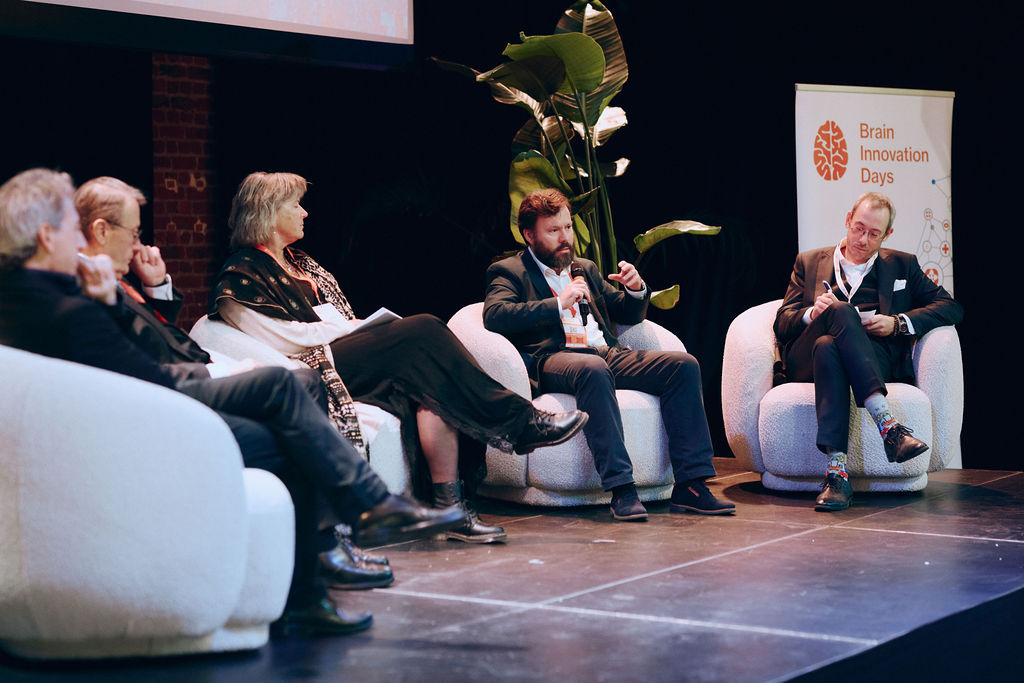
Many of EBC’s initiatives culminate at the annual Brain Innovation Days. The event returns for its sixth edition on 18-19 November at Area 42 in Brussels.
The Innovation Days were partly created to change the narrative around neuroscience, a field long shaped by the burden of brain disorders, scientific complexity, limited treatments, and uncertainty around new approaches.
“For far too long, we were basically emphasising the fact that brain disorders are costly, that there are no treatments, that the research is complex,” Destrebecq says. “Over the last years, we saw that biology delivers.” BID was built to make those advances more visible, celebrating successes while bringing researchers and clinicians closer to startups, investors, and other groups moving innovation forward.
That vision runs central to this year’s theme: Science, Scale & Impact. Science covers the research underpinning new technologies, scale looks at how they move through funding, procurement and adoption, and impact focuses on whether they ultimately improve outcomes for patients.
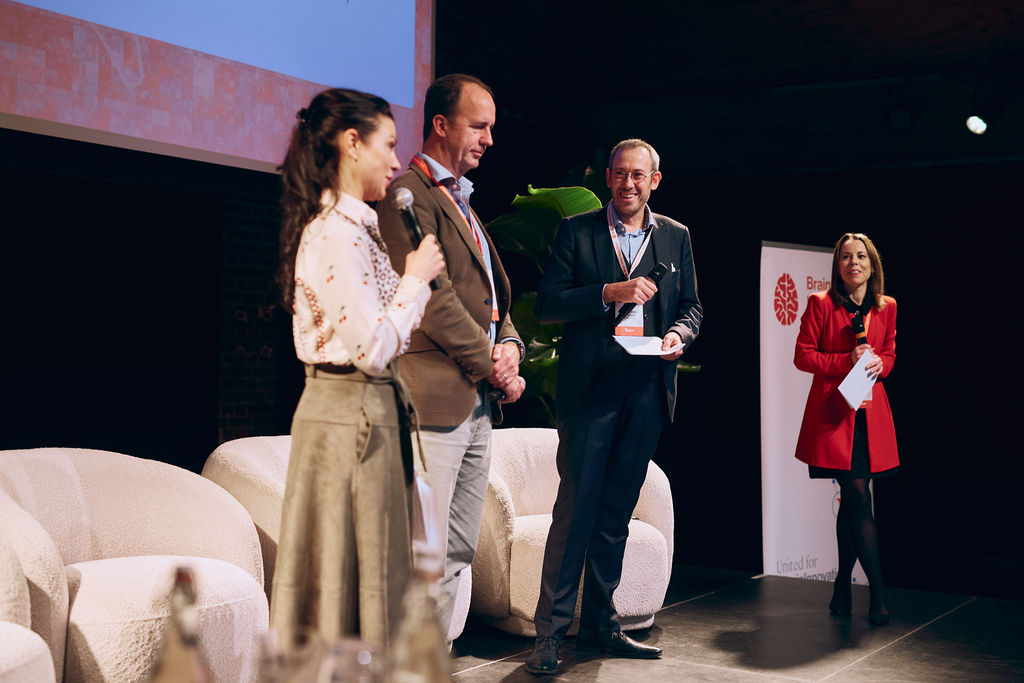
The main programme follows that progression across two days. Day one moves from a policy opening into sessions on rewiring the EU innovation ecosystem and fostering science and innovation. Day two shifts toward competitiveness in brain health, the value created by innovation, and the final challenge of scaling promising technologies.
Around those sessions, BID adds more practical formats. A Brain Innovation Sprint will work through barriers such as reimbursement, regulation, clinical integration, and trust, while a World Café follows the path from lab to market. The programme also includes a brain-data debate, investor matchmaking, a Pecha Kucha-style startup pitch competition and an Innovation Hall where companies can demonstrate their technologies across both days.
Explore the Brain Innovation Days.
Applying BID’s Science, Scale & Impact framing to Europe’s neurotech industry, there is an opportunity to take strong science, scale it responsibly, and turn more of it into real clinical and economic impact. The main constraint is capital. Europe accounts for around 38% of companies tracked in the Neurofounders Startup Map, but attracted just 11% of disclosed neurotech funding in H1 2026.
“There is certainly an issue with access to capital and the capacity to then scale that innovation,” Destrebecq says. That gap is increasingly recognised at the European level. The EIC now has a dedicated brain-technology portfolio worth €37 million, while the European Partnership for Brain Health is set to mobilise around €500 million over ten years across research and translation.
But Destrebecq also sees a uniquely European advantage in its focus on end users. “The protection and benefit to the end users is very likely what is going to put us in a leading role,” he says.
That opportunity is being framed more broadly than through neurotechnology alone. The EBC has been active in the emerging brain-economy movement, from the European Brain Economy Summit and Davos to recent activity in New York around the UN General Assembly.
Those discussions place brain health, brain capital, and neurotechnology within a wider economic agenda, linking innovation to societal trends focusing on productivity, resilience, and long-term competitiveness.
Disclaimer: This article was produced as part of a paid partnership with the European Brain Council.
.svg)









%20copy.jpg)
%20copy.jpg)