.svg)





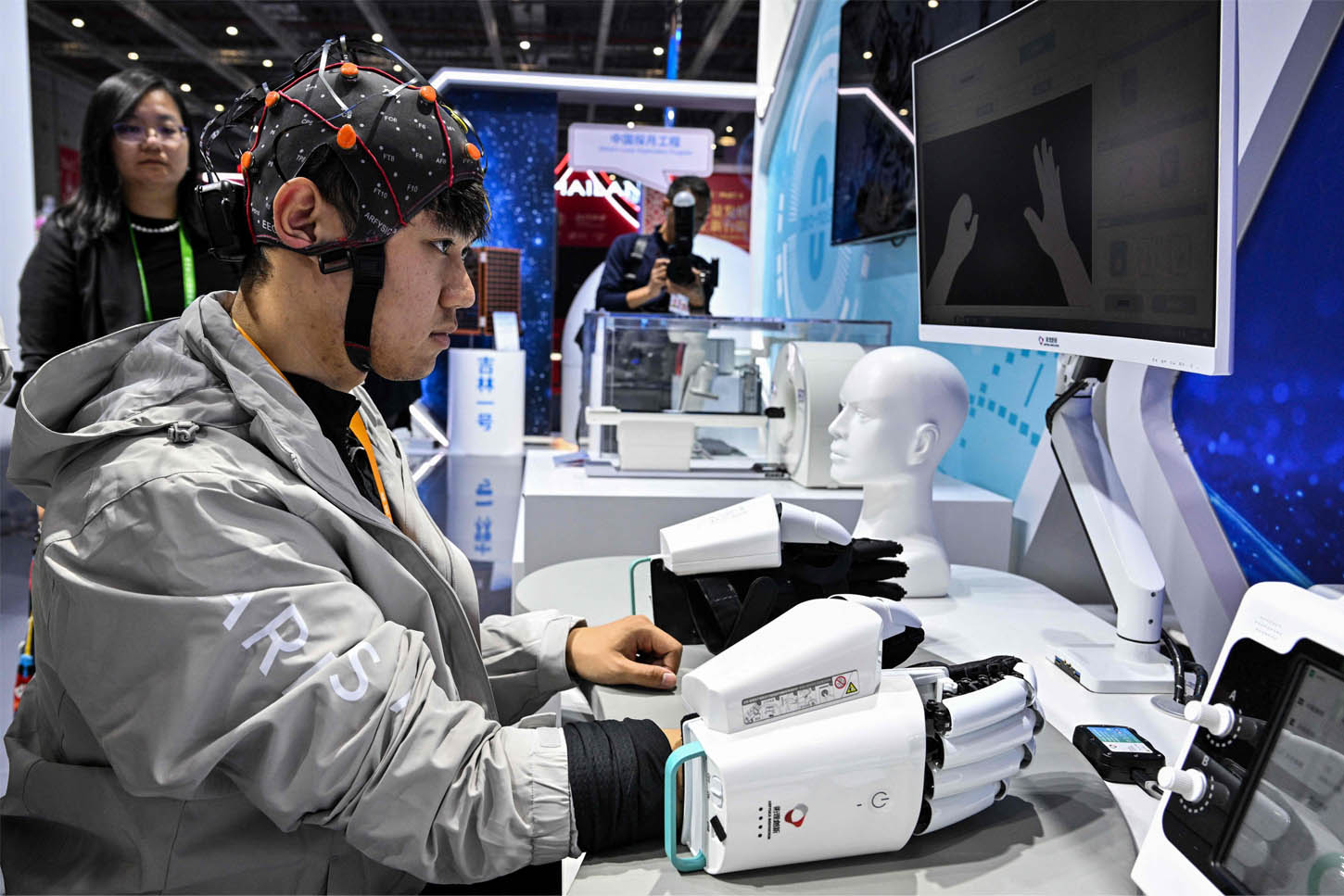

Interest in neurotechnology is accelerating rapidly. And while much of the attention still centres on the US and Europe, China is increasingly showing that it is moving in close step. Headlines from the country now regularly reach international audiences. In the last few months alone, WIRED covered a Chinese ultrasound neurotech startup, Bloomberg reported IPO plans from a major Chinese player, and the field saw the first Chinese BCI system reach market approval.
Still, these headlines remain sporadic. They tend to focus on individual companies or milestones, rather than the structure of the Chinese neurotechnology market itself. A few names are now reasonably familiar internationally, including the recently launched Gestala, the well-funded BrainCo, and Neuracle, the company behind China’s first approved BCI. This article expands that view by mapping 15 of the most important Chinese neurotech companies and projects currently visible in the public record.
Full coverage of China’s neurotech scene would require a much longer report, which we would like to take on one day. For now, it is still important to dedicate some space to the state-led agenda helping the field grow at such speed.
In response to rapid neurotechnological advances in the United States, China has launched a coordinated push to keep pace. In 2024, the Chinese Ministry of Industry and Information Technology (MIIT) published a “future industries” agenda in which brain-computer interfaces were listed as a strategic priority, alongside quantum technology, humanoid robots, and other emerging technologies.
This year, that agenda became more concrete through China’s national planning process, which listed brain-computer interfaces as a standalone industry to be cultivated at the national industrial-policy level in the coming five years.
With BCI defined as a standalone industry to be strategically cultivated, a dedicated industry roadmap was developed. In 2025, seven central bodies, including the MIIT, issued the “Implementation Opinions on Promoting the Innovative Development of the Brain-Computer Interface Industry.” The roadmap came with buy-in from the National Health Commission, the Ministry of Education, the Chinese Academy of Sciences, and other institutions needed for a coordinated push toward technological progress.
The roadmap sets ambitious goals for China’s BCI industry. By 2027, China wants to see breakthroughs in core BCI technologies. By 2030, it wants a safe and reliable industrial ecosystem in place, with two or three globally influential leading companies and a group of specialised SMEs, several of which we detail below.
With goals agreed and buy-in from a range of institutional bodies, China has rapidly turned BCI into a national priority. We are now starting to see some of the results of that effort. In 2024, China adopted ethics guidance for BCI research. In June 2025, the MIIT established a BCI Standardization Technical Committee. This was followed by terminology guidance from the National Medical Products Administration (NMPA), China’s FDA-equivalent for medical devices. Earlier this year, the NMPA continued that push by adding more BCI-specific medical-device standards.
The institutional layer is creating an environment more conducive to neurotech translation. In the last few months, we have seen how quickly that environment can produce concrete results. In March 2026, NMPA approved Neuracle’s implantable BCI for motor impairment from cervical spinal cord injury. The product has already received a medical insurance code.
The picture becomes even more interesting when incorporating the local layer, where Beijing and Shanghai are developing dedicated initiatives to create neurotech hubs. But for now, the main point is that these companies are not emerging from an underdeveloped ecosystem. The systems are increasingly in place to speed up progress and start cutting into the United States’ technological advantage.
Any article focused on Chinese technology innovation requires a short disclaimer. While national initiatives are often clearly reported and publicly available, the activities of private companies are harder to track. Company websites are often only available in Chinese, firms are registered under Chinese names and frequently use more than one English name, communication can be sparse, external reporting is limited, and individual claims are often difficult to verify.
For that reason, this article only includes neurotech companies with enough confidence in the main claims reported. Even then, some company information remains self-reported or based on local media coverage and should be treated with caution.
Note: 1 Million RMB = 147.254 USD [as of 14/05/2026]
Chinese name: 强脑科技
Location: Hangzhou
Founding year: 2015
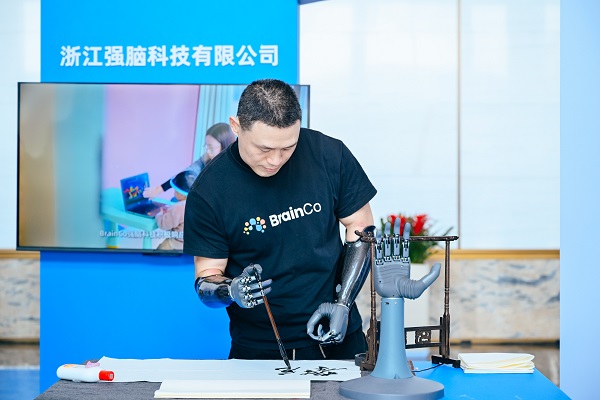
BrainCo focuses on non-invasive EEG and EMG systems. Its commercial products span attention training, sleep support, and assistive devices. The company is best known for its EEG headbands and brain-training products, while it is also exploring EMG-controlled prosthetics. BrainCo’s business model mostly focuses on consumer neurotech, also outside of China. Earlier this year, the company raised around RMB 2 billion and was linked to a potential Hong Kong IPO, making it one of China’s most visible neurotech companies.
Chinese name: 格式塔科技
Location: Chengdu/Shanghai
Founding year: 2026
Gestala is developing a non-invasive brain interface platform built around focused ultrasound. Rather than going for implantable intracortical arrays, the company is pursuing ultrasound as a way to stimulate deeper brain targets. Its stated applications include chronic pain, stroke rehabilitation, PTSD, and blood-brain barrier opening. Gestala is still very early, but its reported RMB 150 million angel round in 2026 made it one of the more visible new entrants in Chinese neurotech.
Chinese name: 脑虎科技
Location: Shanghai
Founding year: 2021
NeuroXess is one of China’s main invasive BCI companies, developing high-density flexible electrode implants for neural recording. Its platform regards a 256-channel implanted BCI system, with early clinical work focused on motor and language decoding. The company is positioned around severe neurological impairment, including applications in paralysis and ALS-related communication loss. NeuroXess has not reached market approval, but its human clinical work with hospital partners makes it one of the more advanced Chinese implantable BCI players. The company previously raised a RMB 97 million round, followed by a Series A round reportedly worth several hundred million RMB.
Chinese name: 博睿康
Location: Shanghai
Founding year: 2021
Neuracle, also known as Borui Kang Medical Technology, is the clearest regulatory milestone in China’s BCI market so far. The company develops NEO, an extradural BCI for people with cervical spinal cord injury, designed to restore hand grasp through neural decoding and an external assistive device. NEO received market approval in China in March 2026. The system is less invasive than intracortical approaches but more clinically advanced from a regulatory perspective than many higher-channel implant programs still in trials.
Chinese name: 芯智达神经技术
Location: Beijing
Founding year: 2023
NeuCyber Neurotech is a state-backed BCI company developing semi-invasive and invasive systems for motor restoration. Its Beinao-1 platform has been implanted in seven people, placing it among China’s most clinically active BCI programs. The company is also developing Beinao-2, a more advanced flexible intracranial implant that is currently at the animal-testing stage. NeuCyber’s focus is on paralysis and movement recovery. With around RMB 200 million in reported government backing, it is one of the clearest examples of China’s institutional push into clinical BCI.
Chinese name: 阶梯医疗
Location: Shanghai
Founding year: 2021
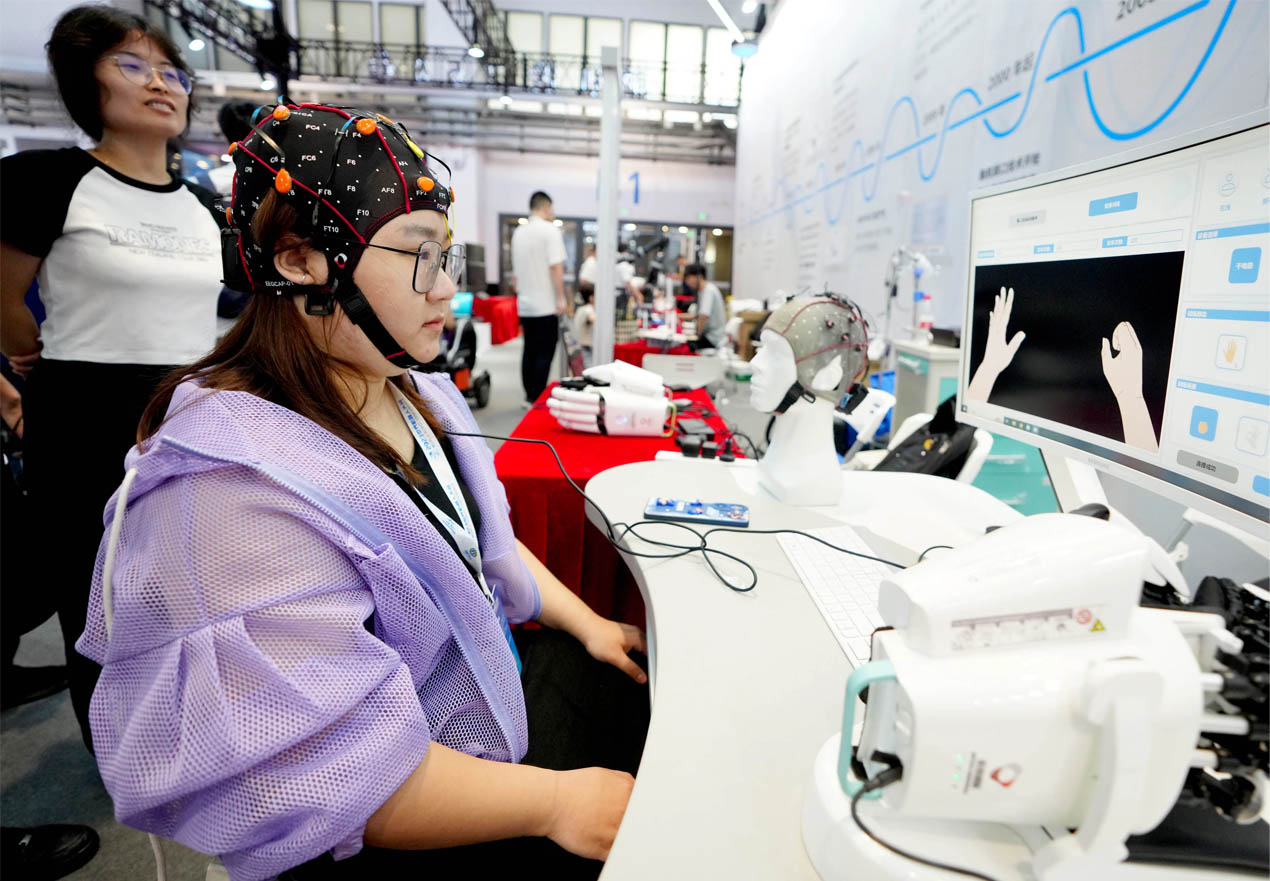
StairMed Medical is building an invasive BCI platform around flexible micro-electrodes. Its stack includes electrodes, a signal-acquisition platform, and a dedicated implant robot. In early 2026, the company reportedly implanted its 256-channel WRS02 system in a patient while preparing a multicentre registration trial. Its recent RMB 500 million strategic round, led by Alibaba with participation from Tencent and others, makes it one of China’s most capitalised invasive BCI startups.
Chinese name: 傲意科技
Location: Shanghai
Founding year: 2015
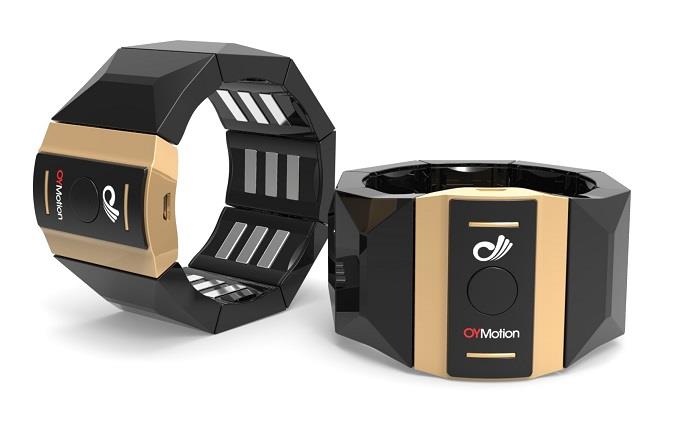
OYMotion is a commercial neuroprosthetics company working across EMG and EEG. Its core products include the amyoelectric prosthetic hand, gesture-control systems, and EEG devices. Its EMG products use muscle signals to control external devices, while its EEG line extends the company into non-invasive monitoring. In 2026, OYMotion reportedly raised a RMB 150 million round, supporting its position as one of China’s more commercially active neuroprosthetics companies.
Chinese name: 智冉医疗
Location: Beijing
Founding year: 2022
Zhiran Medical is developing an invasive BCI platform built around flexible implantable electrodes. Its BCIFlex system is positioned for high-throughput neural recording, with intended applications in severe motor impairment and communication restoration. The company sits in China’s newer wave of implantable BCI startups, focused on flexible interfaces rather than rigid intracortical arrays. Zhiran has reported plans for a large registered clinical trial. It raised more than RMB 300 million in Series A funding, followed by a RMB 300 million A+ round.
Chinese name: 宁矩科技
Location: Beijing
Founding year: 2019
NeuraMatrix is building the upstream layer for invasive BCI, with a focus on implanted chips, wireless neural interfaces, and bidirectional recording and stimulation systems. Rather than targeting one approved clinical indication today, the company appears focused on research platforms and core interface hardware that could support future neurotechnology products. NeuraMatrix has raised a multimillion-dollar Pre-A round and an RMB 100 million Series A.
Chinese name: 品驰医疗
Location: Beijing
Founding year: 2008
PINS Medical is one of China’s more established implantable neuromodulation companies, with commercial systems across DBS, VNS, SCS, and sacral nerve modulation. Its products target established clinical indications, including Parkinson’s disease, epilepsy, chronic pain, and overactive bladder. Unlike newer BCI startups, PINS is already operating in regulated medical-device markets with multiple registered products.
Chinese name: 景昱医疗
Location: Suzhou
Founding year: 2011
SceneRay is one of China’s main domestic DBS companies, with commercial implantable neuromodulation systems for Parkinson’s disease and newer psychiatric indications. SceneRay has also moved into more novel indications, with an addiction-focused DBS system approved in China and OCD reportedly entering the NMPA green channel. The company raised a RMB 300 million D+ round in 2022 and remains one of the clearest examples of China’s growing implantable neurostimulation base.
Chinese name: 瑞神安医疗
Location: Changzhou
Founding year: 2013
Rishena Medical is another implantable neuromodulation company, with a broad product base across VNS, SCS, CNS stimulation, t-VNS, and sEEG. Its systems target established clinical areas including epilepsy, chronic pain, and other brain disorders. The company is more commercially mature than most Chinese startups, with VNS approved in 2020, sEEG and t-VNS in 2021, SCS in 2022, and a CNS implantable neurostimulation system in 2025.

Chinese name: 银河脑科学
Location: Beijing
Founding year: 2019
Neural Galaxy is developing a precision non-invasive neuromodulation platform built around individualized brain functional mapping and targeted iTBS stimulation. Its pBFS technology creates patient-specific brain functional maps, which are then used to select neural circuit targets for its Precision Circuit Stimulation system. The company is applying the approach across autism, depression, Parkinson’s disease, and post-stroke recovery. Its system has been installed at Beijing Tiantan Hospital’s BCI clinical translation ward.
Chinese name: 神复健行
Location: Shanghai
Founding year: Unclear
Shenfu Jianxing is developing a brain-spine interface for walking restoration after spinal cord injury. Its system combines implanted brain and spinal stimulation technologies to reconnect movement intention with lower-limb function. The company has early reports that point to human use and rapid recovery signals in initial cases. Shenfu Jianxing has reportedly also received FDA Breakthrough Device Designation and is preparing a China registration trial.

Chinese name: 明视脑机
Location: Beijing
Founding year: 2024
Mindtrix is an early-stage invasive BCI company focused on visual restoration. The company is developing a visual reconstruction brain-computer interface for people with severe vision loss or blindness. Public reporting describes the system as an invasive product, incorporating ultra-thin flexible arrays, and says the company has completed early human validation. Details on implant location, stimulation strategy, and patient outcomes remain limited. Mindtrix has raised around RMB 150 million across angel-series rounds and is using the funding to move toward clinical validation and registration filing.


.svg)
.svg)