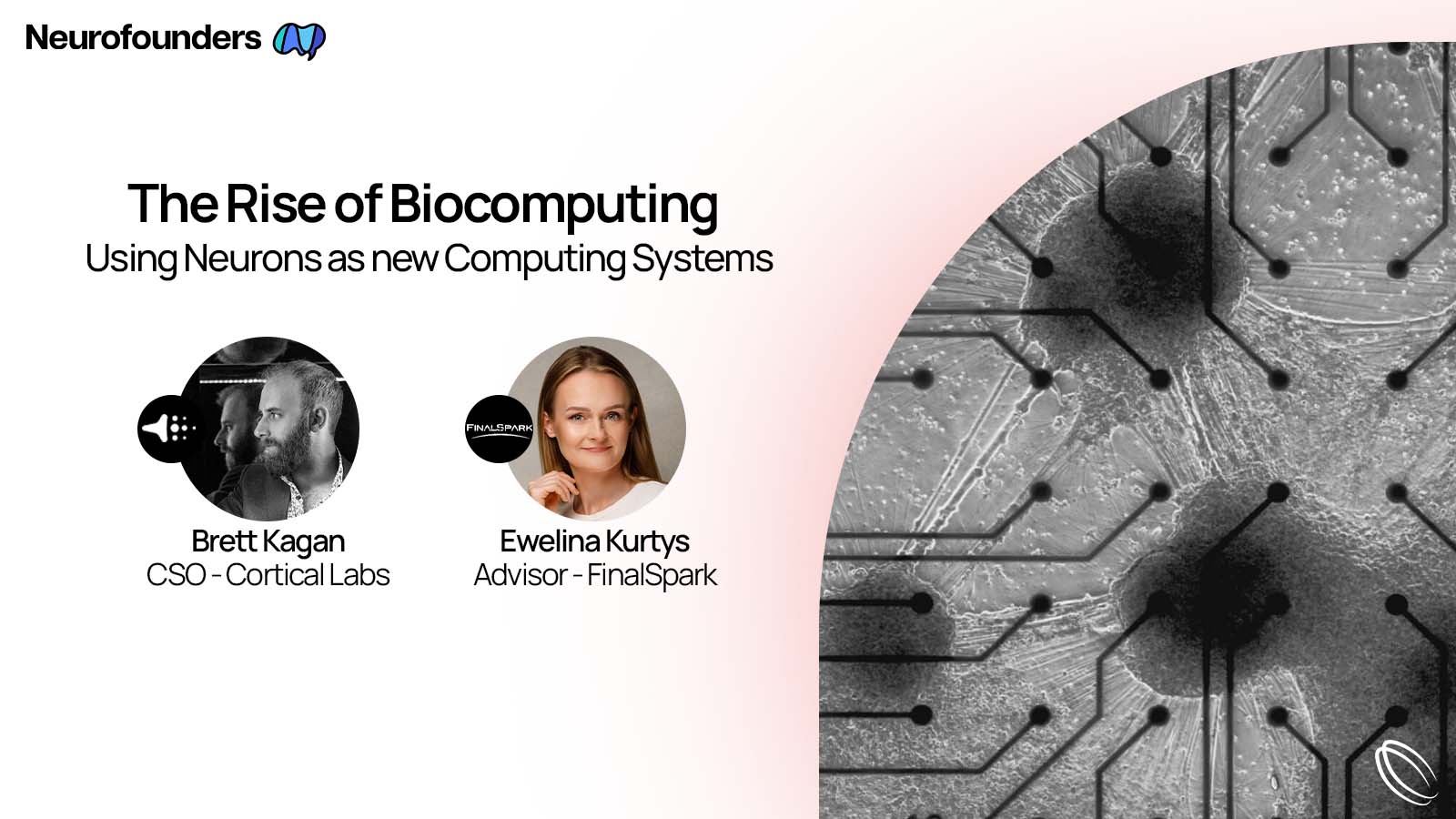



FinalSpark SA is a Swiss biocomputing startup operating the first remotely accessible research platform using living human brain organoids as computational substrates. Founded in 2014 by Dr. Fred Jordan and Dr. Martin Kutter in Vevey, Switzerland, the company developed its Neuroplatform after pivoting from conventional AI algorithms to biological computing in 2018.
The Neuroplatform comprises brain organoids (three-dimensional clusters of approximately 10,000 neurons each, derived from human induced pluripotent stem cells) cultured on multi-electrode arrays (MEAs). Researchers interact with the organoids via electrical stimulation and record neural responses, accessing the system remotely through a browser interface or Python API. The company has scaled to over 1,000 organoids and collected more than 18 terabytes of experimental data. Current organoid lifespan averages approximately 100 days.
FinalSpark targets academic researchers and commercial clients interested in wetware computing, offering monthly subscription access to its laboratory. Ten universities worldwide participate in an open research initiative, including institutions in the UK, Germany, France, and the US. The company's long-term thesis is that biological neural networks can eventually complement silicon for AI workloads at dramatically lower energy consumption. FinalSpark holds three patents and has published in Frontiers in Artificial Intelligence.

Cortical Labs develops a biocomputing platform that integrates living neurons with silicon hardware to create hybrid biological–digital systems. The company’s flagship system, CL1, embeds lab-grown neurons onto a silicon substrate to form a functional neural network. This approach, referred to as silicon-embedded biology, is designed to enable direct interaction between biological neurons and computational infrastructure. Cortical Labs positions its technology within experimental computing and neuroscience research contexts.
The platform allows cultured neurons to receive inputs and produce outputs through real-time neural code execution. By interfacing living neural networks with software-defined environments, the system enables neurons to learn and adapt through feedback-driven tasks. Electrical signals are exchanged bidirectionally between the biological network and silicon, allowing controlled stimulation and readout of neural activity. This setup supports investigation of learning, plasticity, and computation in biological systems under tightly controlled conditions.
Cortical Labs targets applications in neuroscience research, biocomputing, and exploratory artificial intelligence. The CL1 platform is intended for laboratory use rather than clinical or consumer deployment. Its work reflects growing interest in leveraging biological intelligence as a computational substrate and in studying learning systems that differ fundamentally from traditional silicon-based computing architectures.

.svg)