
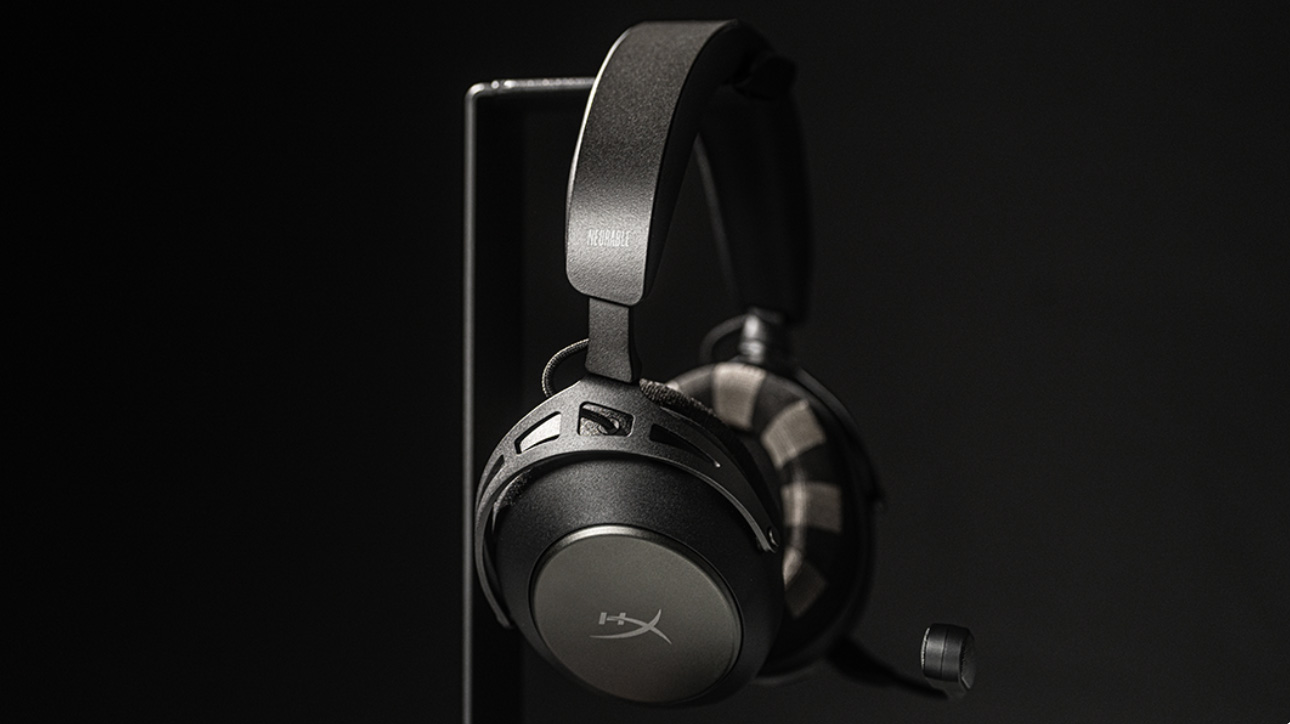

At CES 2026, Neurable returned as part of a growing wave of consumer neurotech moving into familiar hardware. Across the floor, brain sensing technologies showed up across several ear-worn forms, from in-ear EEG aimed at measuring and modulating sleep to premium headsets experimenting with neural feedback. Neurable’s contribution sat in the middle of that mix, focusing on over-ear headphones that embed EEG into familiar devices used for work and entertainment.
That CES appearance followed a concentrated period of activity for the company. Just weeks earlier, Neurable raised a $35 million Series A to scale its consumer EEG platform. At CES, the firm added another data point, as they announced a gaming headset partnership with HyperX. While in the public eye, Neurable is heating up, these developments also surface a recurring tension in consumer neurotech. Investor and partnership interest is there, but the products remain premium and somewhat unfocused. For Neurable, 2026 will be about proving that consumer EEG can translate into a sustained habit, rather than a short-lived feature.
Neurable first entered the consumer market in 2021 with Enten, an early product that demonstrated EEG could be captured through a comfortable, wireless headphone without clinical setup. Its move into scaled consumer hardware followed in 2023 through a collaboration with Master & Dynamic on the more premium MW75 Neuro. The headset integrates EEG sensors into the ear pads alongside active noise cancelling and high-end audio hardware, with pricing placing the MW75 Neuro firmly in the premium headphone segment.
The MW75 Neuro LT followed last year as a more accessible iteration. Marketing materials emphasized a lighter design, a lower price point, and a shift toward everyday use. Neurable also highlighted quicker setup and shorter interaction loops, aiming to reduce the friction associated with early-gen brain-sensing wearables. The underlying EEG approach remained the same, but the LT was framed as something users could integrate more naturally into regular listening habits.
In December, Neurable raised a $35 million Series A, bringing total funding to around $65 million and placing it among the most well-funded consumer neurotech companies to date. The round was led by Spectrum Moonshot Fund, with continued participation from Pace Ventures. Public statements around the raise focused on scaling deployment of their 'everyday brain-computer interface technology', with particular emphasis on Neurable’s AI and signal-processing layer, rather than a single flagship product.
CES 2026 offered the first public glimpse of what Neurable's scaling phase might look like. Neurable announced a gaming headset prototype developed with HyperX, extending its EEG stack into a performance-driven consumer category. Hands-on coverage described the embedded EEG sensors enabling short pre-game priming routines aimed at focus and readiness, with the device clearly framed as an early prototype. Now, a decade since launch, after several product iterations and commercial partnerships, and with a fresh bag of capital secured, Neurable will have to overcome the challenge of making devices that do not just intrigue consumers, but excite them.
With its recent momentum, Neurable now faces a familiar challenge in consumer neurotech: turning a proven concept into sustained, everyday use. The most structured path to do so looks to be through clinical positioning and pharmaceutical partnerships. Naox’s FDA-cleared in-ear EEG pushes toward sleep monitoring and medical workflows, where long wear times and compliance are expected. In parallel, Beacon Biosignals is turning its Dreem acquisition into a research and trial endpoint, integrating their EEG headbands and caps into pharma pipelines rather than consumer hardware. These approaches prioritise signal fidelity and protocol stability over mass adoption.
On the consumer side, sleep has emerged as the most forgiving on-ramp. Companies such as NextSense are building in-ear EEG products for overnight use, where comfort, low effort, and repeat behaviour are already established and a consumer use case is established through existing proxy measures, like the Apple Watch and OURA ring. In this model, EEG is justified by a clear outcome, sleep quality, and the device earns its place by staying out of the way.
Neurable is deliberately taking a different route. Its products are designed for daytime use, embedded in over-ear headphones worn for work, commuting, or entertainment. That choice brings a clear advantage, existing wear habits and long session times, but also requires the company to convince consumers of its value. Daytime cognitive metrics are easier to ignore if they do not translate into actions users find immediately useful. The product has to compete not only with other neurotech, but with the option of ignoring brain data altogether.
This is where the economics of premium headsets become a constraint. High price points narrow reach and make retention sensitive to perceived value. The MW75 Neuro LT addresses part of that by lowering friction, but the core challenge remains software-driven. If insights feel abstract or repetitive, curiosity fades quickly. Neurable’s emphasis on its AI and signal-processing layer reflects an awareness that differentiation must come from what the data enables, not from EEG alone.
Seen in that light, the HyperX prototype is less about gaming hardware and more about testing new viable habit loops. Gaming offers structured sessions, motivation to improve, and natural moments for intervention, such as pre-game priming. A major peripherals partner also offers distribution and scale that premium audio collaborations cannot. Whether this becomes a shipping product matters less than what it proves. If EEG can become part of a routine users return to for performance, not just insights, Neurable’s consumer strategy starts to look credible. If not, it risks remaining intriguing, but never truly exciting.
[Cover image credit: Neurable]
Produced with support from

.svg)







.svg)

